Similes are one of the most powerful tools in figurative language. They compare two unlike things using words such as like or as to make ideas clearer, more vivid, and often more memorable. Writers, speakers, students, and even everyday texters use similes to explain emotions, behaviors, and situations in a colorful way that plain words cannot always capture.
When it comes to describing foolish behavior, poor judgment, or lack of awareness, similes for stupid are commonly used in literature, humor, storytelling, and casual conversation. However, these similes are not always meant to insult. Very often, they are playful, exaggerated, or humorous ways to describe a moment of confusion, ignorance, or silly thinking.
In this long-form guide, you’ll explore 20 carefully explained similes for stupid, each with its meaning, tone, best usage context, and multiple natural example sentences. You’ll also find texting examples and daily-use ideas to help you apply them correctly and creatively. By the end, you’ll understand how to use similes thoughtfully—adding color to your writing without sounding harsh or robotic.
As dumb as a rock
Meaning: This simile compares someone’s lack of understanding to a rock—an object that cannot think or respond. It highlights extreme mental dullness or total unawareness in a situation.
Tone: Blunt, humorous, and sometimes insulting depending on context.
Best usage context: Used in casual speech, storytelling, or comedic writing. Not suitable for formal or sensitive conversations.
Example sentences:
- He stared at the math problem for ten minutes and still looked as dumb as a rock.
- I explained the rules twice, but he just stood there, dumb as a rock.
- The character in the story acts tough but is as dumb as a rock when plans change.
Texting & daily-use examples:
- “I forgot my own password again—feeling dumb as a rock 😅”
- “That move in the movie was dumb as a rock, honestly.”
As stupid as a bag of bricks
Meaning: This simile exaggerates foolishness by comparing intelligence to a bag of bricks—heavy, lifeless, and unthinking.
Tone: Strongly critical but often used humorously.
Best usage context: Common in fiction, jokes, or heated conversations. Use carefully to avoid offense.
Example sentences:
- He tried to fix the computer by hitting it, which was as stupid as a bag of bricks.
- The villain underestimated everyone and acted as stupid as a bag of bricks.
- That decision was as stupid as a bag of bricks falling uphill.
Texting & daily-use examples:
- “I sent the email without the attachment—bag of bricks moment 🤦♂️”
- “That plan sounds as stupid as a bag of bricks, no offense.”
Like a head full of air
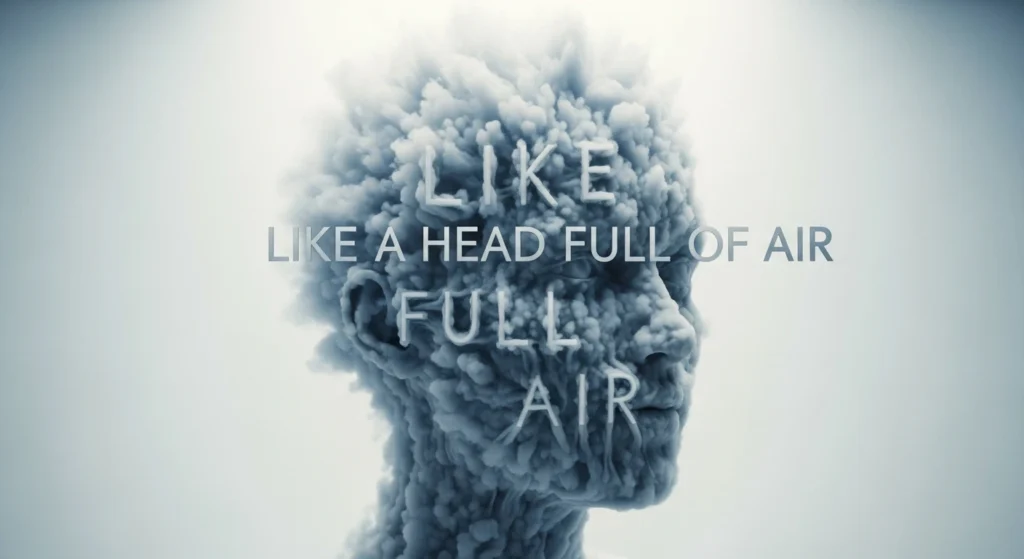
Meaning: This simile suggests someone lacks substance in thinking, as if their head contains nothing solid.
Tone: Lightly mocking, playful.
Best usage context: Great for humorous writing or teasing among friends.
Example sentences:
- He talks a lot, but it’s like he’s got a head full of air.
- She smiled confidently, though her ideas floated like a head full of air.
- The character seems charming but thinks like a head full of air.
Texting & daily-use examples:
- “I walked into the room and forgot why—head full of air today 😂”
- “Mondays make my brain feel like a head full of air.”
As clueless as a lost puppy
Meaning: This simile highlights confusion and innocence rather than intelligence alone.
Tone: Gentle, soft, sometimes sympathetic.
Best usage context: Used when describing confusion without cruelty.
Example sentences:
- He looked at the instructions as clueless as a lost puppy.
- New to the job, she wandered around clueless as a lost puppy.
- The tourist was as clueless as a lost puppy in the busy city.
Texting & daily-use examples:
- “First day at the gym—clueless as a lost puppy 🐶”
- “Explain it again; I’m lost puppy level confused.”
As slow as molasses in winter
Meaning: This simile suggests slow thinking or delayed understanding.
Tone: Mildly critical but often humorous.
Best usage context: Great for describing delayed reactions or learning pace.
Example sentences:
- His response time was as slow as molasses in winter.
- She eventually understood, but her thinking moved like molasses in winter.
- The detective solved the case, though slow as molasses in winter.
Texting & daily-use examples:
- “My brain is molasses today 😴”
- “Took me forever to get the joke—molasses speed.”
Like a chicken without a head
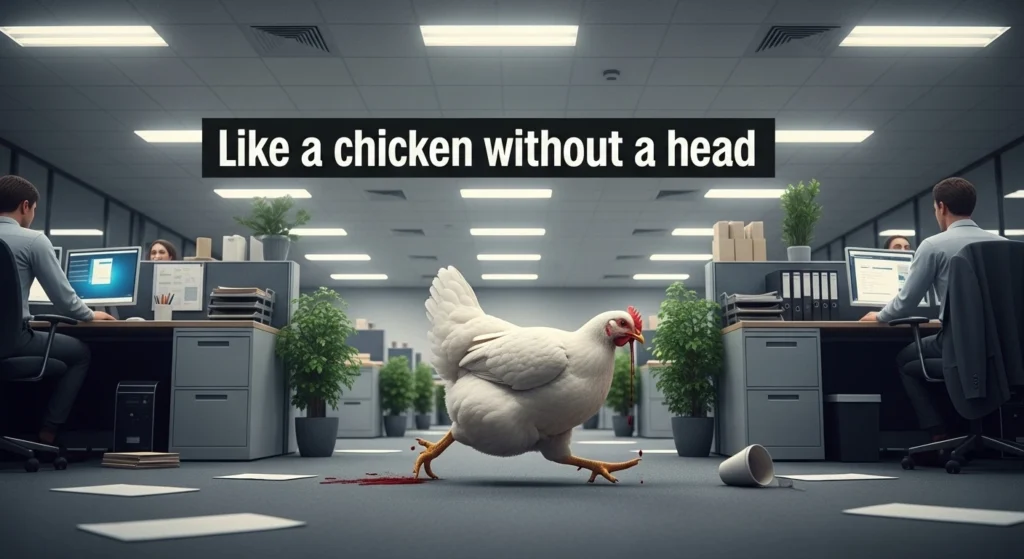
Meaning: Describes chaotic, senseless behavior rather than pure stupidity.
Tone: Comic, exaggerated.
Best usage context: Storytelling, humor, workplace anecdotes.
Example sentences:
- He ran around the office like a chicken without a head.
- During exams, students move like chickens without heads.
- The character panicked like a chicken without a head.
Texting & daily-use examples:
- “Running errands today like a chicken without a head 🐔”
- “Deadlines got me acting crazy.”
As empty as a hollow drum
Meaning: Suggests lack of depth or meaningful thought.
Tone: Poetic, metaphorical, sharp.
Best usage context: Creative writing, essays, literature.
Example sentences:
- His speech was loud but empty as a hollow drum.
- The argument sounded impressive yet hollow as a drum.
- The leader’s promises echoed empty like a hollow drum.
Texting & daily-use examples:
- “That explanation felt hollow, honestly.”
- “Lots of talk, zero sense.”
Like a deer in headlights
Meaning: Describes frozen confusion or stunned stupidity in a moment.
Tone: Neutral, descriptive.
Best usage context: Everyday situations, storytelling.
Example sentences:
- When asked suddenly, he froze like a deer in headlights.
- She stared at the screen like a deer in headlights.
- The student stood silent, deer-in-headlights confused.
Texting & daily-use examples:
- “Boss asked me a question—deer in headlights 😳”
- “Didn’t see that coming at all.”
As thick as two short planks

Meaning: British-style simile meaning someone is not very smart.
Tone: Humorous, slightly insulting.
Best usage context: Casual speech, British English writing.
Example sentences:
- He missed the obvious hint, thick as two short planks.
- The character acts brave but thick as two short planks.
- That mistake made him look thick as two short planks.
Texting & daily-use examples:
- “Didn’t get the hint at all—planks moment.”
- “Why am I like this today?”
As silly as a goose
Meaning: Focuses more on playful foolishness than intelligence.
Tone: Light, friendly, non-offensive.
Best usage context: Children’s writing, gentle teasing.
Example sentences:
- He laughed at his mistake, silly as a goose.
- The kids acted silly as geese during recess.
- She felt silly as a goose for forgetting the keys.
Texting & daily-use examples:
- “I waved back at someone who wasn’t waving at me—goose moment 🪿”
- “Feeling extra silly today.”
Like trying to teach a fish to climb a tree
Meaning: Suggests misplaced expectations or lack of ability.
Tone: Thoughtful, reflective.
Best usage context: Educational or motivational writing.
Example sentences:
- Expecting him to excel there was like teaching a fish to climb a tree.
- The task didn’t fit her skills at all.
- Blaming him felt unfair in that situation.
Texting & daily-use examples:
- “This task isn’t for me at all.”
- “Wrong skill, wrong job.”
As sharp as a butter knife
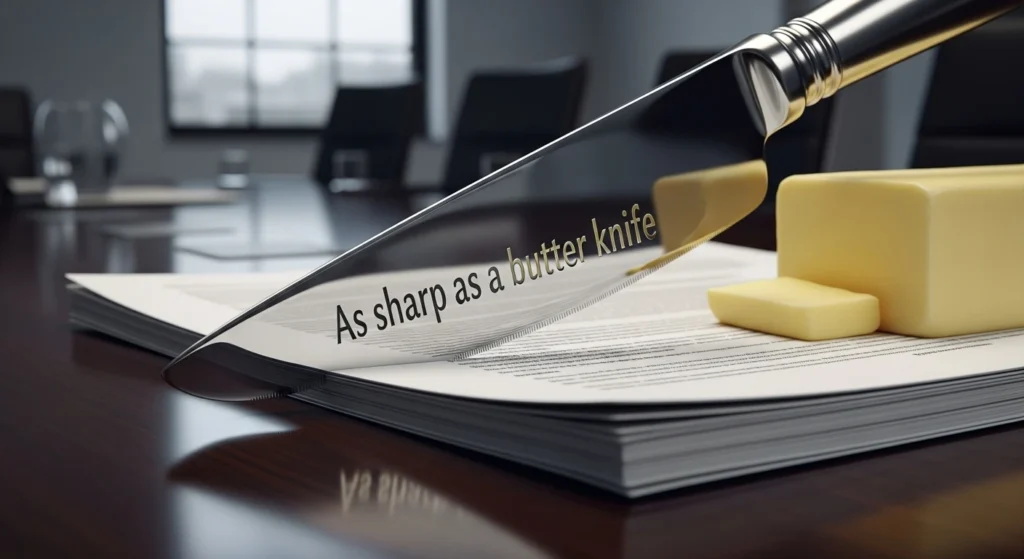
Meaning: Implies dull thinking or low intelligence.
Tone: Sarcastic, humorous.
Best usage context: Comedy, casual remarks.
Example sentences:
- His logic was as sharp as a butter knife.
- The plan sounded clever but was butter-knife sharp.
- That comeback wasn’t sharp at all.
Texting & daily-use examples:
- “My brain isn’t sharp today 🧈”
- “Need coffee ASAP.”
Like a broken compass
Meaning: Shows inability to think clearly or make correct decisions.
Tone: Descriptive, metaphorical.
Best usage context: Narrative writing, leadership discussions.
Example sentences:
- Without guidance, he reasoned like a broken compass.
- The team felt lost with broken-compass leadership.
- Her thoughts pointed everywhere at once.
Texting & daily-use examples:
- “No direction today whatsoever.”
- “Totally lost right now.”
As blind as a bat (mentally)
Meaning: Highlights failure to notice obvious things.
Tone: Blunt but common.
Best usage context: Casual speech, humor.
Example sentences:
- He missed the clear clue, mentally blind as a bat.
- She ignored every warning sign.
- The character couldn’t see the truth at all.
Texting & daily-use examples:
- “How did I miss that?”
- “Completely overlooked it.”
Like talking to a wall
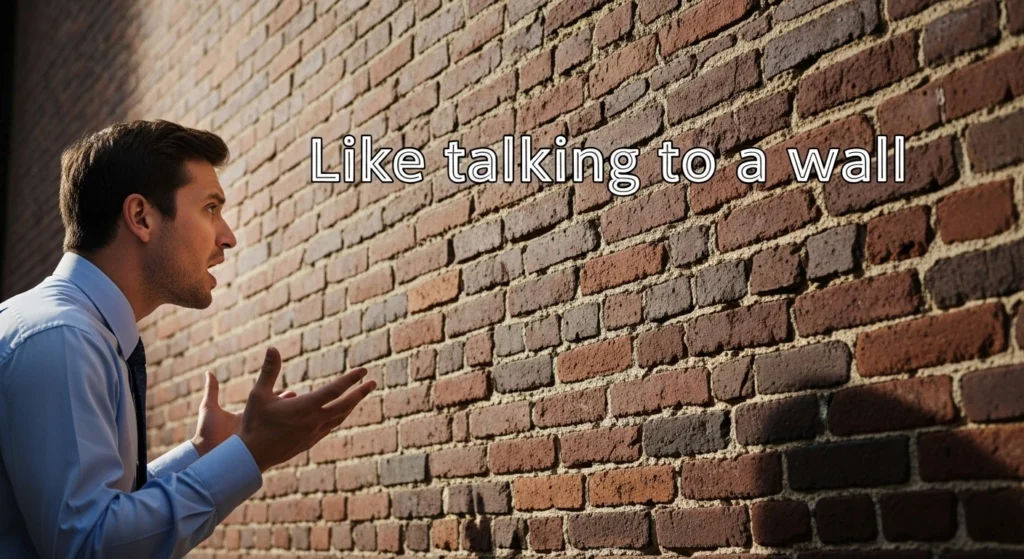
Meaning: Shows lack of understanding or response.
Tone: Frustrated, expressive.
Best usage context: Arguments, emotional writing.
Example sentences:
- Explaining it felt like talking to a wall.
- He nodded but understood nothing.
- The discussion went nowhere.
Texting & daily-use examples:
- “This conversation is going nowhere.”
- “No response at all.”
As foolish as I’ve ever seen
Meaning: A flexible simile expressing strong disapproval.
Tone: Direct, serious.
Best usage context: Reflective writing, narratives.
Example sentences:
- That decision was as foolish as I’ve ever seen.
- The character learned from that foolish moment.
- Mistakes sometimes teach the biggest lessons.
Texting & daily-use examples:
- “That wasn’t my smartest move.”
- “Lesson learned.”
Like a mind on vacation
Meaning: Suggests temporary stupidity or distraction.
Tone: Light, forgiving.
Best usage context: Everyday life, self-reflection.
Example sentences:
- I forgot my wallet—mind on vacation again.
- His brain seemed elsewhere during the meeting.
- She laughed at her absent-minded moment.
Texting & daily-use examples:
- “Brain on vacation today 🏖️”
- “Need rest.”
As confused as a maze without exits
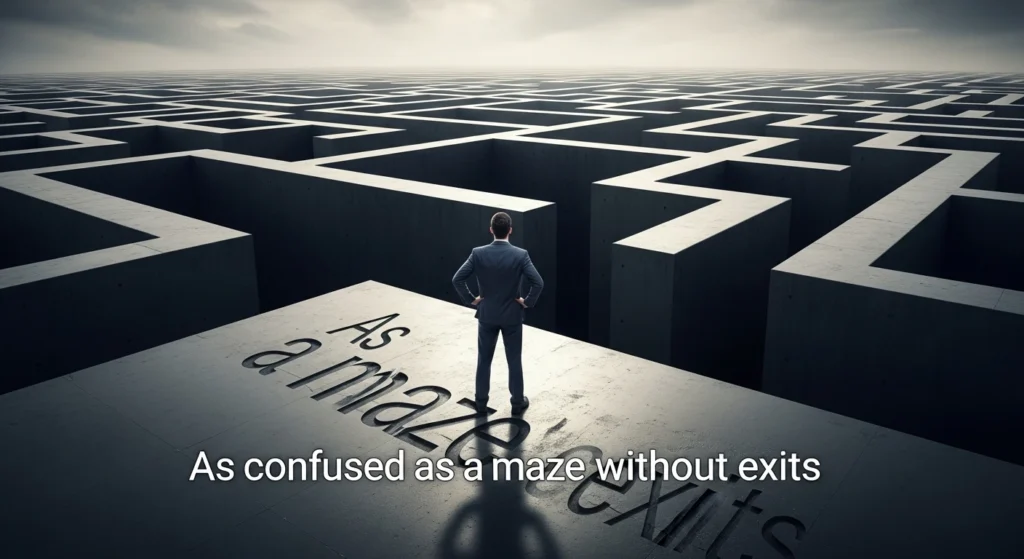
Meaning: Highlights deep confusion or lack of logic.
Tone: Descriptive, thoughtful.
Best usage context: Academic or creative writing.
Example sentences:
- His reasoning felt like a maze without exits.
- The instructions confused everyone.
- The plot reflected mental chaos.
Texting & daily-use examples:
- “Totally lost in this.”
- “Nothing makes sense.”
Like a puzzle missing pieces
Meaning: Suggests incomplete thinking rather than stupidity.
Tone: Gentle, insightful.
Best usage context: Constructive criticism, analysis.
Example sentences:
- His explanation was like a puzzle missing pieces.
- The idea needed more thought.
- She revised her plan carefully.
Texting & daily-use examples:
- “Something’s missing here.”
- “Doesn’t add up.”
As clueless as yesterday’s news
Meaning: Implies outdated or irrelevant thinking.
Tone: Witty, modern.
Best usage context: Commentary, media writing.
Example sentences:
- His views sounded clueless as yesterday’s news.
- The character couldn’t adapt to change.
- Fresh thinking was needed.
Texting & daily-use examples:
- “That info is old.”
- “We’ve moved on.”
Like a brain stuck on pause
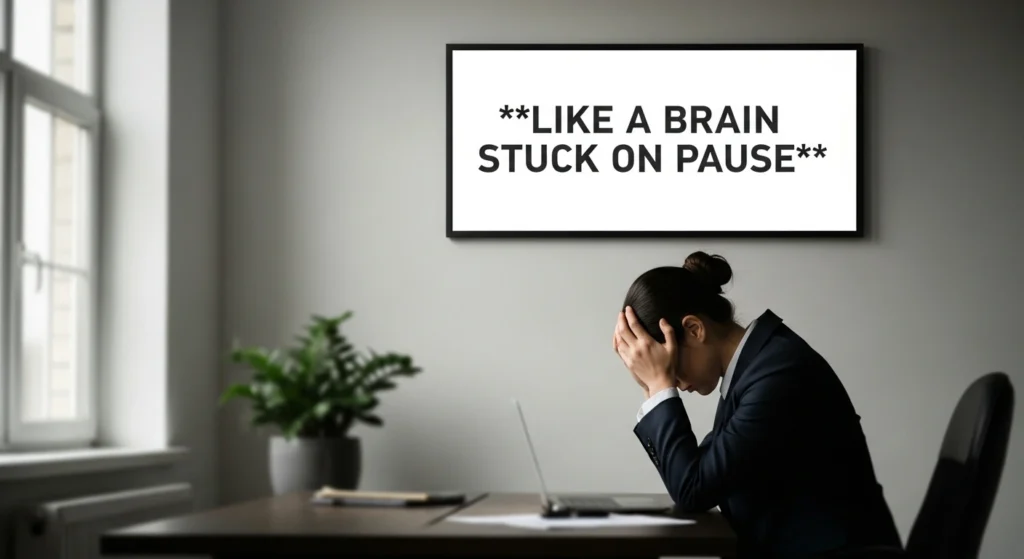
Meaning: Describes momentary mental shutdown.
Tone: Relatable, humorous.
Best usage context: Casual conversation, blogs.
Example sentences:
- I stood there, brain stuck on pause.
- Stress froze his thinking.
- She laughed once clarity returned.
Texting & daily-use examples:
- “Brain froze 😵”
- “Give me a second.”
Conclusion
Similes are not just decorative language—they are powerful tools that help ideas stick, emotions resonate, and stories come alive. When used thoughtfully, similes for stupid can add humor, clarity, and vivid imagery to writing without sounding harsh or robotic. The key lies in choosing the right simile for the right context—whether playful, reflective, descriptive, or gently critical.
By understanding tone, meaning, and usage, you can turn even simple comparisons into engaging expressions that connect with readers and listeners. Whether you’re writing creatively, texting casually, or sharpening your storytelling skills, similes give your language personality and depth. Use them wisely, creatively, and confidently—and let your words truly stand out.