Darkness is more than the absence of light—it is a feeling, a moment, and often a powerful symbol. Similes help us describe darkness in ways that feel vivid, emotional, and easy to imagine. In figurative language, similes create clear comparisons using words like “as” or “like,” allowing readers to instantly picture abstract ideas. They are essential tools in poetry, stories, and everyday writing because they add color, depth, and emotion. Just as trees symbolize strength, growth, resilience, wisdom, and human emotion through their roots and branches, darkness can symbolize fear, rest, mystery, comfort, or transformation. Writers often pair nature imagery—such as forests, night skies, and shadows—with darkness to make descriptions feel alive. By using strong similes for darkness, you can turn simple sentences into powerful images that stay with the reader.
What Is a Simile?
A simile is a figure of speech that compares two different things using the words “like” or “as” to make descriptions clearer and more vivid.
Example: The darkness spread like ink spilled across a white page.
This comparison helps readers instantly visualize how darkness moves and feels.
Darkness like a curtain falling on the world
Meaning: Darkness arriving suddenly and completely.
Usage Insight: Works well in dramatic scenes or endings.
- The sun vanished, and darkness fell like a curtain dropping on the world.
- Fear rose as darkness closed in like a final curtain.
Darkness as thick as midnight fog
Meaning: Extremely dense and hard to see through darkness.
Usage Insight: Ideal for suspense or mystery writing.
- The alley was wrapped in darkness as thick as midnight fog.
- His thoughts felt lost in darkness that clung like heavy mist.
Darkness like ink soaking into paper
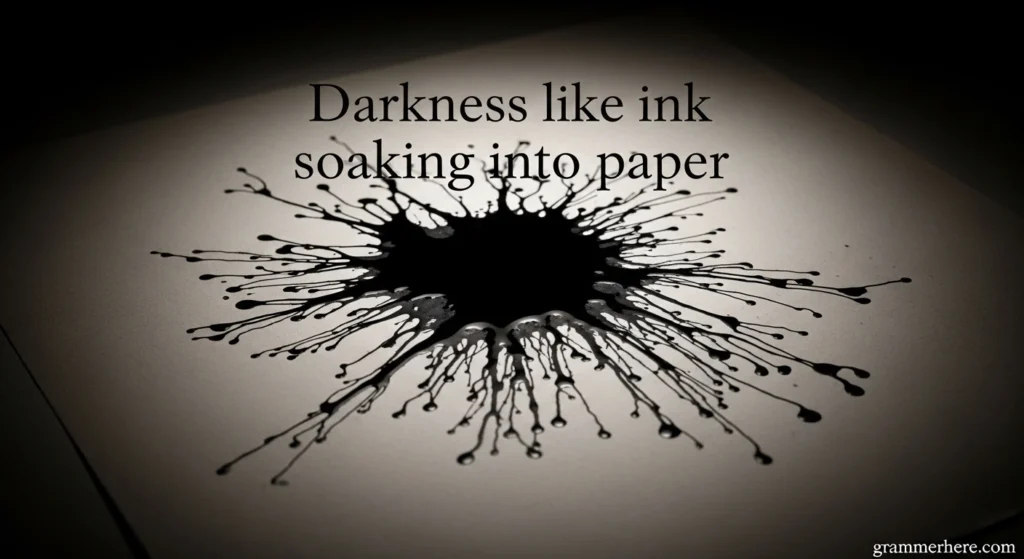
Meaning: Darkness spreading slowly but completely.
Usage Insight: Great for gradual emotional shifts.
- The room dimmed as darkness spread like ink into paper.
- Sadness crept in, darkness soaking through his calm.
Darkness as deep as an endless cave
Meaning: Vast, overwhelming darkness.
Usage Insight: Useful for fear or isolation themes.
- Her eyes reflected darkness as deep as an endless cave.
- Silence lived there, buried in cave-deep darkness.
Darkness like a closed fist
Meaning: Tight, suffocating darkness.
Usage Insight: Effective for tension-filled moments.
- The forest felt trapped in darkness like a closed fist.
- Anxiety tightened as darkness clenched around him.
Darkness as heavy as wet earth
Meaning: Oppressive and emotionally weighty darkness.
Usage Insight: Perfect for sadness or grief.
- Darkness pressed down, heavy as wet earth after rain.
- His chest ached under darkness that felt unbearably heavy.
Darkness like a stolen breath
Meaning: Sudden, shocking darkness.
Usage Insight: Best for unexpected events.
- The lights died, and darkness came like a stolen breath.
- Panic followed darkness that struck without warning.
Darkness as quiet as a sleeping forest
Meaning: Calm, peaceful darkness.
Usage Insight: Works beautifully in reflective writing.
- The night settled in darkness as quiet as a sleeping forest.
- She found comfort in that gentle, forest-quiet darkness.
Darkness like spilled oil on water
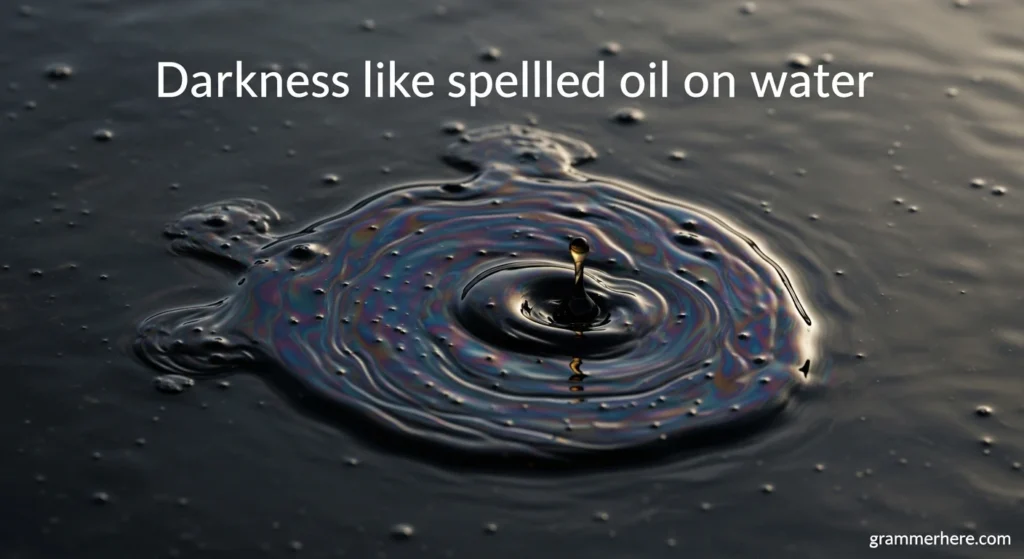
Meaning: Smooth yet unsettling darkness.
Usage Insight: Ideal for eerie or unsettling imagery.
- Darkness slid across the lake like oil on water.
- His smile hid darkness spreading smoothly underneath.
Darkness as endless as the night sky
Meaning: Limitless and vast darkness.
Usage Insight: Good for awe or existential themes.
- The desert lay in darkness as endless as the night sky.
- Her worries felt boundless, like sky-deep darkness.
Darkness like a blanket pulled too tight
Meaning: Smothering, uncomfortable darkness.
Usage Insight: Fits claustrophobic scenes.
- The cave trapped them in darkness like a tight blanket.
- Guilt wrapped him in suffocating darkness.
Darkness as cold as a winter shadow
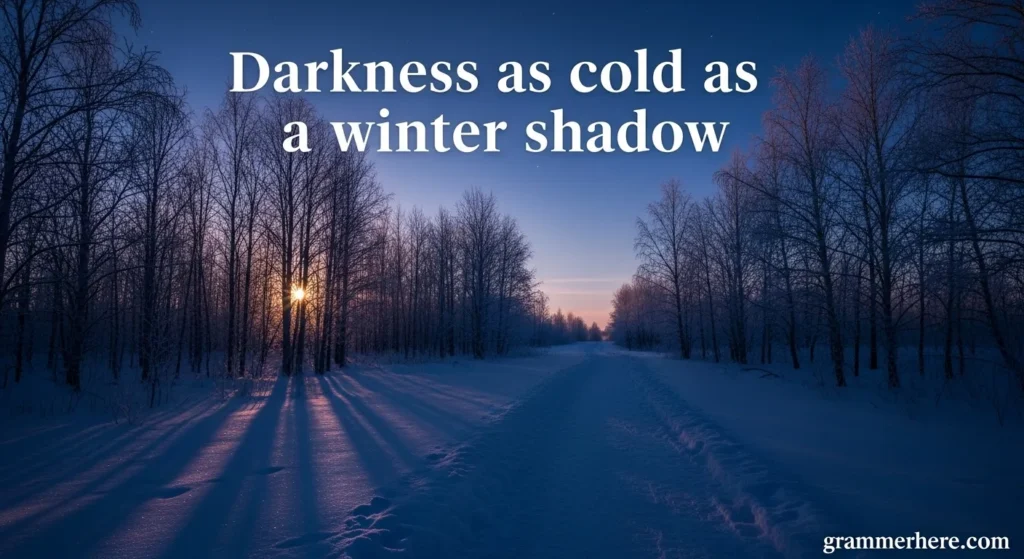
Meaning: Emotionally distant or harsh darkness.
Usage Insight: Effective in lonely or bleak scenes.
- The hallway felt cold with winter-shadow darkness.
- His voice carried the chill of shadowed darkness.
Darkness like a locked door
Meaning: Darkness that blocks understanding or hope.
Usage Insight: Useful for emotional barriers.
- Her past remained darkness like a locked door.
- They stood before answers hidden in darkness.
Darkness as thick as velvet
Meaning: Soft, rich, enveloping darkness.
Usage Insight: Works well in romantic or calm scenes.
- The room glowed softly in velvet-thick darkness.
- Music floated through the smooth darkness.
Darkness like a swallowed scream
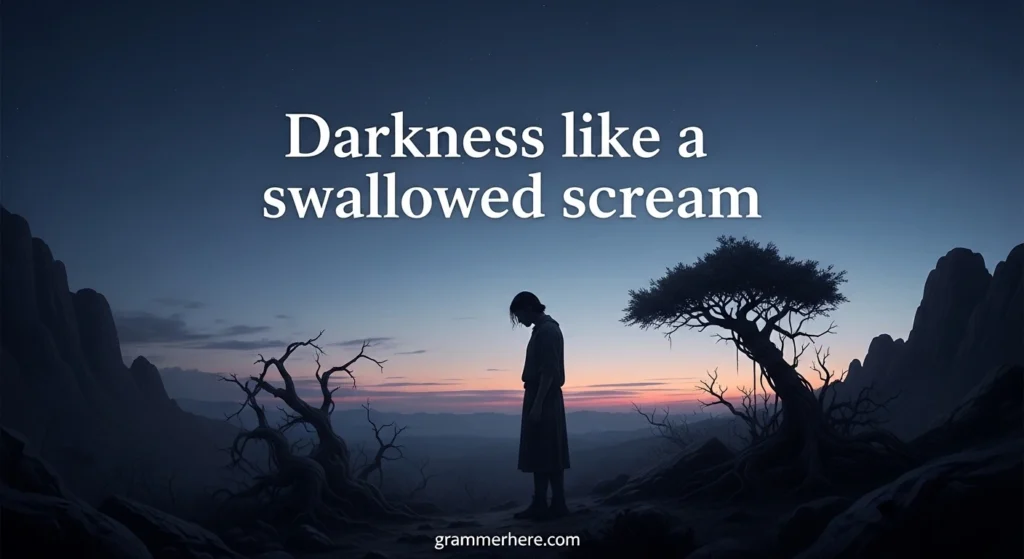
Meaning: Suppressed fear or emotion.
Usage Insight: Ideal for inner conflict.
- His anger lived in darkness like a swallowed scream.
- The night held secrets unspoken in darkness.
Darkness as still as holding breath
Meaning: Tense, waiting darkness.
Usage Insight: Great for suspense.
- The house froze in darkness, still as held breath.
- Time paused inside that waiting darkness.
Darkness like falling ash
Meaning: Gradual, quiet descent of darkness.
Usage Insight: Suitable for endings or loss.
- Evening fell in darkness like soft ash.
- Hope faded as darkness drifted down.
Darkness as wide as the sea at night
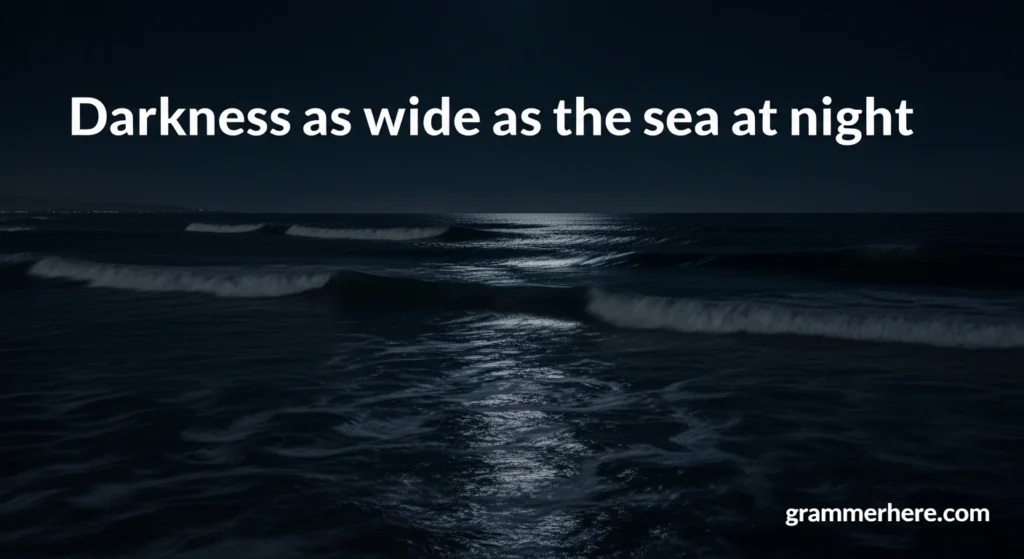
Meaning: Vast and unknowable darkness.
Usage Insight: Perfect for adventure or fear.
- The horizon stretched in sea-wide darkness.
- He felt small beneath that endless dark sea.
Darkness like a thief in soft shoes
Meaning: Sneaky, unnoticed darkness.
Usage Insight: Works for subtle mood shifts.
- Darkness arrived like a thief in soft shoes.
- Doubt crept in quietly, wrapped in darkness.
Darkness as deep as unspoken sorrow
Meaning: Emotional, painful darkness.
Usage Insight: Strong for character development.
- Her silence held darkness as deep as sorrow.
- He carried grief buried in deep darkness.
Darkness like a shuttered window
Meaning: Closed-off, hidden darkness.
Usage Insight: Fits secrecy or denial.
- His face became darkness like a shuttered window.
- Truth stayed hidden behind darkness.
Darkness as thick as forest roots
Meaning: Tangled, natural darkness.
Usage Insight: Connects well with nature similes.
- The woods lay in root-thick darkness.
- Fear twisted through him like forest-dark roots.
Darkness like a shadow without a source
Meaning: Mysterious, unexplained darkness.
Usage Insight: Excellent for supernatural writing.
- Something followed them like a source-less shadow.
- His fear felt real yet unexplained.
Darkness as silent as falling snow
Meaning: Gentle, peaceful darkness.
Usage Insight: Best for calm scenes.
- The town slept in snow-silent darkness.
- Comfort lived in that quiet dark.
Darkness like a tide pulling back light
Meaning: Gradual loss of brightness or hope.
Usage Insight: Useful for transitions.
- Evening came as darkness pulled light away.
- Joy receded under the dark tide.
Darkness as smooth as polished stone
Meaning: Calm, controlled darkness.
Usage Insight: Works for composed characters.
- His voice stayed steady in stone-smooth darkness.
- The room felt cool and calm.
Darkness like a sealed envelope
Meaning: Containing secrets or truths.
Usage Insight: Ideal for mystery themes.
- Her letter hid darkness like a sealed envelope.
- Answers waited inside the dark.
Darkness as long as a sleepless night
Meaning: Endless-feeling darkness.
Usage Insight: Good for emotional exhaustion.
- Grief stretched as long as a sleepless night.
- He waited through endless darkness.
Darkness like a bruise on the sky
Meaning: Visual, emotional darkness.
Usage Insight: Great for poetic imagery.
- Storm clouds formed darkness like a sky bruise.
- The sunset faded beneath dark stains.
Darkness as tangled as thorny vines
Meaning: Confusing, messy darkness.
Usage Insight: Effective for inner struggles.
- Thoughts twisted in vine-like darkness.
- Fear trapped him in tangled dark.
Darkness like a mouth swallowing sound
Meaning: Complete silence and darkness.
Usage Insight: Perfect for horror or suspense.
- The tunnel swallowed sound and light alike.
- Words vanished into darkness.
Darkness as patient as waiting roots
Meaning: Slow, inevitable darkness.
Usage Insight: Symbolic and reflective writing.
- Darkness waited patiently, like roots underground.
- Change grew quietly in the dark.
Darkness like the pause before thunder
Meaning: Tense, expectant darkness.
Usage Insight: Ideal for climactic moments.
- The air thickened with darkness before thunder.
- Everyone waited in charged silence.
How to Use Similes Effectively in Writing
- Match mood and meaning: Choose similes that fit the emotion—fear, peace, mystery, or sorrow.
- Use nature similes wisely: Forests, trees, night skies, and shadows feel natural and relatable.
- Avoid overloading sentences: One strong simile is often better than many weak ones.
- Vary your imagery: Mix visual, emotional, and sensory comparisons.
- Adapt for form: Use softer similes for poems and songs, clearer ones for essays and stories.
FAQs
What are similes for darkness? They are comparisons using like or as to describe darkness vividly and clearly.
How are similes different from metaphors? Similes use like or as, while metaphors state the comparison directly.
Are similes used in literature? Yes, similes in literature are common for building imagery, mood, and symbolism.
Can similes be used in academic writing? Yes, when used carefully, similes can clarify ideas and improve engagement.
Why use nature similes for darkness? Nature similes feel familiar and emotionally powerful, making descriptions more vivid.
Conclusion
Similes for darkness transform vague ideas into clear, emotional images that readers can see and feel. By using thoughtful comparisons drawn from nature, emotion, and everyday experiences, writers add clarity, depth, and beauty to their language. Whether in poetry, stories, essays, or songs, well-chosen similes help darkness speak—sometimes softly, sometimes powerfully. Mastering these comparisons allows your writing to grow stronger, more expressive, and more memorable, just like deep roots growing quietly beneath the surface.