Similes are one of the most beautiful tools in language, helping writers turn simple ideas into vivid images. By comparing one thing to another using words like “as” or “like,” similes make descriptions clearer, more emotional, and more memorable. In figurative language, they act as bridges between the familiar and the imaginative, allowing readers to see and feel what the writer means. The sky, in particular, has inspired writers for centuries because it reflects mood, time, freedom, hope, and mystery. From calm blue mornings to stormy gray evenings, the sky mirrors human emotions in powerful ways. That’s why similes for sky are so common in poetry, stories, and literature. In this guide, you’ll explore creative, meaningful comparisons that bring the sky to life through language.
What Is a Simile?
A simile is a figure of speech that compares two different things using the words “like” or “as” to create a clear image or feeling.
Example: The sky glowed like a polished sapphire at dawn.
This comparison helps the reader imagine the sky’s color and brilliance more vividly.
1. The sky like a vast blue ocean
Meaning: Suggests endlessness and calm.
Usage Insight: Works well in peaceful or reflective scenes.
Examples:
- The sky stretched like a vast blue ocean above the quiet town.
- She lay on the grass, staring at the sky like a vast blue ocean without shores.
2. The sky as clear as polished glass
Meaning: Emphasizes clarity and brightness.
Usage Insight: Ideal for fresh mornings or hopeful moments.
Examples:
- The sky was as clear as polished glass after the rain.
- Birds flew freely across a sky as clear as polished glass.
3. The sky like a painted canvas
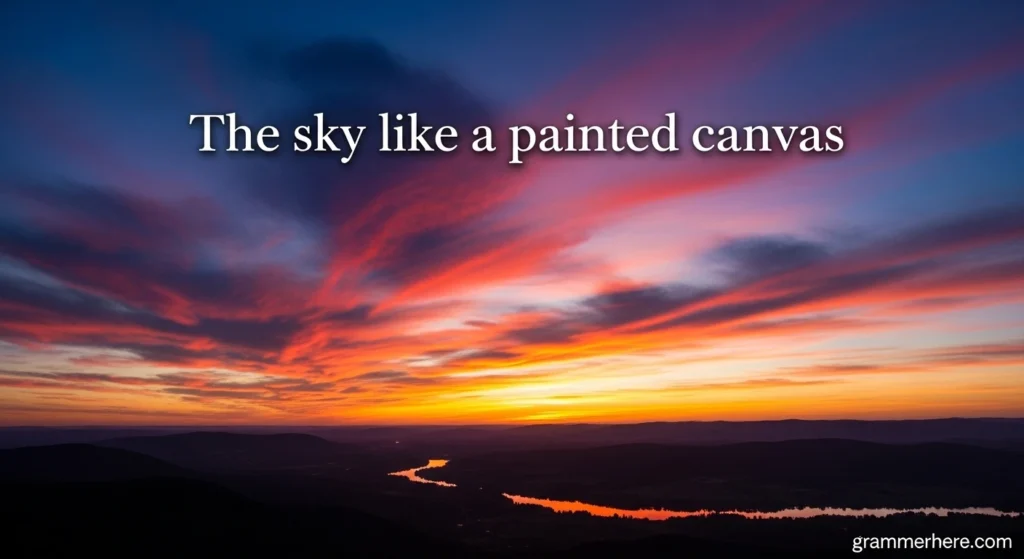
Meaning: Highlights color and artistic beauty.
Usage Insight: Perfect for sunsets and sunrises.
Examples:
- At dusk, the sky looked like a painted canvas of gold and pink.
- Clouds drifted slowly across the sky like a painted canvas in motion.
4. The sky as wide as freedom
Meaning: Symbolizes openness and possibility.
Usage Insight: Strong in emotional or inspirational writing.
Examples:
- Standing alone, he felt the sky as wide as freedom above him.
- Her dreams rose into a sky as wide as freedom itself.
5. The sky like a silver mirror
Meaning: Reflects light and calmness.
Usage Insight: Works well with moonlight or quiet nights.
Examples:
- The moon turned the sky into a silver mirror.
- Stars shimmered softly in a sky like a silver mirror.
6. The sky as soft as silk
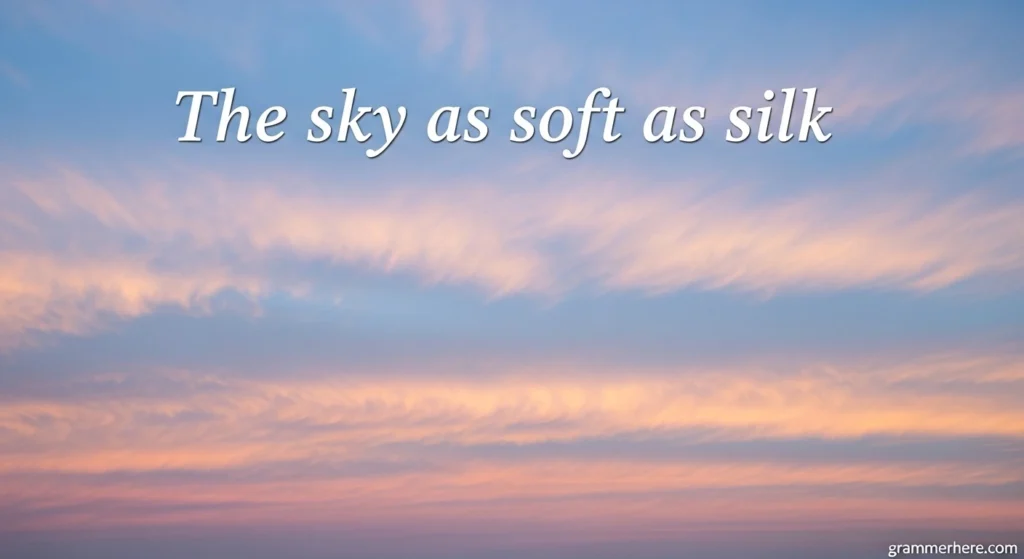
Meaning: Suggests gentleness and smooth beauty.
Usage Insight: Best for romantic or peaceful descriptions.
Examples:
- The evening sky felt as soft as silk against the fading sun.
- Clouds floated through a sky as soft as silk.
7. The sky like a burning flame
Meaning: Conveys intensity and passion.
Usage Insight: Effective for dramatic sunsets or strong emotion.
Examples:
- The sunset set the sky ablaze like a burning flame.
- Red clouds streaked the sky like a burning flame.
8. The sky as endless as a dream
Meaning: Represents imagination and hope.
Usage Insight: Ideal for poetic or emotional scenes.
Examples:
- Her thoughts drifted under a sky as endless as a dream.
- The traveler walked forward beneath a sky as endless as a dream.
9. The sky like a storyteller’s book

Meaning: Suggests change and narrative.
Usage Insight: Great for reflective writing.
Examples:
- Each cloud turned the sky into a storyteller’s book.
- He read meaning in the sky like a storyteller’s book.
10. The sky as calm as a sleeping child
Meaning: Expresses peace and stillness.
Usage Insight: Perfect for quiet scenes.
Examples:
- At dawn, the sky was as calm as a sleeping child.
- The lake reflected a sky as calm as a sleeping child.
11. The sky like a ceiling of stars
Meaning: Highlights wonder and beauty.
Usage Insight: Best for nighttime imagery.
Examples:
- The desert night revealed a sky like a ceiling of stars.
- She felt small beneath a sky like a ceiling of stars.
12. The sky as heavy as a sigh
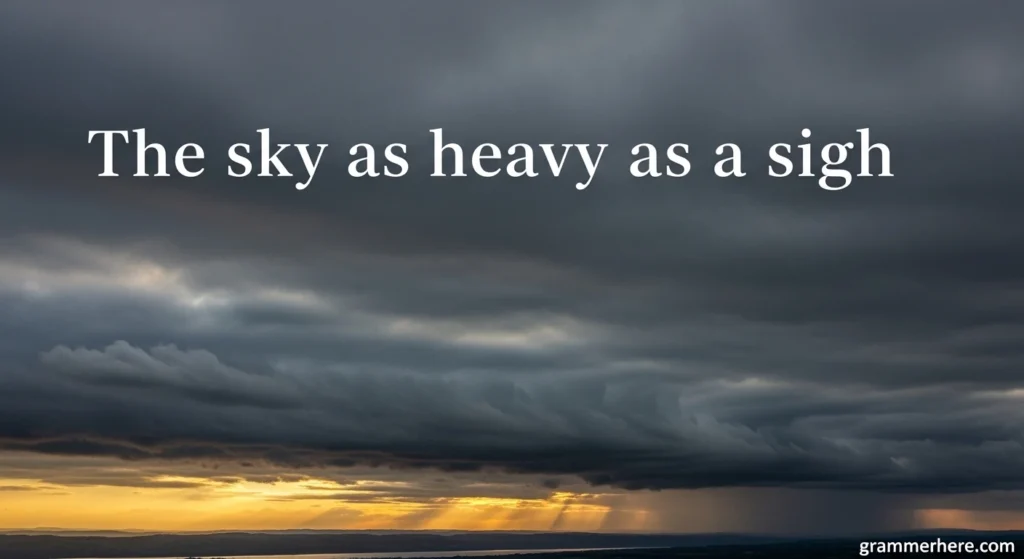
Meaning: Shows sadness or tension.
Usage Insight: Works well before storms or emotional scenes.
Examples:
- Before the rain, the sky hung as heavy as a sigh.
- The mood darkened with a sky as heavy as a sigh.
13. The sky like a crown of light
Meaning: Suggests brilliance and majesty.
Usage Insight: Ideal for sunrise imagery.
Examples:
- The sun lifted the sky like a crown of light.
- Mountains stood proud beneath a sky like a crown of light.
14. The sky as open as an invitation
Meaning: Represents welcome and possibility.
Usage Insight: Great for hopeful narratives.
Examples:
- The journey began under a sky as open as an invitation.
- Dreams felt closer beneath a sky as open as an invitation.
15. The sky like a restless sea
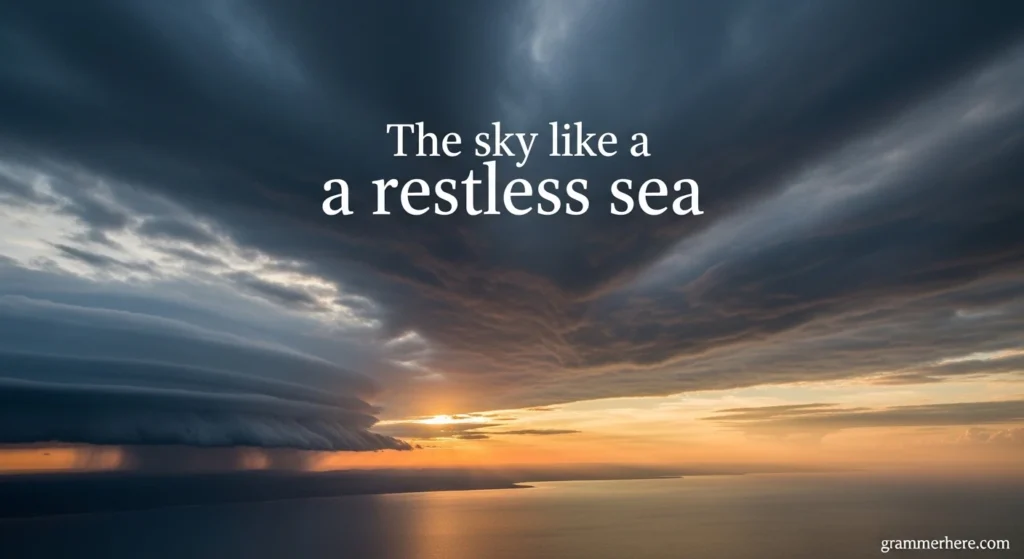
Meaning: Conveys movement and change.
Usage Insight: Useful during windy or stormy scenes.
Examples:
- Clouds rolled across the sky like a restless sea.
- The sky churned like a restless sea before the storm.
16. The sky as bright as new hope
Meaning: Symbolizes optimism.
Usage Insight: Ideal for uplifting moments.
Examples:
- Morning broke with a sky as bright as new hope.
- She smiled beneath a sky as bright as new hope.
17. The sky like a gentle blanket
Meaning: Suggests comfort and protection.
Usage Insight: Works well in calm, intimate scenes.
Examples:
- Night wrapped the land in a sky like a gentle blanket.
- The village slept beneath a sky like a gentle blanket.
18. The sky as fragile as glass

Meaning: Implies delicacy and quiet tension.
Usage Insight: Useful for sensitive moods.
Examples:
- The pale sky looked as fragile as glass.
- Silence hung under a sky as fragile as glass.
19. The sky like a rolling painting
Meaning: Emphasizes movement and color.
Usage Insight: Best for dynamic weather scenes.
Examples:
- Clouds turned the sky into a rolling painting.
- The afternoon sky shifted like a rolling painting.
20. The sky as deep as memory
Meaning: Suggests reflection and emotion.
Usage Insight: Strong in introspective writing.
Examples:
- He stared into a sky as deep as memory.
- The past echoed beneath a sky as deep as memory.
21. The sky like a whispering secret
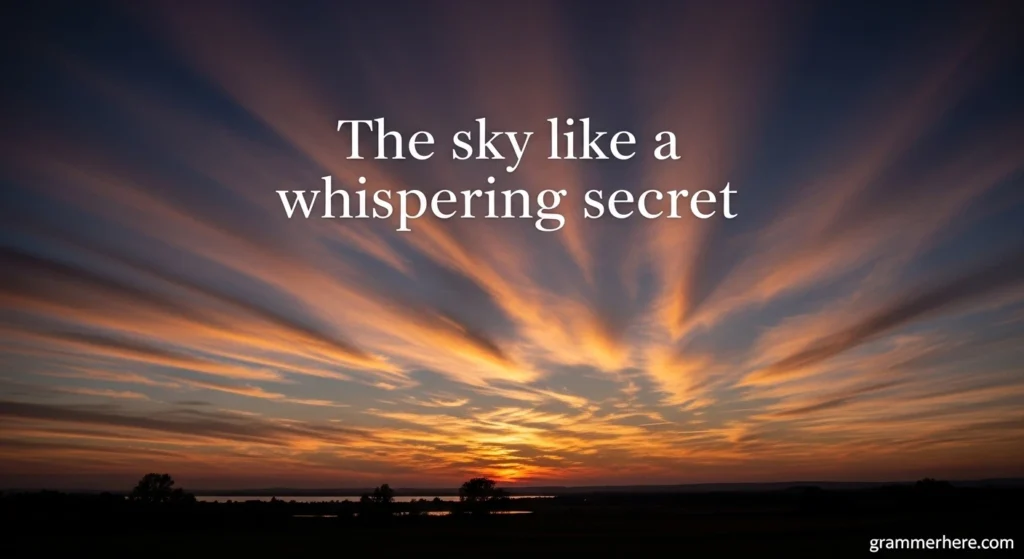
Meaning: Creates mystery.
Usage Insight: Ideal for quiet, suspenseful moments.
Examples:
- The twilight sky felt like a whispering secret.
- Stars blinked softly in a sky like a whispering secret.
22. The sky as pale as a dream
Meaning: Conveys softness and imagination.
Usage Insight: Works well for early mornings.
Examples:
- Dawn arrived with a sky as pale as a dream.
- Fog faded beneath a sky as pale as a dream.
23. The sky like a watchful eye
Meaning: Suggests awareness or fate.
Usage Insight: Effective in symbolic writing.
Examples:
- The sky watched silently like a watchful eye.
- He felt judged by a sky like a watchful eye.
24. The sky as loud as thunder
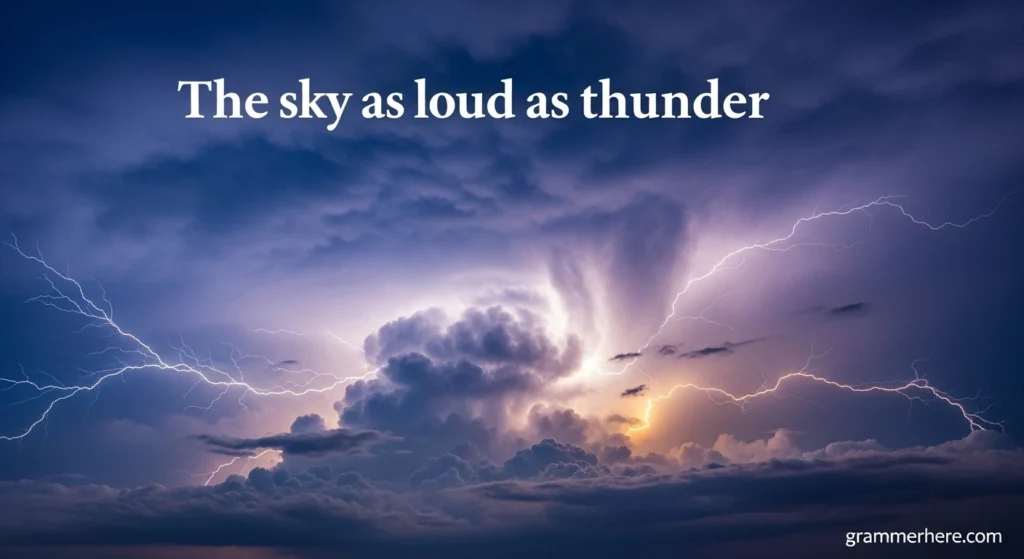
Meaning: Shows power and drama.
Usage Insight: Best during storms.
Examples:
- The storm made the sky as loud as thunder.
- Fear rose with a sky as loud as thunder.
25. The sky like a soft blue sigh
Meaning: Expresses relief and calm.
Usage Insight: Perfect for peaceful endings.
Examples:
- Evening settled into a sky like a soft blue sigh.
- The day ended beneath a sky like a soft blue sigh.
26. The sky as golden as promise
Meaning: Symbolizes opportunity.
Usage Insight: Works well in hopeful scenes.
Examples:
- The sunset turned the sky as golden as promise.
- New beginnings glowed in a sky as golden as promise.
27. The sky like drifting music
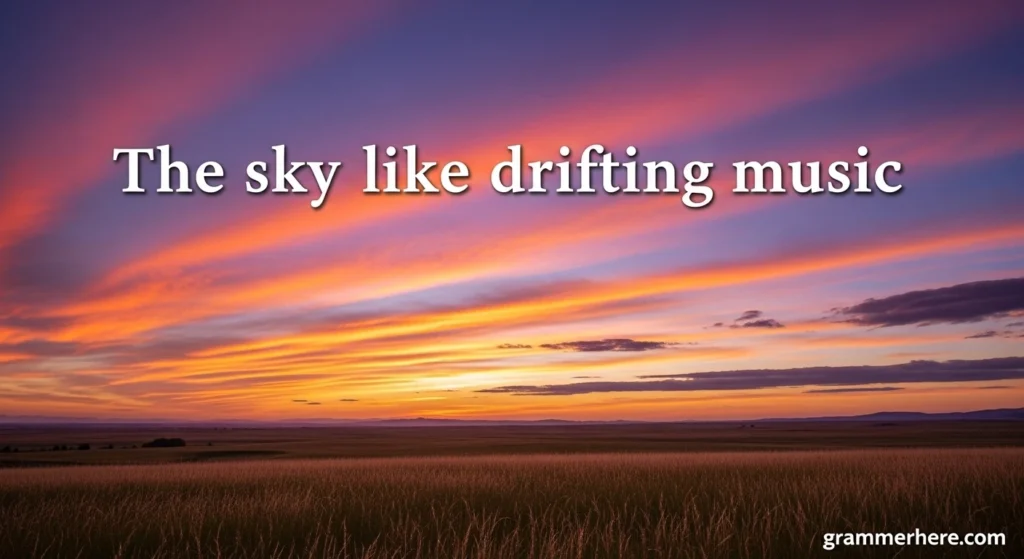
Meaning: Suggests rhythm and calm.
Usage Insight: Ideal for poetic prose.
Examples:
- Clouds moved through the sky like drifting music.
- The sky felt alive like drifting music above them.
28. The sky as cold as steel
Meaning: Conveys harshness.
Usage Insight: Useful for bleak or winter scenes.
Examples:
- Winter left the sky as cold as steel.
- He shivered beneath a sky as cold as steel.
29. The sky like a glowing doorway
Meaning: Represents transition or hope.
Usage Insight: Great for symbolic moments.
Examples:
- Sunset opened the sky like a glowing doorway.
- She stepped forward under a sky like a glowing doorway.
30. The sky as restless as thought
Meaning: Suggests movement and unease.
Usage Insight: Works well in emotional scenes.
Examples:
- The sky shifted as restless as thought.
- Anxiety rose beneath a sky as restless as thought.
31. The sky like a field of light
Meaning: Highlights brightness and openness.
Usage Insight: Ideal for daytime scenes.
Examples:
- Birds crossed a sky like a field of light.
- The valley opened beneath a sky like a field of light.
32. The sky as silent as prayer
Meaning: Expresses stillness and reverence.
Usage Insight: Strong in reflective writing.
Examples:
- The night sky was as silent as prayer.
- He paused beneath a sky as silent as prayer.
33. The sky like a slow-burning fire
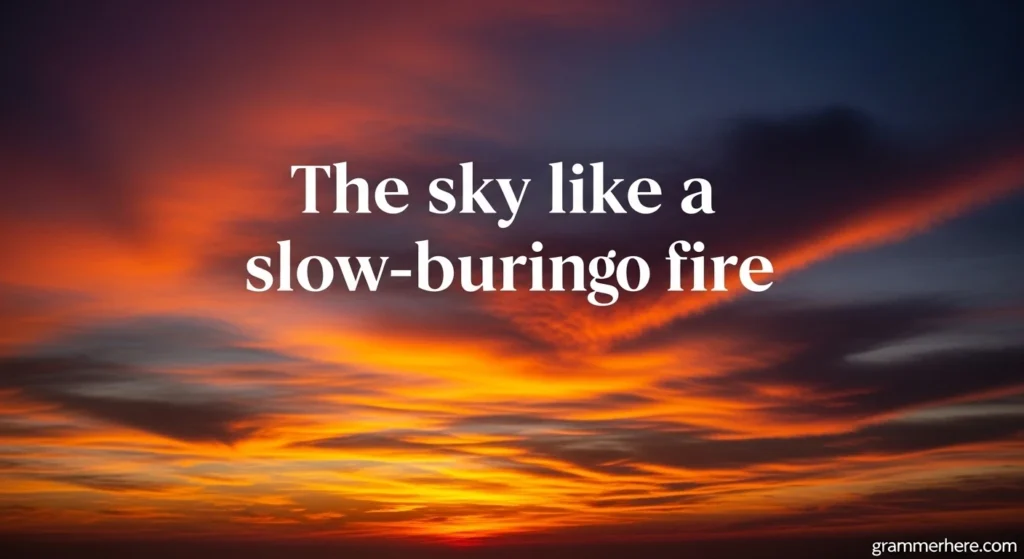
Meaning: Suggests gradual intensity.
Usage Insight: Perfect for sunsets.
Examples:
- Dusk turned the sky into a slow-burning fire.
- Colors spread across the sky like a slow-burning fire.
34. The sky as light as a thought
Meaning: Conveys openness and ease.
Usage Insight: Ideal for uplifting scenes.
Examples:
- Clouds floated in a sky as light as a thought.
- Worries faded beneath a sky as light as a thought.
35. The sky like an endless road
Meaning: Symbolizes journey and future.
Usage Insight: Works well in travel or life metaphors.
Examples:
- He looked ahead at a sky like an endless road.
- Dreams stretched upward into a sky like an endless road.
How to Use Similes Effectively in Writing
When using similes, clarity is more important than complexity. Choose comparisons your readers can easily imagine. In poems and songs, similes add rhythm and emotion. In stories, they help set mood and atmosphere. For essays or academic writing, use similes sparingly to explain ideas clearly without distracting from the main point. Always match the simile to the tone—gentle for calm scenes, bold for dramatic ones.
FAQs
What are similes for sky? They are comparisons using like or as to describe the sky in vivid, imaginative ways.
What is the difference between a simile and a metaphor? A simile uses like or as, while a metaphor states the comparison directly.
Are similes used in literature? Yes, similes are widely used in poetry, novels, and classic literature to enhance imagery.
Can similes be used in academic writing? Yes, when used carefully, they help explain complex ideas clearly.
Why are sky similes so popular? Because the sky reflects emotion, mood, and change, making it perfect for figurative language.
Conclusion
Similes for sky transform ordinary descriptions into powerful images filled with emotion and meaning. By comparing the sky to familiar sights and feelings, writers add clarity, beauty, and depth to their language. Whether in poetry, storytelling, or thoughtful essays, these comparisons help readers see the world more vividly. When used thoughtfully, sky similes enrich writing and create lasting impressions that linger long after the final sentence.