
Similes are like magical windows in language—they allow us to see ordinary things in extraordinary ways. For kids, learning similes is not just about memorizing figures of speech; it’s about understanding the world more vividly. A simile is a comparison that uses “like” or “as” to connect two seemingly different things, helping us paint pictures with words. They make writing fun, expressive, and memorable. Nature, especially trees, provides perfect inspiration for similes because trees symbolize strength, growth, resilience, wisdom, and emotions that resonate with humans. By practicing similes, children can enhance their creativity, improve descriptive writing, and develop a deeper appreciation for language. This article offers a rich, engaging simile practice for kids, filled with examples, tips, and inspiration to help young learners master this essential element of figurative language.
What Is a Simile?
A simile is a figure of speech that compares two different things using the words “like” or “as” to highlight a shared quality. Similes make writing more vivid and help readers imagine experiences more clearly.
Example: Her smile was as bright as the morning sun.
Here, the brightness of her smile is compared to the sun, helping the reader visualize its warmth and cheerfulnes
1. As strong as an oak tree
Meaning: Very strong and resilient.
Usage: Use when describing physical or emotional strength.
Examples:
- The athlete’s arms were as strong as an oak tree after months of training.
- Her determination was as strong as an oak tree, weathering every challenge.
2. As quiet as falling leaves
Meaning: Very silent or soft.
Usage: Perfect for calm, peaceful, or secretive moments.
Examples:
- The baby slept as quiet as falling leaves in autumn.
- She tiptoed into the room as quiet as falling leaves.
3. As wise as a willow
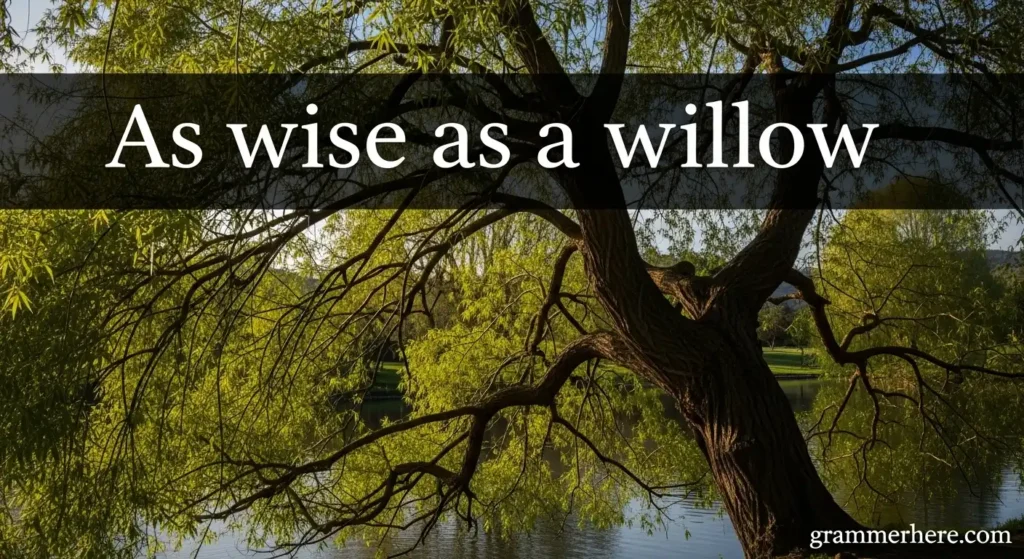
Meaning: Very intelligent or insightful.
Usage: Use to describe someone with experience or thoughtful advice.
Examples:
- The old mentor was as wise as a willow.
- Grandpa’s stories were as wise as a willow, full of life lessons.
4. As stubborn as a bramble
Meaning: Very determined or hard to persuade.
Usage: Good for describing persistence or obstinacy.
Examples:
- He was as stubborn as a bramble, refusing to give up.
- The child clung to her plan as stubborn as a bramble.
5. As free as a bird in spring
Meaning: Completely free and unburdened.
Usage: Use for moments of liberation or joy.
Examples:
- After finishing her exams, she felt as free as a bird in spring.
- He ran through the meadow as free as a bird in spring.
6. As bright as new leaves
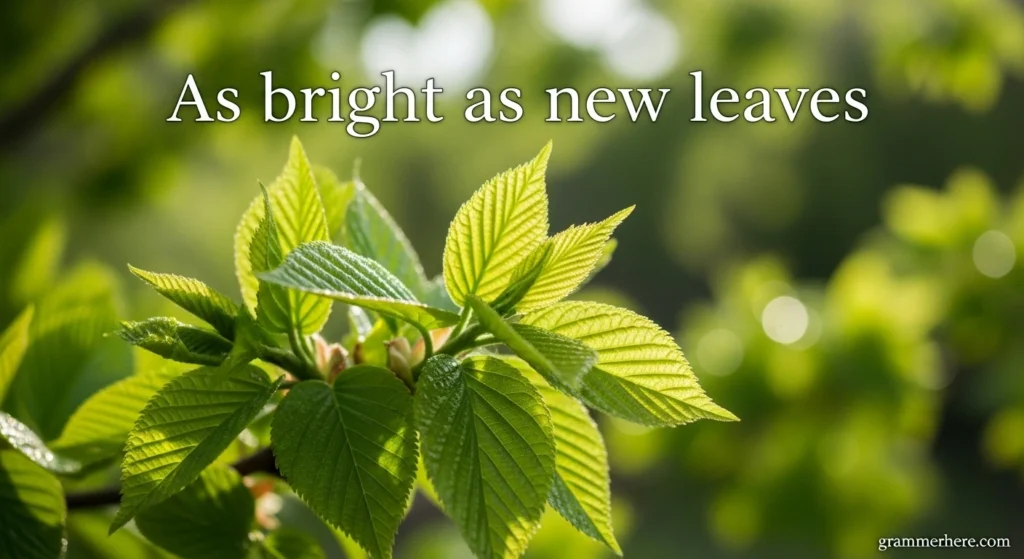
Meaning: Very fresh, vibrant, or cheerful.
Usage: Works for visual descriptions or uplifting moods.
Examples:
- Her dress was as bright as new leaves on a sunny day.
- The classroom was as bright as new leaves, filled with laughter.
7. As patient as a pine
Meaning: Very patient and enduring.
Usage: Use when describing long-suffering or calm perseverance.
Examples:
- She waited for her turn as patient as a pine.
- The gardener tended the flowers as patient as a pine.
8. As hidden as tree roots
Meaning: Difficult to find or secretive.
Usage: Ideal for mysterious or secretive situations.
Examples:
- The treasure was as hidden as tree roots beneath the soil.
- His feelings were as hidden as tree roots, deep and unseen.
9. As flexible as a young branch
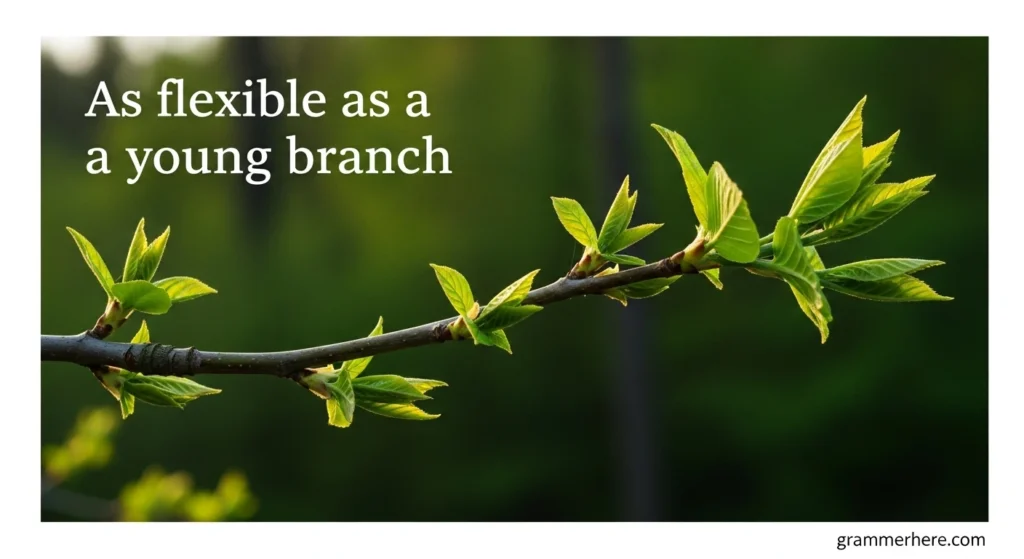
Meaning: Able to adapt easily.
Usage: Good for describing adaptability or resilience.
Examples:
- The gymnast was as flexible as a young branch.
- Her schedule was as flexible as a young branch in the wind.
10. As tall as a redwood
Meaning: Very tall or impressive.
Usage: Great for literal or figurative height.
Examples:
- The basketball player was as tall as a redwood.
- His ambitions were as tall as a redwood, reaching for the sky.
11. As gentle as a sapling
Meaning: Very gentle or soft.
Usage: Perfect for tender actions or kind behavior.
Examples:
- The nurse’s touch was as gentle as a sapling.
- She spoke to the kitten as gentle as a sapling swaying in the wind.
12. As rough as bark
Meaning: Coarse or uneven.
Usage: Can describe texture or personality.
Examples:
- His hands were as rough as bark from years of work.
- The wall felt as rough as bark under her fingertips.
13. As colorful as autumn leaves
Meaning: Very vibrant or diverse.
Usage: Great for lively descriptions.
Examples:
- Her scarf was as colorful as autumn leaves.
- The festival decorations were as colorful as autumn leaves.
14. As rooted as an old tree
Meaning: Firmly established or loyal.
Usage: Perfect for stability or commitment.
Examples:
- Her values were as rooted as an old tree.
- The town traditions were as rooted as an old tree, lasting generations.
15. As fleeting as morning dew
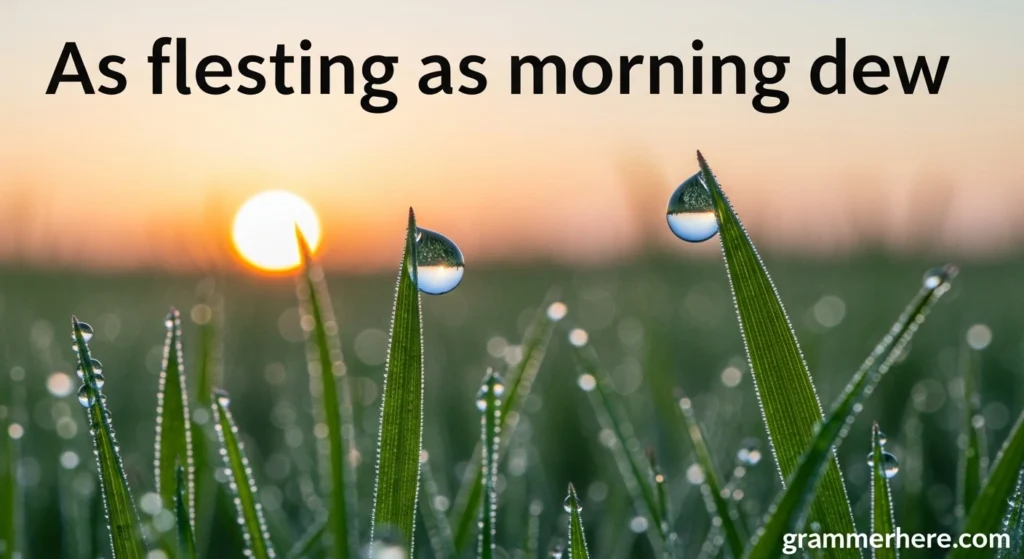
Meaning: Short-lived or temporary.
Usage: Use when describing delicate, passing moments.
Examples:
- Happiness can be as fleeting as morning dew.
- The rainbow disappeared as fleeting as morning dew.
16. As protective as a tree canopy
Meaning: Guarding or sheltering others.
Usage: Use when someone shields or supports loved ones.
Examples:
- Mom was as protective as a tree canopy over the garden.
- The dog acted as protective as a tree canopy for its puppies.
17. As silent as a forest at night
Meaning: Completely quiet.
Usage: Perfect for serene or suspenseful settings.
Examples:
- The library was as silent as a forest at night.
- He crept as silent as a forest at night.
18. As steadfast as an ancient oak
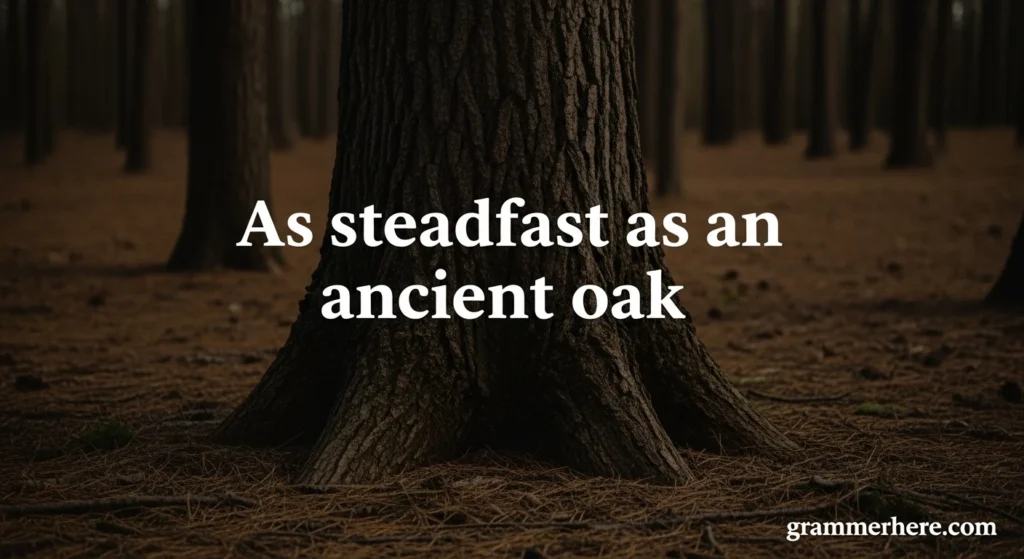
Meaning: Very loyal or unwavering.
Usage: Ideal for describing trustworthiness or endurance.
Examples:
- She remained as steadfast as an ancient oak through difficulties.
- His friendship was as steadfast as an ancient oak.
19. As warm as sunlight through leaves
Meaning: Comforting or pleasant.
Usage: Use to evoke warmth or happiness.
Examples:
- Her hug was as warm as sunlight through leaves.
- The room felt as warm as sunlight through leaves.
20. As twisting as ivy
Meaning: Complicated or winding.
Usage: Good for paths, stories, or situations.
Examples:
- The plot was as twisting as ivy climbing a wall.
- The river moved as twisting as ivy through the forest.
21. As mysterious as a forest fog
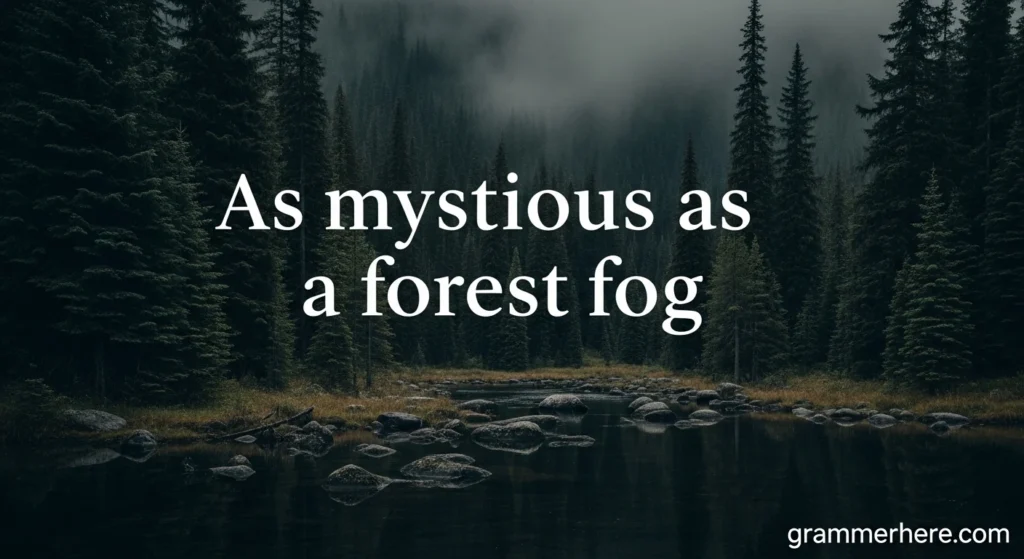
Meaning: Hard to understand or hidden.
Usage: Perfect for suspense or curiosity.
Examples:
- The stranger’s smile was as mysterious as a forest fog.
- The story unfolded as mysterious as a forest fog.
22. As lively as a spring orchard
Meaning: Full of life or energy.
Usage: Great for cheerful, vibrant scenes.
Examples:
- The playground was as lively as a spring orchard.
- Her laugh was as lively as a spring orchard.
23. As enduring as pine needles
Meaning: Long-lasting or persistent.
Usage: Use for durability or reliability.
Examples:
- The friendship was as enduring as pine needles.
- His commitment was as enduring as pine needles on the forest floor.
24. As playful as squirrels in autumn
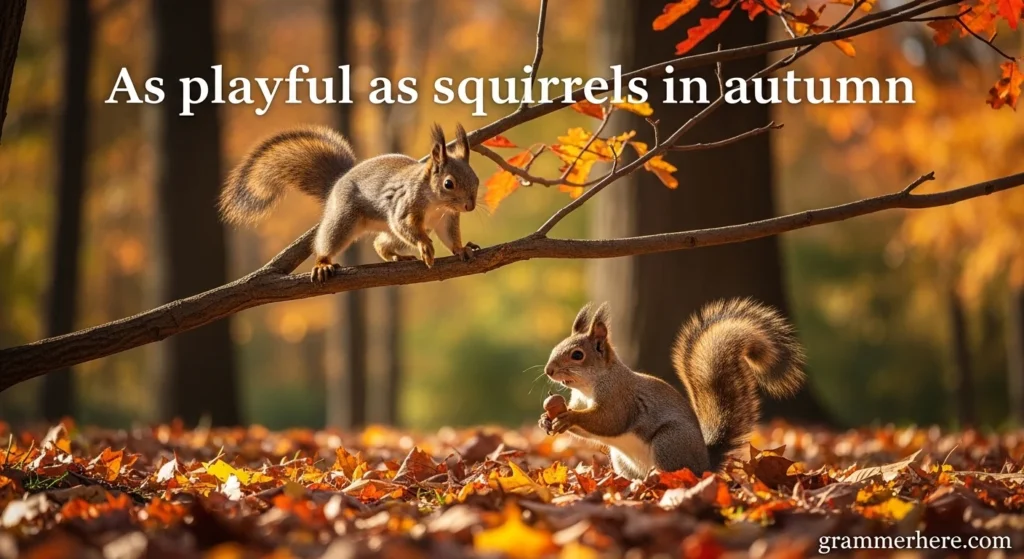
Meaning: Very playful and energetic.
Usage: Ideal for fun, animated behavior.
Examples:
- The children were as playful as squirrels in autumn.
- Her puppy was as playful as squirrels in autumn.
25. As tangled as forest vines
Meaning: Complicated or confusing.
Usage: Good for describing problems or emotions.
Examples:
- The debate became as tangled as forest vines.
- His thoughts were as tangled as forest vines.
26. As bright as spring blossoms
Meaning: Cheerful or vivid.
Usage: Perfect for uplifting descriptions.
Examples:
- Her artwork was as bright as spring blossoms.
- The morning felt as bright as spring blossoms.
27. As hidden as a seed underground
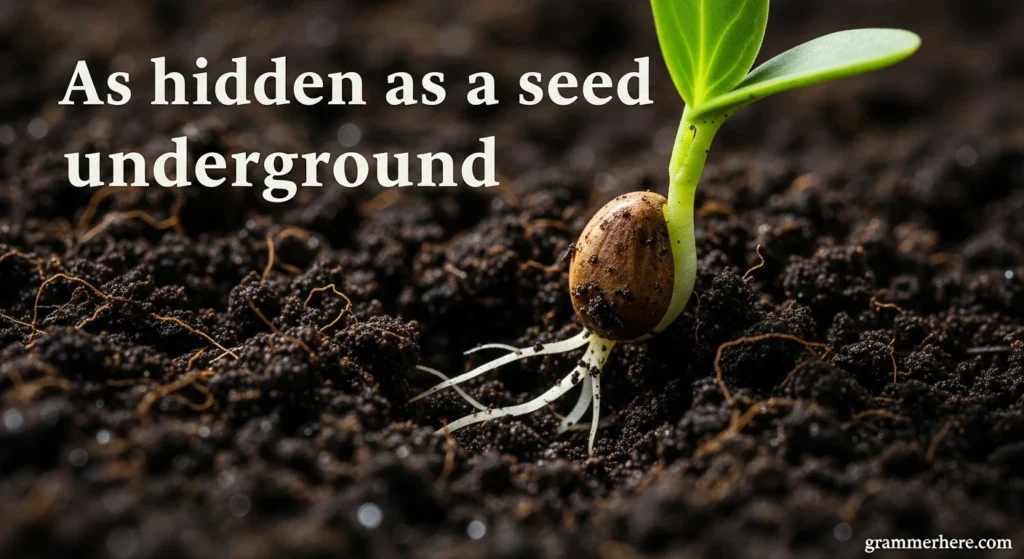
Meaning: Concealed or secret.
Usage: Use for ideas or feelings that are not yet revealed.
Examples:
- His talent was as hidden as a seed underground.
- The answer remained as hidden as a seed underground.
28. As quiet as moss
Meaning: Extremely silent or subtle.
Usage: Great for peaceful or soft settings.
Examples:
- She moved as quiet as moss across the floor.
- The forest was as quiet as moss in the shade.
29. As protective as tree bark
Meaning: Guarding or shielding.
Usage: Use for someone keeping others safe.
Examples:
- His advice was as protective as tree bark.
- The shelter acted as protective as tree bark for the campers.
30. As graceful as willow branches
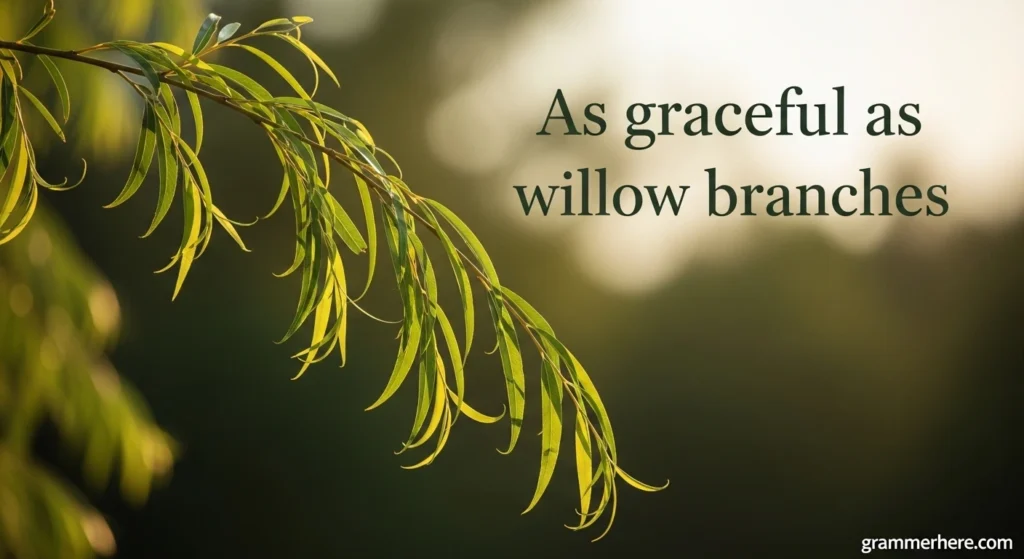
Meaning: Smooth, flowing, or elegant.
Usage: Perfect for describing movements or posture.
Examples:
- The dancer moved as graceful as willow branches.
- Her handwriting was as graceful as willow branches.
31. As steady as a fir tree
Meaning: Reliable or unshakable.
Usage: Ideal for consistency in personality or action.
Examples:
- His decisions were as steady as a fir tree.
- The bridge stood as steady as a fir tree during the storm.
32. As cheerful as sunlit leaves
Meaning: Happy or radiant.
Usage: Great for bright moods or environments.
Examples:
- Her smile was as cheerful as sunlit leaves.
- The morning market was as cheerful as sunlit leaves.
33. As mysterious as ancient roots
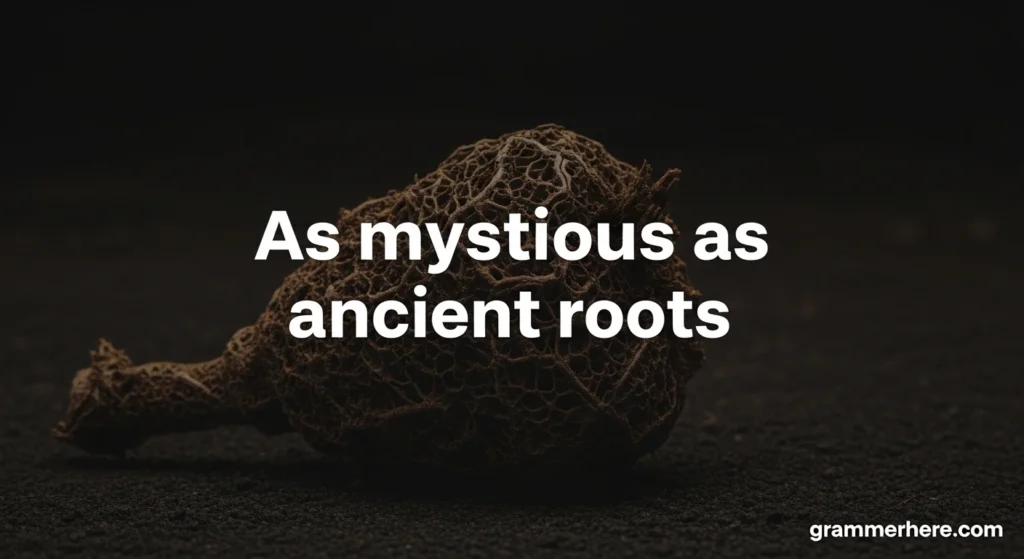
Meaning: Hidden depth or secrets.
Usage: Perfect for character or story depth.
Examples:
- The village was as mysterious as ancient roots.
- His thoughts were as mysterious as ancient roots.
34. As flexible as bamboo
Meaning: Easily adaptable.
Usage: Use for resilience or compromise.
Examples:
- She bent as flexible as bamboo to solve the problem.
- His approach was as flexible as bamboo in the wind.
35. As inspiring as a mighty oak
Meaning: Motivating or uplifting.
Usage: Great for describing people or ideas that encourage others.
Examples:
- The teacher was as inspiring as a mighty oak.
- Her courage was as inspiring as a mighty oak standing tall.
How to Use Similes Effectively in Writing
- Choose vivid comparisons: Pick objects or experiences that your readers can visualize.
- Keep it simple: Similes should clarify, not confuse. Avoid overly complicated images.
- Use for mood and tone: Match the simile to the emotion you want to evoke.
- Mix familiar and new ideas: Combine common experiences with unique comparisons for freshness.
- Use in all writing forms: Poems, stories, essays, and songs benefit from similes. They enrich descriptions and make content more memorable.
- Don’t overuse: Too many similes can overwhelm; balance is key.
FAQs
Q1: What is the difference between a simile and a metaphor? A simile uses “like” or “as” to compare two things, while a metaphor directly states the comparison without these words.
Q2: Can similes be used in academic writing? Yes, sparingly. They can make complex ideas more relatable and engaging if relevant.
Q3: How do similes enhance creative writing? They create vivid imagery, evoke emotions, and make descriptions memorable.
Q4: Are nature similes better than other types? Nature similes are relatable and visual, making them powerful for young learners and creative writing.
Q5: Can kids create their own similes? Absolutely! Encouraging children to invent similes strengthens creativity, language skills, and observation.
Conclusion
Simile practice for kids is more than a writing exercise—it’s a gateway to seeing the world with curiosity and imagination. By comparing everyday things to nature, people, and experiences, young learners gain clarity, emotional depth, and expressive power in their writing. Whether describing a person, a place, or a feeling, similes help words come alive. Encouraging children to explore similes nurtures creativity, observation skills, and a lifelong love of language. Like trees growing tall and strong, their skills in figurative language can flourish, branching into endless possibilities.