Language becomes more colorful and expressive when we use similes. A simile is one of the most common tools in figurative language, helping writers create vivid comparisons that spark imagination. Instead of simply saying something is bad, we can describe it in a way that paints a picture in the reader’s mind. This is why similes are so important in both everyday speech and creative writing. They transform plain descriptions into emotional, memorable moments.
Nature, especially trees, often plays a powerful role in comparisons. Trees symbolize strength, growth, resilience, wisdom, and even human emotion. A storm-damaged tree can reflect hardship, while a rotting trunk can symbolize decay or failure. By combining similes for bad with strong natural imagery, writers create meaning that feels deeper and more relatable. Whether you’re crafting poems, essays, or stories, the right comparison can turn a simple sentence into something unforgettable.
What Is a Simile?
A simile is a figure of speech that compares two different things using the words like or as. It helps readers understand one idea by relating it to something familiar.
Example: The silence was like a fallen tree blocking the path.
This comparison makes the silence feel heavy, obstructive, and impossible to ignore.
1. As bad as a tree struck by lightning
Meaning: Something suddenly ruined or destroyed beyond repair.
Usage Insight: Works well when describing shocking failure or unexpected disaster.
Examples:
- His reputation fell apart as bad as a tree struck by lightning.
- The project collapsed as bad as a tree struck by lightning in a summer storm.
2. Like a rotting trunk in the forest
Meaning: Slowly decaying or morally corrupt.
Usage Insight: Ideal for describing long-term decline or hidden weakness.
Examples:
- Their partnership was like a rotting trunk in the forest.
- The company’s ethics felt like a rotting trunk in the forest.
3. As bad as roots torn from the earth
Meaning: Completely unstable or uprooted.
Usage Insight: Perfect for emotional or financial collapse.
Examples:
- After the scandal, his career was as bad as roots torn from the earth.
- The storm left the village as bad as roots torn from the earth.
4. Like leaves withering in drought
Meaning: Gradually weakening or fading away.
Usage Insight: Best for describing slow emotional or physical decline.
Examples:
- Her hope faded like leaves withering in drought.
- The team’s motivation shrank like leaves withering in drought.
5. As bad as a hollow tree in winter
Meaning: Empty, lifeless, or broken inside.
Usage Insight: Works well for emotional emptiness.
Examples:
- He felt as bad as a hollow tree in winter.
- The abandoned house looked as bad as a hollow tree in winter.
6. Like bark stripped by a storm
Meaning: Exposed and damaged.
Usage Insight: Useful for vulnerability or harsh criticism.
Examples:
- She felt like bark stripped by a storm after the harsh review.
- His confidence was like bark stripped by a storm.
7. As bad as a forest after wildfire
Meaning: Completely devastated.
Usage Insight: Strong image for total destruction.
Examples:
- The town looked as bad as a forest after wildfire.
- His savings were as bad as a forest after wildfire.
8. Like a branch hanging by a thread
Meaning: Nearly broken or failing.
Usage Insight: Ideal for suspense or tension.
Examples:
- Their friendship was like a branch hanging by a thread.
- The company survived like a branch hanging by a thread.
9. As bad as sap turned bitter
Meaning: Something once sweet that has gone wrong.
Usage Insight: Effective in emotional or relational writing.
Examples:
- Their love became as bad as sap turned bitter.
- The deal ended as bad as sap turned bitter.
10. Like a tree bending under too much snow
Meaning: Overwhelmed by pressure.
Usage Insight: Perfect for stress-related comparisons.
Examples:
- He felt like a tree bending under too much snow.
- The workload was like a tree bending under too much snow.
11. As bad as a cracked oak in a storm
Meaning: Strong but damaged beyond stability.
Usage Insight: Works well for broken leadership or pride.
Examples:
- His authority seemed as bad as a cracked oak in a storm.
- The team stood as bad as a cracked oak in a storm.
12. Like a forest lost in thick fog
Meaning: Confused and directionless.
Usage Insight: Great for uncertainty or doubt.
Examples:
- I felt like a forest lost in thick fog.
- Their plan was like a forest lost in thick fog.
13. As bad as termites in timber
Meaning: Slowly destructive from within.
Usage Insight: Effective for hidden problems.
Examples:
- Corruption spread as bad as termites in timber.
- The lies grew as bad as termites in timber.
14. Like a fallen log blocking the trail
Meaning: An obstacle causing delay.
Usage Insight: Best for narrative conflict.
Examples:
- The misunderstanding stood like a fallen log blocking the trail.
- His fear was like a fallen log blocking the trail.
15. As bad as soil poisoned by waste
Meaning: Contaminated or ruined.
Usage Insight: Strong for moral or environmental themes.
Examples:
- The rumor was as bad as soil poisoned by waste.
- Trust became as bad as soil poisoned by waste.
16. Like a tree split down the middle
Meaning: Deeply divided or damaged.
Usage Insight: Useful for conflict.
Examples:
- The family felt like a tree split down the middle.
- The nation stood like a tree split down the middle.
17. As bad as a forest stripped bare.
Usage Insight: Strong for total loss.
Examples:
- His bank account was as bad as a forest stripped bare.
- The land looked as bad as a forest stripped bare.
18. Like brittle twigs underfoot
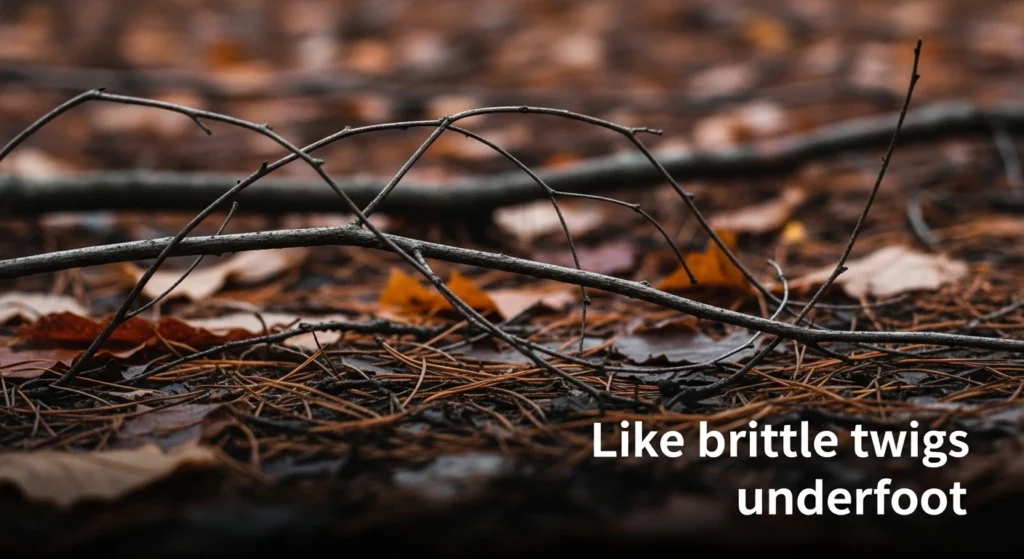
Meaning: Fragile and easily broken.
Usage Insight: Good for emotional sensitivity.
Examples:
- Her patience was like brittle twigs underfoot.
- His excuse snapped like brittle twigs underfoot.
19. As bad as a dying sapling
Meaning: Weak and unlikely to survive.
Usage Insight: Works in tragic tones.
Examples:
- The startup seemed as bad as a dying sapling.
- Their hope looked as bad as a dying sapling.
20. Like a forest echoing with emptiness
Meaning: Lonely and hollow.
Usage Insight: Ideal for isolation themes.
Examples:
- His voice sounded like a forest echoing with emptiness.
- The hall felt like a forest echoing with emptiness.
21. As bad as moss choking the bark
Meaning: Slowly suffocating growth.
Usage Insight: Strong metaphor for limitation.
Examples:
- Doubt grew as bad as moss choking the bark.
- Fear spread as bad as moss choking the bark.
22. Like a branch snapped by careless hands
Meaning: Harm caused by negligence.
Usage Insight: Effective for betrayal.
Examples:
- Their trust broke like a branch snapped by careless hands.
- The plan failed like a branch snapped by careless hands.
23. As bad as a tree scarred by axes
Meaning: Deeply wounded.
Usage Insight: Good for emotional scars.
Examples:
- He felt as bad as a tree scarred by axes.
- The relationship stood as bad as a tree scarred by axes.
24. Like shadows under a dead canopy
Meaning: Dark and hopeless.
Usage Insight: Ideal for gloomy settings.
Examples:
- The mood was like shadows under a dead canopy.
- The future seemed like shadows under a dead canopy.
25. As bad as bark eaten by insects
Meaning: Gradually destroyed.
Usage Insight: Works for subtle deterioration.
Examples:
- The system failed as bad as bark eaten by insects.
- His confidence weakened as bad as bark eaten by insects.
26. Like a forest drained of color
Meaning: Dull and lifeless.
Usage Insight: Strong visual imagery.
Examples:
- The painting looked like a forest drained of color.
- Her smile faded like a forest drained of color.
27. As bad as a storm ripping through branches
Meaning: Chaotic and destructive.
Usage Insight: Perfect for action scenes.
Examples:
- The argument was as bad as a storm ripping through branches.
- The news hit as bad as a storm ripping through branches.
28. Like a tree leaning toward collapse
Meaning: On the verge of failure.
Usage Insight: Good for suspenseful writing.
Examples:
- The company stood like a tree leaning toward collapse.
- He felt like a tree leaning toward collapse.
29. As bad as a nest fallen from the tree
Meaning: Broken safety or security.
Usage Insight: Effective for vulnerability.
Examples:
- Their home felt as bad as a nest fallen from the tree.
- Her trust broke as bad as a nest fallen from the tree.
30. Like dry leaves scattered by wind
Meaning: Disorganized and chaotic.
Usage Insight: Useful for disorderly situations.
Examples:
- The papers flew like dry leaves scattered by wind.
- His thoughts felt like dry leaves scattered by wind.
31. As bad as branches tangled beyond repair
Meaning: Complicated and messy.
Usage Insight: Great for complex problems.
Examples:
- The legal case was as bad as branches tangled beyond repair.
- Their history seemed as bad as branches tangled beyond repair.
32. Like a forest fading into ashes
Meaning: Completely destroyed.
Usage Insight: Strong dramatic impact.
Examples:
- The empire fell like a forest fading into ashes.
- His dreams ended like a forest fading into ashes.
33. As bad as sap frozen in winter
Meaning: Stuck and unable to flow.
Usage Insight: Ideal for creative blocks.
Examples:
- My ideas felt as bad as sap frozen in winter.
- The negotiations stalled as bad as sap frozen in winter.
34. Like a cracked branch in icy wind
Meaning: Weak under pressure.
Usage Insight: Good for fragile resilience.
Examples:
- His voice trembled like a cracked branch in icy wind.
- The alliance stood like a cracked branch in icy wind.
35. As bad as a forest stripped of birdsong
Meaning: Joyless and empty.
Usage Insight: Perfect for emotional silence.
Examples:
- The house felt as bad as a forest stripped of birdsong.
- Her laughter stopped, and the room became as bad as a forest stripped of birdsong.
How to Use Similes Effectively in Writing
To use similes effectively in poems, stories, essays, songs, and creative descriptions:
- Be specific. Strong nature similes create clearer imagery than vague comparisons.
- Match the tone. Dark comparisons suit tragedy, while lighter ones fit humor or reflection.
- Avoid overuse. Too many similes in one paragraph can weaken their impact.
- Connect to emotion. The best figurative language examples mirror human feelings.
- Study similes in literature. Great authors use comparisons to deepen meaning and theme.
When used carefully, similes for bad can make writing more dramatic, symbolic, and memorable.
FAQs
1. What are similes for bad? Similes for bad are creative comparisons that describe something negative using “like” or “as” to create strong imagery.
2. What is the difference between similes and metaphors? Similes use “like” or “as” to compare two things, while metaphors state the comparison directly without those words.
3. Why are similes important in figurative language? They make descriptions clearer, more emotional, and easier to visualize.
4. Can similes be used in academic writing? Yes, but they should be used carefully and only when they clarify complex ideas.
5. How do similes improve creative writing? They add imagery, symbolism, and emotional depth, making the text more engaging.
Conclusion
Powerful similes for bad do more than describe negativity—they create vivid images, emotional resonance, and symbolic depth. By drawing inspiration from nature and especially trees, writers can express failure, decay, vulnerability, and destruction in meaningful ways. These comparisons transform ordinary sentences into memorable lines. Whether you are crafting poetry, storytelling, essays, or songs, thoughtful similes enrich your language and captivate your readers. When used wisely, they bring clarity, beauty, and dramatic impact to every piece of writing.