
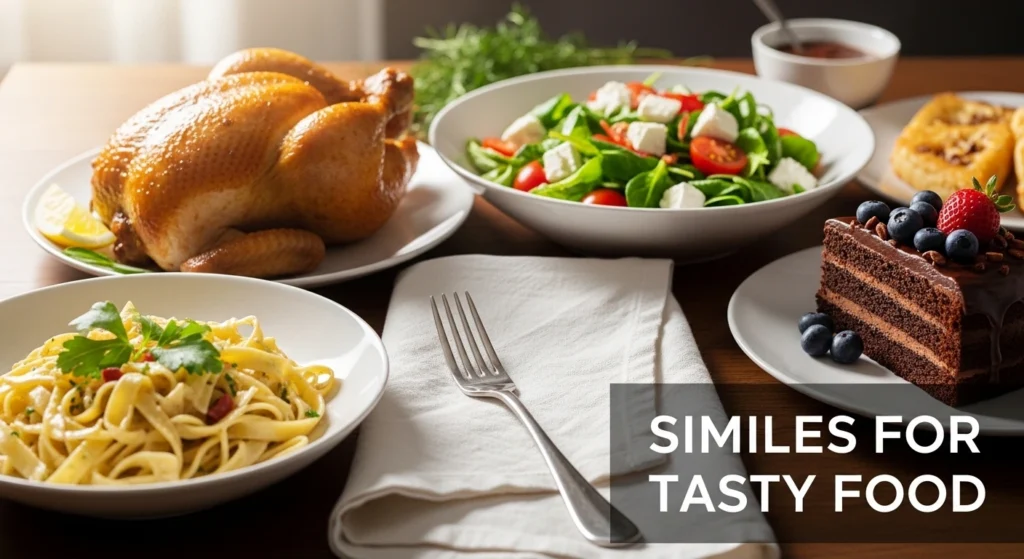
Food is more than something we eat—it is an experience, a memory, and sometimes even a story on a plate. When we try to describe delicious meals, simple words like “good” or “yummy” often feel too plain. That’s where similes come in. Similes are powerful tools in figurative language that help us create vivid comparisons using words like “as” or “like.”
They make descriptions more colorful, emotional, and memorable. Just as trees symbolize strength, growth, resilience, wisdom, and deep-rooted emotion in literature, similes help our language grow branches of meaning and beauty. A single well-crafted comparison can transform an ordinary food description into something mouthwatering and unforgettable. In this article, you’ll discover creative and original similes for tasty food that will enrich your writing and bring flavor to every sentence.
What Is a Simile?
A simile is a figure of speech that compares two different things using the words “like” or “as.” It helps readers understand something better by relating it to something familiar.
Example: The cake was as light as a cloud.
This comparison helps the reader imagine the soft, airy texture of the cake in a clear and sensory way.
1. As Sweet as Spring Honey
Meaning: The food tastes naturally and richly sweet.
Usage Insight: Works beautifully in nature similes or when describing desserts with organic sweetness.
Examples:
- The baklava was as sweet as spring honey dripping from a fresh comb.
- Her homemade cookies tasted as sweet as spring honey on warm toast.
2. Like Sunshine Melting on the Tongue
Meaning: The flavor feels warm, comforting, and joyful.
Usage Insight: Perfect for describing comforting dishes or citrus desserts.
Examples:
- The lemon tart was like sunshine melting on the tongue.
- Each spoonful of mango sorbet felt like sunshine melting gently in my mouth.
3. As Rich as Autumn Harvest
Meaning: The taste is full, deep, and abundant.
Usage Insight: Ideal for hearty meals and seasonal dishes.
Examples:
- The pumpkin soup was as rich as an autumn harvest.
- That slow-cooked stew tasted as rich as the fields in October.
4. Like a Festival of Fireworks in the Mouth
Meaning: The food bursts with exciting flavors.
Usage Insight: Great for spicy or multi-layered dishes.
Examples:
- The salsa exploded like a festival of fireworks in the mouth.
- Every bite of the curry felt like fireworks dancing across my taste buds.
5. As Smooth as Velvet Cream
Meaning: The texture is soft and luxurious.
Usage Insight: Excellent for desserts, sauces, or creamy drinks.
Examples:
- The chocolate mousse was as smooth as velvet cream.
- Her latte tasted as smooth as velvet cream on a winter morning.
6. Like a Garden in Full Bloom
Meaning: The dish is fresh and vibrant.
Usage Insight: Perfect for salads and plant-based meals.
Examples:
- The salad looked and tasted like a garden in full bloom.
- The herbs made the pasta feel like spring blossoming on a plate.
7. As Comforting as a Warm Blanket
Meaning: The food brings emotional warmth.
Usage Insight: Ideal for soups and comfort foods.
Examples:
- The chicken soup was as comforting as a warm blanket.
- That bowl of oatmeal felt as soothing as wrapping up by the fire.
8. Like Butter Gliding Over Warm Bread
Meaning: The flavor spreads smoothly and pleasantly.
Usage Insight: Useful in soft, sensory descriptions.
Examples:
- The caramel sauce flowed like butter over warm bread.
- The gravy settled like butter gliding across toast.
9. As Delightful as Morning Dew
Meaning: The taste feels fresh and light.
Usage Insight: Works well in poetic food writing.
Examples:
- The fruit salad was as delightful as morning dew.
- The chilled grapes tasted as refreshing as dew on spring leaves.
10. Like Music Dancing on the Palate
Meaning: The flavors harmonize beautifully.
Usage Insight: Perfect for gourmet dishes.
Examples:
- The spices blended like music dancing on the palate.
- Each bite of the risotto felt like a gentle melody in my mouth.
11. As Bold as Summer Sun
Meaning: The flavor is strong and powerful.
Usage Insight: Great for spicy or smoky dishes.
Examples:
- The barbecue sauce was as bold as the summer sun.
- The chili hit my taste buds as fiercely as midday heat.
12. Like a Sweet Whisper of Vanilla
Meaning: The sweetness is subtle and gentle.
Usage Insight: Ideal for delicate desserts.
Examples:
- The custard tasted like a sweet whisper of vanilla.
- The frosting lingered like a soft vanilla breeze.
13. As Crisp as Autumn Leaves
Meaning: The texture is crunchy and fresh.
Usage Insight: Perfect for fried or fresh items.
Examples:
- The fries were as crisp as autumn leaves.
- The apple slice snapped like leaves underfoot.
14. Like a River of Chocolate
Meaning: The flavor flows richly and smoothly.
Usage Insight: Best for chocolate-based dishes.
Examples:
- The fondue poured like a river of chocolate.
- The brownie melted like a dark cocoa stream.
15. As Refreshing as Mountain Air
Meaning: The taste feels clean and energizing.
Usage Insight: Great for drinks and light meals.
Examples:
- The mint lemonade was as refreshing as mountain air.
- The cucumber salad tasted as cool as a highland breeze.
16. Like Stars Sprinkled Across the Sky
Meaning: The dish has delightful bursts of flavor.
Usage Insight: Works well for desserts with toppings.
Examples:
- The cupcake sparkled like stars sprinkled across the sky.
- The berries popped like tiny constellations of sweetness.
17. As Juicy as Ripe Orchard Fruit
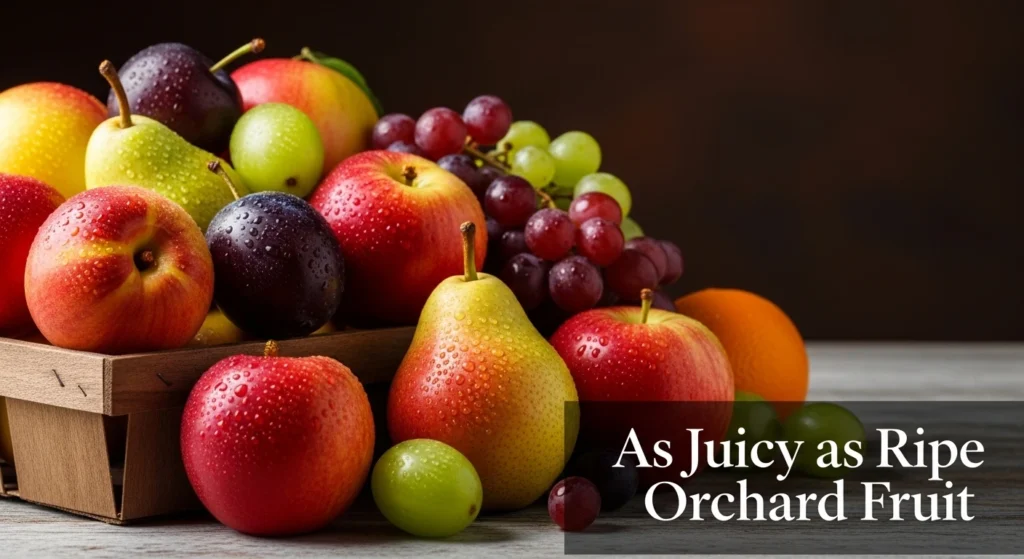
Meaning: The food is fresh and succulent.
Usage Insight: Perfect for meats or fruits.
Examples:
- The steak was as juicy as ripe orchard fruit.
- The peach tasted as lush as midsummer produce.
18. Like a Hug from the Inside
Meaning: The food brings emotional comfort.
Usage Insight: Excellent for homestyle meals.
Examples:
- The casserole felt like a hug from the inside.
- Her cooking always tastes like comfort wrapped in flavor.
19. As Decadent as Royal Feast
Meaning: The dish feels luxurious.
Usage Insight: Great for rich desserts.
Examples:
- The cheesecake was as decadent as a royal feast.
- The truffles tasted fit for a king’s table.
20. Like Waves Crashing with Flavor
Meaning: Strong layers of taste hit at once.
Usage Insight: Useful for bold dishes.
Examples:
- The curry rolled like waves crashing with flavor.
- The spices surged like an ocean storm.
21. As Gentle as Falling Snow
Meaning: The flavor is soft and mild.
Usage Insight: Good for subtle dishes.
Examples:
- The cream sauce was as gentle as falling snow.
- The tofu absorbed flavor as softly as snowflakes settling.
22. Like a Treasure Chest of Taste
Meaning: The dish contains delightful surprises.
Usage Insight: Ideal for layered recipes.
Examples:
- The paella felt like a treasure chest of taste.
- Every spoonful revealed something deliciously unexpected.
23. As Bright as Citrus Sunrise
Meaning: The flavor is lively and zesty.
Usage Insight: Perfect for tangy dishes.
Examples:
- The orange glaze was as bright as a citrus sunrise.
- The salsa sparkled like early morning light.
24. Like Warm Caramel Drizzle
Meaning: Sweet and smooth flavor.
Usage Insight: Works well in dessert writing.
Examples:
- The syrup poured like warm caramel drizzle.
- The flavor lingered like golden sweetness.
25. As Savory as Forest Herbs
Meaning: Earthy and aromatic taste.
Usage Insight: Ideal for herb-based meals.
Examples:
- The roast was as savory as forest herbs.
- The stuffing tasted of thyme and woodland air.
26. Like a Symphony of Spices
Meaning: Complex and balanced flavors.
Usage Insight: Great for multicultural cuisine descriptions.
Examples:
- The biryani unfolded like a symphony of spices.
- Each bite carried harmony and depth.
27. As Tender as New Leaves
Meaning: The food is soft and delicate.
Usage Insight: Perfect for meats or pastries.
Examples:
- The lamb was as tender as new leaves.
- The pastry crumbled as softly as spring growth.
28. Like Golden Rays on a Plate
Meaning: Warm, rich, and inviting flavor.
Usage Insight: Works for visually appealing dishes.
Examples:
- The cornbread shone like golden rays on a plate.
- The pancakes glowed warmly in the morning light.
29. As Sweet as Childhood Memories
Meaning: The taste brings nostalgia.
Usage Insight: Excellent for storytelling.
Examples:
- Grandma’s pie was as sweet as childhood memories.
- The aroma carried me back to simpler days.
30. Like a Burst of Spring Rain
Meaning: Fresh and awakening flavor.
Usage Insight: Ideal for light and crisp dishes.
Examples:
- The watermelon felt like a burst of spring rain.
- The iced tea refreshed me instantly.
31. As Silky as Melted Gold
Meaning: Smooth and luxurious texture.
Usage Insight: Great for sauces and custards.
Examples:
- The sauce flowed as silky as melted gold.
- The pudding shimmered with richness.
32. Like a Celebration in Every Bite
Meaning: Joyful and exciting taste.
Usage Insight: Perfect for festive meals.
Examples:
- The cake tasted like a celebration in every bite.
- The feast felt like pure happiness on a plate.
33. As Fragrant as Blooming Orchards
Meaning: Strong, pleasant aroma and taste.
Usage Insight: Good for aromatic dishes.
Examples:
- The tea was as fragrant as blooming orchards.
- The curry filled the room with perfume-like warmth.
34. Like Creamy Clouds in the Sky
Meaning: Light and fluffy texture.
Usage Insight: Works for whipped or airy foods.
Examples:
- The whipped cream was like creamy clouds in the sky.
- The soufflé rose as gently as drifting clouds.
35. As Satisfying as a Long-Awaited Rain
Meaning: Deeply fulfilling flavor.
Usage Insight: Perfect for describing meals after hunger or effort.
Examples:
- The meal was as satisfying as long-awaited rain after drought.
- After the hike, the sandwich tasted incredibly rewarding.
How to Use Similes Effectively in Writing
Using similes effectively requires balance and creativity. Here are practical tips:
- Be specific: Choose comparisons that match texture, flavor, and emotion.
- Avoid clichés: Fresh similes feel more powerful than overused ones.
- Match tone: Use gentle comparisons for calm writing and bold ones for energetic scenes.
- Engage senses: Combine taste, smell, texture, and sight for vivid imagery.
- Use sparingly: Too many similes can overwhelm your writing.
In poems, similes create rhythm and imagery. In stories, they deepen sensory details. In essays, they clarify complex ideas. In songs, they add emotional impact. Strong comparisons make descriptions memorable.
FAQs
1. What are similes for tasty food? They are comparisons that describe delicious food using “like” or “as” to create vivid imagery.
2. How are similes different from metaphors? Similes use “like” or “as,” while metaphors directly state that one thing is another.
3. Can similes be used in academic writing? Yes, especially in creative essays or descriptive assignments, but they should remain clear and appropriate.
4. Why are similes important in creative writing? They enhance imagery, emotion, and reader engagement.
5. Are nature similes effective in food writing? Absolutely. Nature similes often feel fresh, relatable, and sensory-rich.
Conclusion
Creative similes for tasty food transform simple descriptions into vivid experiences. They help readers taste sweetness, feel warmth, and imagine textures through carefully chosen comparisons. Like strong trees rooted in deep soil, similes anchor language in clarity while allowing imagination to branch outward. Whether you are writing poetry, storytelling, blogging, or academic work, flavorful similes add richness, imagery, and emotional depth. By mastering these comparisons, you give your words the power to linger—just like a truly unforgettable meal.