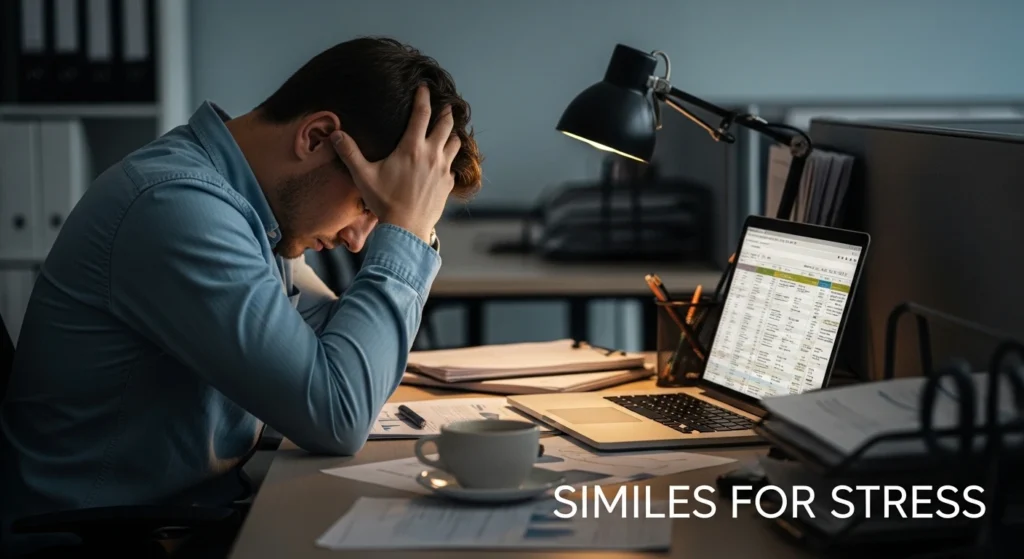
Stress is a universal human experience, yet it can be surprisingly difficult to describe. This is where similes for stress become powerful tools in writing. A simile is a type of figurative language that compares two different things using words like “as” or “like,” helping readers see and feel emotions more clearly. Through comparisons, writers transform invisible feelings into vivid images.
Nature similes, especially those involving trees, storms, roots, and seasons, often capture stress in a meaningful way because nature reflects strength, growth, resilience, wisdom, and human emotion. Just as a tree bends in the wind yet stands tall, people endure pressure and continue forward.
In literature and everyday communication, similes help us explain stress in ways that feel relatable, poetic, and memorable. Whether you are writing stories, essays, poems, or personal reflections, these figurative language examples will deepen your expression and sharpen your imagery.
What Is a Simile?
A simile is a figure of speech that directly compares two unlike things using the words like or as to create a vivid image or deeper understanding.
Example: Her mind was like a stormy sky, dark with gathering thoughts.
This comparison helps readers visualize emotional tension by connecting it to a storm.
1. Stress is like a storm pounding against a fragile roof
Meaning: Stress feels relentless and overwhelming, as if pressure keeps striking without pause.
Usage Insight: This simile works best in emotional narratives or reflective essays describing mental overload.
Examples:
- Deadlines piled up, and stress was like a storm pounding against a fragile roof.
- Before the exam results, his thoughts felt like heavy rain hammering nonstop above him.
2. Stress clings like vines wrapping around a tree
Meaning: Stress can slowly tighten its grip, making it hard to move freely.
Usage Insight: Ideal for nature similes in poetry or descriptive prose.
Examples:
- Responsibilities clung to her like vines wrapping around a tree.
- The pressure of expectations grew tighter, like creeping ivy on old bark.
3. Stress builds like thunderclouds before a downpour
Meaning: Tension grows gradually until it finally releases.
Usage Insight: Excellent for foreshadowing emotional breakdowns in stories.
Examples:
- His frustration built like thunderclouds before a downpour.
- The silence in the room felt heavy, like clouds about to burst.
4. Stress feels like carrying a mountain on your shoulders
Meaning: Stress can feel physically and emotionally heavy.
Usage Insight: Effective in persuasive or motivational writing.
Examples:
- Managing two jobs felt like carrying a mountain on her shoulders.
- The burden of debt weighed on him like a rocky peak pressing down.
5. Stress spreads like cracks in dry earth
Meaning: Once it begins, stress can quickly expand and affect everything.
Usage Insight: Works well in descriptive essays about burnout.
Examples:
- Anxiety spread through her thoughts like cracks in dry earth.
- One small mistake widened like a fracture across fragile ground.
6. Stress flickers like a restless flame
Meaning: Stress can feel unstable and unpredictable.
Usage Insight: Best for poetic comparisons in short stories.
Examples:
- His temper flickered like a restless flame under pressure.
- Worry danced in her chest like firelight in the wind.
7. Stress is like a river rushing out of control
Meaning: Stress can feel overwhelming and impossible to stop.
Usage Insight: Perfect for dramatic storytelling.
Examples:
- Deadlines rushed toward her like a river out of control.
- His thoughts surged like floodwaters after heavy rain.
8. Stress hangs like fog over a quiet forest
Meaning: Stress creates confusion and heaviness.
Usage Insight: Useful in reflective or atmospheric writing.
Examples:
- Uncertainty hung over him like fog in a silent forest.
- The office felt tense, as if mist blurred every clear thought.
9. Stress tightens like roots gripping hard soil
Meaning: Stress can anchor itself deeply inside us.
Usage Insight: Strong in symbolic, nature-based figurative language examples.
Examples:
- Fear tightened inside her like roots gripping hard soil.
- The memory held fast, rooted deeply within him.
10. Stress beats like a drum in your chest
Meaning: Stress can increase heart rate and physical tension.
Usage Insight: Ideal for action scenes or exam moments.
Examples:
- His heart beat like a drum before the presentation.
- Anxiety pounded loudly, echoing through his ribs.
11. Stress coils like a snake ready to strike
Meaning: Stress creates anticipation and nervous tension.
Usage Insight: Effective in suspenseful writing.
Examples:
- The tension coiled inside her like a snake ready to strike.
- Waiting for the phone call felt sharp and dangerous.
12. Stress lingers like smoke after a fire
Meaning: Stress remains even after the main problem ends.
Usage Insight: Great for reflective essays.
Examples:
- Even after the meeting ended, stress lingered like smoke after a fire.
- The argument faded, but its scent remained in the air.
13. Stress presses like a heavy winter sky
Meaning: Stress feels cold, dull, and suffocating.
Usage Insight: Useful in melancholic descriptions.
Examples:
- The silence pressed on her like a heavy winter sky.
- Gray thoughts hovered above him all day.
14. Stress hums like electricity in the air
Meaning: Stress creates restless energy.
Usage Insight: Works well in workplace or city-based writing.
Examples:
- The office hummed like charged wires before the deadline.
- Nervous energy sparked between colleagues.
15. Stress trembles like leaves in strong wind
Meaning: Stress causes instability and fear.
Usage Insight: Perfect for emotional vulnerability scenes.
Examples:
- She trembled like leaves in strong wind before speaking.
- His voice shook softly under pressure.
16. Stress feels like a knot tightening in your stomach
Meaning: Stress creates physical discomfort.
Usage Insight: Common in realistic storytelling.
Examples:
- A knot tightened in her stomach before the interview.
- Anxiety twisted inside him all morning.
17. Stress crashes like waves against sharp rocks
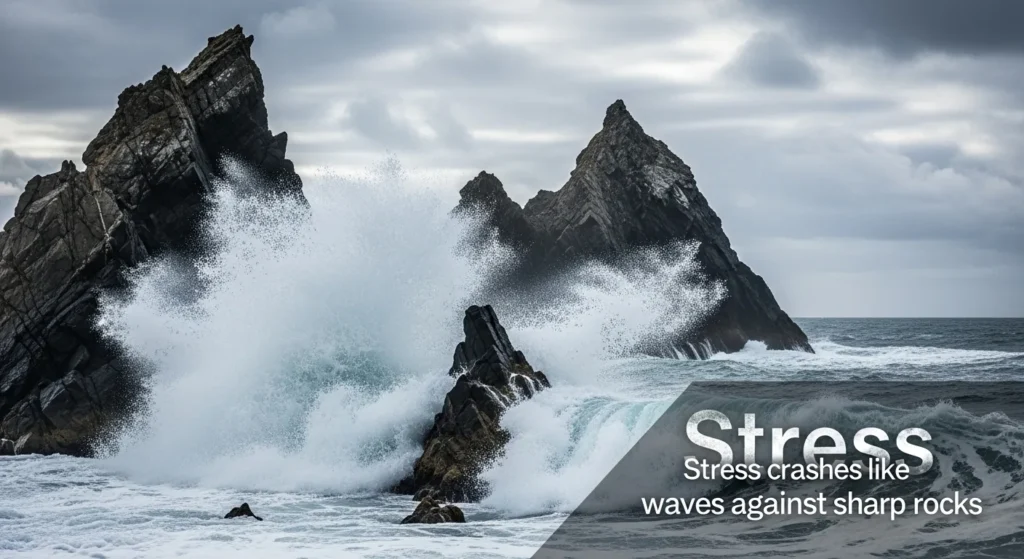
Meaning: Stress can feel repetitive and painful.
Usage Insight: Ideal for dramatic emotion.
Examples:
- Doubts crashed like waves against sharp rocks.
- The pressure kept returning in harsh cycles.
18. Stress creeps like shadows at dusk
Meaning: Stress slowly approaches without warning.
Usage Insight: Works well in suspense writing.
Examples:
- Fear crept in like shadows at dusk.
- Worry darkened the edges of her thoughts.
19. Stress burns like the midday sun
Meaning: Stress can feel intense and exhausting.
Usage Insight: Great for high-pressure moments.
Examples:
- The spotlight burned like the midday sun on stage.
- His anxiety scorched through him.
20. Stress rattles like branches in a storm
Meaning: Stress causes instability.
Usage Insight: Nature similes fit poems beautifully.
Examples:
- Her nerves rattled like branches in a storm.
- He felt shaken from within.
21. Stress feels like walking on thin ice
Meaning: Stress brings fear of mistakes.
Usage Insight: Useful in professional writing.
Examples:
- Presenting to the board felt like walking on thin ice.
- One wrong word could break everything.
22. Stress spreads like wildfire in dry grass
Meaning: Stress grows quickly.
Usage Insight: Best in group or workplace settings.
Examples:
- Panic spread like wildfire through the office.
- Rumors fueled anxiety instantly.
23. Stress echoes like thunder in a canyon
Meaning: Stress feels loud and unavoidable.
Usage Insight: Powerful in dramatic literature.
Examples:
- His doubts echoed like thunder in a canyon.
- The criticism rang in her ears all night.
24. Stress freezes like water in winter
Meaning: Stress can make you feel stuck.
Usage Insight: Useful in reflective prose.
Examples:
- She froze like water in winter during the test.
- His mind locked in place.
25. Stress shakes like an earthquake beneath your feet
Meaning: Stress disrupts stability.
Usage Insight: Dramatic storytelling.
Examples:
- The news shook him like an earthquake.
- Everything felt unstable at once.
26. Stress wraps like a tight scarf around your throat
Meaning: Stress restricts expression.
Usage Insight: Ideal for emotional dialogue scenes.
Examples:
- Words stuck like a scarf pulled too tight.
- Anxiety closed around her voice.
27. Stress pulls like a tide dragging you out
Meaning: Stress feels inescapable.
Usage Insight: Great for metaphorical comparisons.
Examples:
- Responsibilities pulled him like a tide dragging outward.
- He struggled against the current of expectations.
28. Stress flicks like cold rain against bare skin
Meaning: Stress feels sharp and uncomfortable.
Usage Insight: Poetic writing.
Examples:
- Criticism hit her like cold rain on bare skin.
- Each word stung quietly.
29. Stress latches like thorns on clothing
Meaning: Stress sticks and is hard to remove.
Usage Insight: Useful in personal essays.
Examples:
- The worry latched on like thorns to fabric.
- Even small problems clung stubbornly.
30. Stress churns like a restless sea
Meaning: Stress creates inner turmoil.
Usage Insight: Works beautifully in literature.
Examples:
- His thoughts churned like a restless sea.
- Emotions rolled endlessly within her.
31. Stress weighs like wet sand in your pockets
Meaning: Stress feels heavy and draining.
Usage Insight: Creative storytelling.
Examples:
- Fatigue weighed on him like wet sand.
- Each task added more heaviness.
32. Stress darts like startled birds
Meaning: Stress makes thoughts jump quickly.
Usage Insight: Useful in describing anxiety.
Examples:
- Her thoughts darted like startled birds.
- Focus scattered suddenly.
33. Stress drips like water from a cracked ceiling
Meaning: Stress can feel constant and slow.
Usage Insight: Reflective essays.
Examples:
- Worry dripped like water from a cracked ceiling.
- The pressure never fully stopped.
34. Stress hums like wind through tall trees
Meaning: Stress creates a persistent background tension.
Usage Insight: Excellent in nature similes and poetic writing.
Examples:
- The uncertainty hummed like wind through tall trees.
- Even in silence, tension whispered softly.
35. Stress rises like sap in spring
Meaning: Stress can build naturally during busy seasons of growth.
Usage Insight: Symbolic writing about ambition and progress.
Examples:
- During promotion season, pressure rose like sap in spring.
- Ambition stirred within her, strong and unstoppable.
How to Use Similes Effectively in Writing
To use similes effectively, focus on clarity and originality. In poems, choose nature similes that create strong emotional imagery. In stories, use comparisons to reveal a character’s inner world without long explanations. In essays, similes can simplify complex ideas and make arguments more relatable. Songwriters often use figurative language examples to make emotions memorable and lyrical. Avoid clichés by creating fresh, meaningful comparisons. Always match the tone of your simile to the mood of your writing. A gentle comparison suits reflective writing, while a bold one strengthens dramatic scenes.
FAQs
1. What are similes for stress? Similes for stress are comparisons that describe pressure, anxiety, or emotional tension using “like” or “as” to create vivid imagery.
2. What is the difference between similes and metaphors? Similes use connecting words such as “like” or “as,” while metaphors state that one thing is another without those words.
3. Why are nature similes effective in describing stress? Nature reflects human emotions—storms, roots, and seasons mirror strength, struggle, and growth.
4. Can similes be used in academic writing? Yes, when used carefully, similes clarify ideas and improve reader engagement without reducing professionalism.
5. How do similes improve creative writing? They add imagery, emotional depth, and memorable comparisons that make writing more expressive.
Conclusion
Similes for stress transform invisible emotions into vivid, relatable imagery. Through creative comparisons, writers can describe pressure like storms, roots, tides, or trembling leaves. These figurative language examples bring clarity, rhythm, and emotional depth to communication. Whether in literature, essays, poems, or everyday reflections, similes help readers see and feel what words alone cannot express. By choosing thoughtful, original comparisons, you can turn stress into powerful storytelling imagery that resonates long after the sentence ends.