
Creative writing thrives on imagination, emotion, and vivid detail—and nothing adds color to language quite like similes. If you’re searching for similes for creative writing, you’re already on the right path to making your stories, poems, and essays more expressive. Similes are one of the most powerful tools in figurative language because they create strong comparisons that readers instantly understand. They help abstract feelings feel real and ordinary moments feel magical.
Nature, especially trees, often inspires the best comparisons. Trees symbolize strength, growth, resilience, wisdom, and deep human emotion. Just like people, trees bend in storms, grow toward light, and stand firm through seasons of change. When you use nature similes in creative writing, your words feel grounded, relatable, and deeply meaningful. In this guide, you’ll discover original figurative language examples designed to elevate your writing and spark your imagination.
What Is a Simile?
A simile is a figure of speech that compares two different things using the words like or as.
Example: Her patience was like a tree rooted deep in the earth.
In this example, patience is compared to a tree’s roots to show strength and stability. Similes help readers picture ideas clearly and feel emotions more deeply.
1. As steady as an old oak tree
Meaning: Strong, reliable, and dependable.
Usage Insight: Works best when describing a trustworthy person or stable situation.
Examples:
- His advice was as steady as an old oak tree, grounding everyone in the room.
- She remained as steady as an old oak tree even when chaos surrounded her.
2. Like leaves dancing in the wind
Meaning: Light, playful, or carefree movement.
Usage Insight: Ideal for describing joy, freedom, or gentle motion.
Examples:
- The children laughed like leaves dancing in the wind.
- Her thoughts drifted like leaves dancing in the wind.
3. As deep as tree roots in winter soil
Meaning: Profound and emotionally intense.
Usage Insight: Perfect for describing love, grief, or long-lasting bonds.
Examples:
- Their friendship was as deep as tree roots in winter soil.
- His sorrow ran as deep as tree roots in winter soil.
4. Like a sapling reaching for sunlight
Meaning: Hopeful and ambitious.
Usage Insight: Great for describing growth or new beginnings.
Examples:
- She stepped into her new career like a sapling reaching for sunlight.
- His dreams stretched like a sapling reaching for sunlight.
5. As silent as a forest at dusk
Meaning: Extremely quiet and peaceful.
Usage Insight: Useful in atmospheric descriptions.
Examples:
- The room fell as silent as a forest at dusk.
- Her disappointment was as silent as a forest at dusk.
6. Like branches tangled in a storm
Meaning: Confused or complicated.
Usage Insight: Ideal for emotional or mental conflict.
Examples:
- His thoughts were like branches tangled in a storm.
- Their relationship felt like branches tangled in a storm.
7. As patient as a tree in changing seasons
Meaning: Calm and enduring over time.
Usage Insight: Strong in reflective or inspirational writing.
Examples:
- She waited as patient as a tree in changing seasons.
- His growth was as patient as a tree in changing seasons.
8. Like bark protecting fragile wood
Meaning: Guarded but sensitive inside.
Usage Insight: Perfect for layered characters.
Examples:
- He acted tough like bark protecting fragile wood.
- Her humor was like bark protecting fragile wood.
9. As tall as pine trees in the mountains
Meaning: Impressive or commanding presence.
Usage Insight: Great for physical or symbolic height.
Examples:
- His confidence stood as tall as pine trees in the mountains.
- The building rose as tall as pine trees in the mountains.
10. Like autumn leaves falling softly
Meaning: Gentle ending or change.
Usage Insight: Beautiful in poetic transitions.
Examples:
- Her words drifted like autumn leaves falling softly.
- The memory faded like autumn leaves falling softly.
11. As resilient as a tree after wildfire
Meaning: Strong after hardship.
Usage Insight: Ideal for themes of survival.
Examples:
- She was as resilient as a tree after wildfire.
- Their community grew as resilient as a tree after wildfire.
12. Like roots gripping rocky ground
Meaning: Determined and unwavering.
Usage Insight: Strong for motivational writing.
Examples:
- He held on like roots gripping rocky ground.
- Her faith was like roots gripping rocky ground.
13. As wise as ancient cedar
Meaning: Full of experience and wisdom.
Usage Insight: Works well for mentors or elders.
Examples:
- The teacher spoke as wise as ancient cedar.
- His silence felt as wise as ancient cedar.
14. Like sunlight through green leaves
Meaning: Hopeful and refreshing.
Usage Insight: Beautiful for emotional uplift.
Examples:
- Her smile was like sunlight through green leaves.
- The good news spread like sunlight through green leaves.
15. As fragile as a new blossom
Meaning: Delicate and vulnerable.
Usage Insight: Effective in emotional scenes.
Examples:
- His confidence felt as fragile as a new blossom.
- The truce was as fragile as a new blossom.
16. Like a forest breathing after rain
Meaning: Renewed and refreshed.
Usage Insight: Strong sensory imagery.
Examples:
- She felt like a forest breathing after rain.
- The city seemed like a forest breathing after rain.
17. As grounded as a banyan tree
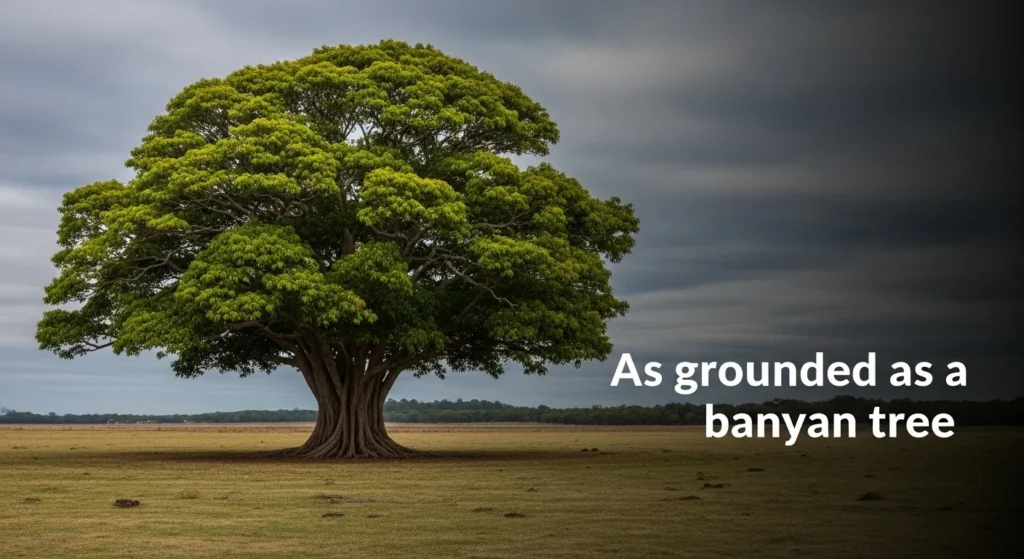
Meaning: Stable and secure.
Usage Insight: Excellent for emotional maturity.
Examples:
- He remained as grounded as a banyan tree.
- Her beliefs were as grounded as a banyan tree.
18. Like vines climbing a stone wall
Meaning: Persistent progress.
Usage Insight: Great for slow achievement.
Examples:
- Her success grew like vines climbing a stone wall.
- Hope returned like vines climbing a stone wall.
19. As restless as branches before a storm
Meaning: Nervous anticipation.
Usage Insight: Strong in suspenseful scenes.
Examples:
- He felt as restless as branches before a storm.
- The crowd grew as restless as branches before a storm.
20. Like seeds waiting beneath snow
Meaning: Hidden potential.
Usage Insight: Inspiring in growth narratives.
Examples:
- Her talent lay like seeds waiting beneath snow.
- Change stirred like seeds waiting beneath snow.
21. As bright as spring leaves
Meaning: Fresh and lively.
Usage Insight: Works well in hopeful moments.
Examples:
- Her ideas were as bright as spring leaves.
- The future looked as bright as spring leaves.
22. Like shadows beneath tall trees
Meaning: Subtle and mysterious.
Usage Insight: Perfect for atmospheric writing.
Examples:
- Doubt crept in like shadows beneath tall trees.
- His smile hid secrets like shadows beneath tall trees.
23. As firm as a trunk in winter
Meaning: Strong under pressure.
Usage Insight: Useful in leadership descriptions.
Examples:
- She stood as firm as a trunk in winter.
- His decision was as firm as a trunk in winter.
24. Like blossoms carried by the breeze
Meaning: Spreading gently and beautifully.
Usage Insight: Poetic tone works best.
Examples:
- Her laughter traveled like blossoms carried by the breeze.
- The rumor moved like blossoms carried by the breeze.
25. As enduring as evergreen needles
Meaning: Lasting and constant.
Usage Insight: Great for loyalty themes.
Examples:
- Their love was as enduring as evergreen needles.
- His loyalty remained as enduring as evergreen needles.
26. Like rings hidden inside a trunk
Meaning: Layered history or hidden depth.
Usage Insight: Perfect for complex characters.
Examples:
- Her past was like rings hidden inside a trunk.
- His story unfolded like rings hidden inside a trunk.
27. As calm as a shaded grove
Meaning: Peaceful and soothing.
Usage Insight: Ideal for reflective scenes.
Examples:
- Her voice was as calm as a shaded grove.
- The morning felt as calm as a shaded grove.
28. Like branches stretching toward the sky
Meaning: Ambitious and hopeful.
Usage Insight: Inspiring imagery for growth.
Examples:
- He reached for success like branches stretching toward the sky.
- Her dreams expanded like branches stretching toward the sky.
29. As hidden as roots beneath earth
Meaning: Invisible but essential.
Usage Insight: Useful in metaphorical reflection.
Examples:
- His sacrifices were as hidden as roots beneath earth.
- Strength can be as hidden as roots beneath earth.
30. Like a tree bending in heavy wind
Meaning: Flexible under pressure.
Usage Insight: Great for resilience themes.
Examples:
- She adapted like a tree bending in heavy wind.
- Their plans shifted like a tree bending in heavy wind.
31. As golden as autumn sunlight
Meaning: Warm and glowing.
Usage Insight: Romantic or nostalgic tone.
Examples:
- Her hair shone as golden as autumn sunlight.
- The evening felt as golden as autumn sunlight.
32. Like moss growing quietly on stone
Meaning: Slow, quiet progress.
Usage Insight: Effective for subtle change.
Examples:
- Confidence returned like moss growing quietly on stone.
- Time passed like moss growing quietly on stone.
33. As tangled as forest undergrowth
Meaning: Complex and difficult to navigate.
Usage Insight: Useful for plot complications.
Examples:
- The mystery became as tangled as forest undergrowth.
- His emotions felt as tangled as forest undergrowth.
34. Like blossoms opening at dawn
Meaning: Awakening or realization.
Usage Insight: Ideal for hopeful turning points.
Examples:
- Understanding came like blossoms opening at dawn.
- Her courage unfolded like blossoms opening at dawn.
35. As timeless as an ancient tree
Meaning: Enduring across generations.
Usage Insight: Powerful in reflective endings.
Examples:
- Their story felt as timeless as an ancient tree.
- True wisdom is as timeless as an ancient tree.
How to Use Similes Effectively in Writing
To make the most of similes in creative writing:
- Be original. Avoid overused comparisons like “as busy as a bee.”
- Match the tone. Soft nature similes suit poetry, while sharper comparisons work in drama.
- Keep it clear. A good simile enhances understanding, not confusion.
- Use sparingly. Too many comparisons can overwhelm readers.
- Engage the senses. Nature similes are especially powerful when they include sight, sound, touch, or smell.
Whether you’re writing poems, short stories, novels, essays, or song lyrics, strong comparisons add emotional depth and visual richness to your language.
FAQs
1. What are similes for creative writing? They are descriptive comparisons using “like” or “as” that help writers create vivid imagery and emotional depth in stories, poems, and essays.
2. What is the difference between similes and metaphors? Similes use “like” or “as” to compare, while metaphors directly state that one thing is another. For example, “She is like a tree” (simile) vs. “She is a tree” (metaphor).
3. Why are nature similes effective in writing? Nature carries universal symbolism—trees, seasons, wind, and light are relatable and emotionally powerful.
4. Can similes be used in academic writing? Yes, but they should be used carefully. In creative essays or reflective pieces, similes enhance clarity. In formal academic writing, they should remain limited and precise.
5. How do I create original similes? Think about the feeling you want to express, then compare it to something vivid, sensory, and meaningful.
Conclusion
Using similes for creative writing transforms ordinary sentences into vivid experiences. These figurative language examples help readers see, feel, and connect with your ideas. Nature similes—especially those inspired by trees—add strength, growth, resilience, and wisdom to your storytelling. Thoughtful comparisons make your writing clearer, more emotional, and more memorable.
When used effectively, similes don’t just decorate language—they deepen meaning. Start experimenting with these comparisons today, and watch your creative writing grow as strong and expressive as an ancient forest.