Words have the power to paint images in a reader’s mind. When writers use pictures for similes, they turn simple sentences into vivid scenes filled with color, emotion, and meaning. A simile is one of the most popular tools in figurative language because it compares two different things using “like” or “as.”
These comparisons help readers see, feel, and understand ideas more clearly. Nature—especially trees—often inspires strong and meaningful comparisons. Trees symbolize strength, growth, resilience, wisdom, and deep human emotion. Just like trees stand firm through storms and change with the seasons, people grow, endure, and evolve through life’s experiences. In this guide, you’ll discover powerful similes that create clear mental pictures and elevate your creative writing.
What Is a Simile?
A simile is a figure of speech that compares two different things using the words like or as to highlight a shared quality.
Example: Her voice was as gentle as a summer breeze.
This comparison helps readers imagine softness and calmness by connecting the voice to something familiar and sensory.
1. As strong as an ancient oak tree
Meaning: Describes great strength and stability.
Usage Insight: Perfect for showing physical strength or emotional resilience in stories or essays.
Examples:
- He stood as strong as an ancient oak tree during the crisis.
- Her determination was as strong as an ancient oak tree rooted deep in the earth.
2. Like leaves dancing in the wind
Meaning: Suggests lightness, movement, and freedom.
Usage Insight: Works beautifully in poetry or nature similes describing joy or motion.
Examples:
- The children ran across the field like leaves dancing in the wind.
- Her laughter floated through the room like leaves dancing in the wind.
3. As steady as a tree trunk in a storm
Meaning: Calm and dependable during chaos.
Usage Insight: Effective for describing leadership or emotional balance.
Examples:
- She remained as steady as a tree trunk in a storm.
- His voice was as steady as a tree trunk in a storm.
4. Like roots gripping the earth
Meaning: Deep connection or loyalty.
Usage Insight: Ideal for themes of family, culture, or belonging.
Examples:
- Their traditions held them together like roots gripping the earth.
- Her love for her hometown clung like roots gripping the earth.
5. As tall as a pine reaching for the sky
Meaning: Ambitious and proud.
Usage Insight: Use when describing dreams, goals, or confidence.
Examples:
- His hopes stood as tall as a pine reaching for the sky.
- She walked as tall as a pine reaching for the sky.
6. Like branches stretching toward sunlight
Meaning: Growth and hope.
Usage Insight: Excellent in inspirational writing.
Examples:
- Her ambitions grew like branches stretching toward sunlight.
- The young artist reached for success like branches stretching toward sunlight.
7. As calm as a forest at dawn
Meaning: Peaceful and quiet.
Usage Insight: Works well in reflective or descriptive passages.
Examples:
- The classroom was as calm as a forest at dawn.
- His mind felt as calm as a forest at dawn.
8. Like a seed waiting to bloom
Meaning: Hidden potential.
Usage Insight: Perfect for character development.
Examples:
- Her talent was like a seed waiting to bloom.
- The idea rested in his thoughts like a seed waiting to bloom.
9. As wise as an old cedar
Meaning: Deep wisdom gained over time.
Usage Insight: Effective in similes in literature when describing elders.
Examples:
- The village elder was as wise as an old cedar.
- Her advice felt as wise as an old cedar.
10. Like autumn leaves falling softly
Meaning: Gentle change or letting go.
Usage Insight: Great for emotional or reflective scenes.
Examples:
- Memories drifted away like autumn leaves falling softly.
- Her worries faded like autumn leaves falling softly.
11. As bright as sunlight through branches
Meaning: Cheerful and radiant.
Usage Insight: Use in uplifting scenes.
Examples:
- Her smile was as bright as sunlight through branches.
- The room felt as bright as sunlight through branches.
12. Like bark rough against the skin
Meaning: Harsh or tough personality.
Usage Insight: Useful for complex characters.
Examples:
- His words were like bark rough against the skin.
- The experience felt like bark rough against the skin.
13. As patient as a tree in winter
Meaning: Enduring hardship quietly.
Usage Insight: Ideal for themes of resilience.
Examples:
- She waited as patient as a tree in winter.
- He remained as patient as a tree in winter.
14. Like a forest whispering secrets
Meaning: Mystery and quiet communication.
Usage Insight: Perfect for creative descriptions.
Examples:
- The hallway echoed like a forest whispering secrets.
- Her voice sounded like a forest whispering secrets.
15. As grounded as roots beneath the soil
Meaning: Practical and realistic.
Usage Insight: Effective in academic writing and character sketches.
Examples:
- She stayed as grounded as roots beneath the soil.
- His advice was as grounded as roots beneath the soil.
16. Like a sapling bending in the wind
Meaning: Flexible yet resilient.
Usage Insight: Great for describing adaptability.
Examples:
- She adjusted like a sapling bending in the wind.
- His plans shifted like a sapling bending in the wind.
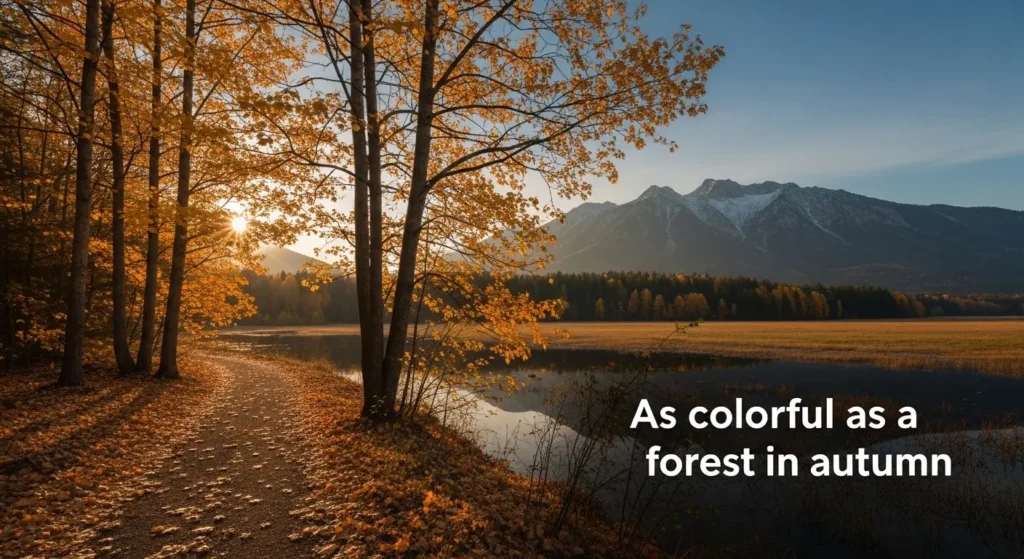
17. As colorful as a forest in autumn
Meaning: Vibrant and expressive.
Usage Insight: Perfect for descriptive essays.
Examples:
- Her wardrobe was as colorful as a forest in autumn.
- The festival looked as colorful as a forest in autumn.
18. Like branches intertwined
Meaning: Close relationships.
Usage Insight: Ideal for friendship or romance.
Examples:
- Their lives grew together like branches intertwined.
- The siblings stood united like branches intertwined.
19. As deep as tree roots in fertile soil
Meaning: Strong emotional depth.
Usage Insight: Use in heartfelt scenes.
Examples:
- His gratitude ran as deep as tree roots in fertile soil.
- Their bond was as deep as tree roots in fertile soil.
20. Like a tree scarred by lightning
Meaning: Hurt but still standing.
Usage Insight: Powerful in dramatic writing.
Examples:
- She stood like a tree scarred by lightning.
- His past marked him like a tree scarred by lightning.
21. As refreshing as shade on a summer day
Meaning: Comforting relief.
Usage Insight: Great in positive comparisons.
Examples:
- Her kindness was as refreshing as shade on a summer day.
- The news felt as refreshing as shade on a summer day.
22. Like dew clinging to leaves
Meaning: Fragile or delicate.
Usage Insight: Works beautifully in poetry.
Examples:
- Hope shimmered like dew clinging to leaves.
- Tears rested like dew clinging to leaves.
23. As vast as a forest stretching for miles
Meaning: Large and expansive.
Usage Insight: Ideal for emphasizing scale.
Examples:
- His imagination was as vast as a forest stretching for miles.
- The silence felt as vast as a forest stretching for miles.
24. Like a hollow tree echoing within
Meaning: Emptiness or loneliness.
Usage Insight: Strong emotional comparison.
Examples:
- He felt like a hollow tree echoing within.
- Her laughter sounded like a hollow tree echoing within.
25. As lively as spring blossoms
Meaning: Energetic and full of life.
Usage Insight: Perfect for joyful descriptions.
Examples:
- The party was as lively as spring blossoms.
- She felt as lively as spring blossoms.
26. Like moss growing quietly on stone
Meaning: Slow but steady change.
Usage Insight: Great for subtle transformation.
Examples:
- Confidence built like moss growing quietly on stone.
- The friendship formed like moss growing quietly on stone.
27. As silent as a snow-covered forest
Meaning: Deep, powerful silence.
Usage Insight: Ideal for suspenseful writing.
Examples:
- The room became as silent as a snow-covered forest.
- His reaction was as silent as a snow-covered forest.
28. Like vines climbing a wall
Meaning: Persistent growth.
Usage Insight: Effective in motivational writing.
Examples:
- Her ambitions rose like vines climbing a wall.
- The company expanded like vines climbing a wall.
29. As radiant as golden leaves at sunset
Meaning: Warm and glowing beauty.
Usage Insight: Works in romantic scenes.
Examples:
- She looked as radiant as golden leaves at sunset.
- The evening felt as radiant as golden leaves at sunset.
30. Like a fallen leaf carried by the river
Meaning: Lack of control.
Usage Insight: Strong in reflective writing.
Examples:
- He drifted through life like a fallen leaf carried by the river.
- Her thoughts wandered like a fallen leaf carried by the river.
31. As firm as a tree’s roots in rock
Meaning: Unshakeable determination.
Usage Insight: Powerful for motivational speeches.
Examples:
- Her resolve was as firm as a tree’s roots in rock.
- He remained as firm as a tree’s roots in rock.
32. Like branches casting long shadows
Meaning: Lasting influence.
Usage Insight: Ideal for legacy themes.
Examples:
- His actions spread like branches casting long shadows.
- Her kindness lingered like branches casting long shadows.
33. As gentle as petals falling from a blossom
Meaning: Soft and tender.
Usage Insight: Perfect for emotional scenes.
Examples:
- Her touch was as gentle as petals falling from a blossom.
- His apology sounded as gentle as petals falling from a blossom.
34. Like a tree blooming after a harsh winter
Meaning: Renewal after hardship.
Usage Insight: Excellent for inspirational writing.
Examples:
- She rose again like a tree blooming after a harsh winter.
- His career revived like a tree blooming after a harsh winter.
35. As enduring as a forest through the ages
Meaning: Long-lasting strength.
Usage Insight: Works in historical or reflective writing.
Examples:
- Their love was as enduring as a forest through the ages.
- The tradition remained as enduring as a forest through the ages.
How to Use Similes Effectively in Writing
- Be specific. Choose comparisons that create clear mental pictures.
- Match the tone. Gentle similes work for romance, while strong comparisons fit drama.
- Avoid clichés. Create original comparisons to keep your writing fresh.
- Use sparingly. Too many similes can overwhelm readers.
- Blend with emotion. The best figurative language examples connect imagery with feeling.
- Revise carefully. Make sure the comparison truly enhances meaning rather than distracting from it.
Whether you are writing poems, stories, essays, or songs, strong comparisons make your message more vivid and memorable.
FAQs
1. What are pictures for similes?
Pictures for similes are vivid comparisons that help readers imagine scenes clearly through descriptive language.
2. How are similes different from metaphors?
Similes use “like” or “as” to compare two things, while metaphors state that one thing is another without those words.
3. Why are nature similes powerful?
Nature similes connect emotions to familiar natural elements like trees, seasons, and landscapes, making ideas easier to visualize.
4. Can similes be used in academic writing?
Yes. When used carefully, similes can clarify complex ideas and strengthen arguments.
5. Why are similes common in literature?
Similes in literature help authors create imagery, mood, and emotional depth while making abstract ideas concrete.
Conclusion
Using powerful pictures for similes transforms ordinary sentences into meaningful, image-rich expressions. Through thoughtful comparisons—especially those inspired by trees and nature—you can show strength, growth, resilience, wisdom, and emotion with clarity and beauty. Similes add depth to poems, color to stories, and precision to essays. When chosen carefully and used with purpose, they help readers not just understand your words, but truly see and feel them. Keep experimenting with fresh comparisons, and your writing will grow as strong and enduring as the tallest tree in the forest.