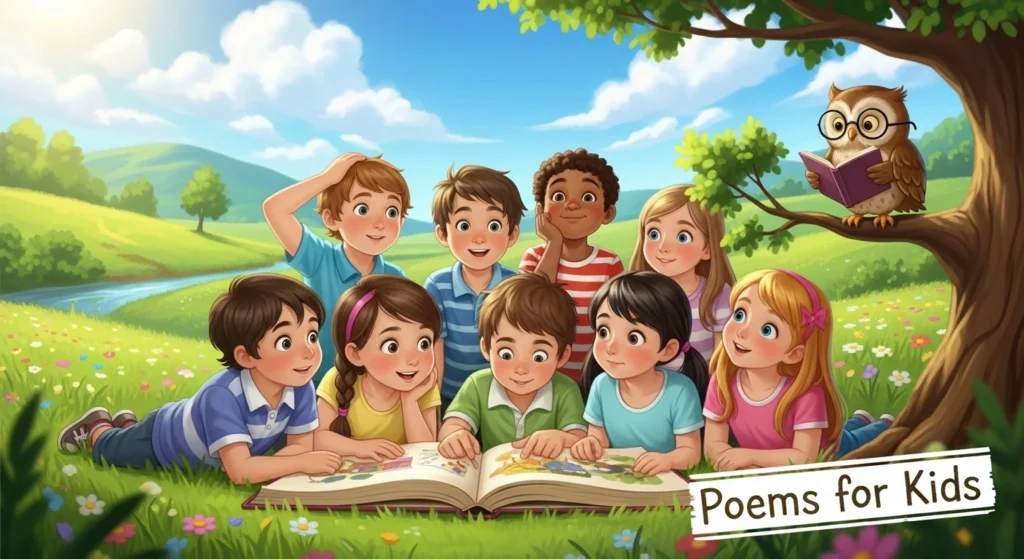
Poems for kids are magical little worlds built from simple words, rhythm, and imagination. One of the most powerful tools in children’s poetry is the simile. Similes make writing colorful by comparing one thing to another using words like “as” or “like.” They help young readers see, feel, and understand ideas more clearly.
In figurative language, similes are especially important because they turn ordinary descriptions into vivid pictures. Nature similes, especially those about trees, are powerful because trees symbolize strength, growth, resilience, wisdom, and deep human emotion. Just like children, trees grow, bend, learn, and stand tall through every season. When we use comparisons in poems for kids, we give young minds images that are easy to understand and fun to imagine.
What Is a Simile?
A simile is a figure of speech that compares two different things using the words like or as to make a description more vivid.
Example: Her smile was as bright as the morning sun.
This comparison helps readers clearly picture how radiant her smile is.
1. As Tall as a Brave Tree
Meaning: Describes someone strong, confident, and proud.
Usage Insight: Works beautifully in poems for kids when describing courage or growth.
Examples:
- The little boy stood as tall as a brave tree on his first day of school.
- She felt as tall as a brave tree after winning the spelling contest.
2. As Gentle as Falling Leaves
Meaning: Very soft and kind.
Usage Insight: Perfect for calm moments or caring characters.
Examples:
- Her voice was as gentle as falling leaves in autumn.
- He touched the kitten as gentle as falling leaves.
3. Like Roots Holding the Earth
Meaning: Strong support or deep connection.
Usage Insight: Ideal for themes of friendship or family.
Examples:
- Their friendship was like roots holding the earth together.
- She held her dreams like roots holding the earth.
4. As Bright as Morning Dew
Meaning: Fresh, hopeful, and full of promise.
Usage Insight: Great for describing new beginnings.
Examples:
- His ideas were as bright as morning dew.
- The classroom felt as bright as morning dew on the first day.
5. Like Branches Reaching for the Sky
Meaning: Ambitious and hopeful.
Usage Insight: Excellent for growth-themed poems for kids.
Examples:
- Her dreams stretched like branches reaching for the sky.
- He raised his hands like branches reaching for the sky.
6. As Strong as an Oak in Winter
Meaning: Steady even during hard times.
Usage Insight: Works well in similes in literature about resilience.
Examples:
- She stayed as strong as an oak in winter.
- The team stood as strong as an oak in winter.
7. Like a Seed Waiting to Bloom
Meaning: Full of hidden potential.
Usage Insight: Perfect for describing children’s growth.
Examples:
- The shy girl was like a seed waiting to bloom.
- His talent was like a seed waiting to bloom.
8. As Calm as a Forest at Dawn
Meaning: Peaceful and quiet.
Usage Insight: Ideal for soothing imagery.
Examples:
- The baby slept as calm as a forest at dawn.
- Her mind felt as calm as a forest at dawn.
9. Like Sunshine Through Leaves
Meaning: Warm and comforting.
Usage Insight: Great for describing kindness.
Examples:
- His laughter was like sunshine through leaves.
- Her hug felt like sunshine through leaves.
10. As Steady as a Tree Trunk
Meaning: Reliable and firm.
Usage Insight: Effective in figurative language examples about trust.
Examples:
- He remained as steady as a tree trunk during the storm.
- Her voice stayed as steady as a tree trunk.
11. Like Blossoms After Rain
Meaning: Fresh joy after sadness.
Usage Insight: Works beautifully in emotional poems for kids.
Examples:
- Their smiles bloomed like blossoms after rain.
- Hope returned like blossoms after rain.
12. As Free as the Wind in the Trees
Meaning: Full of freedom and happiness.
Usage Insight: Perfect for playful scenes.
Examples:
- The children ran as free as the wind in the trees.
- She felt as free as the wind in the trees.
13. Like a Tree Sharing Its Shade
Meaning: Generous and caring.
Usage Insight: Ideal for themes of kindness.
Examples:
- He helped others like a tree sharing its shade.
- Her kindness spread like a tree sharing its shade.
14. As Patient as a Tree in Winter
Meaning: Calmly waiting for change.
Usage Insight: Great for lessons about patience.
Examples:
- She waited as patient as a tree in winter.
- He stayed as patient as a tree in winter.
15. Like Leaves Dancing in the Breeze
Meaning: Playful and joyful.
Usage Insight: Excellent for lively comparisons.
Examples:
- The kids laughed like leaves dancing in the breeze.
- Her curls bounced like leaves dancing in the breeze.
16. As Wise as an Ancient Forest
Meaning: Deeply knowledgeable.
Usage Insight: Works well in reflective poems.
Examples:
- Grandpa seemed as wise as an ancient forest.
- The teacher spoke as wise as an ancient forest.
17. Like a Sapling Growing Stronger

Meaning: Gradual improvement.
Usage Insight: Great for character development.
Examples:
- He improved like a sapling growing stronger.
- Her confidence grew like a sapling growing stronger.
18. As Bright as Autumn Colors
Meaning: Cheerful and lively.
Usage Insight: Adds vivid imagery.
Examples:
- Her dress was as bright as autumn colors.
- His painting shone as bright as autumn colors.
19. Like Raindrops on Leaves
Meaning: Light and refreshing.
Usage Insight: Perfect for calm, soothing scenes.
Examples:
- Her words fell like raindrops on leaves.
- Laughter echoed like raindrops on leaves.
20. As Deep as Forest Roots
Meaning: Strong emotional depth.
Usage Insight: Excellent in heartfelt writing.
Examples:
- Their love was as deep as forest roots.
- His thoughts ran as deep as forest roots.
21. Like a Tree Standing After the Storm
Meaning: Resilient and brave.
Usage Insight: Powerful in motivational poems for kids.
Examples:
- She rose like a tree standing after the storm.
- He smiled like a tree standing after the storm.
22. As Fresh as Spring Leaves
Meaning: New and lively.
Usage Insight: Ideal for beginnings.
Examples:
- The idea felt as fresh as spring leaves.
- Her energy was as fresh as spring leaves.
23. Like a Forest Full of Secrets
Meaning: Mysterious and intriguing.
Usage Insight: Perfect for storytelling.
Examples:
- His imagination was like a forest full of secrets.
- The attic felt like a forest full of secrets.
24. As Warm as Sunlight on Bark
Meaning: Comforting and safe.
Usage Insight: Great for emotional warmth.
Examples:
- Her smile was as warm as sunlight on bark.
- His words felt as warm as sunlight on bark.
25. Like Branches Intertwined
Meaning: Close connection.
Usage Insight: Works well for friendships.
Examples:
- They stood together like branches intertwined.
- Their hands met like branches intertwined.
26. As Quiet as Snow on Pines
Meaning: Extremely silent.
Usage Insight: Ideal for peaceful imagery.
Examples:
- The night was as quiet as snow on pines.
- She tiptoed as quiet as snow on pines.
27. Like a Tree Reaching Toward Light
Meaning: Seeking hope or success.
Usage Insight: Inspiring comparison.
Examples:
- He studied like a tree reaching toward light.
- She grew like a tree reaching toward light.
28. As Green as New Leaves
Meaning: Young and fresh.
Usage Insight: Good for youthful descriptions.
Examples:
- His ideas were as green as new leaves.
- The park looked as green as new leaves.
29. Like Bark Protecting the Heartwood
Meaning: Protective and caring.
Usage Insight: Useful in family-themed poems for kids.
Examples:
- She guarded him like bark protecting the heartwood.
- Parents protect like bark protecting the heartwood.
30. As Light as Petals in the Wind
Meaning: Soft and delicate.
Usage Insight: Great for gentle imagery.
Examples:
- Her laugh was as light as petals in the wind.
- The scarf floated as light as petals in the wind.
31. Like a Tree Counting the Seasons
Meaning: Growing wiser over time.
Usage Insight: Reflective tone.
Examples:
- He learned like a tree counting the seasons.
- She matured like a tree counting the seasons.
32. As Golden as Autumn Sunlight
Meaning: Warm and beautiful.
Usage Insight: Enhances vivid imagery.
Examples:
- Her hair glowed as golden as autumn sunlight.
- The field shimmered as golden as autumn sunlight.
33. Like Leaves Turning Toward the Sun
Meaning: Seeking positivity.
Usage Insight: Inspiring for children’s poetry.
Examples:
- She smiled like leaves turning toward the sun.
- He listened like leaves turning toward the sun.
34. As Firm as Roots in Rock
Meaning: Unshakable determination.
Usage Insight: Excellent for strength themes.
Examples:
- He stood as firm as roots in rock.
- Her promise was as firm as roots in rock.
35. Like a Forest Whispering Stories
Meaning: Full of imagination and mystery.
Usage Insight: Perfect closing image in poems for kids.
Examples:
- Her mind wandered like a forest whispering stories.
- The book opened like a forest whispering stories.
How to Use Similes Effectively in Writing
- Keep comparisons simple so children understand them easily.
- Use nature similes to create strong mental images.
- Avoid overusing similes—balance them with clear descriptions.
- Match the tone of your simile to the mood of your poem or story.
- Be original and avoid clichés.
- In essays or academic writing, use similes carefully to clarify ideas rather than distract from them.
- In songs and creative descriptions, similes add rhythm and emotional depth.
FAQs
1. What are similes in poems for kids? Similes are comparisons using “like” or “as” that help children visualize ideas clearly and creatively.
2. What is the difference between a simile and a metaphor? A simile uses “like” or “as,” while a metaphor directly states that something is something else.
3. Why are nature similes popular in children’s poetry? Nature is familiar and visual, making comparisons easy for children to understand.
4. Can similes be used in academic writing? Yes, but they should clarify ideas rather than make the writing too decorative.
5. How do similes improve figurative language examples? They add imagery, emotion, and clearer comparisons that engage readers.
Conclusion
Poems for kids become richer and more memorable when they include thoughtful similes. These comparisons transform simple sentences into vivid images filled with strength, growth, resilience, and warmth—just like trees standing tall through every season. By using creative nature similes and meaningful comparisons, writers can make figurative language come alive for young readers. Whether in poems, stories, songs, or essays, similes add clarity, imagination, and emotional depth to language. When used carefully and creatively, they help children not only understand words—but truly feel them.