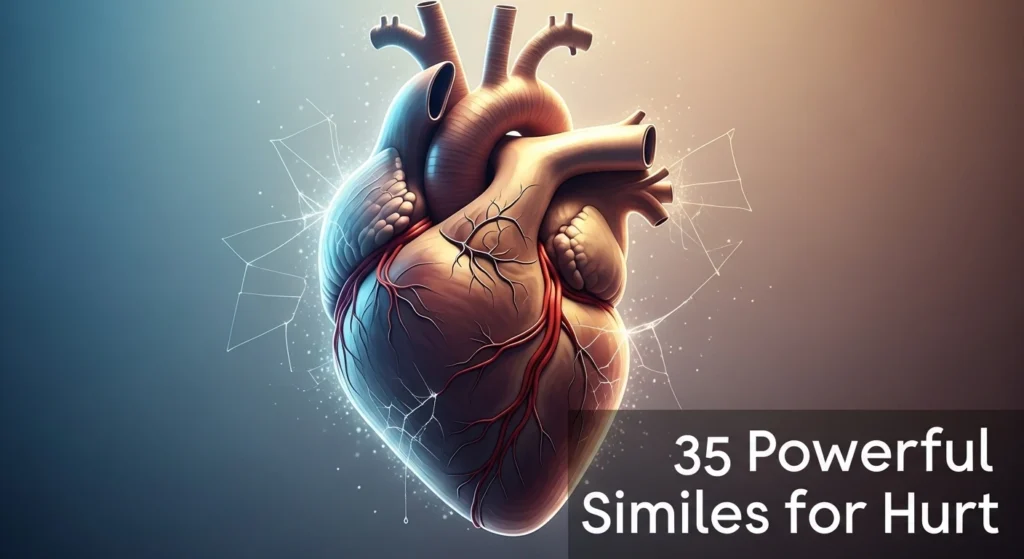
Words often struggle to describe pain. Whether it is physical injury or emotional heartbreak, hurt can feel heavy, sharp, silent, or overwhelming. This is where similes become powerful tools in figurative language. Similes help us create vivid comparisons using “like” or “as,” allowing readers to truly feel what we describe. Through strong comparisons, writers can turn abstract emotions into clear and memorable images.
Nature has always helped writers express deep emotions. Just as trees bend in storms yet remain rooted, human beings experience pain yet continue to grow. Trees symbolize strength, resilience, wisdom, and emotional endurance. In the same way, similes for hurt allow us to connect pain with natural imagery, everyday experiences, and sensory details that readers instantly understand. By using well-crafted similes in literature and creative writing, we transform simple descriptions into powerful emotional moments.
In this guide, you’ll discover 35 original and expressive similes for hurt, complete with meanings, usage insights, and examples to enrich your writing.
What Is a Simile?
A simile is a figure of speech that compares two different things using the words “like” or “as.” It helps make descriptions clearer, more vivid, and emotionally engaging.
Example: Her heart felt like a cracked mirror, reflecting pain in every direction.
This comparison helps the reader visualize emotional damage more clearly than simply saying “she was hurt.”
1. Hurt like a bruise pressed too hard
Meaning: A pain that intensifies when touched or remembered.
Usage Insight: Works well when describing emotional wounds that resurface easily.
Examples:
- His words hurt like a bruise pressed too hard.
- The memory hurt like a bruise pressed too hard whenever it returned.
2. Hurt like a tree split by lightning
Meaning: Sudden, shocking emotional pain.
Usage Insight: Perfect for betrayal or unexpected loss.
Examples:
- Her betrayal hurt like a tree split by lightning.
- The news struck him, hurting like a tree split by lightning.
3. Hurt like salt in an open wound
Meaning: Pain made worse by additional harm.
Usage Insight: Ideal for layered emotional conflicts.
Examples:
- His sarcasm hurt like salt in an open wound.
- Watching her move on hurt like salt in an open wound.
4. Hurt like glass beneath bare feet
Meaning: Sharp and piercing pain.
Usage Insight: Best for describing harsh criticism or guilt.
Examples:
- The accusation hurt like glass beneath bare feet.
- Every harsh word hurt like glass beneath bare feet.
5. Hurt like winter without a coat
Meaning: Cold, exposed, and lonely pain.
Usage Insight: Effective for loneliness or rejection.
Examples:
- Being ignored hurt like winter without a coat.
- His absence hurt like winter without a coat.
6. Hurt like a storm tearing through leaves
Meaning: Chaotic, overwhelming emotional pain.
Usage Insight: Great for heartbreak scenes in stories.
Examples:
- The breakup hurt like a storm tearing through leaves.
- Her anger hurt like a storm tearing through leaves.
7. Hurt like a fading echo in an empty room
Meaning: Quiet, lingering sadness.
Usage Insight: Works for reflective or poetic writing.
Examples:
- The silence hurt like a fading echo in an empty room.
- His goodbye hurt like a fading echo in an empty room.
8. Hurt like a splinter buried deep
Meaning: Small but persistent pain.
Usage Insight: Good for subtle emotional wounds.
Examples:
- Her doubt hurt like a splinter buried deep.
- The regret hurt like a splinter buried deep in his heart.
9. Hurt like a cracked bell that cannot ring
Meaning: Damage that changes someone permanently.
Usage Insight: Powerful in symbolic or literary contexts.
Examples:
- The betrayal hurt like a cracked bell that cannot ring.
- Losing trust hurt like a cracked bell that cannot ring again.
10. Hurt like rain on fresh scars
Meaning: Old pain resurfacing.
Usage Insight: Ideal for past trauma returning.
Examples:
- Seeing him again hurt like rain on fresh scars.
- The anniversary hurt like rain on fresh scars.
11. Hurt like thorns against soft skin
Meaning: Gentle vulnerability meeting harsh treatment.
Usage Insight: Great for sensitive characters.
Examples:
- Her criticism hurt like thorns against soft skin.
- The rejection hurt like thorns against soft skin.
12. Hurt like a candle blown out too soon
Meaning: A loss of hope or potential.
Usage Insight: Useful in tragic scenes.
Examples:
- The failure hurt like a candle blown out too soon.
- His dream ending hurt like a candle blown out too soon.
13. Hurt like waves crashing against cliffs
Meaning: Repeated emotional impact.
Usage Insight: Works for ongoing arguments or grief.
Examples:
- Their fights hurt like waves crashing against cliffs.
- The guilt hurt like waves crashing against cliffs.
14. Hurt like frost on tender blossoms
Meaning: Innocence harmed unexpectedly.
Usage Insight: Perfect for youth or fragile hope.
Examples:
- The harsh truth hurt like frost on tender blossoms.
- Her disappointment hurt like frost on tender blossoms.
15. Hurt like a rope pulled too tight
Meaning: Emotional strain reaching a breaking point.
Usage Insight: Effective in tense narratives.
Examples:
- The pressure hurt like a rope pulled too tight.
- Keeping secrets hurt like a rope pulled too tight.
16. Hurt like smoke in tired eyes
Meaning: Irritating, exhausting emotional pain.
Usage Insight: Good for long-term stress.
Examples:
- His lies hurt like smoke in tired eyes.
- The conflict hurt like smoke in tired eyes.
17. Hurt like a bird with a broken wing

Meaning: Helpless and vulnerable pain.
Usage Insight: Strong in emotional storytelling.
Examples:
- She felt hurt like a bird with a broken wing.
- His pride hurt like a bird with a broken wing.
18. Hurt like a shadow that never leaves
Meaning: Persistent emotional pain.
Usage Insight: Great for trauma narratives.
Examples:
- The memory hurt like a shadow that never leaves.
- His mistake hurt like a shadow that never leaves.
19. Hurt like a door slammed in silence
Meaning: Sudden rejection.
Usage Insight: Works in relationship conflicts.
Examples:
- Her refusal hurt like a door slammed in silence.
- The dismissal hurt like a door slammed in silence.
20. Hurt like sand in open eyes
Meaning: Immediate discomfort and irritation.
Usage Insight: Good for tense dialogue.
Examples:
- His remark hurt like sand in open eyes.
- The insult hurt like sand in open eyes.
21. Hurt like a branch snapping in a storm
Meaning: Breaking under pressure.
Usage Insight: Useful in dramatic scenes.
Examples:
- His patience hurt like a branch snapping in a storm.
- The argument hurt like a branch snapping in a storm.
22. Hurt like fire under frozen skin
Meaning: Hidden but intense pain.
Usage Insight: Works for suppressed emotions.
Examples:
- Her jealousy hurt like fire under frozen skin.
- The shame hurt like fire under frozen skin.
23. Hurt like an unanswered prayer
Meaning: Deep disappointment.
Usage Insight: Ideal for reflective essays.
Examples:
- The silence hurt like an unanswered prayer.
- His hope fading hurt like an unanswered prayer.
24. Hurt like a mirror shattering in slow motion
Meaning: Gradual emotional breakdown.
Usage Insight: Excellent in descriptive narratives.
Examples:
- The truth hurt like a mirror shattering in slow motion.
- Her trust hurt like a mirror shattering in slow motion.
25. Hurt like an old photograph fading
Meaning: Loss mixed with nostalgia.
Usage Insight: Works in memoir writing.
Examples:
- The memory hurt like an old photograph fading.
- Their friendship ending hurt like an old photograph fading.
26. Hurt like thunder without warning
Meaning: Sudden shock or betrayal.
Usage Insight: Strong in dramatic scenes.
Examples:
- The accusation hurt like thunder without warning.
- The confession hurt like thunder without warning.
27. Hurt like stepping into icy water
Meaning: Sharp, immediate emotional reaction.
Usage Insight: Useful in conflict scenes.
Examples:
- The breakup hurt like stepping into icy water.
- Her cold tone hurt like stepping into icy water.
28. Hurt like a song stuck on one sad note
Meaning: Lingering sorrow.
Usage Insight: Great in poetic writing.
Examples:
- The regret hurt like a song stuck on one sad note.
- His loneliness hurt like a song stuck on one sad note.
29. Hurt like a cracked foundation
Meaning: Deep structural emotional damage.
Usage Insight: Effective for trust issues.
Examples:
- The betrayal hurt like a cracked foundation.
- Losing faith hurt like a cracked foundation.
30. Hurt like a candle dripping wax
Meaning: Slow, steady pain.
Usage Insight: Best in reflective passages.
Examples:
- Waiting hurt like a candle dripping wax.
- The silence hurt like a candle dripping wax.
31. Hurt like a locked door with no key
Meaning: Feeling trapped or hopeless.
Usage Insight: Good for psychological themes.
Examples:
- His confusion hurt like a locked door with no key.
- The rejection hurt like a locked door with no key.
32. Hurt like dust in a healing wound
Meaning: Pain that interrupts recovery.
Usage Insight: Useful in reconciliation scenes.
Examples:
- Her return hurt like dust in a healing wound.
- The reminder hurt like dust in a healing wound.
33. Hurt like a tree losing its last leaf
Meaning: Final stage of loss.
Usage Insight: Strong seasonal symbolism.
Examples:
- Saying goodbye hurt like a tree losing its last leaf.
- The ending hurt like a tree losing its last leaf.
34. Hurt like silence after a scream
Meaning: Emotional emptiness following chaos.
Usage Insight: Works in dramatic writing.
Examples:
- The calm hurt like silence after a scream.
- His withdrawal hurt like silence after a scream.
35. Hurt like roots torn from the earth
Meaning: Deep emotional displacement.
Usage Insight: Ideal for themes of separation or exile.
Examples:
- Leaving home hurt like roots torn from the earth.
- The separation hurt like roots torn from the earth.
How to Use Similes Effectively in Writing
- Be specific. Strong comparisons create clearer images.
- Match the tone. Gentle similes suit reflective writing, while sharp similes fit dramatic scenes.
- Avoid clichés. Original comparisons feel fresh and authentic.
- Use sparingly. Too many similes can overwhelm your writing.
- Connect with nature. Nature similes often feel universal and emotionally powerful.
Similes work beautifully in poems, short stories, novels, essays, speeches, and even song lyrics. They add texture, rhythm, and emotional clarity to language.
FAQs
1. What are similes for hurt? Similes for hurt are comparisons that describe emotional or physical pain using “like” or “as” to create vivid imagery.
2. How are similes different from metaphors? Similes use “like” or “as” to compare two things, while metaphors directly state that one thing is another.
3. Why are similes important in literature? Similes make writing more expressive, relatable, and emotionally powerful.
4. Can similes be used in academic writing? Yes, but sparingly. They are more common in creative writing, essays, and descriptive narratives.
5. How can I create original similes? Observe nature, emotions, and everyday experiences, then find meaningful comparisons.
Conclusion
Strong similes for hurt transform ordinary descriptions into powerful emotional experiences. Through creative comparisons, writers give shape to invisible pain and allow readers to truly feel the moment. Whether inspired by storms, trees, frost, fire, or silence, similes add clarity, imagery, and emotional depth to language. When used thoughtfully, they enrich poems, stories, essays, and songs with resonance and meaning. Mastering similes is not just about decoration—it is about connection.