Language becomes vivid and unforgettable when we use similes to paint pictures with words. Similes are powerful tools in figurative language because they compare one thing to another using “like” or “as,” helping readers see emotions and actions more clearly. When describing intense or wild behavior, writers often search for expressive similes for crazy that feel fresh and meaningful.
Nature, especially trees, offers rich inspiration in figurative language examples because trees symbolize strength, growth, resilience, wisdom, and deep human emotion. Just like a storm-bent oak or a wildly swaying branch, human behavior can shift between calm and chaos. By using strong comparisons, we make writing more engaging, dramatic, and memorable. In this article, you’ll discover creative similes in literature style, along with practical comparisons you can use in stories, essays, and everyday writing.
What Is a Simile?
A simile is a figure of speech that compares two different things using the words like or as to create a vivid image in the reader’s mind.
Example: He was as restless as a tree shaking in a storm.
This comparison helps readers instantly imagine nervous energy and movement.
1. Crazy like a squirrel in a thunderstorm
Meaning: Extremely restless or panicked.
Usage Insight: Works well when describing frantic behavior or anxious excitement.
Examples:
- She rushed around the house like a squirrel in a thunderstorm before her big presentation.
- The children were screaming and running like squirrels in a thunderstorm at the birthday party.
2. Crazy like leaves spinning in a whirlwind
Meaning: Out of control or wildly energetic.
Usage Insight: Ideal for chaotic scenes in stories.
Examples:
- His thoughts were spinning like leaves in a whirlwind.
- The marketplace erupted like leaves caught in a sudden gust.
3. Crazy like a monkey on a sugar rush
Meaning: Hyperactive and uncontrollable.
Usage Insight: Great for humorous writing or playful exaggeration.
Examples:
- After drinking soda, he acted like a monkey on a sugar rush.
- The puppy darted around like a monkey on a sugar rush.
4. Crazy like fireworks in the night sky
Meaning: Loud, explosive, and dramatic.
Usage Insight: Perfect for emotional outbursts.
Examples:
- Her temper flared like fireworks in the night sky.
- The celebration burst alive like fireworks above the city.
5. Crazy like a storm-tossed tree
Meaning: Wild and emotionally shaken.
Usage Insight: Useful in dramatic or poetic descriptions.
Examples:
- He felt like a storm-tossed tree after hearing the news.
- Her emotions bent and twisted like a storm-tossed tree.
6. Crazy like a cat chasing its own tail
Meaning: Silly or irrational.
Usage Insight: Best for lighthearted descriptions.
Examples:
- He argued in circles like a cat chasing its own tail.
- The debate felt pointless, like a cat chasing its tail.
7. Crazy like a volcano ready to erupt
Meaning: Full of bottled-up anger or energy.
Usage Insight: Effective in intense emotional writing.
Examples:
- She stood there like a volcano ready to erupt.
- His silence was like lava building inside a volcano.
8. Crazy like bees in a shaken hive
Meaning: Agitated and buzzing with energy.
Usage Insight: Works well for crowded or tense scenes.
Examples:
- The office was buzzing like bees in a shaken hive.
- Students poured out like bees disturbed from their hive.
9. Crazy like a fox in a henhouse
Meaning: Mischievous and chaotic.
Usage Insight: Good for storytelling with dramatic tension.
Examples:
- He slipped into the meeting like a fox in a henhouse.
- The prankster caused trouble like a fox in a henhouse.
10. Crazy like lightning zigzagging across the sky
Meaning: Fast and unpredictable.
Usage Insight: Ideal for action scenes.
Examples:
- His ideas jumped like lightning across the sky.
- The conversation changed like lightning during a storm.
11. Crazy like a river after heavy rain
Meaning: Overflowing with unstoppable force.
Usage Insight: Strong for emotional overflow.
Examples:
- Her laughter rushed like a river after heavy rain.
- His anger surged like a flooded river.
12. Crazy like wind rattling old windows
Meaning: Loud and unsettling.
Usage Insight: Effective for eerie or tense settings.
Examples:
- The rumors spread like wind rattling old windows.
- Her nervous laugh echoed like a rattling pane.
13. Crazy like a rooster at sunrise
Meaning: Overexcited and loud.
Usage Insight: Great for comedic descriptions.
Examples:
- He bragged like a rooster at sunrise.
- The boy shouted like a rooster greeting dawn.
14. Crazy like a carousel spinning too fast
Meaning: Dizzying and overwhelming.
Usage Insight: Useful in emotional or psychological scenes.
Examples:
- Her thoughts whirled like a carousel spinning too fast.
- The day passed like a ride out of control.
15. Crazy like popcorn in a hot pan
Meaning: Bursting with sudden energy.
Usage Insight: Good for lively descriptions.
Examples:
- Ideas popped like popcorn in his mind.
- The crowd reacted like kernels exploding in heat.
16. Crazy like a wolf howling at the moon
Meaning: Wild and emotionally raw.
Usage Insight: Poetic and dramatic writing.
Examples:
- He laughed like a wolf howling at the moon.
- Her cry echoed like a lone wolf at midnight.
17. Crazy like a kite caught in a hurricane
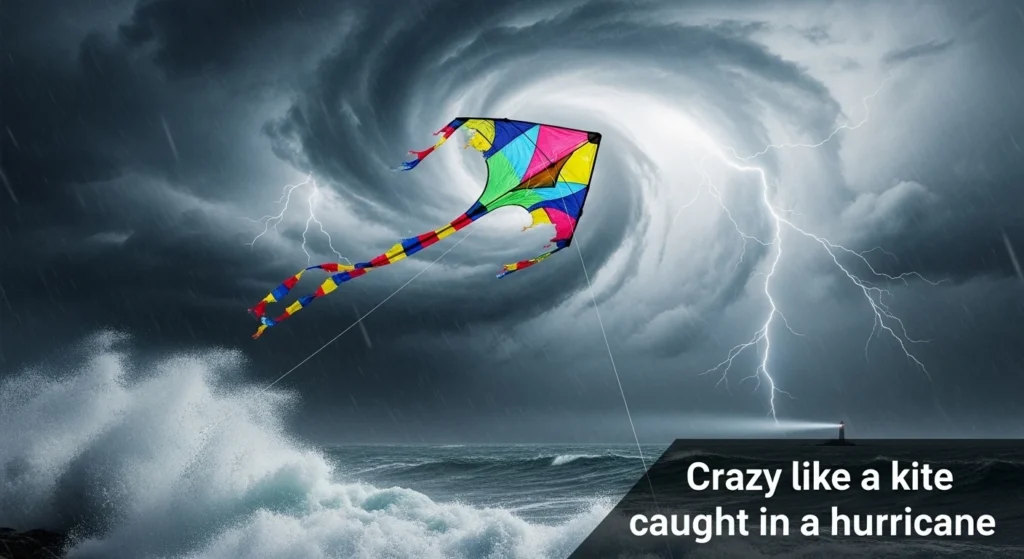
Meaning: Completely out of control.
Usage Insight: Powerful for chaotic moments.
Examples:
- His plans flew apart like a kite in a hurricane.
- The argument spiraled like a torn kite in wind.
18. Crazy like ants in a disturbed nest
Meaning: Frantic and disorganized.
Usage Insight: Works well for busy settings.
Examples:
- Workers scattered like ants in a disturbed nest.
- The hallway buzzed like an upset colony.
19. Crazy like a drum beaten too hard
Meaning: Overly intense or loud.
Usage Insight: Useful in musical or emotional contexts.
Examples:
- His heart pounded like a drum beaten too hard.
- The tension throbbed like relentless percussion.
20. Crazy like a painter splashing colors wildly
Meaning: Creative but chaotic.
Usage Insight: Ideal for artistic descriptions.
Examples:
- Her imagination worked like a painter splashing colors wildly.
- The festival looked like paint thrown across canvas.
21. Crazy like a fox in a maze
Meaning: Cunning but erratic.
Usage Insight: Great for describing unpredictable intelligence.
Examples:
- He plotted like a fox in a maze.
- Her strategy twisted like a clever animal finding escape.
22. Crazy like a branch snapping in the wind
Meaning: Sudden and sharp reaction.
Usage Insight: Dramatic turning points.
Examples:
- His patience broke like a branch in the wind.
- The mood shifted like cracking wood in a storm.
23. Crazy like a clock spinning without hands
Meaning: Directionless madness.
Usage Insight: Symbolic writing.
Examples:
- His schedule felt like a clock spinning without hands.
- The plan ran like time without meaning.
24. Crazy like a lion pacing in a cage
Meaning: Restless and frustrated.
Usage Insight: Emotional intensity scenes.
Examples:
- She paced like a lion in a cage.
- He waited like a trapped animal.
25. Crazy like a train racing downhill
Meaning: Gaining speed uncontrollably.
Usage Insight: Action scenes.
Examples:
- Events unfolded like a train racing downhill.
- His words tumbled like unstoppable wheels.
26. Crazy like sparks flying from a fire
Meaning: Quick and explosive.
Usage Insight: Romantic or angry exchanges.
Examples:
- Their argument flew like sparks from a fire.
- Ideas flashed like bright embers.
27. Crazy like a storm breaking over the sea
Meaning: Powerful and overwhelming.
Usage Insight: Epic storytelling.
Examples:
- His emotions crashed like a storm at sea.
- The news hit like thunder over water.
28. Crazy like a jack-in-the-box popping open
Meaning: Sudden surprise.
Usage Insight: Humor or suspense.
Examples:
- He shouted like a jack-in-the-box popping open.
- The secret burst out unexpectedly.
29. Crazy like ivy climbing without control
Meaning: Gradually overwhelming.
Usage Insight: Slow-building tension.
Examples:
- Fear spread like ivy climbing a wall.
- Rumors grew like creeping vines.
30. Crazy like a hurricane tearing through trees
Meaning: Destructive intensity.
Usage Insight: Dramatic narratives.
Examples:
- His rage moved like a hurricane through trees.
- Change swept in like violent wind.
31. Crazy like a drummer lost in rhythm
Meaning: Passionate but reckless.
Usage Insight: Artistic settings.
Examples:
- She danced like a drummer lost in rhythm.
- He worked with reckless musical energy.
32. Crazy like waves crashing endlessly
Meaning: Relentless and unstoppable.
Usage Insight: Emotional repetition.
Examples:
- Doubts returned like crashing waves.
- Her laughter rolled like tide after tide.
33. Crazy like a compass spinning near a magnet
Meaning: Confused and unstable.
Usage Insight: Symbolic comparisons.
Examples:
- His decisions spun like a compass near a magnet.
- The team felt directionless.
34. Crazy like thunder shaking the sky
Meaning: Loud and dramatic.
Usage Insight: Powerful reactions.
Examples:
- His voice boomed like thunder.
- The applause roared across the hall.
35. Crazy like roots breaking through stone
Meaning: Fierce persistence that seems wild.
Usage Insight: Inspirational tone.
Examples:
- Her determination pushed forward like roots through stone.
- His ambition cracked limits like growing roots.
How to Use Similes Effectively in Writing
- Be specific: Fresh comparisons create stronger imagery.
- Match the tone: Use playful similes in light scenes and intense ones in dramatic writing.
- Avoid overuse: Too many comparisons weaken impact.
- Draw from nature: Nature similes feel timeless and relatable.
- Revise for clarity: Ensure the comparison enhances meaning rather than confusing readers.
Similes in literature often succeed because they deepen emotion without overcomplicating language. Whether you are writing poems, songs, essays, or short stories, thoughtful comparisons add rhythm and vividness.
FAQs
1. What are similes for crazy?
Similes for crazy are creative comparisons that describe wild, intense, or unpredictable behavior using “like” or “as.”
2. What is the difference between similes and metaphors?
A simile uses “like” or “as” to compare two things, while a metaphor states the comparison directly without those words.
3. Are similes useful in academic writing?
Yes, when used carefully, similes can clarify complex ideas and make explanations more relatable.
4. Why are nature similes so popular?
Nature provides universal images—storms, trees, rivers—that readers easily understand and visualize.
5. How do similes improve creative writing?
They add imagery, emotional depth, rhythm, and originality to language.
Conclusion
Strong similes for crazy bring energy and color to your writing. Through vivid comparisons inspired by storms, trees, animals, and natural forces, you can express intensity in a way that feels clear and memorable. Like roots pushing through stone or thunder shaking the sky, well-crafted similes strengthen your message and deepen emotional impact. Whether you’re crafting poetry, fiction, essays, or songs, thoughtful figurative language examples transform ordinary descriptions into powerful storytelling. Use these comparisons wisely, and your writing will feel alive, expressive, and unforgettable.