Language becomes alive when we move beyond plain facts and begin to paint pictures with words. That’s where similes and metaphors step in. These powerful tools of figurative language help writers describe emotions, nature, people, and experiences in ways that feel vivid and memorable.
Similes, in particular, create direct comparisons using the words “like” or “as,” making ideas clearer and more relatable. They are widely used in poetry, fiction, speeches, and even everyday conversations. In literature, nature similes often draw on powerful symbols such as trees. Trees represent strength, growth, resilience, wisdom, and deep human emotion. Just as a tree stands firm through storms and seasons, similes help language stand tall with meaning and beauty.
What Is a Simile?
A simile is a figure of speech that compares two different things using the words “like” or “as.” It highlights similarities in a clear and imaginative way.
Example: Her voice was as soft as falling snow.
This comparison helps readers instantly imagine gentleness and quietness.
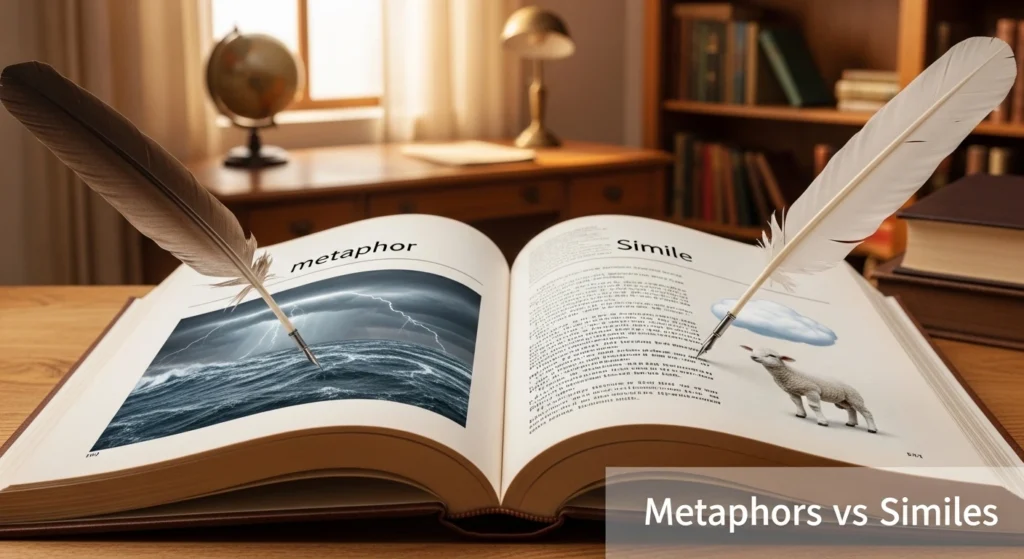
Metaphors vs Similes: What’s the Difference?
When exploring metaphors vs similes, the main difference lies in how the comparison is made:
- A simile uses like or as. He is as brave as a lion.
- A metaphor makes a direct comparison without like or as. He is a lion in battle.
Both are essential figurative language examples, but similes feel more explicit and clear, while metaphors can feel stronger and more dramatic. Writers often choose between them depending on tone, purpose, and style.
As strong as an ancient oak
Meaning: Extremely strong and steady.
Usage Insight: Perfect for describing resilience, emotional endurance, or physical strength.
Examples: He stood as strong as an ancient oak during the crisis. Her determination was as strong as an ancient oak rooted in deep soil.
Like sunlight breaking through storm clouds
Meaning: Bringing sudden hope or happiness.
Usage Insight: Works beautifully in emotional or uplifting scenes.
Examples: Her laughter was like sunlight breaking through storm clouds. The good news arrived like sunlight after a week of rain.
As calm as a still lake at dawn
Meaning: Peaceful and undisturbed.
Usage Insight: Ideal for describing composure or serene settings.
Examples: He remained as calm as a still lake at dawn. The classroom felt as calm as morning water before the wind rises.
Like roots gripping the earth
Meaning: Deeply connected or grounded.
Usage Insight: Excellent for themes of belonging or loyalty.
Examples: Her traditions held her like roots gripping the earth. His values were like roots that kept him steady.
As bright as a midsummer sky
Meaning: Very cheerful or intelligent.
Usage Insight: Great for personality descriptions.
Examples: Her smile was as bright as a midsummer sky. The child’s curiosity shone as bright as summer daylight.
Like leaves dancing in autumn wind
Meaning: Light, carefree movement.
Usage Insight: Ideal for describing grace or freedom.
Examples: She moved like leaves dancing in autumn wind. His thoughts fluttered like golden leaves in October.
As steady as a lighthouse in a storm
Meaning: Reliable and unwavering.
Usage Insight: Works well in leadership or support themes.
Examples: She was as steady as a lighthouse in a storm. His advice remained steady when emotions ran high.
Like a seed waiting for rain
Meaning: Full of potential but waiting for opportunity.
Usage Insight: Powerful in growth or transformation narratives.
Examples: He felt like a seed waiting for rain. Her talent rested quietly like a seed beneath dry soil.
As fragile as frost on morning grass
Meaning: Delicate and easily harmed.
Usage Insight: Effective in emotional or vulnerable contexts.
Examples: His confidence was as fragile as frost on morning grass. Their truce felt as fragile as winter ice.
Like thunder rolling across hills
Meaning: Loud and powerful.
Usage Insight: Best for dramatic scenes.
Examples: Her voice echoed like thunder rolling across hills. Applause rose like distant thunder.
As gentle as falling petals
Meaning: Soft and tender.
Usage Insight: Romantic or affectionate writing.
Examples: Her touch was as gentle as falling petals. His words landed as gently as blossoms in spring.
Like a river carving stone
Meaning: Persistent and transformative.
Usage Insight: Works well in motivational writing.
Examples: Change moved like a river carving stone. Her patience shaped him like water shapes rock.
As tall as a mountain pine
Meaning: Impressive and proud.
Usage Insight: Great for physical or symbolic height.
Examples: He stood as tall as a mountain pine. Her dreams rose tall against doubt.
Like stars scattered across velvet
Meaning: Beautiful and striking.
Usage Insight: Perfect for descriptive imagery.
Examples: Her eyes sparkled like stars scattered across velvet. The city lights shimmered in the night.
As quick as summer lightning
Meaning: Extremely fast.
Usage Insight: Action scenes or sharp reactions.
Examples: He moved as quick as summer lightning. Her response came instantly.
Like snow melting under spring sun
Meaning: Gradually disappearing.
Usage Insight: Emotional healing or fading tension.
Examples: His anger faded like snow melting under spring sun. Fear disappeared in warmth.
As deep as forest shadows
Meaning: Mysterious or profound.
Usage Insight: Character depth or emotion.
Examples: Her thoughts were as deep as forest shadows. His silence held hidden meaning.
Like wind whispering through branches
Meaning: Soft and subtle.
Usage Insight: Poetic or reflective tone.
Examples: Her voice sounded like wind through branches. Secrets moved quietly through the room.
As bright as morning dew
Meaning: Fresh and lively.
Usage Insight: Youthful energy.
Examples: The child looked as bright as morning dew. Hope sparkled in her eyes.
Like waves kissing the shore
Meaning: Gentle repetition.
Usage Insight: Romantic or calming imagery.
Examples: His reassurance came like waves kissing the shore. Memories returned in soft rhythms.
As silent as snowfall at midnight
Meaning: Completely quiet.
Usage Insight: Atmospheric description.
Examples: The house felt as silent as snowfall at midnight. The forest held its breath.
Like ivy climbing a wall
Meaning: Gradual growth.
Usage Insight: Slow progress themes.
Examples: Confidence grew like ivy climbing a wall. Trust formed over time.
As warm as sunlight on skin
Meaning: Comforting and kind.
Usage Insight: Emotional warmth.
Examples: Her hug was as warm as sunlight on skin. His welcome felt genuine.
Like branches reaching for the sky
Meaning: Ambitious and hopeful.
Usage Insight: Aspirational writing.
Examples: Her goals stretched like branches reaching for the sky. Dreams expanded upward.
As clear as a mountain stream
Meaning: Easy to understand.
Usage Insight: Clarity in explanation.
Examples: His instructions were as clear as a mountain stream. The message flowed smoothly.
Like petals opening to light
Meaning: Slowly becoming confident.
Usage Insight: Character growth.
Examples: She blossomed like petals opening to light. His confidence unfolded gently.
As fierce as a winter wind
Meaning: Intense and strong.
Usage Insight: Conflict scenes.
Examples: Her anger was as fierce as winter wind. Determination swept through him.
Like moss clinging to stone
Meaning: Persistent attachment.
Usage Insight: Loyalty or memory themes.
Examples: The memory clung like moss to stone. Hope refused to fade.
As patient as a growing tree
Meaning: Calm and enduring.
Usage Insight: Wisdom symbolism.
Examples: He waited as patiently as a growing tree. Success took time to mature.
Like fireflies in summer dusk
Meaning: Brief and magical.
Usage Insight: Nostalgic tone.
Examples: Joy flickered like fireflies in summer dusk. The moment glowed softly.
As smooth as polished marble
Meaning: Refined and flawless.
Usage Insight: Describing surfaces or speech.
Examples: Her performance was as smooth as polished marble. His voice carried elegance.
Like rain nourishing dry earth
Meaning: Revitalizing and refreshing.
Usage Insight: Renewal themes.
Examples: Encouragement fell like rain on dry earth. The opportunity revived his spirit.
As golden as autumn sunlight
Meaning: Rich and warm.
Usage Insight: Descriptive imagery.
Examples: Her hair glowed as golden as autumn sunlight. The field shimmered brightly.
Like echoes across a canyon
Meaning: Lingering impact.
Usage Insight: Memory or influence themes.
Examples: His words echoed like sound across a canyon. The laughter stayed long after.
As unshakable as bedrock
Meaning: Firm and dependable.
Usage Insight: Trust and integrity.
Examples: Her loyalty was as unshakable as bedrock. His faith never moved.
How to Use Similes Effectively in Writing
- Match tone and theme. Choose nature similes for poetic writing and simple comparisons for essays.
- Avoid clichés. Original similes make your work fresh and memorable.
- Be specific. Strong imagery creates vivid mental pictures.
- Use sparingly. Too many comparisons can overwhelm readers.
- Blend with context. Similes should enhance meaning, not distract from it.
In poems, similes add rhythm and beauty. In stories, they deepen character emotion. In essays, they clarify complex ideas. In songs, they create memorable imagery.
FAQs
1. What is the main difference between metaphors vs similes?
Similes use “like” or “as,” while metaphors make direct comparisons without those words.
2. Are similes better than metaphors?
Neither is better. Similes are clearer; metaphors are often more dramatic.
3. Can similes be used in academic writing?
Yes, when used carefully, they clarify ideas and improve readability.
4. Why are similes common in literature?
Similes in literature help readers visualize scenes and connect emotionally.
5. What are examples of nature similes?
Examples include “as calm as a still lake” and “like roots gripping the earth.”
Conclusion
Understanding metaphors vs similes empowers writers to choose the most effective form of comparison. Similes bring clarity, vivid imagery, and emotional depth to language, much like a strong tree adds beauty and strength to a landscape. Through thoughtful comparisons, writers can transform simple sentences into powerful expressions. Whether you are crafting poetry, storytelling, essays, or songs, mastering similes strengthens your voice and sharpens your imagery. Like roots anchoring a mighty oak, well-chosen similes ground your writing in meaning while allowing your ideas to reach skyward.