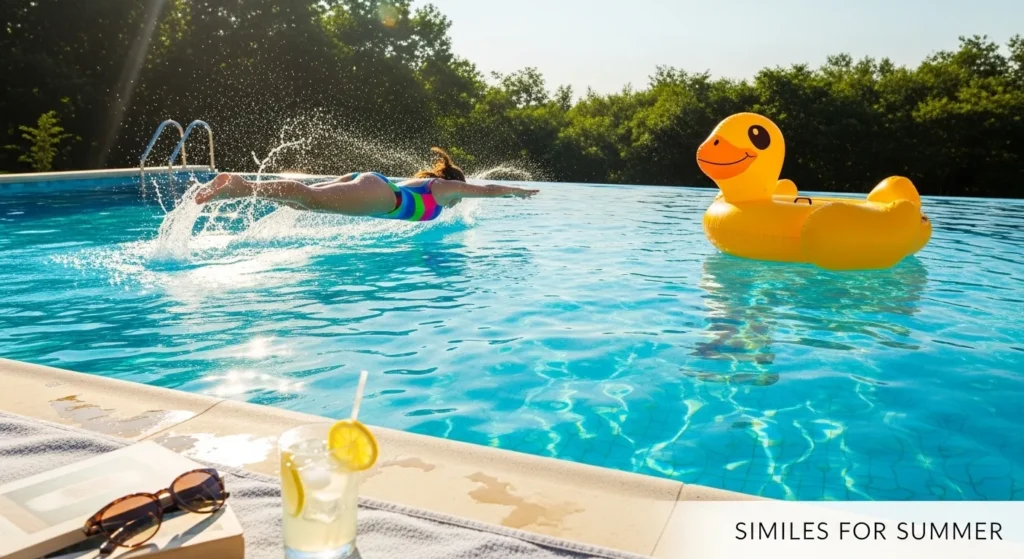
Summer is a season full of vibrant energy, long sunny days, and the soothing sounds of nature. It’s a time when the world seems to bloom with life, and every moment feels brighter and more alive. But how can writers capture this essence of summer in words? That’s where similes come in.
Similes are figures of speech that compare two unlike things using “like” or “as,” making writing more vivid, relatable, and emotionally engaging. By using similes, you can paint pictures in readers’ minds, evoke feelings, and make ordinary descriptions extraordinary. Nature, especially summer landscapes, offers a rich palette for figurative language, providing endless inspiration for comparisons.
Just as trees symbolize strength, growth, resilience, and wisdom, similes can give your writing depth, clarity, and emotional resonance. In this article, we’ll explore 35 unique similes for summer, along with guidance on how to use them effectively in your creative and academic writing.
What Is a Simile?
A simile is a figure of speech that directly compares two different things using the words “like” or “as.” Similes are powerful tools that make descriptions more vivid, helping readers to see, hear, or feel what the writer intends.
Example: “The summer sun was as fierce as a lion, roaring down on the city streets.”
This simile compares the intensity of the summer sun to a lion, instantly conveying heat, strength, and an almost wild energy.
1. As golden as a wheat field in July
Meaning: Highlights bright, warm, golden tones of summer sunlight.
Usage: Best used in descriptive writing about sunlight, landscapes, or warmth.
Example Sentences:
- Her hair shimmered in the sunlight, as golden as a wheat field in July.
- The morning light spread across the meadow, as golden as a wheat field in July.
2. Like a lazy river in the afternoon
Meaning: Conveys slow, relaxed movement, peacefulness.
Usage: Ideal for setting a tranquil, summery mood.
Example Sentences:
- He strolled through the park, moving like a lazy river in the afternoon.
- The conversation drifted on, like a lazy river in the afternoon.
3. As bright as a sunflower in full bloom
Meaning: Represents cheerfulness, energy, and optimism.
Usage: Works well for lively descriptions or joyful characters.
Example Sentences:
- Her smile was as bright as a sunflower in full bloom.
- The festival decorations were as bright as a sunflower in full bloom.
4. Like fireflies dancing at dusk
Meaning: Evokes fleeting beauty and magical moments.
Usage: Perfect for evening summer scenes or whimsical writing.
Example Sentences:
- Children ran across the yard, laughing like fireflies dancing at dusk.
- Memories of that night glimmered in his mind like fireflies dancing at dusk.
5. As warm as freshly baked bread
Meaning: Suggests comfort, coziness, and pleasant heat.
Usage: Works well in sensory-rich writing.
Example Sentences:
- The sun wrapped around us, as warm as freshly baked bread.
- Her hug felt as warm as freshly baked bread.
6. Like waves crashing on a sunlit shore
Meaning: Conveys motion, rhythm, and the energy of the ocean.
Usage: Suitable for dynamic scenes or descriptive nature writing.
Example Sentences:
- Laughter rolled through the beach like waves crashing on a sunlit shore.
- The festival energy surged like waves crashing on a sunlit shore.
7. As golden as honey dripping from combs
Meaning: Suggests richness, sweetness, and warmth.
Usage: Ideal for sensory descriptions or metaphorical comparisons.
Example Sentences:
- Her voice was as golden as honey dripping from combs.
- The sunset spilled across the sky, as golden as honey dripping from combs.
8. Like a kite soaring in a gentle breeze
Meaning: Represents freedom, joy, and lightness.
Usage: Perfect for uplifting or playful scenes.
Example Sentences:
- He felt like a kite soaring in a gentle breeze during the summer festival.
- Her laughter floated through the garden, like a kite soaring in a gentle breeze.
9. As hot as a blacktop in August
Meaning: Highlights intense summer heat.
Usage: Great for creating vivid, realistic summer imagery.
Example Sentences:
- The pavement was as hot as a blacktop in August.
- Walking barefoot, she felt the ground as hot as a blacktop in August.
10. Like lemonade on a sunny porch
Meaning: Suggests refreshment, relaxation, and enjoyment.
Usage: Ideal for cozy summer moments or sensory writing.
Example Sentences:
- The afternoon felt sweet and slow, like lemonade on a sunny porch.
- He savored the memory like lemonade on a sunny porch.
11. As clear as a mountain stream
Meaning: Evokes purity, clarity, and calmness.
Usage: Perfect for nature writing or describing emotions.
Example Sentences:
- Her thoughts were as clear as a mountain stream.
- The lake reflected the sky, as clear as a mountain stream.
12. Like a sunflower turning to the sun
Meaning: Suggests optimism, growth, and focus.
Usage: Works well metaphorically for characters or summer imagery.
Example Sentences:
- She faced each challenge like a sunflower turning to the sun.
- The town seemed alive, like a sunflower turning to the sun.
13. As buzzing as a beehive
Meaning: Conveys busy activity and energy.
Usage: Useful for crowded, lively summer scenes.
Example Sentences:
- The market was as buzzing as a beehive on a hot afternoon.
- Children ran around the fairgrounds, as buzzing as a beehive.
14. Like a hammock swaying in the shade
Meaning: Evokes relaxation and comfort.
Usage: Great for leisure or peaceful descriptions.
Example Sentences:
- He lay back like a hammock swaying in the shade.
- The summer breeze moved the curtains like a hammock swaying in the shade.
15. As radiant as a midsummer sunrise
Meaning: Highlights beauty, freshness, and energy.
Usage: Works well in poetic or descriptive passages.
Example Sentences:
- Her smile was as radiant as a midsummer sunrise.
- The morning sky glowed, as radiant as a midsummer sunrise.
16. Like sand slipping through fingers
Meaning: Suggests fleeting moments, impermanence, and nostalgia.
Usage: Perfect for reflective or emotional writing.
Example Sentences:
- Childhood memories drifted like sand slipping through fingers.
- The last warm days faded, like sand slipping through fingers.
17. As lively as a summer carnival

Meaning: Conveys excitement, color, and movement.
Usage: Works well in festive or energetic scenes.
Example Sentences:
- The party was as lively as a summer carnival.
- Her energy was as lively as a summer carnival.
18. Like shadows dancing under leafy trees
Meaning: Suggests movement, playfulness, and shade.
Usage: Ideal for nature scenes or serene outdoor descriptions.
Example Sentences:
- The children played like shadows dancing under leafy trees.
- Sunlight flickered across the ground, like shadows dancing under leafy trees.
19. As sweet as a ripe peach
Meaning: Evokes taste, delight, and pleasure.
Usage: Great for sensory writing or character descriptions.
Example Sentences:
- Her laugh was as sweet as a ripe peach.
- The dessert was as sweet as a ripe peach on a summer afternoon.
20. Like a gentle breeze through cornfields
Meaning: Conveys calmness, movement, and nature’s touch.
Usage: Ideal for tranquil, pastoral summer scenes.
Example Sentences:
- The morning felt serene, like a gentle breeze through cornfields.
- Her thoughts drifted, like a gentle breeze through cornfields.
21. As bright as ice on a hot day
Meaning: Highlights contrast, brilliance, and relief.
Usage: Perfect for vivid contrasts in writing.
Example Sentences:
- The soda glistened, as bright as ice on a hot day.
- Her eyes sparkled, as bright as ice on a hot day.
22. Like cicadas singing at dusk
Meaning: Evokes summer sounds and atmosphere.
Usage: Great for auditory imagery and mood-setting.
Example Sentences:
- The evening air buzzed like cicadas singing at dusk.
- Memories of summer nights were like cicadas singing at dusk.
23. As fleeting as a sunset over the lake
Meaning: Suggests beauty, transience, and impermanence.
Usage: Useful for reflective, poetic passages.
Example Sentences:
- Joy was as fleeting as a sunset over the lake.
- The golden sky disappeared, as fleeting as a sunset over the lake.
24. Like lemonade melting on the tongue
Meaning: Evokes refreshment, sweetness, and sensory pleasure.
Usage: Perfect for vivid food or summer taste descriptions.
Example Sentences:
- The ice cream was like lemonade melting on the tongue.
- Her memory of summer was like lemonade melting on the tongue.
25. As radiant as sun-kissed skin
Meaning: Highlights warmth, glow, and health.
Usage: Works for character or descriptive imagery.
Example Sentences:
- He walked with confidence, as radiant as sun-kissed skin.
- Her cheeks were flushed, as radiant as sun-kissed skin.
26. Like a hammock drifting in a lazy afternoon
Meaning: Evokes relaxation and peacefulness.
Usage: Ideal for leisure and calm summer scenes.
Example Sentences:
- He dozed off, like a hammock drifting in a lazy afternoon.
- Time seemed slow, like a hammock drifting in a lazy afternoon.
27. As vibrant as a field of marigolds
Meaning: Suggests color, life, and energy.
Usage: Great for nature, festivals, or joyful writing.
Example Sentences:
- Her dress was as vibrant as a field of marigolds.
- The garden exploded in color, as vibrant as a field of marigolds.
28. Like waves kissing the golden sand
Meaning: Evokes gentle motion and romantic imagery.
Usage: Perfect for poetic beach or nature writing.
Example Sentences:
- The tide moved softly, like waves kissing the golden sand.
- Their hands touched, like waves kissing the golden sand.
29. As warm as a sunlit meadow
Meaning: Suggests comfort, serenity, and summer light.
Usage: Works well for pastoral or scenic descriptions.
Example Sentences:
- She lay in the grass, as warm as a sunlit meadow.
- The room felt inviting, as warm as a sunlit meadow.
30. Like butterflies fluttering in a summer garden
Meaning: Represents delicacy, beauty, and motion.
Usage: Ideal for gentle, whimsical imagery.
Example Sentences:
- Thoughts drifted, like butterflies fluttering in a summer garden.
- Children ran through flowers, like butterflies fluttering in a summer garden.
31. As blazing as a midsummer bonfire
Meaning: Highlights intensity, heat, and energy.
Usage: Great for dramatic summer night descriptions.
Example Sentences:
- The campfire burned as blazing as a midsummer bonfire.
- Her passion shone as blazing as a midsummer bonfire.
32. Like the scent of fresh-cut grass
Meaning: Evokes nostalgia, freshness, and summer atmosphere.
Usage: Perfect for sensory writing and evocative scenes.
Example Sentences:
- The air smelled like the scent of fresh-cut grass.
- Memories returned, like the scent of fresh-cut grass.
33. As sparkling as morning dew
Meaning: Suggests freshness, purity, and light.
Usage: Ideal for nature or reflective passages.
Example Sentences:
- The flowers were as sparkling as morning dew.
- Her eyes shone, as sparkling as morning dew.
34. Like the laughter of children in a park
Meaning: Represents joy, energy, and lightheartedness.
Usage: Great for lively or nostalgic summer writing.
Example Sentences:
- The playground echoed like the laughter of children in a park.
- The room felt alive, like the laughter of children in a park.
35. As radiant as a field under the midday sun
Meaning: Highlights brightness, energy, and warmth.
Usage: Works well in descriptive, high-energy summer scenes.
Example Sentences:
- The meadow glowed, as radiant as a field under the midday sun.
- Her spirit shone, as radiant as a field under the midday sun.
How to Use Similes Effectively in Writing
- Set the Scene: Use similes to describe weather, landscapes, or summer activities vividly.
- Character Emotions: Compare feelings to natural elements to create empathy.
- Enhance Poetry and Songs: Similes can give rhythm, imagery, and mood.
- Add Sensory Depth: Appeal to sight, sound, smell, touch, or taste for immersive experiences.
- Keep It Natural: Ensure your similes flow smoothly and don’t distract from the story.
- Balance Creativity and Clarity: Avoid overly obscure comparisons; the reader should instantly understand the imagery.
FAQs
Q1: What are similes, and why are they useful? A: Similes compare two unlike things using “like” or “as” to create vivid imagery, making writing more engaging and memorable.
Q2: How are similes different from metaphors? A: A metaphor implies a direct comparison without “like” or “as,” while a simile uses these words to explicitly show similarity.
Q3: Can similes be used in academic writing? A: Yes, similes can clarify complex ideas or illustrate examples, though they should remain appropriate and sparing.
Q4: How do similes enhance creative writing? A: Similes make descriptions more vivid, evoke emotions, and help readers visualize scenes, enriching poems, stories, and songs.
Q5: Are nature similes only for outdoor scenes? A: No, nature similes can also describe emotions, objects, or abstract ideas, making them versatile across contexts.
Conclusion
Similes for summer are powerful tools that bring warmth, color, and life to writing. From sparkling morning dew to the laughter of children, these comparisons create imagery that readers can see, feel, and savor. Like trees that stand resilient and strong, similes give depth, clarity, and emotional resonance to your words. Whether you’re writing poems, essays, stories, or songs, using well-crafted similes will make your writing memorable, immersive, and vibrant. Let your words shine like the summer sun, and watch your writing bloom with energy, imagery, and joy.
If you want, I can also create a visually structured table version of all 35 similes for faster reference, which is great for SEO-friendly blog layouts. This can make the article more scannable for readers.
Do you want me to do that next?