

Teaching figurative language can be exciting when students discover how comparisons bring words to life. One of the most powerful tools in descriptive writing is the simile. Similes help learners express thoughts in colorful, imaginative ways by comparing two different things using “like” or “as.”
They are an essential part of figurative language examples found in poems, stories, songs, and even everyday speech. From nature similes about trees and rivers to emotional comparisons about courage and fear, similes add depth and clarity to writing. Trees, in particular, are powerful symbols of strength, growth, resilience, wisdom, and human emotion—making them perfect inspiration for simile activities for grade-level classrooms. When students explore comparisons based on nature, especially trees, they connect abstract feelings to vivid imagery. These activities help learners grow as writers while strengthening creativity and comprehension skills.
What Is a Simile?
A simile is a figure of speech that compares two different things using the words “like” or “as.” It helps readers visualize ideas more clearly by linking something familiar to something new.
Example: Her courage was like a tall oak tree standing firm in a storm.
This comparison shows strength and resilience by connecting courage to the image of a strong tree.
Below are 35 original similes that work perfectly as classroom activities, writing prompts, or figurative language exercises.
As Strong as a Tree Root Gripping the Earth
Meaning
This simile expresses deep strength, stability, and determination.
Usage
Best used when describing resilience, loyalty, or emotional strength in essays, stories, or reflective writing. The tone is powerful and encouraging.
Examples
- Her determination was as strong as a tree root gripping the earth during a storm.
- His loyalty to his friends remained as strong as roots holding firm in rocky soil.
Like Leaves Dancing in the Wind
Meaning
This suggests lightness, freedom, or joyful movement.
Usage
Works well in poetry or descriptive writing with a soft, playful tone.
Examples
- The children ran across the field like leaves dancing in the wind.
- Her laughter floated through the room like leaves twirling in autumn air.
As Wise as an Ancient Oak
Meaning
Represents wisdom gained through experience.
Usage
Ideal for character descriptions in stories or narratives. Tone is respectful and thoughtful.
Examples
- The old teacher spoke as wise as an ancient oak in the forest.
- Her advice felt as wise as a centuries-old tree.
Like a Seed Waiting for Spring
Meaning
Symbolizes potential and patience.
Usage
Effective in motivational essays and personal reflections. Tone is hopeful.
Examples
- His talent lay hidden like a seed waiting for spring.
- Her dreams rested quietly like seeds beneath winter soil.
As Tall as a Pine Reaching for the Sky
Meaning
Expresses ambition and aspiration.
Usage
Best used in inspirational writing with an uplifting tone.
Examples
- She stood proud as a pine reaching for the sky.
- His goals rose as tall as the forest trees.
Like Branches Spreading in Every Direction
Meaning
Represents growth, opportunity, and expansion.
Usage
Perfect for academic essays about development or progress.
Examples
- Her ideas grew like branches spreading in every direction.
- The company expanded like limbs of a thriving tree.
As Calm as a Tree in Morning Light
Meaning
Conveys peace and quiet confidence.
Usage
Works well in descriptive passages with a serene tone.
Examples
- He remained as calm as a tree in morning light.
- The lake looked as peaceful as a forest at dawn.
Like a Tree Bending but Not Breaking
Meaning
Shows resilience during challenges.
Usage
Great for persuasive or reflective writing. Tone is strong and determined.
Examples
- She faced hardship like a tree bending but not breaking.
- His spirit held firm like branches in strong wind.
As Patient as Roots Growing Underground
Meaning
Represents silent progress and steady effort.
Usage
Useful in motivational essays and classroom discussions.
Examples
- Success grows as patient as roots beneath the soil.
- She practiced daily, as patient as roots finding water.
Like Blossoms After Rain
Meaning
Symbolizes renewal and fresh beginnings.
Usage
Effective in storytelling with a hopeful tone.
Examples
- Her confidence returned like blossoms after rain.
- Joy appeared like flowers after a storm.
As Steady as a Tree Trunk
Meaning
Indicates reliability and strength.
Usage
Ideal for describing dependable characters.
Examples
- He was as steady as a tree trunk during crisis.
- Her voice stayed firm as oak wood.
Like Autumn Leaves Falling Softly
Meaning
Expresses gentleness or quiet endings.
Usage
Works well in reflective poetry.
Examples
- Her words drifted like autumn leaves falling softly.
- The moment passed like leaves settling on the ground.
As Bright as Sunlight Through Branches
Meaning
Represents hope and clarity.
Usage
Perfect for optimistic writing.
Examples
- Her smile was as bright as sunlight through branches.
- The solution appeared as clear as morning rays.
Like a Forest Standing Together
Meaning
Shows unity and teamwork.
Usage
Great for essays about cooperation.
Examples
- The class worked like a forest standing together.
- Their friendship grew strong like trees in a woodland.
As Quiet as Snow on Pine Needles
Meaning
Suggests deep silence.
Usage
Best for peaceful, descriptive scenes.
Examples
- The room fell as quiet as snow on pine needles.
- His footsteps were as silent as winter woods.
Like Sap Rising in Spring
Meaning
Symbolizes energy and renewal.
Usage
Works well in motivational or seasonal writing.
Examples
- Her excitement rose like sap in springtime.
- Hope returned like warmth after frost.
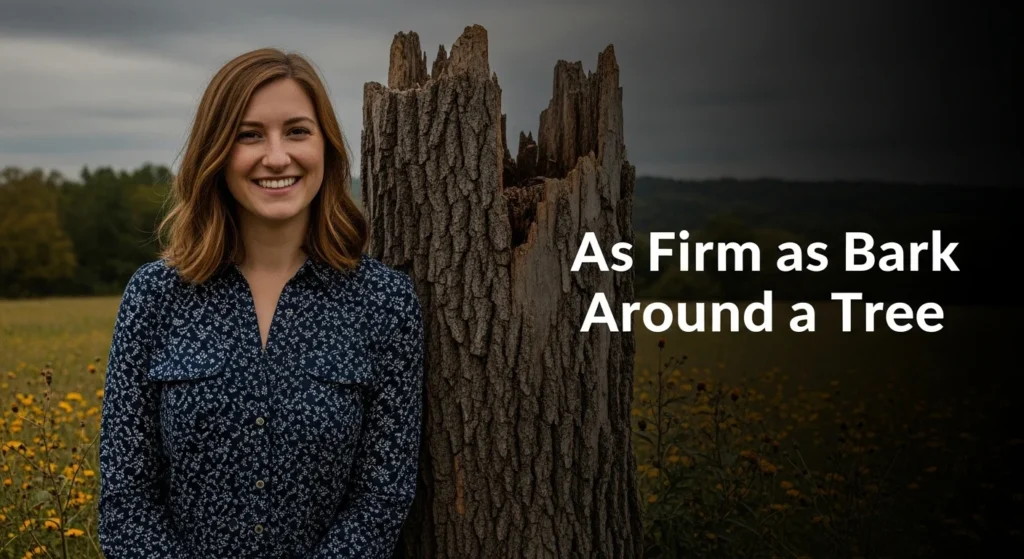
As Firm as Bark Around a Tree
Meaning
Represents protection and security.
Usage
Ideal for emotional or character-focused writing.
Examples
- His confidence stood as firm as bark around a tree.
- She guarded her dreams like sturdy bark.
Like Branches Reaching for Sunlight
Meaning
Shows ambition and growth.
Usage
Effective in educational essays.
Examples
- Students learn like branches reaching for sunlight.
- His curiosity grew like limbs toward warmth.
As Deep as Tree Roots in Ancient Soil
Meaning
Expresses depth of emotion or tradition.
Usage
Best for serious or reflective tone.
Examples
- Their history ran as deep as roots in ancient soil.
- Her love felt grounded and deep.
Like a Sapling Facing Its First Storm
Meaning
Represents youthful courage.
Usage
Perfect for narratives about growth.
Examples
- He stood brave like a sapling facing its first storm.
- She handled criticism like a young tree learning strength.
As Gentle as Leaves in Spring Breeze
Meaning
Suggests softness and kindness.
Usage
Ideal for positive character descriptions.
Examples
- Her voice sounded as gentle as leaves in a breeze.
- His touch felt light and kind.
Like Moss Growing Quietly on Stone
Meaning
Represents slow, steady development.
Usage
Works well in reflective essays.
Examples
- Trust formed like moss growing quietly on stone.
- Knowledge built slowly but surely.
As Bright as Blossoms in Bloom
Meaning
Symbolizes beauty and vibrancy.
Usage
Best in creative writing with joyful tone.
Examples
- Her personality was as bright as blossoms in bloom.
- The festival sparkled with color and cheer.
Like a Tree Casting Cool Shade
Meaning
Represents comfort and protection.
Usage
Useful in descriptive passages.
Examples
- His presence felt like a tree casting cool shade.
- She offered comfort like shelter from heat.
As Solid as a Redwood in a Storm
Meaning
Expresses immense strength.
Usage
Ideal for dramatic storytelling.
Examples
- He stood as solid as a redwood in a storm.
- Her resolve remained unshaken.
Like Branches Intertwined in Friendship
Meaning
Shows close relationships.
Usage
Perfect for narrative writing about bonds.
Examples
- Their friendship grew like branches intertwined.
- They supported each other without hesitation.
As Silent as a Forest at Dusk
Meaning
Conveys deep stillness.
Usage
Great for suspenseful descriptions.
Examples
- The classroom became as silent as a forest at dusk.
- His reply was thoughtful and calm.
Like Seeds Scattered by the Wind
Meaning
Represents spreading ideas.
Usage
Ideal for persuasive essays.
Examples
- Her ideas spread like seeds scattered by the wind.
- The message traveled quickly among students.
As Fresh as New Leaves After Rain
Meaning
Symbolizes renewal and clarity.
Usage
Best for positive transitions in writing.
Examples
- The project felt as fresh as new leaves after rain.
- Her start at school was refreshing.
Like a Tree Growing Ring by Ring
Meaning
Represents gradual development.
Usage
Perfect for academic growth discussions.
Examples
- Skills develop like a tree growing ring by ring.
- Experience builds over time.
As Grounded as Roots Beneath the Soil
Meaning
Shows stability and realism.
Usage
Works well in character analysis.
Examples
- She stayed as grounded as roots beneath soil.
- His plans were practical and steady.
Like Blossoms Opening to the Sun
Meaning
Expresses confidence and openness.
Usage
Great for uplifting tone in stories.
Examples
- She smiled like blossoms opening to the sun.
- His talents shone brightly in class.
As Steady as a Tree Through the Seasons
Meaning
Represents consistency over time.
Usage
Ideal for reflective essays.
Examples
- Her friendship remained as steady as a tree through seasons.
- He stayed dependable no matter what changed.
Like a Forest After the Rain
Meaning
Symbolizes freshness and hope.
Usage
Best in inspirational writing.
Examples
- The classroom felt alive like a forest after rain.
- Her mood lifted after good news.
As Resilient as a Tree After a Storm
Meaning
Shows recovery and perseverance.
Usage
Perfect for motivational essays.
Examples
- She rose as resilient as a tree after a storm.
- His spirit bounced back stronger than before.
How to Use Similes Effectively in Writing
To use similes effectively, choose comparisons that feel natural and clear. Avoid overusing them in a single paragraph. In poems, similes create rhythm and imagery. In stories, they reveal emotion and character traits. In essays, they clarify complex ideas. In songs, they add feeling and memorability. Always match the tone—gentle similes for peaceful scenes and strong similes for dramatic moments. Most importantly, ensure the comparison enhances meaning instead of confusing the reader.
FAQs
1. What are simile activities for grade-level students?
They are classroom exercises that help students practice creating and understanding comparisons using “like” or “as.”
2. What is the difference between a simile and a metaphor?
A simile uses “like” or “as” to compare two things, while a metaphor directly states that one thing is another.
3. Why are similes important in creative writing?
Similes create vivid imagery, emotional depth, and clearer descriptions.
4. Can similes be used in academic writing?
Yes, when used carefully, they can clarify complex ideas and improve engagement.
5. How can teachers make similes fun?
By using nature similes, storytelling prompts, and creative comparison games.
Conclusion
These simile activities for grade-level learning show how powerful comparisons can transform simple sentences into vivid expressions. By connecting ideas to nature—especially trees as symbols of strength, wisdom, growth, and resilience—students develop both creativity and clarity in their writing. Similes strengthen imagery, deepen emotional meaning, and make communication more memorable. When learners practice thoughtful comparisons, they grow as writers just like trees grow ring by ring—steadily, confidently, and beautifully.