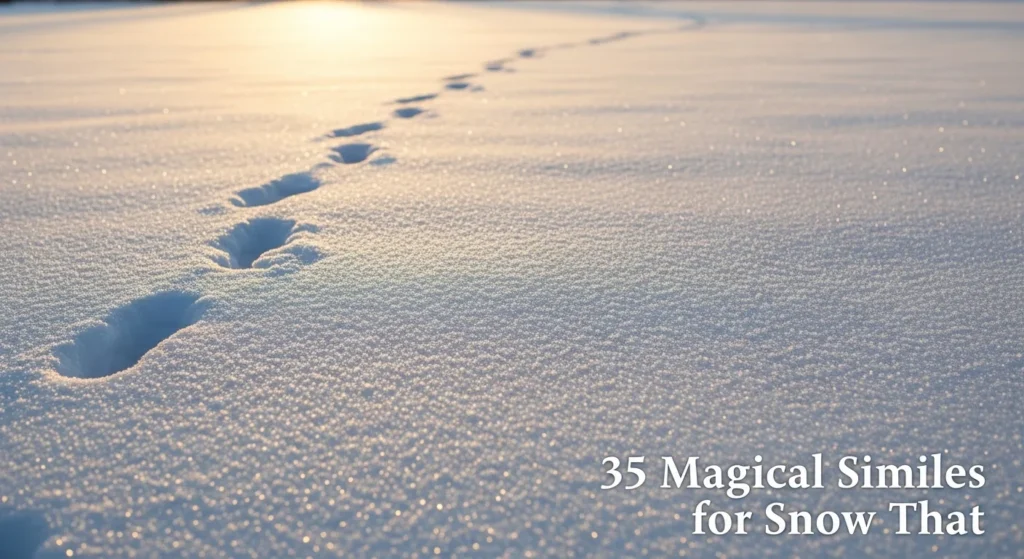
Snow has always inspired writers, poets, and dreamers. When the world turns white, language often follows, searching for comparisons that capture the beauty, silence, and power of winter. That’s where similes for snow become especially powerful. Similes are an essential part of figurative language, helping us describe one thing by comparing it to another using words like “as” or “like.”
They make writing more vivid, emotional, and memorable. Just as trees stand as timeless symbols of strength, growth, resilience, wisdom, and human emotion in literature, snow too carries deep symbolic meaning—purity, stillness, transformation, and even loneliness. In both poetry and prose, nature similes help readers see, feel, and experience a scene more clearly. Whether you’re crafting a poem, story, essay, or song, the right comparison can turn an ordinary winter description into something magical.
Let’s explore how to use similes effectively—and discover 35 original, creative similes for snow you can use in your writing.
What Is a Simile?
A simile is a figure of speech that compares two different things using the words “like” or “as” to highlight a shared quality.
Example: The snow fell like feathers drifting from a pillow.
This comparison helps the reader imagine how soft, light, and gentle the snowfall appears.
Snow as soft as a whispered secret
Meaning
This simile expresses the quiet and delicate nature of falling snow.
Usage
Best used in calm, peaceful scenes with a gentle or reflective tone.
Examples
- The snow settled on the rooftops as soft as a whispered secret.
- Snowflakes brushed her coat as soft as a whispered secret in the night.
Snow like powdered sugar on a cake
Meaning
It highlights snow’s fine, light, and evenly spread appearance.
Usage
Perfect for cheerful or cozy winter descriptions.
Examples
- The fields looked like powdered sugar on a cake under the morning sun.
- Snow dusted the hills like powdered sugar on a cake.
Snow as white as fresh paper
Meaning
Emphasizes purity and untouched beauty.
Usage
Works well in descriptive essays and reflective writing.
Examples
- The valley stretched before us as white as fresh paper.
- Her boots left marks on snow as white as fresh paper.
Snow like feathers drifting from the sky
Meaning
Suggests lightness and gentle movement.
Usage
Ideal for poetic or romantic scenes.
Examples
- Snow floated down like feathers drifting from the sky.
- The evening felt magical as flakes fell like feathers drifting from the sky.
Snow as silent as a sleeping forest
Meaning
Captures the deep stillness snowfall creates.
Usage
Best for peaceful or mysterious tones.
Examples
- The night grew as silent as a sleeping forest beneath the snow.
- Snow covered the world as silent as a sleeping forest.
Snow like a silver blanket over the earth
Meaning
Shows how snow covers everything evenly and beautifully.
Usage
Great for imagery in descriptive passages.
Examples
- The countryside shimmered like a silver blanket over the earth.
- Snow lay across the town like a silver blanket over the earth.
Snow as delicate as lace
Meaning
Focuses on the intricate beauty of snowflakes.
Usage
Perfect for poetic writing.
Examples
- The frost formed patterns as delicate as lace.
- Snowflakes landed on her sleeve as delicate as lace.
Snow like stars scattered across the ground
Meaning
Compares sparkling snow to shining stars.
Usage
Best used at night or in moonlit settings.
Examples
- The frozen field glittered like stars scattered across the ground.
- Snow sparkled like stars scattered across the ground under the moon.
Snow as cold as forgotten memories
Meaning
Suggests emotional coldness and distance.
Usage
Works well in emotional or dramatic contexts.
Examples
- His touch felt as cold as forgotten memories.
- The wind carried snow as cold as forgotten memories.
Snow like cotton spread across the fields
Meaning
Describes thickness and softness.
Usage
Ideal for simple, visual descriptions.
Examples
- The hills looked like cotton spread across the fields.
- Snow covered the meadow like cotton spread across the fields.
Snow as pure as a newborn’s smile
Meaning
Represents innocence and purity.
Usage
Best for uplifting tones.
Examples
- The morning appeared as pure as a newborn’s smile.
- Snow rested quietly as pure as a newborn’s smile.
Snow like a quiet promise of spring
Meaning
Hints at renewal and change.
Usage
Useful in reflective or symbolic writing.
Examples
- The snowfall felt like a quiet promise of spring.
- Each flake seemed like a quiet promise of spring.
Snow as bright as polished silver
Meaning
Highlights shine and brilliance.
Usage
Works in sunny winter scenes.
Examples
- The mountains glowed as bright as polished silver.
- Snow shimmered as bright as polished silver at noon.
Snow like confetti at a silent celebration
Meaning
Combines festivity with quiet beauty.
Usage
Creative and slightly whimsical tone.
Examples
- Snow fell like confetti at a silent celebration.
- The sky tossed flakes like confetti at a silent celebration.
Snow as endless as the open sky
Meaning
Expresses vastness.
Usage
Best in landscape descriptions.
Examples
- The plains seemed as endless as the open sky.
- Snow stretched outward as endless as the open sky.
Snow like pearls scattered across velvet
Meaning
Highlights contrast and elegance.
Usage
Effective in luxurious or romantic imagery.
Examples
- The dark road sparkled like pearls scattered across velvet.
- Snow shone like pearls scattered across velvet fields.
Snow as gentle as a lullaby
Meaning
Shows calmness and comfort.
Usage
Perfect for bedtime or peaceful scenes.
Examples
- Snow fell as gentle as a lullaby.
- The winter evening felt as gentle as a lullaby.
Snow like ash from a winter fire
Meaning
Suggests softness with a darker tone.
Usage
Great for dramatic or moody settings.
Examples
- Flakes drifted like ash from a winter fire.
- Snow floated down like ash from a winter fire.
Snow as fragile as spun glass
Meaning
Focuses on delicacy and breakable beauty.
Usage
Works in poetic descriptions.
Examples
- The frost glittered as fragile as spun glass.
- Snowflakes looked as fragile as spun glass on her sleeve.
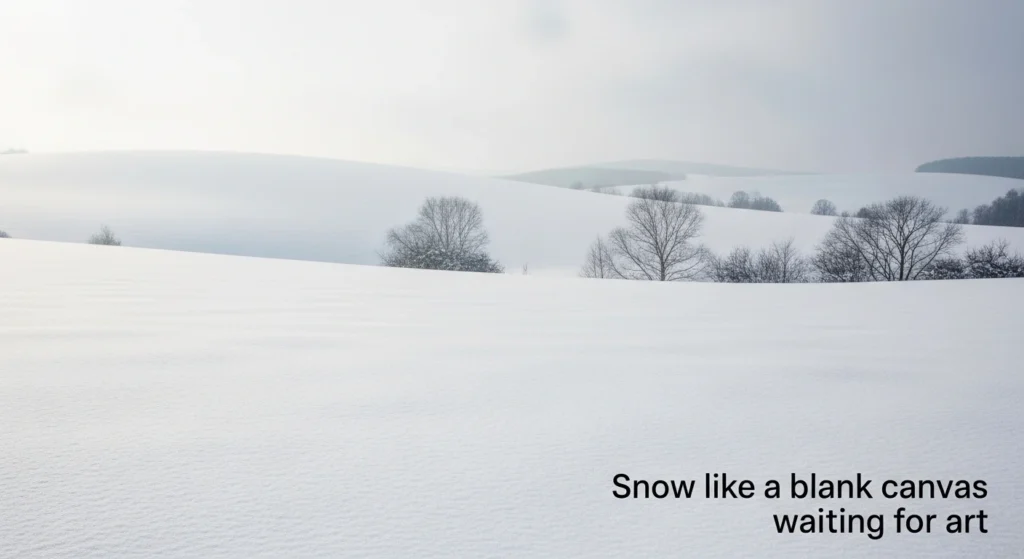
Snow like a blank canvas waiting for art
Meaning
Symbolizes possibility and new beginnings.
Usage
Ideal for inspirational writing.
Examples
- The field lay like a blank canvas waiting for art.
- Snow spread like a blank canvas waiting for art.
Snow as calm as a held breath
Meaning
Expresses quiet tension or peace.
Usage
Useful in suspenseful or reflective moments.
Examples
- The forest stood as calm as a held breath.
- Snow settled as calm as a held breath before dawn.
Snow like silk falling from the heavens
Meaning
Highlights smoothness and grace.
Usage
Best for romantic imagery.
Examples
- Snow drifted like silk falling from the heavens.
- Flakes brushed her face like silk falling from the heavens.
Snow as thick as a woolen blanket
Meaning
Describes heavy snowfall.
Usage
Effective in strong winter scenes.
Examples
- Snow piled up as thick as a woolen blanket.
- The road vanished beneath snow as thick as a woolen blanket.
Snow like a hush over the world
Meaning
Shows how snow quiets everything.
Usage
Perfect for peaceful storytelling.
Examples
- A hush spread like snow over the world.
- Snow fell like a hush over the world at dusk.
Snow as bright as morning hope
Meaning
Represents optimism and renewal.
Usage
Ideal for uplifting narratives.
Examples
- The hillside gleamed as bright as morning hope.
- Snow shimmered as bright as morning hope.
Snow like a curtain closing on autumn
Meaning
Marks seasonal change.
Usage
Best for transitional descriptions.
Examples
- Winter arrived like a curtain closing on autumn.
- Snow fell like a curtain closing on autumn’s colors.
Snow as quiet as falling tears
Meaning
Blends stillness with sadness.
Usage
Works in emotional or reflective contexts.
Examples
- The night was as quiet as falling tears.
- Snow drifted as quiet as falling tears in the dark.
Snow like frost-kissed petals
Meaning
Suggests beauty touched by cold.
Usage
Poetic tone.
Examples
- The garden looked like frost-kissed petals beneath the snow.
- Snow settled like frost-kissed petals across the yard.
Snow as weightless as a dream
Meaning
Describes floating movement.
Usage
Ideal for dreamy writing.
Examples
- Flakes fell as weightless as a dream.
- Snow drifted as weightless as a dream through the air.
Snow like moonlight frozen in time
Meaning
Combines light and stillness.
Usage
Perfect for night imagery.
Examples
- The lake shone like moonlight frozen in time.
- Snow glittered like moonlight frozen in time.
Snow as smooth as marble
Meaning
Highlights evenness and shine.
Usage
Best for landscape detail.
Examples
- The courtyard appeared as smooth as marble.
- Snow lay as smooth as marble across the fields.
Snow like paper scraps from the clouds
Meaning
Playful visual comparison.
Usage
Great for children’s writing.
Examples
- Snow fluttered like paper scraps from the clouds.
- Flakes tumbled like paper scraps from the clouds.
Snow as quiet as a paused clock
Meaning
Emphasizes stillness.
Usage
Effective in suspense or calm scenes.
Examples
- The town felt as quiet as a paused clock.
- Snow fell as quiet as a paused clock at midnight.
Snow like sugar crystals in sunlight
Meaning
Focuses on sparkle and shine.
Usage
Best for bright winter mornings.
Examples
- The field glittered like sugar crystals in sunlight.
- Snow sparkled like sugar crystals in sunlight.
Snow as patient as time itself
Meaning
Symbolizes endurance and slow transformation.
Usage
Works in reflective or philosophical writing.
Examples
- Winter waited as patient as time itself.
- Snow gathered as patient as time itself on the rooftops.
How to Use Similes Effectively in Writing
- Match the Tone: Choose gentle similes for calm scenes and dramatic ones for intense moments.
- Avoid Overuse: One strong comparison is better than many weak ones.
- Be Original: Fresh similes feel more powerful than clichés.
- Connect Emotionally: The best similes reflect both physical description and emotional meaning.
- Use in Different Forms:
- In poems, similes add rhythm and imagery.
- In stories, they deepen atmosphere.
- In essays, they clarify complex ideas.
- In songs, they enhance emotional expression.
FAQs
1. What are similes for snow?
They are comparisons using “like” or “as” to describe snow’s appearance, movement, or feeling.
2. What is the difference between a simile and a metaphor?
A simile uses “like” or “as,” while a metaphor directly states that one thing is another.
3. Why are similes important in literature?
Similes make descriptions vivid, relatable, and emotionally powerful.
4. Can similes be used in academic writing?
Yes, but they should be clear, relevant, and used sparingly.
5. How do I create original nature similes?
Observe details in nature and compare them creatively to emotions, objects, or experiences.
Conclusion
Snow transforms the world into something quieter, brighter, and more reflective—and the right similes for snow can do the same for your writing. By using thoughtful comparisons, you add clarity, vivid imagery, and emotional depth to your words. Whether you are writing poetry, fiction, essays, or songs, similes help readers see beyond simple description. Like trees symbolizing resilience and growth, snow carries layers of meaning waiting to be expressed. Choose your comparisons carefully, keep your tone consistent, and let your language sparkle like winter sunlight on fresh snow.