Language becomes vivid and memorable when we use similes to paint pictures with words. Similes are one of the most powerful tools in figurative language because they help readers understand ideas through clear and imaginative comparisons. When we want to describe something as different, unique, or unlike the rest, a strong simile can instantly bring that feeling to life. Instead of simply saying “He is different,” we can say, “He is like a lone tree standing in an open field.” That image feels stronger and more emotional.
Trees, in particular, are powerful symbols in writing. They represent strength, growth, resilience, wisdom, and human emotion. A tree can bend in a storm yet remain rooted. It can grow slowly over time, just like character and identity. Because of this, nature similes—especially those involving trees—are perfect for expressing individuality and uniqueness.
In this article, you’ll discover 35 original similes for different, each explained with meaning, usage, and polished examples. Whether you’re writing poetry, essays, stories, or songs, these figurative language examples will help your comparisons feel natural and expressive.
What Is a Simile?
A simile is a figure of speech that compares two different things using the words “like” or “as.” It helps readers understand something unfamiliar by connecting it to something familiar.
Example: She was as calm as a tree standing quietly in the winter snow.
Here, calmness is compared to a still tree, creating a peaceful and clear image.
1. As different as a lone tree in a desert
Meaning
This simile expresses standing out strongly in a place where everything else is similar.
Usage
Works well in reflective or emotional writing when describing isolation or individuality.
Examples
He felt as different as a lone tree in a desert, surrounded by people who thought the same. Her ideas were as different as a lone tree in a desert, impossible to ignore.
2. Like a pine tree among palms
Meaning
Represents someone who does not naturally fit into their environment.
Usage
Best for cultural, social, or personality contrasts.
Examples
He looked like a pine tree among palms at the beach party. Her quiet nature was like a pine tree among palms in that loud crowd.
3. As different as winter from summer
Meaning
Shows complete contrast between two things.
Usage
Effective in essays or storytelling when highlighting strong differences.
Examples
Their personalities were as different as winter from summer. His old life felt as different as winter from summer compared to now.
4. Like a crooked branch on a straight tree
Meaning
Symbolizes uniqueness within a uniform group.
Usage
Ideal for describing subtle but noticeable differences.
Examples
She felt like a crooked branch on a straight tree in her traditional family. His opinion stood out like a crooked branch on a straight tree.
5. As different as night from dawn
Meaning
Expresses a shift or transformation.
Usage
Useful in character development or emotional storytelling.
Examples
She was as different as night from dawn after the experience. The town felt as different as night from dawn after the storm.
6. Like a wildflower in a field of roses
Meaning
Represents natural uniqueness and individuality.
Usage
Great for poetic or romantic descriptions.
Examples
She was like a wildflower in a field of roses—unexpected and beautiful. His creativity stood out like a wildflower in a field of roses.
7. As different as roots and leaves
Meaning
Highlights contrasting roles or perspectives.
Usage
Works well in essays or analytical writing.
Examples
Their responsibilities were as different as roots and leaves. Their viewpoints were as different as roots and leaves on a tree.
8. Like a tall oak among young saplings
Meaning
Shows maturity or strength compared to others.
Usage
Effective in leadership or growth contexts.
Examples
He stood like a tall oak among young saplings in the meeting. Her wisdom was like a tall oak among young saplings.
9. As different as bark from blossom
Meaning
Represents inner and outer contrast.
Usage
Great for character depth in stories.
Examples
He seemed gentle, yet firm—like bark from blossom. Their personalities were as different as bark from blossom.
10. Like a river flowing against the current
Meaning
Symbolizes going against norms.
Usage
Strong for motivational or inspirational tone.
Examples
She moved through life like a river flowing against the current. His choices were like a river flowing against the current.
11. As different as spring rain and desert wind
Meaning
Contrasts softness and harshness.
Usage
Best for emotional comparisons.
Examples
Their voices were as different as spring rain and desert wind. The two leaders were as different as spring rain and desert wind.
12. Like a shadow at sunrise
Meaning
Suggests subtle uniqueness.
Usage
Poetic and reflective contexts.
Examples
He felt like a shadow at sunrise—present yet unnoticed. Her ideas lingered like a shadow at sunrise.
13. As different as mountains and valleys
Meaning
Shows dramatic contrast.
Usage
Useful in descriptive writing.
Examples
Their dreams were as different as mountains and valleys. The siblings were as different as mountains and valleys.
14. Like autumn leaves among evergreen trees
Meaning
Represents change among constancy.
Usage
Great for seasonal or emotional writing.
Examples
Her bright scarf stood out like autumn leaves among evergreen trees. He felt like autumn leaves among evergreen trees in his steady office.
15. As different as thunder and whispering wind
Meaning
Contrasts loudness and softness.
Usage
Ideal for personality descriptions.
Examples
Their arguments were as different as thunder and whispering wind. She spoke as softly as whispering wind, unlike him.
16. Like a cactus in a forest
Meaning
Shows extreme contrast in environment.
Usage
Best for strong visual imagery.
Examples
He felt like a cactus in a forest at that formal dinner. Her style was like a cactus in a forest—unexpected.
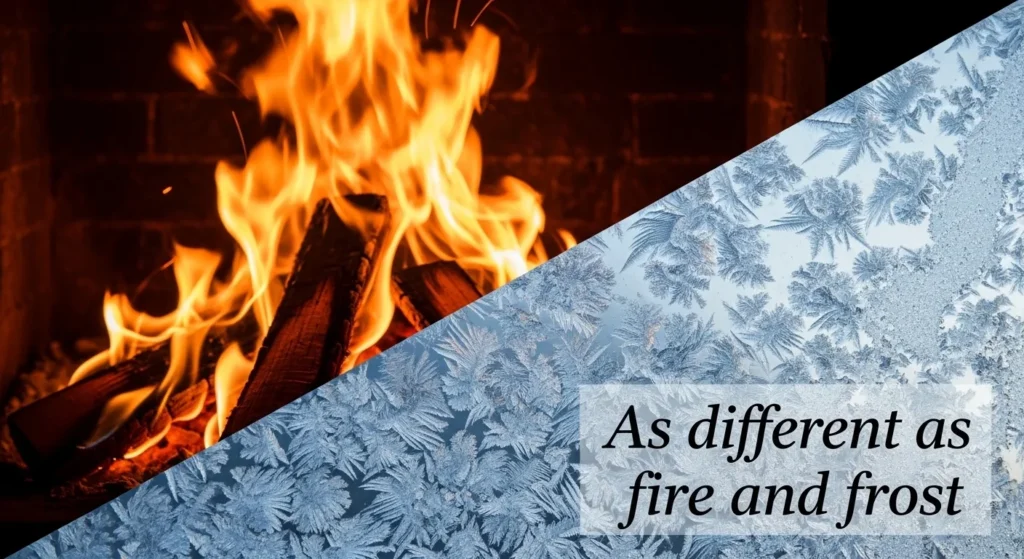
17. As different as fire and frost
Meaning
Represents opposing emotions or traits.
Usage
Effective for dramatic comparisons.
Examples
Their tempers were as different as fire and frost. The two rivals were as different as fire and frost.
18. Like a storm cloud in a clear sky
Meaning
Indicates sudden contrast.
Usage
Useful in narrative tension.
Examples
His mood changed like a storm cloud in a clear sky. She felt like a storm cloud in a clear sky at the celebration.
19. As different as sunrise and sunset
Meaning
Shows contrast yet connection.
Usage
Ideal for poetic writing.
Examples
They were as different as sunrise and sunset. Her past and future felt as different as sunrise and sunset.
20. Like a whisper in a crowded forest
Meaning
Suggests quiet uniqueness.
Usage
Good for subtle individuality.
Examples
His gentle advice was like a whisper in a crowded forest. She stood like a whisper in a crowded forest.
21. As different as sand and stone
Meaning
Represents texture and stability differences.
Usage
Works in descriptive essays.
Examples
Their foundations were as different as sand and stone. The plans felt as different as sand and stone.
22. Like a rainbow in a gray sky
Meaning
Symbolizes positive uniqueness.
Usage
Inspirational tone.
Examples
She was like a rainbow in a gray sky at the office. His laughter felt like a rainbow in a gray sky.
23. As different as ocean tides and still ponds
Meaning
Shows movement versus calmness.
Usage
Ideal for character contrast.
Examples
They were as different as ocean tides and still ponds. Her energy was like ocean tides compared to his still ponds.
24. Like a snowflake in summer
Meaning
Represents rarity.
Usage
Best in poetic comparisons.
Examples
His honesty was like a snowflake in summer. She felt like a snowflake in summer in that harsh world.
25. As different as ivy and iron
Meaning
Softness versus strength.
Usage
Good for relationship writing.
Examples
They were as different as ivy and iron. Her patience met his firmness like ivy and iron.
26. Like a lantern in daylight
Meaning
Suggests subtle contrast.
Usage
Reflective tone.
Examples
He felt like a lantern in daylight—bright but unnecessary. Her voice was like a lantern in daylight.
27. As different as seeds and stones
Meaning
Growth versus stillness.
Usage
Useful in motivational writing.
Examples
Their futures were as different as seeds and stones. His dreams were seeds while hers felt like stones.
28. Like a lone wolf in a meadow
Meaning
Represents independence.
Usage
Strong for character individuality.
Examples
He walked like a lone wolf in a meadow. She felt like a lone wolf in a meadow at school.
29. As different as clouds and roots
Meaning
Sky versus earth contrast.
Usage
Poetic tone.
Examples
Their ambitions were as different as clouds and roots. He dreamed of clouds while she valued roots.
30. Like a bright star at noon
Meaning
Hidden uniqueness.
Usage
Subtle emotional writing.
Examples
Her talent was like a bright star at noon. He felt like a bright star at noon—present but unseen.
31. As different as waves and cliffs
Meaning
Movement versus firmness.
Usage
Dramatic writing.
Examples
Their personalities were as different as waves and cliffs. She was waves; he was cliffs.
32. Like moss on marble
Meaning
Natural difference in texture and tone.
Usage
Descriptive imagery.
Examples
His warmth on her cool attitude was like moss on marble. Their styles felt like moss on marble.
33. As different as echoes and silence
Meaning
Sound versus stillness.
Usage
Poetic storytelling.
Examples
Their reactions were as different as echoes and silence. The brothers were as different as echoes and silence.
34. Like a comet across a quiet sky
Meaning
Rare and striking difference.
Usage
Dramatic tone.
Examples
She entered the room like a comet across a quiet sky. His idea flashed like a comet across a quiet sky.
35. As different as branches reaching opposite skies
Meaning
Shared roots but different paths.
Usage
Perfect for family or relationship writing.
Examples
The twins grew as different as branches reaching opposite skies. Their careers were as different as branches reaching opposite skies.
How to Use Similes Effectively in Writing
Using similes effectively requires balance and creativity. Here are practical tips:
- Choose relatable comparisons. Nature similes work well because readers instantly visualize them.
- Match the tone. Use soft imagery for emotional scenes and bold imagery for dramatic moments.
- Avoid overuse. Too many similes can overwhelm your writing.
- Be original. Fresh comparisons stand out more than clichés.
- Use them in poems, essays, and songs to add rhythm and emotional depth.
- In academic writing, use similes sparingly but strategically to clarify complex ideas.
Strong comparisons make writing memorable.
FAQs
1. What are similes for different?
They are comparisons using “like” or “as” to show how something stands out or contrasts with others.
2. What is the difference between a simile and a metaphor?
A simile uses “like” or “as” for comparison, while a metaphor directly states that something is something else.
3. Why use similes in literature?
Similes create vivid imagery, emotional depth, and clearer understanding, which is why they are common in similes in literature.
4. Can similes be used in academic writing?
Yes, but they should be used carefully to clarify ideas rather than decorate unnecessarily.
5. Are nature similes more effective?
Often yes, because nature provides universal and powerful imagery that readers easily understand.
Conclusion
These similes for different show how powerful comparisons can transform simple descriptions into vivid, emotional language. By using figurative language examples inspired by nature—especially trees—you can express individuality, contrast, growth, and resilience with clarity and beauty. Whether you are writing poetry, fiction, essays, or songs, thoughtful similes add depth and memorability to your words. When chosen carefully, a single comparison can say more than a paragraph of plain explanation. Let your writing grow strong and expressive—like a tree reaching confidently toward its own unique sky.