
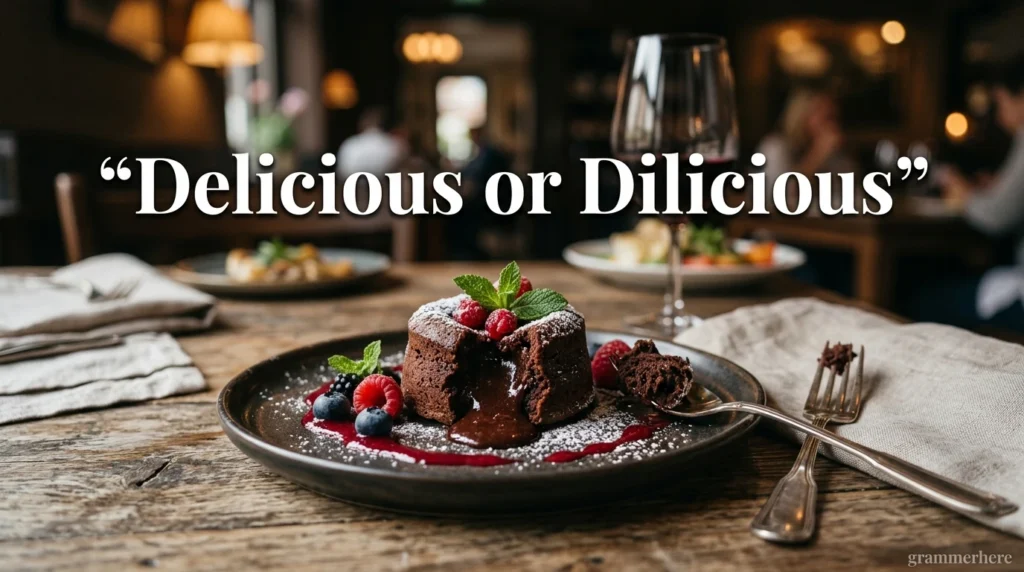
Imagine sitting at a family dinner while someone places a steaming plate of biryani on the table. The aroma fills the room, and without even thinking, someone blurts out, “This looks dilicious!” Everyone understands what they mean, yet something feels slightly off. Was that spelling correct? Should it be “delicious” instead?
This small confusion happens more often than people realize. In text messages, social media captions, school assignments, restaurant reviews, and even casual conversations, many people accidentally write “dilicious” instead of “delicious.” At first glance, it may seem like a harmless typo, but spelling shapes communication in powerful ways. One wrong letter can affect confidence, professionalism, search results, and even how people perceive your writing skills.
Understanding the difference between “delicious” and “dilicious” is not just about memorizing a spelling rule. It is about learning how language works, why mistakes happen, and how we can improve everyday communication naturally. In this article, we will explore the correct spelling, the meaning behind the word, common misunderstandings, emotional connections with food language, practical usage examples, and helpful lessons that make this topic easier to remember forever.
The Correct Spelling: Delicious
The correct spelling is delicious. The word “dilicious” is incorrect and considered a misspelling.
The adjective “delicious” is used to describe something that tastes extremely good or pleasing. While it is most commonly connected with food, people also use it figuratively to describe enjoyable experiences, attractive smells, or even entertaining moments.
For example:
- “The cake was absolutely delicious.”
- “That soup smells delicious.”
- “We had a delicious evening together.”
The confusion usually begins because the word is pronounced quickly in casual speech. In some accents, the “de” sound may sound softer, making people think the word begins with “di.” This creates a spelling mistake that becomes surprisingly common online.
Language often tricks us this way. People spell words based on how they hear them rather than how they are written. A child hearing the word for the first time might naturally assume it starts with “di.” Without seeing the word written correctly, the mistake can continue for years.
Fortunately, once people understand the proper spelling and its pattern, it becomes easier to remember. The key is realizing that “delicious” follows a recognizable English structure that appears in many other words.
What Does Delicious Actually Mean?
At its core, “delicious” refers to something highly pleasing to the senses, especially taste. Yet the emotional power of the word goes much deeper than food alone.
When someone says a meal is delicious, they are not simply describing flavor. They may also be expressing comfort, nostalgia, happiness, love, or satisfaction. A grandmother’s homemade bread can feel delicious because it carries memories of childhood. A cup of tea after a stressful day can taste delicious because it brings calmness.
Delicious Beyond Food
People also use the word metaphorically:
Emotional Experiences
- “The silence after the storm felt delicious.”
- “She enjoyed the delicious feeling of success.”
Entertaining Moments
- “The movie had delicious humor.”
Attractive Smells
- “The bakery smelled delicious from outside.”
These examples show how language expands beyond literal meanings. “Delicious” often represents pleasure itself. It paints a vivid emotional picture rather than merely describing taste.
This deeper understanding helps explain why the word appears so frequently in advertisements, restaurant menus, social media captions, and storytelling. It creates an emotional connection instantly.
Why People Commonly Write “Dilicious”
Misspellings rarely happen randomly. Usually, there is a logical reason behind them. The mistake “dilicious” comes from several natural language habits.
Pronunciation Confusion
In fast speech, “delicious” may sound closer to “dilicious.” Certain accents soften vowel sounds, especially the short “e” in the beginning. People often write words exactly as they hear them.
Autocorrect and Informal Typing
Sometimes people type quickly on phones and never notice the error. If autocorrect fails to catch it, the incorrect spelling spreads through messages and social media.
Lack of Reading Exposure
People who hear words more often than they read them are more likely to spell phonetically. Someone may use the word daily in conversation but rarely see it written.
Influence of Similar Words
English contains many words beginning with “di,” such as:
- Different
- Digital
- Dilemma
Because of these familiar patterns, “dilicious” may appear visually believable even though it is incorrect.
This mistake reflects how the human brain tries to simplify language using sound and pattern recognition. Understanding this makes spelling errors feel more understandable rather than embarrassing.
The Origin and History of the Word Delicious
The word “delicious” has a long linguistic history that stretches back centuries. It comes from the Latin root deliciae, meaning delight, pleasure, or enjoyment.
Later, the word evolved through Old French before entering English. Over time, it became strongly associated with enjoyable taste and sensory pleasure.
What is fascinating is that the original meaning was broader than food. It referred to delight in general. Even today, traces of that older meaning remain when people describe experiences, emotions, or moments as delicious.
A Word Connected to Pleasure
Language historians often note that words survive when they connect deeply with human emotions. “Delicious” survived because pleasure is universal.
Across cultures:
- Good meals create memories.
- Shared food builds relationships.
- Flavor becomes tied to identity and tradition.
The word carries emotional warmth, which explains why it remains powerful in everyday speech.
When someone says, “That was delicious,” they are often expressing gratitude, joy, comfort, and appreciation all at once.
How Spelling Mistakes Affect Communication
A single spelling mistake may seem small, but it can influence communication in surprising ways.
Imagine reading a restaurant review that says:
“The pasta was dilicious.”
Most readers still understand the meaning. However, the error may reduce trust in the writer’s professionalism or attention to detail.
In School and Education
Students who repeatedly misspell common words may lose marks in assignments or struggle with confidence in writing.
In Professional Settings
Businesses rely heavily on accurate language:
- Restaurant menus
- Food blogs
- Advertisements
- Social media captions
Misspellings can appear careless and reduce credibility.
In Everyday Digital Life
Online communication moves quickly. Small errors spread easily through memes, comments, and captions. Sometimes incorrect spellings become normalized simply because people see them often.
Still, correct spelling matters because language shapes perception. Clear writing helps people appear thoughtful, educated, and reliable.
The good news is that mistakes are part of learning. Many strong writers once struggled with spelling too.
Easy Tricks to Remember the Correct Spelling
Learning spelling becomes easier when linked with memory tricks and emotional associations.
Here are some simple ways to remember “delicious.”
Think of the Word “Delight”
Both words begin with “del.”
- Delight
- Delicious
Since delicious means pleasure and enjoyment, connecting it with delight helps reinforce the spelling.
Break the Word Into Parts
You can divide it like this:
- De-li-cious
Reading it slowly helps the brain recognize the correct structure.
Visual Association
Imagine a fancy restaurant sign that says:
“Delicious Meals Served Here”
Seeing the word repeatedly in correct contexts strengthens memory naturally.
Practice Through Sentences
Writing sentences improves retention:
- “The pizza was delicious.”
- “Your cooking smells delicious.”
- “That dessert looks delicious.”
Repetition creates familiarity.
Over time, the correct spelling begins to feel natural while the incorrect version starts to look strange.
How Children and Language Learners Experience This Confusion
For children and English learners, spelling confusion is extremely common. English pronunciation does not always match spelling perfectly, making the language challenging.
A child hearing “delicious” for the first time might logically spell it “dilicious.” The brain relies heavily on sound before mastering visual word recognition.
Why English Feels Tricky
English contains many irregular spellings:
- Enough
- Through
- Knife
- Beautiful
Compared to these, “delicious” is relatively predictable, yet pronunciation still creates confusion.
Emotional Impact on Learners
Many learners feel embarrassed by spelling mistakes. However, these mistakes often show that someone is actively learning and experimenting with language.
Teachers who encourage curiosity rather than shame help students improve more confidently.
A supportive environment matters because language learning is deeply emotional. Fear of mistakes can silence communication, while encouragement builds growth.
Delicious in Everyday Conversations
The word “delicious” appears naturally in daily life because food is connected to emotion, culture, and relationships.
Think about family gatherings, weddings, street food stalls, cafés, and celebrations. Food becomes part of storytelling.
Everyday Examples
Family Moments
“Mom’s curry tastes delicious every time.”
Friendly Compliments
“This milkshake is delicious!”
Romantic Situations
“He cooked a delicious dinner for their anniversary.”
Social Media Captions
“Late-night burgers always taste delicious.”
These examples reveal how the word creates warmth and positivity instantly.
People rarely use “delicious” in cold or negative situations. The word naturally carries joy, comfort, and satisfaction.
That emotional tone explains why the word remains popular across generations and cultures.
Common Situations Where People Misspell Delicious
Some situations increase the likelihood of spelling mistakes more than others.
Fast Typing
When texting quickly, people prioritize speed over accuracy.
Example:
“This cake is so dilicious.”
Social Media Posts
Casual online environments encourage relaxed spelling habits.
Restaurant Reviews
People often write reviews immediately after eating, focusing on excitement rather than proofreading.
Children’s Homework
Young students commonly spell words exactly how they sound.
Speech-to-Text Errors
Voice typing tools sometimes misinterpret pronunciation and create incorrect spellings automatically.
These situations remind us that spelling mistakes are often practical rather than intellectual. They happen because humans communicate quickly and imperfectly.
Why Food Words Carry Emotional Power
“Delicious” is more than vocabulary. It belongs to a category of emotionally charged food language.
Food words trigger memories and feelings almost instantly.
Comfort and Nostalgia
A delicious smell may remind someone of:
- Childhood kitchens
- Holiday dinners
- Family traditions
Celebration and Togetherness
People gather around food during:
- Weddings
- Birthdays
- Religious festivals
- Friendly dinners
Calling something delicious often expresses emotional appreciation for the entire experience, not just the flavor.
Identity and Culture
Every culture has dishes considered deeply delicious. These foods become symbols of belonging and heritage.
For example:
- Homemade naan
- Fresh pasta
- Spicy tacos
- Traditional soups
The word helps people emotionally connect with culture and memory.
That emotional richness gives “delicious” lasting power in language.
The Difference Between Typo and Habit
There is a difference between making a quick typo and repeatedly using an incorrect spelling.
Occasional Typos
Everyone makes typing mistakes:
- “Dilicious”
- “Delcious”
- “Delisious”
These errors are normal and usually harmless.
Repeated Habitual Errors
When someone consistently writes “dilicious,” it may indicate they genuinely believe the spelling is correct.
Habits form through repetition. The more a person sees or types an incorrect word, the stronger the habit becomes.
Correcting Habits Gently
The best correction approach is encouragement rather than criticism.
For example:
- “I think the correct spelling is delicious.”
- “Easy mistake—the right spelling uses ‘de.’”
Kind correction helps learning happen naturally without embarrassment.
Delicious in Marketing and Advertising
Businesses use the word “delicious” constantly because it triggers appetite and emotional desire.
Restaurant Menus
Menus often describe dishes using emotionally appealing language:
- Delicious pasta
- Delicious desserts
- Delicious homemade soup
Food Advertisements
Commercials combine visuals with the word “delicious” to create craving and excitement.
Social Media Branding
Food influencers and restaurants frequently use the word because it immediately communicates pleasure.
Interestingly, a spelling mistake like “dilicious” in marketing could hurt credibility. Customers may subconsciously associate spelling accuracy with professionalism and quality.
This demonstrates how language influences business perception in subtle but powerful ways.
Practical Lessons From This Simple Spelling Mistake
The confusion between “delicious” and “dilicious” teaches broader lessons about communication and learning.
Mistakes Are Part of Growth
Every skilled writer once struggled with spelling. Errors often show effort rather than failure.
Reading Improves Accuracy
People who read regularly naturally absorb correct spelling patterns.
Language Is Emotional
Words carry feeling, memory, identity, and social meaning.
Small Details Matter
A single letter can influence clarity and credibility.
Patience Helps Learning
Correct spelling becomes easier through exposure, practice, and gentle correction.
These lessons extend beyond one word. They apply to communication in general.
How to Build Better Spelling Skills Naturally
Improving spelling does not require memorizing endless rules. Natural habits often work better.
Read Frequently
Books, articles, menus, and captions expose the brain to correct spelling repeatedly.
Write Daily
Short journal entries, messages, or social posts help reinforce memory.
Notice Patterns
Words often share structures:
- Delight
- Delicate
- Delicious
Recognizing patterns improves retention.
Use Technology Wisely
Spellcheck tools are helpful, but relying on them completely can weaken learning. It helps to pause and notice corrections consciously.
Practice Without Fear
Fear of mistakes can slow learning. Confident practice leads to improvement faster.
Language grows through use, experimentation, and correction over time.
Why Correct Language Still Matters in Modern Digital Culture
Some people argue that spelling no longer matters because communication online is informal. Yet accuracy still plays an important role.
First Impressions
Correct writing creates trust and professionalism.
Searchability
Correct spelling helps content appear properly in search engines and digital platforms.
Clarity
Accurate spelling prevents confusion and misunderstanding.
Confidence
People often feel more confident when they know they are communicating clearly.
At the same time, perfection is unnecessary. Language should remain human and flexible. Occasional mistakes are normal.
The goal is not flawless writing but effective communication. Knowing the difference between “delicious” and “dilicious” simply helps people express themselves more clearly.
FAQs
What is the correct spelling: delicious or dilicious?
The correct spelling is delicious. “Dilicious” is a misspelling.
Why do people write “dilicious”?
People often spell the word based on pronunciation, especially when speaking quickly or using informal typing.
What does delicious mean?
“Delicious” describes something highly pleasing, especially food that tastes very good.
Is “dilicious” ever accepted in English?
No, standard English dictionaries do not recognize “dilicious” as a correct spelling.
How can I remember the spelling of delicious?
Connect it with the word “delight,” since both begin with “del” and relate to pleasure.
Can delicious describe things other than food?
Yes. People also use it for experiences, smells, humor, emotions, and enjoyable moments.
Do spelling mistakes matter online?
Yes. While casual mistakes are common, correct spelling improves professionalism, clarity, and credibility.
Why is English spelling difficult?
English combines words from many languages, creating irregular pronunciation and spelling patterns.
Conclusion
The difference between “delicious” and “dilicious” may seem tiny, but it reveals something fascinating about language, memory, and communication. The correct spelling is “delicious,” yet the common mistake happens naturally because people often write words the way they hear them. Behind this small confusion lies a bigger story about learning, confidence, emotional expression, and the human side of communication.