
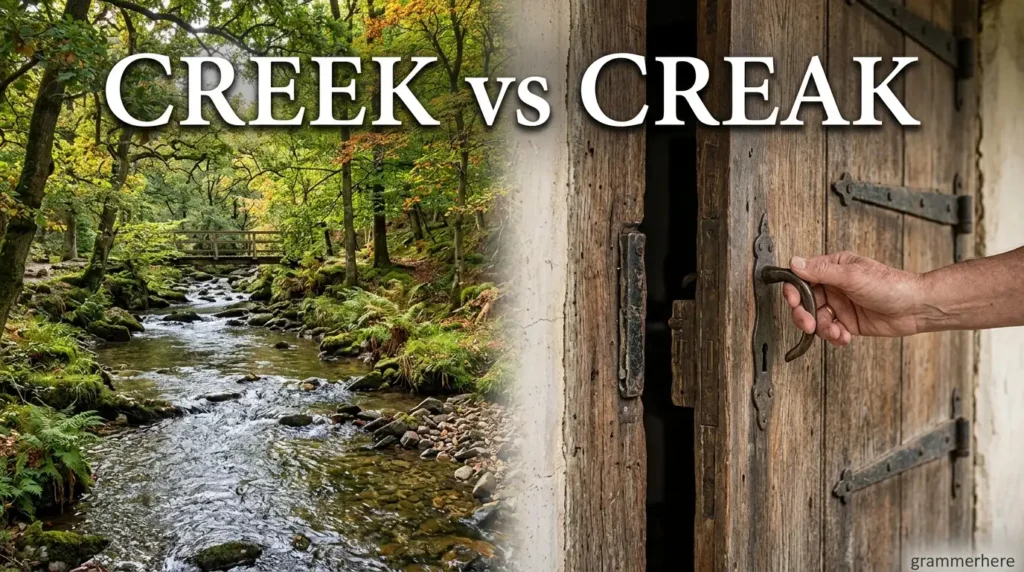
Imagine walking through a quiet forest just before sunset. A narrow stream flows gently beside the trail, its water moving over smooth stones with a peaceful rhythm. Suddenly, an old wooden bridge beneath your feet makes a long, groaning sound. In that moment, you experience two words that many people confuse: creek and creak.
Although these words sound almost identical, they describe completely different things. One relates to nature and flowing water, while the other describes a sound often linked to age, movement, or pressure. Because they are homophones—words that sound alike but have different meanings and spellings—people often mix them up in writing and conversation.
Understanding the difference between creek and creak matters more than many realize. Using the wrong word can confuse readers, weaken communication, or even change the tone of a sentence entirely. Whether you are a student, writer, English learner, or simply someone who enjoys using language correctly, learning these distinctions can sharpen your vocabulary and improve your confidence. This article explores the meanings, uses, emotional connections, practical examples, and deeper lessons behind these two fascinating words.
What Does Creek Mean?
A creek is a small stream or narrow body of flowing water. It is usually smaller than a river and often found in forests, rural areas, valleys, or natural landscapes. Creeks can be calm and gentle or fast-moving after heavy rain.
The word immediately creates images of nature. Many people associate creeks with peaceful outdoor experiences, childhood adventures, fishing trips, or quiet moments away from busy city life.
For example:
- “The children skipped stones across the creek.”
- “A small wooden cabin sat beside the creek.”
- “The sound of the creek helped her relax.”
Creeks are important in both geography and storytelling. In literature, they often symbolize calmness, growth, reflection, or a connection to nature. A creek in a story may represent a peaceful escape or the flow of life itself.
Creek in Everyday Life
People who grow up near creeks often develop emotional memories tied to them. Someone may remember catching frogs by the creek during summer vacations or sitting near the water after a difficult day.
The word carries a soft and natural feeling. Even hearing it spoken aloud often creates a sense of peace.
What Does Creak Mean?
Unlike creek, the word creak refers to a sound. It describes a long, harsh, or squeaky noise made when something old or under pressure moves.
You may hear a creak from:
- A wooden floor
- An old door
- A rocking chair
- Stairs in an aging house
- Tree branches moving in the wind
Examples include:
- “The door creaked open slowly.”
- “She heard the stairs creak at midnight.”
- “The old boat creaked during the storm.”
The word often creates a feeling of tension, mystery, or age. In movies and books, a creak can signal suspense. A creaking floor in a dark hallway instantly makes people imagine something hidden or unknown.
Emotional Feelings Behind Creak
A creak is more than just noise. It often reflects wear, time, pressure, or movement. An old house creaks because it has endured years of weather and change.
In a symbolic way, creaking sounds sometimes remind people that nothing stays new forever. Even strong things eventually show signs of age.
Why People Confuse Creek and Creak
The main reason people confuse these words is pronunciation. In many accents, creek and creak sound exactly alike.
This happens often in English because the language contains many homophones. Examples include:
- Their and there
- Flower and flour
- Right and write
Since creek and creak sound almost identical, writers sometimes choose the wrong spelling without realizing it.
For example:
- Incorrect: “The old floor creeked loudly.”
- Correct: “The old floor creaked loudly.”
Or:
- Incorrect: “We sat beside the creak.”
- Correct: “We sat beside the creek.”
These mistakes are common, especially among young learners or people typing quickly.
The Role of Context
The easiest way to choose the correct word is by examining the situation.
Ask yourself:
- Is it about water or nature? → Use creek
- Is it about a sound or noise? → Use creak
Context usually solves the confusion immediately.
The Origins of the Words
Understanding where words come from often helps people remember them.
The History of Creek
The word creek comes from old words connected to coastal inlets and streams. Over time, English speakers began using it mainly for small flowing waterways.
Different countries sometimes use the word differently. In some regions, a creek may be larger than a stream, while in others it is considered smaller.
The History of Creak
Creak developed from older words connected to sharp or harsh sounds. The word imitates the actual noise itself, which makes it partly onomatopoeic—a word that sounds like the thing it describes.
When you say “creak,” it almost feels like the sound of an old hinge opening slowly.
This connection between sound and language makes the word memorable.
Creek in Nature and Human Emotion
Creeks often appear in poetry, novels, and personal memories because flowing water has deep emotional meaning.
A quiet creek can symbolize:
- Peace
- Healing
- Reflection
- Simplicity
- The passage of time
Imagine someone sitting beside a creek after a stressful week. The flowing water creates a sense of calm that helps clear the mind.
Small Moments Around a Creek
A family picnic near a creek may become a treasured memory years later. Children often explore creeks with curiosity, looking for fish, insects, or smooth stones.
The gentle movement of water encourages people to slow down and notice the world around them.
In this way, the word creek carries emotional warmth far beyond its dictionary meaning.
Creak as a Symbol in Stories and Movies
While creek often feels peaceful, creak usually creates suspense or tension.
Writers and filmmakers frequently use creaking sounds to build atmosphere.
Common Examples in Fiction
A Haunted House
A creaking staircase in a dark hallway immediately creates fear and anticipation.
An Old Ship
A ship creaking during a storm can symbolize danger and uncertainty.
A Lonely Cabin
A creaking rocking chair on a porch can suggest age, loneliness, or mystery.
These examples show how sound shapes emotion. The word creak instantly paints a vivid sensory picture in the reader’s mind.
Why Creak Feels So Powerful
Humans naturally react to unexpected sounds. A creak in silence grabs attention because it interrupts stillness.
That is why horror movies often use creaking doors and floors. The sound creates suspense before anything even happens.
Common Sentences Using Creek
Learning through examples helps build confidence. Here are several natural ways to use creek correctly.
Nature-Related Examples
- “The creek flowed behind their farmhouse.”
- “We crossed the creek using stepping stones.”
- “Wildflowers grew along the creek bank.”
Emotional or Descriptive Examples
- “She found peace sitting beside the creek.”
- “The creek reminded him of childhood summers.”
- “Moonlight reflected softly on the creek.”
These examples show that creek is usually connected to scenery, water, or emotional calmness.
Common Sentences Using Creak
Now let’s look at examples using creak correctly.
Sound-Based Examples
- “The wooden chair creaked when he sat down.”
- “The gate creaked in the wind.”
- “She heard the attic floor creak overhead.”
Descriptive and Emotional Examples
- “The house creaked during the thunderstorm.”
- “Every step made the stairs creak loudly.”
- “The ancient ship creaked across the sea.”
Unlike creek, these sentences focus on movement, sound, tension, or age.
Memory Tricks to Never Confuse Them Again
Simple memory techniques can make these words easy to remember forever.
Trick for Creek
The double “ee” in creek can remind you of a long stream of water stretching through nature.
You can picture the two “e” letters flowing like water.
Trick for Creak
The “a” in creak can remind you of “ache” or “aging,” both linked to strain, pressure, and old sounds.
Think of an old wooden floor making an aching noise.
Another Easy Method
- Creek = water
- Creak = sound
Short and simple.
How Writers Use Creek and Creak Differently
Professional writers choose these words carefully because each creates a very different mood.
Creek Creates Calm Imagery
A creek scene often slows the pace of a story. It invites reflection and peace.
For example:
“She sat quietly beside the creek, listening to the water move over stones.”
This sentence feels gentle and relaxing.
Creak Creates Tension
Now compare this:
“The cabin door creaked open in the darkness.”
This sentence creates suspense almost instantly.
One word changes the emotional atmosphere entirely.
Why Word Choice Matters
Strong writing depends on precise vocabulary. Even small word differences shape how readers feel.
Using creek instead of creak—or vice versa—can completely alter the image in someone’s mind.
Real-Life Situations Where Confusion Happens
People often confuse these words in school assignments, text messages, social media posts, and even professional writing.
In School
A student writing a nature essay might accidentally write:
- “We walked beside the creak.”
Teachers notice these mistakes quickly because the meaning changes.
In Texting
Autocorrect sometimes fails to catch the difference because both words are spelled correctly.
In Creative Writing
Writers may accidentally use the wrong word when typing quickly during storytelling scenes.
Careful proofreading helps avoid these errors.
The Role of Sound in English Language Learning
Words like creek and creak show why English can be challenging for learners.
English pronunciation often differs from spelling patterns. Two completely different words may sound exactly alike.
Why Homophones Matter
Homophones test listening and contextual understanding. Learners must depend on meaning rather than pronunciation alone.
This improves deeper language skills.
Building Confidence Through Practice
The best way to master confusing words is repeated exposure.
Reading books, writing sentences, and hearing words in conversation all help strengthen understanding over time.
Mistakes are part of the learning process.
Creek vs Creak in Creative Expression
Artists and writers use both words because they stimulate sensory imagination.
Creek and Visual Imagery
A creek appeals mostly to sight and emotion:
- Flowing water
- Sunlight reflections
- Green trees
- Quiet surroundings
It paints a peaceful mental picture.
Creak and Auditory Imagery
A creak appeals mainly to hearing:
- Squeaking wood
- Groaning doors
- Straining metal
- Sudden noises in silence
It activates tension and awareness.
Why Sensory Words Matter
Words connected to senses make writing feel alive. Readers do not simply understand the sentence—they experience it.
That is why these small words are surprisingly powerful.
Practical Lessons from Understanding Word Differences
Learning the difference between creek and creak teaches more than vocabulary.
It encourages:
- Careful listening
- Better proofreading
- Stronger communication
- Attention to context
- Richer descriptive writing
Small Details Create Big Improvements
People often focus on advanced vocabulary while ignoring simple word accuracy. Yet mastering small distinctions makes writing more polished and professional.
Language Reflects Thought
Using the correct word shows clarity of thought. It helps readers trust and understand the message more easily.
Precise language also builds confidence in both speaking and writing.
Common Mistakes to Avoid
Even advanced English users sometimes make mistakes with these words.
Mistake 1: Using Creek for Sounds
Incorrect:
- “The stairs creeked loudly.”
Correct:
- “The stairs creaked loudly.”
Mistake 2: Using Creak for Water
Incorrect:
- “They swam in the creak.”
Correct:
- “They swam in the creek.”
Mistake 3: Forgetting Context
Always pause and ask:
- Is this about water?
- Or is this about sound?
That quick mental check prevents most errors.
How These Words Reflect Human Experience
Interestingly, creek and creak represent two very different sides of life.
Creek Represents Flow
A creek symbolizes movement, peace, and natural rhythm. It reflects calm journeys and quiet moments.
Creak Represents Pressure
A creak symbolizes strain, age, and tension. It reminds us that time leaves marks on everything.
Together, these words show how language captures both beauty and struggle through simple sounds and images.
FAQs
1. What is the main difference between creek and creak?
Creek refers to a small stream of water, while creak refers to a squeaking or groaning sound.
2. Are creek and creak pronounced the same?
Yes, in many English accents they sound exactly alike, which is why people often confuse them.
3. Is creek a noun or verb?
Creek is mainly used as a noun because it names a body of water.
4. Can creak be both a noun and a verb?
Yes. You can say:
- “I heard a creak.” (noun)
- “The floorboards creaked.” (verb)
5. Why are these words called homophones?
They are called homophones because they sound similar but have different meanings and spellings.
6. How can I remember the spelling of creek?
Think of the double “ee” as a flowing stream of water.
7. How can I remember the spelling of creak?
Associate the “a” with aging wood making noisy sounds.
8. Which word is more common in storytelling?
Both are common, but they create different moods. Creek often creates peaceful scenes, while creak creates suspense or tension.
Conclusion
The difference between creek and creak may seem small at first glance, but these words carry completely different meanings, emotions, and imagery. One brings thoughts of flowing water, peaceful nature, and reflection. The other creates sounds of movement, age, mystery, or tension. Because they sound alike, they are easy to confuse, yet understanding their unique roles can greatly improve writing and communication.