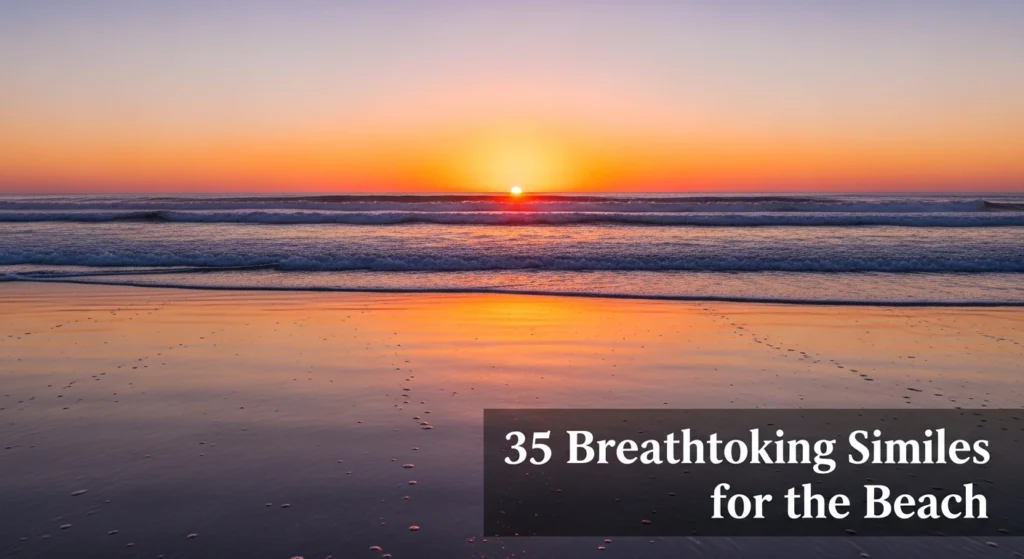
The beach has always inspired poets, storytellers, and dreamers. Its rolling waves, golden sands, and endless horizon create powerful images that are perfect for creative writing. One of the best ways to capture this beauty is through similes—a popular form of figurative language that makes comparisons using the words “like” or “as.” Similes help readers see, hear, and feel a scene more vividly.
They turn simple descriptions into colorful experiences filled with emotion and detail. Just as trees symbolize strength, growth, resilience, wisdom, and deep human emotion, the beach represents freedom, calmness, mystery, and change. When used carefully, beach similes can transform poems, essays, stories, and even social media captions into memorable pieces of writing. In this guide, you’ll discover creative, original, and meaningful similes for the beach that will elevate your work instantly.
What Is a Simile?
A simile is a figure of speech that compares two different things using the words like or as to create a vivid image.
Example: The ocean shimmered like a sheet of melted silver under the sun.
This comparison helps readers clearly picture the brightness and movement of the water.
1. The beach stretched like a golden carpet beneath the sun
Meaning
This simile suggests vastness, warmth, and beauty.
Usage
Perfect for peaceful, scenic descriptions in travel writing or reflective essays.
Examples
- The beach stretched like a golden carpet beneath the sun, inviting us to wander barefoot.
- At dawn, the shore lay like a golden carpet waiting for the day to begin.
2. The waves rolled in like restless dancers
Meaning
Describes constant motion and energy.
Usage
Works well in lively, dynamic scenes with a playful or dramatic tone.
Examples
- The waves rolled in like restless dancers spinning across the stage.
- Even at midnight, the tide moved like restless dancers refusing to sleep.
3. The shoreline curved like a sleeping crescent moon
Meaning
Emphasizes gentle shape and calmness.
Usage
Ideal for romantic or serene descriptions.
Examples
- The shoreline curved like a sleeping crescent moon in the fading light.
- From above, the bay looked like a crescent moon resting peacefully.
4. The sand felt like warm sugar beneath my feet
Meaning
Highlights softness and warmth.
Usage
Great for sensory writing in memoirs or travel blogs.
Examples
- The sand felt like warm sugar beneath my feet at sunset.
- We walked slowly as the shore shimmered like warm sugar under the sun.
5. The ocean sparkled like scattered diamonds
Meaning
Shows brightness and luxury.
Usage
Best in vivid, celebratory descriptions.
Examples
- The ocean sparkled like scattered diamonds at noon.
- Under the bright sky, the water glittered like diamonds tossed across silk.
6. The sea breeze whispered like a secret
Meaning
Suggests gentleness and intimacy.
Usage
Perfect for calm or emotional scenes.
Examples
- The sea breeze whispered like a secret in my ear.
- At twilight, the wind moved like a quiet secret through the dunes.
7. The horizon stretched like an endless promise
Meaning
Represents hope and possibility.
Usage
Great for inspirational writing.
Examples
- The horizon stretched like an endless promise before us.
- She stared ahead, seeing the sea like a promise waiting to unfold.
8. The tide rose like a slow heartbeat
Meaning
Symbolizes rhythm and life.
Usage
Works well in reflective or poetic writing.
Examples
- The tide rose like a slow heartbeat against the rocks.
- I listened as the ocean pulsed like a steady heartbeat.
9. The beach glowed like a canvas painted in gold
Meaning
Emphasizes artistic beauty.
Usage
Excellent for descriptive storytelling.
Examples
- At sunset, the beach glowed like a canvas painted in gold.
- The sky transformed the shore into a golden masterpiece.
10. The waves crashed like thunder
Meaning
Shows power and intensity.
Usage
Effective in dramatic scenes.
Examples
- The waves crashed like thunder against the cliffs.
- During the storm, the sea roared like thunder across the bay.
11. The shells shimmered like tiny treasures
Meaning
Suggests rarity and beauty.
Usage
Ideal for childlike wonder or discovery themes.
Examples
- The shells shimmered like tiny treasures in the sand.
- She gathered them carefully as if they were hidden gems.
12. The beach was as peaceful as a sleeping child
Meaning
Expresses calm and innocence.
Usage
Perfect for tranquil imagery.
Examples
- The beach was as peaceful as a sleeping child at dawn.
- Before the crowds arrived, the shore felt calm and pure.
13. The waves curled like ribbons in the wind
Meaning
Highlights shape and elegance.
Usage
Great for poetic language.
Examples
- The waves curled like ribbons in the wind.
- Foam twisted like delicate ribbons across the tide.
14. The shore shimmered like a mirage
Meaning
Conveys illusion or dreamlike beauty.
Usage
Useful for reflective or nostalgic tones.
Examples
- The shore shimmered like a mirage in the heat.
- From afar, the beach seemed unreal.
15. The seafoam floated like lace on the water
Meaning
Shows delicacy.
Usage
Best for soft, romantic writing.
Examples
- Seafoam floated like lace on the water.
- The waves left lace-like patterns behind.
16. The ocean roared like a wild beast
Meaning
Symbolizes strength and danger.
Usage
Effective in storm scenes.
Examples
- The ocean roared like a wild beast in the storm.
- The sea growled beneath dark clouds.
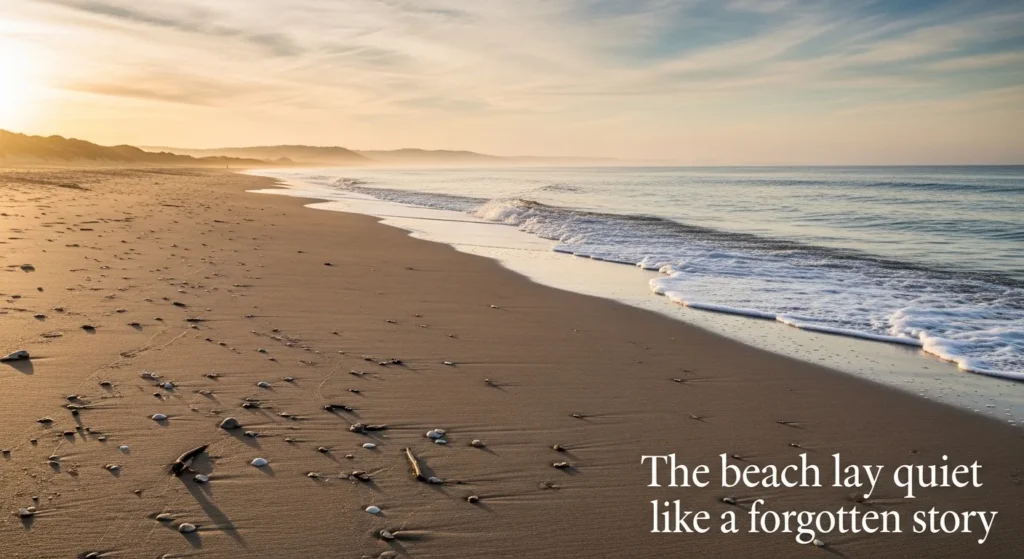
17. The beach lay quiet like a forgotten story
Meaning
Suggests solitude.
Usage
Ideal for melancholic moods.
Examples
- The beach lay quiet like a forgotten story at dusk.
- In winter, the shore felt abandoned.
18. The sunset melted like butter over the sea
Meaning
Describes smooth blending of colors.
Usage
Perfect for warm imagery.
Examples
- The sunset melted like butter over the sea.
- Orange light spread softly across the waves.
19. The water glimmered like polished glass
Meaning
Emphasizes smoothness.
Usage
Works for calm sea scenes.
Examples
- The water glimmered like polished glass at sunrise.
- Not a ripple disturbed the surface.
20. The beach sparkled like a field of stars
Meaning
Suggests magical beauty.
Usage
Great for nighttime settings.
Examples
- The beach sparkled like a field of stars under moonlight.
- Wet sand glittered in the dark.
21. The waves danced like children at play
Meaning
Conveys joy and energy.
Usage
Best in cheerful scenes.
Examples
- The waves danced like children at play.
- The tide skipped along the shore happily.
22. The wind howled like a lonely wolf
Meaning
Indicates isolation or intensity.
Usage
Useful for dramatic settings.
Examples
- The wind howled like a lonely wolf at night.
- The storm turned the beach wild and fierce.
23. The sand shimmered like crushed pearls
Meaning
Shows brightness and elegance.
Usage
Perfect for luxurious descriptions.
Examples
- The sand shimmered like crushed pearls in the sun.
- Each step sparkled in the light.
24. The sea stretched like a blue blanket
Meaning
Suggests comfort and vastness.
Usage
Works well in calm scenes.
Examples
- The sea stretched like a blue blanket across the horizon.
- The water covered the earth softly.
25. The tide crept in like a cautious cat
Meaning
Describes slow, quiet movement.
Usage
Ideal for subtle transitions.
Examples
- The tide crept in like a cautious cat.
- Before we noticed, the water touched our toes.
26. The beach shimmered like a dream
Meaning
Indicates surreal beauty.
Usage
Great for romantic or nostalgic tones.
Examples
- The beach shimmered like a dream at sunrise.
- For a moment, it felt unreal.
27. The ocean sparkled like liquid crystal
Meaning
Highlights clarity and shine.
Usage
Effective in vivid travel descriptions.
Examples
- The ocean sparkled like liquid crystal in the afternoon light.
- Clear water reflected the sky beautifully.
28. The waves surged like galloping horses
Meaning
Shows speed and strength.
Usage
Best for energetic imagery.
Examples
- The waves surged like galloping horses toward the shore.
- Foam raced forward wildly.
29. The beach lay open like an unwritten page
Meaning
Symbolizes opportunity.
Usage
Great for inspirational themes.
Examples
- The beach lay open like an unwritten page.
- Each step felt like the start of a new story.
30. The sea breeze felt like a gentle hug
Meaning
Expresses comfort.
Usage
Perfect for soothing scenes.
Examples
- The sea breeze felt like a gentle hug.
- The wind wrapped around us softly.
31. The horizon glowed like a line of fire
Meaning
Highlights dramatic sunset colors.
Usage
Best in powerful visual scenes.
Examples
- The horizon glowed like a line of fire at dusk.
- Red light burned across the edge of the sea.
32. The ocean shimmered like molten glass
Meaning
Describes smooth, glowing movement.
Usage
Effective for artistic imagery.
Examples
- The ocean shimmered like molten glass in the heat.
- Sunlight turned the water into flowing light.
33. The shore echoed like a quiet cathedral
Meaning
Suggests peaceful grandeur.
Usage
Great for reflective tones.
Examples
- The shore echoed like a quiet cathedral at dawn.
- The sound of waves filled the empty air.
34. The sand drifted like powdered snow
Meaning
Highlights softness and movement.
Usage
Works in windy scenes.
Examples
- The sand drifted like powdered snow across the dunes.
- Wind lifted grains into the air.
35. The beach shone like a jewel in the sun
Meaning
Represents value and beauty.
Usage
Perfect for celebratory descriptions.
Examples
- The beach shone like a jewel in the sun.
- It looked precious and rare from above.
How to Use Similes Effectively in Writing
To use similes effectively:
- Be specific: Choose comparisons that create clear images.
- Match the tone: Gentle similes suit peaceful scenes, while bold comparisons fit dramatic moments.
- Avoid clichés: Original comparisons feel fresh and engaging.
- Use sensory details: Include sight, sound, touch, and emotion.
- Balance your writing: Too many similes can overwhelm the reader.
Similes work beautifully in poems, short stories, essays, songs, travel blogs, and even academic descriptions when used thoughtfully.
FAQs
1. What are similes for the beach? They are creative comparisons that describe the beach using “like” or “as” to create vivid imagery.
2. What is the difference between a simile and a metaphor? A simile uses “like” or “as” to compare two things, while a metaphor makes a direct comparison without those words.
3. Why are similes important in descriptive writing? Similes make writing more engaging, visual, and emotionally powerful.
4. Can similes be used in academic writing? Yes, but they should be used sparingly and appropriately.
5. How can I create original beach similes? Think about the beach’s colors, textures, sounds, and emotions, then compare them to something familiar and vivid.
Conclusion
Similes for the beach bring life, color, and emotion to your writing. They transform ordinary descriptions into powerful images filled with movement, light, and feeling. Whether you are writing poetry, fiction, essays, or captions, these comparisons help readers experience the beach as if they are standing on the shore themselves. By choosing thoughtful and original similes, you can create scenes that shimmer like sunlight on water and linger in the reader’s mind long after the final sentence.