

Music has always been one of the most powerful forces in human life. It moves our hearts, shapes our memories, and connects people across cultures. To describe something as emotional and layered as music, writers often turn to similes—creative comparisons that make language more vivid and expressive. Similes are an important part of figurative language because they help readers see, hear, and feel ideas more clearly. Through imaginative comparisons, writers can transform ordinary descriptions into memorable images.
Just as trees stand tall as symbols of strength, growth, resilience, wisdom, and deep human emotion, music also reflects these qualities in powerful ways. A tree grows slowly yet steadily, much like a melody that builds over time. Its roots run deep, just as music connects to our inner feelings. By using similes for music, you can paint emotional landscapes that feel alive and meaningful. In this article, you’ll discover original and expressive comparisons that will elevate your creative writing, poetry, essays, and songs.
What Is a Simile?
A simile is a figure of speech that compares two different things using the words like or as to create a vivid image or deeper meaning.
Example: Her voice flowed like a gentle river through the silent room.
This comparison helps the reader imagine softness, smoothness, and calmness. That is the power of similes in literature—they turn abstract feelings into clear pictures.
1. Music like a Whispering Forest
Meaning: Music that feels calm, layered, and softly alive, like leaves rustling in the wind.
Usage Insight: Works beautifully in nature descriptions, reflective essays, or peaceful scenes in fiction.
Examples: The violin rose softly, like a whispering forest at dusk. Her lullaby drifted through the house like a whispering forest in spring.
2. Music like a Rising Sun
Meaning: Music that brings hope, warmth, and new beginnings.
Usage Insight: Perfect for motivational writing or scenes of transformation.
Examples: The anthem swelled like a rising sun over the horizon. His composition opened like a rising sun after a long night.
3. Music like Roots of an Ancient Tree
Meaning: Music that feels deep, grounded, and connected to tradition.
Usage Insight: Ideal for cultural writing or describing classical compositions.
Examples: The folk melody spread like roots of an ancient tree beneath the soil of memory. Her voice carried history like roots of an ancient tree gripping the earth.
4. Music like Falling Rain
Meaning: Soft, rhythmic, and soothing sound.
Usage Insight: Effective for romantic scenes or calm moments.
Examples: The piano notes fell like gentle rain on a quiet evening. The rhythm tapped like falling rain against a window.
5. Music like a Wild River
Meaning: Energetic, powerful, and unstoppable sound.
Usage Insight: Best for action scenes or intense emotional moments.
Examples: The drums thundered like a wild river in flood. The rock band roared like a wild river crashing through rocks.
6. Music like Leaves Dancing in the Wind
Meaning: Light, playful, and joyful melodies.
Usage Insight: Great for cheerful scenes or lighthearted poetry.
Examples: The flute fluttered like leaves dancing in the wind. Her laughter blended with the song like leaves twirling in autumn air.
7. Music like a Steady Oak Tree
Meaning: Strong, reliable, and reassuring sound.
Usage Insight: Useful when describing powerful vocals or confident performances.
Examples: His bass voice stood firm like a steady oak tree. The orchestra held its harmony like an oak tree in a storm.
8. Music like Blooming Flowers
Meaning: Music that unfolds gradually and beautifully.
Usage Insight: Perfect for describing a song that builds layer by layer.
Examples: The melody opened like blooming flowers in spring. Each note blossomed like petals in the morning sun.
9. Music like Crashing Thunder
Meaning: Loud, dramatic, and commanding.
Usage Insight: Works well in intense, dramatic writing.
Examples: The drums struck like crashing thunder across the sky. The chorus exploded like thunder breaking through clouds.
10. Music like a Gentle Breeze
Meaning: Soft, comforting, and refreshing.
Usage Insight: Ideal for romantic or peaceful storytelling.
Examples: The guitar hummed like a gentle breeze through tall grass. Her song brushed the air like a cool evening breeze.
11. Music like a Growing Tree
Meaning: Music that develops slowly and becomes stronger over time.
Usage Insight: Excellent for describing long instrumental builds.
Examples: The symphony rose like a growing tree reaching toward the sky. The melody strengthened like branches spreading wide.
12. Music like a Shining Star
Meaning: Bright, captivating, and unforgettable.
Usage Insight: Works in praise or performance reviews.
Examples: Her high notes sparkled like a shining star. The final chord glowed like a star in a dark sky.
13. Music like Waves on the Shore
Meaning: Rhythmic and repeating.
Usage Insight: Great for describing steady beats.
Examples: The rhythm rolled like waves against the shore. The harmony moved like tides pulling in and out.
14. Music like Fire in the Night
Meaning: Passionate and intense.
Usage Insight: Perfect for emotional ballads or powerful performances.
Examples: His solo burned like fire in the night. The chorus flared like flames against darkness.
15. Music like Branches Reaching Skyward
Meaning: Aspirational and uplifting.
Usage Insight: Ideal for inspirational songs.
Examples: The melody stretched like branches reaching skyward. Her voice climbed like limbs searching for sunlight.
16. Music like Snow Falling Softly
Meaning: Quiet and delicate.
Usage Insight: Best for calm winter imagery.
Examples: The harp drifted like snow falling softly. The lullaby settled like snow upon rooftops.
17. Music like a Roaring Storm
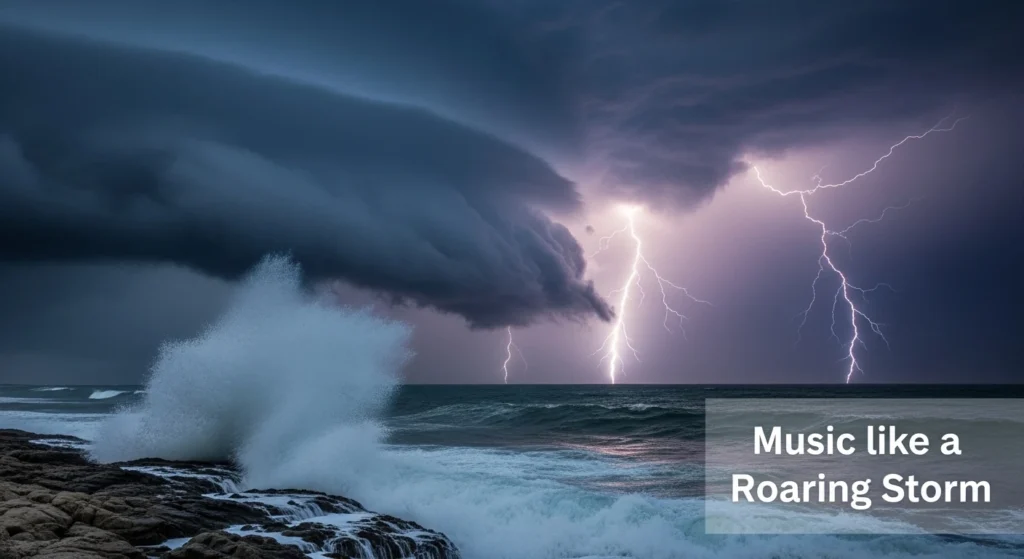
Meaning: Chaotic yet powerful.
Usage Insight: Great for dramatic climaxes.
Examples: The orchestra surged like a roaring storm. The finale raged like wind tearing through trees.
18. Music like Birds at Dawn
Meaning: Fresh, lively, and hopeful.
Usage Insight: Useful for beginnings and joyful moods.
Examples: The choir sang like birds greeting the dawn. The melody chirped like morning sparrows.
19. Music like Echoes in a Valley
Meaning: Haunting and lingering.
Usage Insight: Perfect for reflective or emotional scenes.
Examples: The refrain lingered like echoes in a valley. Her last note faded like distant hills answering back.
20. Music like Sunlight Through Leaves
Meaning: Soft yet radiant.
Usage Insight: Ideal for poetic descriptions.
Examples: The piano shimmered like sunlight through leaves. Her harmony filtered gently like light in a forest.
21. Music like Flowing Sap in Spring
Meaning: Full of renewal and quiet energy.
Usage Insight: Excellent for symbolic or seasonal writing.
Examples: The melody pulsed like sap rising in spring. Hope filled the hall like sap awakening in trees.
22. Music like a Mountain Standing Tall
Meaning: Grand and majestic.
Usage Insight: Perfect for epic compositions.
Examples: The anthem stood like a mountain above the crowd. The chorus towered like peaks against the sky.
23. Music like Roots Holding the Earth
Meaning: Stabilizing and grounding.
Usage Insight: Best for soulful or meaningful songs.
Examples: The rhythm grounded us like roots holding the earth. Her voice anchored the room like deep roots in soil.
24. Music like Dew on Morning Grass
Meaning: Fresh and delicate.
Usage Insight: Good for subtle emotional moments.
Examples: The melody shimmered like dew at sunrise. Each note sparkled like droplets on grass.
25. Music like Branches in a Storm
Meaning: Flexible yet resilient.
Usage Insight: Great for describing emotional strength.
Examples: The harmony bent like branches in a storm. Her voice swayed but never broke.
26. Music like a River Carving Stone
Meaning: Persistent and transformative.
Usage Insight: Ideal for meaningful storytelling.
Examples: The refrain shaped our hearts like a river carving stone. The lyrics changed him slowly but surely.
27. Music like Flames Warming Cold Hands
Meaning: Comforting and intimate.
Usage Insight: Excellent for emotional ballads.
Examples: The song wrapped around us like fire on a winter night. Her melody warmed the silence like glowing embers.
28. Music like Clouds Drifting Across the Sky
Meaning: Dreamy and smooth.
Usage Insight: Perfect for ambient descriptions.
Examples: The instrumental floated like clouds across blue skies. The notes drifted lazily above us.
29. Music like Seeds Sprouting After Rain
Meaning: Full of new beginnings.
Usage Insight: Great for hopeful themes.
Examples: The chorus burst forth like seeds after rain. New dreams grew with every note.
30. Music like a Tree Offering Shade
Meaning: Protective and soothing.
Usage Insight: Works in comforting contexts.
Examples: The lullaby sheltered us like a tree in summer. Her voice provided rest like cool shade.
31. Music like Lightning Across the Sky
Meaning: Sudden and electrifying.
Usage Insight: Ideal for dramatic shifts.
Examples: The guitar solo flashed like lightning. Energy cracked through the hall.
32. Music like Moss Covering Stone
Meaning: Gentle and gradual.
Usage Insight: Effective for subtle storytelling.
Examples: The harmony settled like moss over stone. Its beauty grew quietly over time.
33. Music like Wind Through Tall Pines
Meaning: Deep and resonant.
Usage Insight: Works well in atmospheric writing.
Examples: The cello hummed like wind through pines. Its tone echoed with natural depth.
34. Music like Blossoms After Winter
Meaning: Joyful renewal.
Usage Insight: Perfect for uplifting scenes.
Examples: The final verse bloomed like spring after frost. Hope returned with every chord.
35. Music like a Forest After Rain
Meaning: Fresh, alive, and emotionally rich.
Usage Insight: Ideal for poetic or descriptive passages.
Examples: The symphony felt like a forest breathing after rain. The notes shimmered with renewed life.
How to Use Similes Effectively in Writing
- Be specific. Choose comparisons that match the mood and tone of your piece.
- Avoid clichés. Fresh similes create stronger imagery.
- Match emotion with image. Calm scenes need soft comparisons; intense scenes need bold ones.
- Use them sparingly. Too many similes can overwhelm the reader.
- Blend naturally. Ensure the comparison fits smoothly into the sentence.
Similes work beautifully in poems, stories, essays, songs, and descriptive passages. They make abstract emotions tangible and relatable.
FAQs
1. What are similes for music? Similes for music are creative comparisons that describe music using “like” or “as” to create vivid imagery.
2. What is the difference between a simile and a metaphor? A simile uses like or as to compare, while a metaphor states the comparison directly without those words.
3. Why are similes important in literature? They enhance imagery, clarify emotions, and make writing more engaging.
4. Can similes be used in academic writing? Yes, but sparingly. They are most effective in creative or descriptive sections.
5. How do I create original similes? Think about nature, emotions, or everyday experiences and find meaningful comparisons.
Conclusion
Using similes for music allows writers to express sound, emotion, and atmosphere in powerful and memorable ways. Just as trees symbolize strength, growth, and resilience, music carries depth and meaning that simple words often cannot capture alone. Through thoughtful comparisons, you can turn melodies into living forests, rising suns, or flowing rivers in the reader’s imagination.
Whether you are writing poetry, stories, essays, or songs, similes add clarity, imagery, and emotional richness to your language. With practice and creativity, your descriptions of music can become as vibrant and alive as the sounds themselves.