Language has a beautiful way of expressing emotions that are often hard to explain. One of the most powerful tools in figurative language is the simile—a comparison that helps readers see and feel an idea more clearly. Similes use words like “as” or “like” to connect two different things in a meaningful way.
They turn simple descriptions into vivid images. When we talk about being alone, similes can reveal whether that solitude feels peaceful, painful, strong, or reflective. Interestingly, trees are often used in nature similes because they symbolize strength, growth, resilience, wisdom, and deep human emotion. Just like a tree standing quietly in a wide field, being alone can carry many layers of meaning. In this article, you’ll discover powerful and original similes for alone that bring depth and clarity to your writing.
What Is a Simile?
A simile is a figure of speech that compares two different things using the words “like” or “as” to highlight a shared quality.
Example: She stood as steady as a mountain in the storm.
This comparison helps readers imagine strength and stability more clearly. Similes are widely used in poetry, stories, essays, and even everyday speech to create strong imagery and emotional impact.
As Alone as a Tree in an Empty Field
Meaning: Completely solitary, yet quietly strong and self-sufficient.
Usage Insight: This simile works well when describing someone who stands independently, even when isolated.
Examples:
- He felt as alone as a tree in an empty field after his friends moved away.
- She stood as alone as a tree in an empty field, confident in her own roots.
As Alone as the Moon in a Pale Dawn Sky
Meaning: Visible yet distant, quietly separated from others.
Usage Insight: Ideal for poetic or emotional writing about gentle loneliness.
Examples:
- He walked home as alone as the moon in a pale dawn sky.
- Her thoughts drifted, as alone as the fading moon above the city.
Like a Single Leaf Clinging to a Winter Branch
Meaning: Holding on despite isolation.
Usage Insight: Perfect for describing resilience during lonely times.
Examples:
- She felt like a single leaf clinging to a winter branch after the argument.
- He remained like a single leaf clinging to a winter branch, refusing to give up.
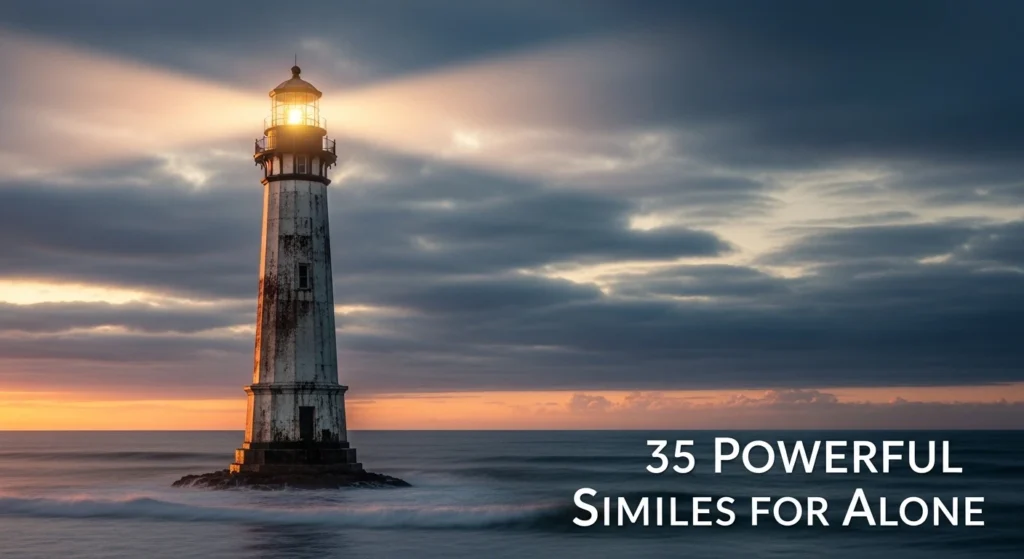
As Alone as a Lighthouse in the Vast Sea
Meaning: Standing apart but serving a purpose.
Usage Insight: Works beautifully in reflective or inspirational writing.
Examples:
- He felt as alone as a lighthouse in the vast sea, guiding others while standing apart.
- She stood as alone as a lighthouse in the storm, shining despite the darkness.
Like a Star Lost in a Clouded Sky
Meaning: Overlooked and isolated.
Usage Insight: Useful in emotional or dramatic scenes.
Examples:
- He felt like a star lost in a clouded sky at the crowded party.
- She seemed like a star lost in a clouded sky, unnoticed but still shining.
As Alone as a Desert Road at Midnight
Meaning: Deeply isolated and silent.
Usage Insight: Effective in suspenseful or introspective writing.
Examples:
- The house felt as alone as a desert road at midnight.
- He walked as alone as a desert road beneath the dark sky.
Like a Book Left Unopened on a Shelf
Meaning: Ignored and forgotten.
Usage Insight: Best used when describing emotional neglect.
Examples:
- She felt like a book left unopened on a shelf.
- His dreams sat like a book left unopened for years.
As Alone as an Island in the Ocean
Meaning: Completely separated from others.
Usage Insight: A classic comparison that works in essays and poems.
Examples:
- He felt as alone as an island in the ocean.
- She stood as alone as an island, surrounded by strangers.
Like a Whisper in an Empty Room
Meaning: Quiet and unnoticed.
Usage Insight: Perfect for soft, emotional scenes.
Examples:
- Her voice sounded like a whisper in an empty room.
- He felt like a whisper no one heard.
As Alone as Snow Falling at Night
Meaning: Peacefully isolated.
Usage Insight: Best for calm, reflective moments.
Examples:
- She felt as alone as snow falling at night, calm but distant.
- The town seemed as alone as silent snow.
Like a Bird Flying Across a Wide Sky
Meaning: Free yet solitary.
Usage Insight: Useful when loneliness feels liberating.
Examples:
- He felt like a bird flying across a wide sky.
- She walked away like a bird seeking her own horizon.
As Alone as a Shadow at Sunset
Meaning: Present but fading.
Usage Insight: Effective in symbolic writing.
Examples:
- He stood as alone as a shadow at sunset.
- Her memory lingered like a fading shadow.
Like a Stone at the Bottom of a River
Meaning: Silent and unseen.
Usage Insight: Works in emotional or melancholic writing.
Examples:
- She felt like a stone at the bottom of a river.
- He remained like a stone, steady but unseen.
As Alone as a Cabin in the Woods
Meaning: Remote and cut off.
Usage Insight: Ideal for descriptive storytelling.
Examples:
- He lived as alone as a cabin in the woods.
- The old house stood as alone as a forgotten cabin.
Like a Candle Burning in an Empty Hall
Meaning: Small presence in vast solitude.
Usage Insight: Powerful for poetic comparisons.
Examples:
- She felt like a candle burning in an empty hall.
- His hope flickered like a lone candle.
As Alone as a Cloud Drifting Across the Sky
Meaning: Gently separated, moving quietly through space.
Usage Insight: Great for peaceful or thoughtful scenes.
Examples:
- She wandered as alone as a cloud drifting across the sky.
- He felt as alone as a cloud with no wind to guide it.
Like a Door Left Half Open
Meaning: Isolated but still connected.
Usage Insight: Useful in emotional or relationship-focused writing.
Examples:
- He stood there like a door left half open, unsure whether to stay or leave.
- She felt like a door half open between two worlds.
As Alone as a Clock Ticking in the Dark
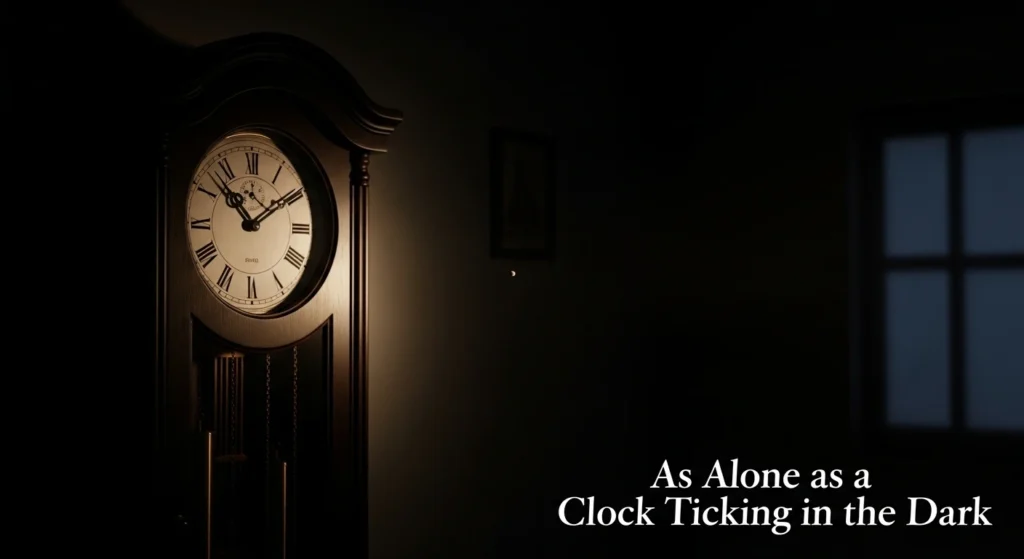
Meaning: Aware of silence and time passing.
Usage Insight: Perfect for suspenseful or reflective moments.
Examples:
- He felt as alone as a clock ticking in the dark.
- The room seemed as alone as the sound of time itself.
Like a Raindrop on a Windowpane
Meaning: Small and separate from the world outside.
Usage Insight: Works beautifully in gentle, emotional writing.
Examples:
- She felt like a raindrop on a windowpane.
- He stood like a raindrop sliding quietly downward.
As Alone as a Wolf Under a Full Moon
Meaning: Wild, independent solitude.
Usage Insight: Strong in dramatic or symbolic scenes.
Examples:
- He felt as alone as a wolf under a full moon.
- She stood as alone as a lone wolf in the forest.
Like a Boat Untied from the Shore
Meaning: Drifting without direction.
Usage Insight: Good for describing uncertainty.
Examples:
- He felt like a boat untied from the shore.
- She drifted like a boat without anchor.
As Alone as a Tree After Autumn
Meaning: Bare and exposed.
Usage Insight: Ideal for emotional vulnerability.
Examples:
- She felt as alone as a tree after autumn.
- He stood as alone as branches stripped of leaves.
Like a Note Hanging in the Air
Meaning: Lingering without response.
Usage Insight: Useful in musical or poetic descriptions.
Examples:
- Her words felt like a note hanging in the air.
- He stood like a sound that no one answered.
As Alone as Footprints in Fresh Snow
Meaning: Singular presence.
Usage Insight: Great for visual imagery.
Examples:
- She walked as alone as footprints in fresh snow.
- His path lay as alone as a single trail behind him.
Like a Seed Buried Deep in Soil
Meaning: Alone but growing.
Usage Insight: Powerful in inspirational writing.
Examples:
- She felt like a seed buried deep in soil, unseen but alive.
- He remained like a seed preparing to rise.
As Alone as the Last Light in a Window
Meaning: The final presence in darkness.
Usage Insight: Perfect for quiet, reflective scenes.
Examples:
- He felt as alone as the last light in a window.
- She stood as alone as a fading glow in the night.
Like a Pebble on a Wide Beach
Meaning: Small among vastness.
Usage Insight: Useful for expressing insignificance.
Examples:
- She felt like a pebble on a wide beach.
- He stood like a pebble among countless stones.
As Alone as a Forgotten Path in the Forest
Meaning: Neglected and unused.
Usage Insight: Works well in descriptive essays.
Examples:
- He felt as alone as a forgotten path in the forest.
- The road stretched as alone as an abandoned trail.
Like a Window Without Light
Meaning: Empty and quiet.
Usage Insight: Ideal for symbolic writing.
Examples:
- She felt like a window without light.
- His heart seemed like a darkened pane.
As Alone as a Bell That No One Rings
Meaning: Unnoticed presence.
Usage Insight: Effective in emotional contexts.
Examples:
- He felt as alone as a bell that no one rings.
- She waited like a bell without a sound.
Like a River Flowing Through Empty Land
Meaning: Moving forward in solitude.
Usage Insight: Good for resilience themes.
Examples:
- She felt like a river flowing through empty land.
- He moved like a quiet current through open fields.
As Alone as a Star at the Edge of the Galaxy
Meaning: Extremely distant and isolated.
Usage Insight: Powerful in poetic and dramatic writing.
Examples:
- He felt as alone as a star at the edge of the galaxy.
- She stood as alone as a distant light in endless space.
Like a Letter Never Sent
Meaning: Unexpressed and hidden.
Usage Insight: Ideal for emotional storytelling.
Examples:
- She felt like a letter never sent.
- His feelings stayed like words sealed away.
As Alone as a Bridge With No Travelers
Meaning: Built for connection but unused.
Usage Insight: Strong metaphorical tone for essays.
Examples:
- He felt as alone as a bridge with no travelers.
- She stood like a bridge waiting for footsteps.
Like a Lantern in a Foggy Field
Meaning: Glowing quietly in isolation.
Usage Insight: Perfect for atmospheric descriptions.
Examples:
- She felt like a lantern in a foggy field.
- He stood like a faint glow in the mist.
How to Use Similes Effectively in Writing
Using similes effectively means choosing comparisons that feel natural and meaningful. In poems, use nature similes to create emotional depth and imagery. In stories, match the simile to your character’s mood and situation. In essays, keep comparisons clear and relevant to your argument. In songs, rhythmic and simple similes often work best. Avoid overusing them—one strong comparison is more powerful than many weak ones. Always aim for clarity, originality, and emotional truth.
FAQs
1. What are similes for alone? Similes for alone are creative comparisons that describe feelings of solitude using “like” or “as,” such as “as alone as an island in the ocean.”
2. What is the difference between a simile and a metaphor? A simile uses “like” or “as” to compare two things, while a metaphor directly states that one thing is another.
3. Why are similes important in figurative language examples? Similes make writing more vivid, emotional, and easier to imagine.
4. Can similes be used in academic writing? Yes, but they should be clear, appropriate, and not overly dramatic.
5. How do similes appear in literature? Similes in literature help authors create strong imagery and express complex emotions through relatable comparisons.
Conclusion
Powerful similes for alone help transform simple descriptions into rich, emotional experiences. Through nature similes, symbolic comparisons, and thoughtful figurative language examples, writers can show that solitude is not just emptiness—it can be strength, reflection, growth, or quiet resilience. Whether you are writing poetry, fiction, essays, or songs, the right simile adds clarity, imagery, and emotional depth to your words. Like a tree standing firm against the wind, the right comparison can give your language strength and lasting impact.