
Anger is one of the strongest human emotions, and writers often struggle to describe it in fresh and powerful ways. This is where similes become incredibly useful. Similes are creative comparisons that use the words “like” or “as” to connect one thing to another, helping readers see and feel emotions more clearly. In figurative language, similes turn plain sentences into colorful, memorable expressions. They are widely used in poetry, novels, speeches, and even everyday conversations.
Interestingly, nature—especially trees—often inspires strong emotional comparisons. Trees symbolize strength, growth, resilience, wisdom, and deep-rooted human emotion. Just as a tree can stand firm in a storm or bend under pressure, people experience emotional storms within themselves. When writing about anger, drawing from natural imagery—storms, fire, thunder, shaking branches—can make the emotion feel alive and relatable. In this guide, you’ll discover 35 original similes for angry that will help you write with clarity, intensity, and emotional depth.
What Is a Simile?
A simile is a figure of speech that compares two different things using the words “like” or “as” to highlight a shared quality.
Example: He was as angry as a volcano ready to erupt.
This comparison helps readers instantly understand the intensity and explosive nature of his anger.
1. As angry as a volcano about to erupt
Meaning: Extremely furious and ready to explode with emotion.
Usage Insight: Perfect for describing explosive anger that cannot stay hidden for long.
- He stood there, as angry as a volcano about to erupt, his fists clenched at his sides.
- She looked as angry as a volcano about to erupt when she heard the accusation.
2. Like thunder crashing through a silent sky
Meaning: Sudden and overwhelming anger.
Usage Insight: Works well when anger interrupts a calm moment.
- His voice boomed like thunder crashing through a silent sky.
- The argument hit the room like thunder crashing through a silent sky.
3. As angry as a storm tearing through the forest
Meaning: Wild, uncontrollable rage.
Usage Insight: Ideal for scenes filled with chaos or emotional destruction.
- He was as angry as a storm tearing through the forest, knocking down every kind word in his path.
- Her fury spread as angry as a storm tearing through the forest.
4. Like fire racing through dry leaves
Meaning: Anger that spreads quickly.
Usage Insight: Great for showing how frustration escalates rapidly.
- His temper flared like fire racing through dry leaves.
- The rumor made her anger burn like fire racing through dry leaves.
5. As angry as a lion protecting its pride
Meaning: Fierce, protective anger.
Usage Insight: Best used when someone is defending loved ones.
- She was as angry as a lion protecting its pride when they insulted her brother.
- He roared back, as angry as a lion protecting its pride.
6. Like a shaken tree in a violent wind
Meaning: Trembling with anger.
Usage Insight: Useful for showing physical signs of rage.
- He stood like a shaken tree in a violent wind, barely containing himself.
- Her hands trembled like a shaken tree in a violent wind.
7. As angry as boiling water in a sealed pot
Meaning: Anger building under pressure.
Usage Insight: Effective for internal, suppressed rage.
- He sat quietly, as angry as boiling water in a sealed pot.
- She smiled politely, but inside she was as angry as boiling water in a sealed pot.
8. Like lightning striking without warning
Meaning: Sudden, sharp anger.
Usage Insight: Ideal for unexpected outbursts.
- His words flashed like lightning striking without warning.
- She snapped like lightning striking without warning.
9. As angry as a bear disturbed from hibernation
Meaning: Dangerous, intense irritation.
Usage Insight: Works for scenes of provoked anger.
- He was as angry as a bear disturbed from hibernation when they mocked him.
- Her glare was as angry as a bear disturbed from hibernation.
10. Like waves crashing against sharp rocks
Meaning: Repeated bursts of anger.
Usage Insight: Best for ongoing frustration.
- His anger came in waves, like waves crashing against sharp rocks.
- She argued back like waves crashing against sharp rocks.
11. As angry as a wildfire out of control
Meaning: Uncontainable rage.
Usage Insight: Strong imagery for destructive emotion.
- He stormed out, as angry as a wildfire out of control.
- The debate turned heated, as angry as a wildfire out of control.
12. Like a tree struck by lightning
Meaning: Shocked and furious.
Usage Insight: Combines surprise and anger effectively.
- He stood frozen, like a tree struck by lightning.
- She felt like a tree struck by lightning after hearing the news.
13. As angry as a hornet guarding its nest
Meaning: Sharp, defensive anger.
Usage Insight: Useful for quick, reactive temper.
- She was as angry as a hornet guarding its nest.
- He responded as angry as a hornet guarding its nest.
14. Like smoke rising from hot coals
Meaning: Quiet but visible anger.
Usage Insight: Best for subtle tension.
- His anger lingered like smoke rising from hot coals.
- She glared at him like smoke rising from hot coals.
15. As angry as a raging bull
Meaning: Aggressive fury.
Usage Insight: Classic simile for intense rage.
- He charged forward, as angry as a raging bull.
- She defended herself, as angry as a raging bull.
16. Like a branch snapping under pressure
Meaning: Breaking point anger.
Usage Insight: Ideal for moments of emotional collapse.
- He snapped like a branch under pressure.
- Her patience broke like a branch snapping under pressure.
17. As angry as the sea in a hurricane
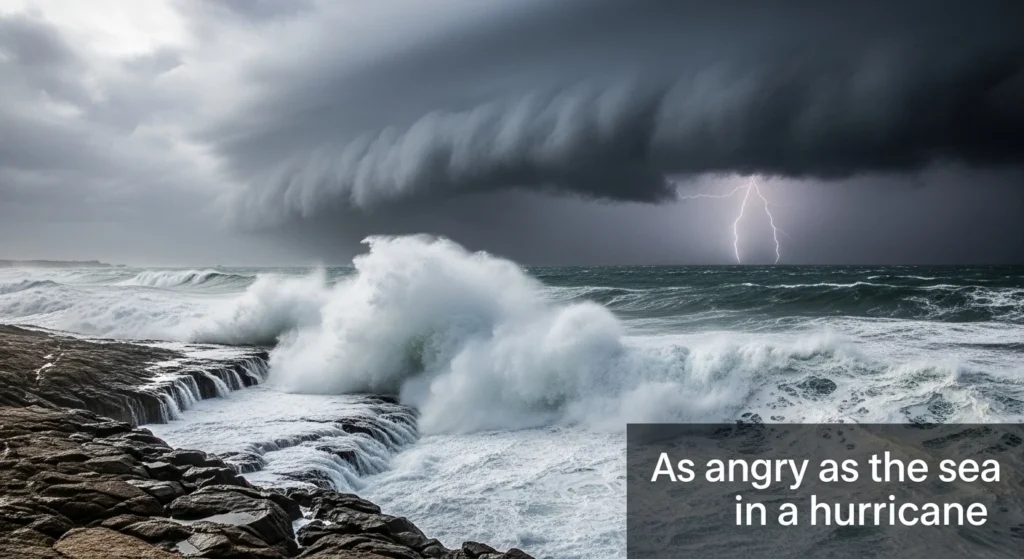
Meaning: Powerful and overwhelming anger.
Usage Insight: Great for dramatic writing.
- His mood shifted, as angry as the sea in a hurricane.
- She trembled, as angry as the sea in a hurricane.
18. Like sparks flying from flint
Meaning: Quick bursts of irritation.
Usage Insight: Works in fast-paced dialogue.
- His replies flew like sparks from flint.
- She answered like sparks flying from flint.
19. As angry as a wolf cornered in the woods
Meaning: Desperate, defensive anger.
Usage Insight: Strong for survival-driven scenes.
- He looked as angry as a wolf cornered in the woods.
- She fought back, as angry as a wolf cornered in the woods.
20. Like a dam ready to burst
Meaning: Suppressed anger about to explode.
Usage Insight: Ideal for emotional buildup.
- His emotions swelled like a dam ready to burst.
- She held back tears, like a dam ready to burst.
21. As angry as a furnace at full heat
Meaning: Blazing fury.
Usage Insight: Great for intense confrontations.
- He burned as angry as a furnace at full heat.
- She glowed red, as angry as a furnace at full heat.
22. Like ice cracking under pressure
Meaning: Cold, sharp anger.
Usage Insight: Perfect for restrained hostility.
- Her voice was like ice cracking under pressure.
- He stared like ice cracking under pressure.
23. As angry as a snake ready to strike
Meaning: Silent but dangerous anger.
Usage Insight: Effective for suspenseful scenes.
- He waited, as angry as a snake ready to strike.
- She whispered, as angry as a snake ready to strike.
24. Like a thundercloud heavy with rain
Meaning: Dark, looming anger.
Usage Insight: Best for emotional tension.
- His face darkened like a thundercloud heavy with rain.
- She walked in like a thundercloud heavy with rain.
25. As angry as a caged tiger
Meaning: Frustrated and trapped anger.
Usage Insight: Strong for confinement themes.
- He paced, as angry as a caged tiger.
- She felt as angry as a caged tiger in that small room.
26. Like lava flowing down a mountain
Meaning: Slow but unstoppable anger.
Usage Insight: Works for long-lasting resentment.
- His anger spread like lava flowing down a mountain.
- She spoke calmly, but inside it flowed like lava down a mountain.
27. As angry as a storm-darkened sky
Meaning: Heavy emotional intensity.
Usage Insight: Good for mood-setting descriptions.
- His expression was as angry as a storm-darkened sky.
- She looked at him, as angry as a storm-darkened sky.
28. Like a match striking rough stone
Meaning: Instant flare of anger.
Usage Insight: Perfect for quick reactions.
- He flared up like a match striking rough stone.
- She responded like a match striking rough stone.
29. As angry as a hawk defending its nest
Meaning: Protective anger.
Usage Insight: Ideal for family-centered scenes.
- She stood as angry as a hawk defending its nest.
- He shouted, as angry as a hawk defending its nest.
30. Like roots tearing through stone
Meaning: Deep, persistent anger.
Usage Insight: Symbolic and powerful for literary writing.
- His resentment grew like roots tearing through stone.
- She held onto her anger like roots tearing through stone.
31. As angry as a blazing sun at noon
Meaning: Intense and scorching rage.
Usage Insight: Useful in poetic descriptions.
- He glared, as angry as a blazing sun at noon.
- She burned as angry as a blazing sun at noon.
32. Like wind howling through bare branches
Meaning: Loud and restless anger.
Usage Insight: Great for emotional monologues.
- His voice echoed like wind howling through bare branches.
- She raged like wind howling through bare branches.
33. As angry as shattered glass
Meaning: Sharp and dangerous emotion.
Usage Insight: Symbolic and modern comparison.
- His tone was as angry as shattered glass.
- She spoke words as angry as shattered glass.
34. Like a boiling desert under the sun
Meaning: Dry, simmering irritation.
Usage Insight: Effective for slow-building tension.
- He felt like a boiling desert under the sun.
- She waited, anger rising like a boiling desert under the sun.
35. As angry as an ancient oak split by a storm
Meaning: Deep, wounded anger mixed with strength.
Usage Insight: Powerful symbolic simile connecting trees and emotion.
- He stood as angry as an ancient oak split by a storm.
- She remained as angry as an ancient oak split by a storm, unbroken yet scarred.
How to Use Similes Effectively in Writing
To use similes effectively:
- Choose comparisons your readers can easily visualize.
- Match the intensity of the simile to the emotion in your scene.
- Avoid clichés unless you refresh them with unique context.
- Use nature similes for emotional depth and symbolism.
- In poems and songs, keep similes rhythmic and concise.
- In essays, use similes sparingly to clarify complex ideas.
- In stories, integrate similes naturally into dialogue and narration.
Strong similes create emotional connections and help readers feel rather than just understand.
FAQs
1. What are similes for angry?
Similes for angry are comparisons that use “like” or “as” to describe anger vividly, such as as angry as a volcano or like thunder crashing through the sky.
2. What is the difference between a simile and a metaphor?
A simile uses “like” or “as” to compare two things, while a metaphor directly states that one thing is another without those words.
3. Are similes useful in academic writing?
Yes, when used carefully. Similes can clarify complex ideas and make explanations more engaging.
4. How do similes improve creative writing?
They add imagery, emotion, and depth, helping readers visualize scenes more clearly.
5. Can nature similes make anger descriptions stronger?
Absolutely. Nature similes—like storms, fire, or trees—create powerful emotional symbolism.
Conclusion
Mastering similes for angry allows writers to transform simple descriptions into powerful emotional experiences. Through vivid comparisons drawn from storms, fire, animals, and trees, anger becomes something readers can see, hear, and almost feel. Similes enrich figurative language, strengthen storytelling, and add depth to poetry, essays, and everyday expression. When used thoughtfully, they create clarity, intensity, and unforgettable imagery. The right comparison can turn a moment of anger into a scene that lingers in the reader’s mind long after the page is turned.