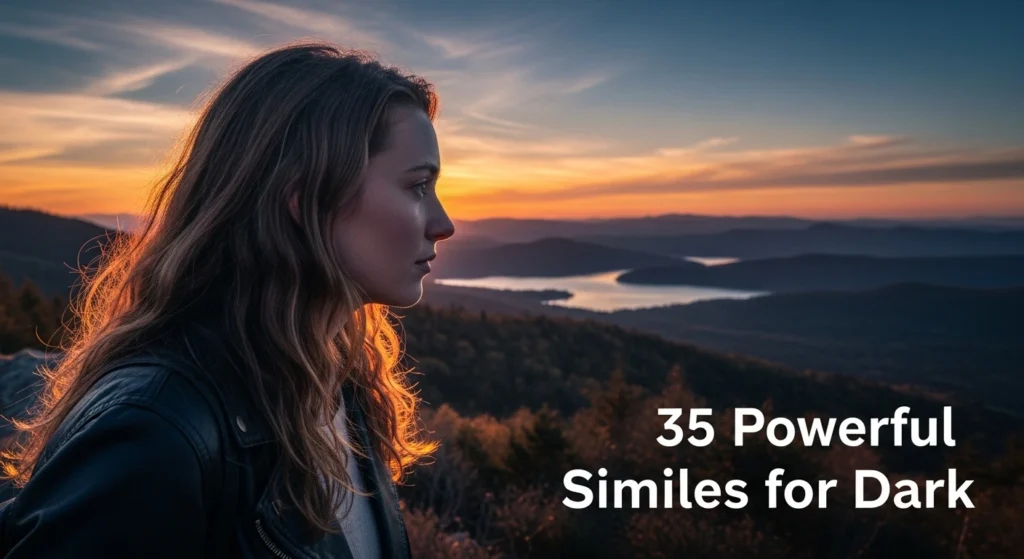
Darkness has always fascinated writers, poets, and storytellers. It can represent mystery, fear, peace, sorrow, beauty, or even comfort. One of the most effective ways to describe darkness vividly is through similes. Similes are powerful tools in figurative language because they create clear and memorable comparisons.
They help readers see, feel, and understand emotions more deeply. Just as trees symbolize strength, resilience, growth, and wisdom in literature, darkness also carries layers of meaning — from shadowed forests to moonless skies. When used thoughtfully, similes for dark can transform plain sentences into expressive and emotional descriptions. In this guide, you’ll discover original and creative similes that bring atmosphere, tone, and imagery to life.
What Is a Simile?
A simile is a figure of speech that compares two different things using the words “like” or “as.” It helps create vivid imagery by linking unfamiliar ideas to familiar ones.
Example: The night was as dark as ink spilled across the sky.
This comparison helps readers imagine deep, heavy darkness by connecting it to something visual and tangible.
1. As dark as midnight without a moon
Meaning
This simile describes complete and absolute darkness with no natural light present.
Usage
Best used in suspenseful, mysterious, or atmospheric writing. It creates a serious and slightly dramatic tone.
Examples
- The forest was as dark as midnight without a moon, swallowing every sound.
- His thoughts felt as dark as midnight without a moon after the bad news.
2. As dark as a cave untouched by sunlight
Meaning
Suggests deep, enclosed darkness that feels isolated and hidden.
Usage
Works well in adventure stories or emotional writing where secrecy or isolation is emphasized.
Examples
- The tunnel was as dark as a cave untouched by sunlight.
- Her mood grew as dark as a cave untouched by sunlight.
3. As dark as spilled ink
Meaning
Refers to thick, heavy darkness that spreads widely.
Usage
Perfect for poetic or dramatic descriptions of night or shadows.
Examples
- Clouds rolled in, as dark as spilled ink across the horizon.
- His anger spread as dark as spilled ink through his thoughts.
4. As dark as a stormy sky
Meaning
Describes darkness filled with tension or approaching trouble.
Usage
Ideal for emotional tension or foreshadowing conflict.
Examples
- Her expression turned as dark as a stormy sky.
- The afternoon grew as dark as a stormy sky before the rain.
5. As dark as charcoal
Meaning
Indicates deep blackness with a solid, dense feel.
Usage
Effective in visual descriptions of objects or settings.
Examples
- The walls were as dark as charcoal after the fire.
- His coat was as dark as charcoal.
6. As dark as a shadow at dusk
Meaning
Represents soft but noticeable darkness.
Usage
Best for calm or reflective scenes.
Examples
- The valley grew as dark as a shadow at dusk.
- Her eyes seemed as dark as a shadow at dusk.
7. As dark as a raven’s feather
Meaning
Describes sleek, glossy blackness.
Usage
Great for describing hair, clothing, or elegant imagery.
Examples
- Her hair was as dark as a raven’s feather.
- The horse’s coat shone as dark as a raven’s feather.
8. As dark as a sealed coffin
Meaning
Suggests suffocating or fearful darkness.
Usage
Common in horror or suspense genres.
Examples
- The basement felt as dark as a sealed coffin.
- His fears closed in, as dark as a sealed coffin.
9. As dark as a forest at night
Meaning
Evokes natural, immersive darkness.
Usage
Excellent for nature similes and atmospheric storytelling.
Examples
- The campsite became as dark as a forest at night.
- Silence settled as dark as a forest at night.
10. As dark as thunderclouds gathering
Meaning
Implies threatening or emotional darkness.
Usage
Perfect for building tension.
Examples
- His mood grew as dark as thunderclouds gathering.
- The sky turned as dark as thunderclouds gathering.
11. As dark as a bottomless pit
Meaning
Suggests endless, overwhelming darkness.
Usage
Strong for emotional or dramatic writing.
Examples
- Her sorrow felt as dark as a bottomless pit.
- The well appeared as dark as a bottomless pit.
12. As dark as a shuttered room
Meaning
Describes closed-off, contained darkness.
Usage
Useful in introspective scenes.
Examples
- The house stood as dark as a shuttered room.
- His heart felt as dark as a shuttered room.
13. As dark as burnt wood
Meaning
Represents charred, smoky blackness.
Usage
Effective in fire imagery.
Examples
- The logs were as dark as burnt wood.
- Her thoughts felt as dark as burnt wood.
14. As dark as a moonless horizon
Meaning
Wide, open darkness stretching endlessly.
Usage
Best in descriptive landscape writing.
Examples
- The ocean looked as dark as a moonless horizon.
- His future seemed as dark as a moonless horizon.
15. As dark as ancient stone
Meaning
Suggests aged, weathered darkness.
Usage
Works in historical or fantasy writing.
Examples
- The castle walls were as dark as ancient stone.
- His silence felt as dark as ancient stone.
16. As dark as a blackened sky
Meaning
Complete and dramatic darkness.
Usage
Ideal for intense scenes.
Examples
- Smoke rose into a sky as dark as a blackened sky.
- Her anger turned as dark as a blackened sky.
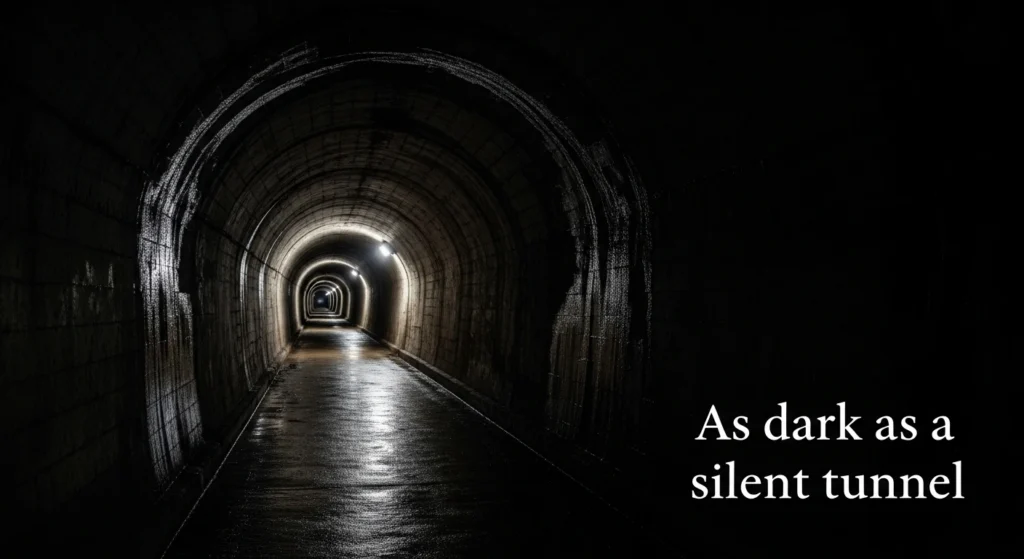
17. As dark as a silent tunnel
Meaning
Lonely, enclosed darkness.
Usage
Works in emotional metaphors.
Examples
- The passage stretched as dark as a silent tunnel.
- His doubts felt as dark as a silent tunnel.
18. As dark as a crow’s wing
Meaning
Deep, glossy blackness.
Usage
Elegant descriptive tone.
Examples
- Her eyes were as dark as a crow’s wing.
- The night lay as dark as a crow’s wing.
19. As dark as soot
Meaning
Dirty, smoky darkness.
Usage
Great for industrial or gritty imagery.
Examples
- His hands were as dark as soot.
- The chimney was as dark as soot.
20. As dark as an eclipse
Meaning
Temporary but intense darkness.
Usage
Perfect for dramatic moments.
Examples
- The room fell as dark as an eclipse.
- His smile faded as dark as an eclipse.
21. As dark as a shadowed valley
Meaning
Natural, deep-set darkness.
Usage
Best in landscape or reflective writing.
Examples
- The land lay as dark as a shadowed valley.
- Her thoughts drifted as dark as a shadowed valley.
22. As dark as velvet
Meaning
Soft, rich darkness.
Usage
Works beautifully in romantic or poetic contexts.
Examples
- The sky was as dark as velvet.
- Her gown shimmered as dark as velvet.
23. As dark as a closed eye
Meaning
Personal, intimate darkness.
Usage
Effective in emotional writing.
Examples
- The room went as dark as a closed eye.
- His hope faded as dark as a closed eye.
24. As dark as an unlit lantern
Meaning
Suggests absence of guidance or hope.
Usage
Useful in symbolic writing.
Examples
- The street stood as dark as an unlit lantern.
- His future felt as dark as an unlit lantern.
25. As dark as deep water
Meaning
Mysterious and unknowable darkness.
Usage
Excellent for suspense.
Examples
- The lake looked as dark as deep water at night.
- Her silence was as dark as deep water.
26. As dark as fading embers
Meaning
Dimming, dying light.
Usage
Ideal for endings or sorrowful scenes.
Examples
- The fire burned as dark as fading embers.
- His voice trailed off as dark as fading embers.
27. As dark as a forgotten cellar
Meaning
Old, dusty, neglected darkness.
Usage
Perfect for mystery genres.
Examples
- The stairs led down to a space as dark as a forgotten cellar.
- His memories felt as dark as a forgotten cellar.
28. As dark as a sealed envelope
Meaning
Hidden and unknown darkness.
Usage
Works for secrets and suspense.
Examples
- The truth remained as dark as a sealed envelope.
- Her thoughts were as dark as a sealed envelope.
29. As dark as smoke-filled air
Meaning
Heavy and suffocating darkness.
Usage
Strong for tense scenes.
Examples
- The room turned as dark as smoke-filled air.
- His anger felt as dark as smoke-filled air.
30. As dark as a starless sky
Meaning
Wide, endless darkness without hope.
Usage
Excellent for poetic descriptions.
Examples
- The desert stretched as dark as a starless sky.
- Her loneliness felt as dark as a starless sky.
31. As dark as black velvet curtains
Meaning
Rich, dramatic darkness.
Usage
Theatrical tone.
Examples
- The stage faded as dark as black velvet curtains.
- The hallway was as dark as black velvet curtains.
32. As dark as heavy coal
Meaning
Solid and dense darkness.
Usage
Works in industrial imagery.
Examples
- His boots were as dark as heavy coal.
- The cave walls were as dark as heavy coal.
33. As dark as nightfall in winter
Meaning
Cold and early darkness.
Usage
Reflective and slightly somber tone.
Examples
- Evening came as dark as nightfall in winter.
- Her mood settled as dark as nightfall in winter.
34. As dark as a hidden grave
Meaning
Ominous and secretive darkness.
Usage
Best for gothic or horror writing.
Examples
- The clearing felt as dark as a hidden grave.
- His silence lingered as dark as a hidden grave.
35. As dark as ancient midnight
Meaning
Timeless, deep, overwhelming darkness.
Usage
Works beautifully in poetic and fantasy writing.
Examples
- The sky loomed as dark as ancient midnight.
- His thoughts wandered as dark as ancient midnight.
How to Use Similes Effectively in Writing
To use similes effectively:
- Match tone and context. A romantic scene needs softer comparisons like “as dark as velvet,” while horror demands stronger imagery.
- Avoid overuse. Too many similes can overwhelm readers.
- Keep comparisons relatable. Choose images your audience understands.
- Use nature similes wisely. Forests, skies, caves, and storms create powerful visual effects.
- Blend emotion and description. The best similes connect physical darkness with emotional depth.
Similes work beautifully in poems, short stories, novels, essays, speeches, and even song lyrics. They add rhythm, clarity, and imagery.
FAQs
1. What are similes for dark?
Similes for dark are comparisons that describe darkness using “like” or “as,” helping create vivid imagery.
2. What is the difference between a simile and a metaphor?
A simile uses “like” or “as” to compare, while a metaphor directly states that one thing is another.
3. Are similes useful in academic writing?
Yes, when used carefully. They can clarify ideas and strengthen descriptive essays.
4. Can similes express emotions?
Absolutely. Darkness often symbolizes fear, sadness, mystery, or comfort.
5. How do I create original similes?
Think about the feeling you want to express, then compare it to something vivid, sensory, and relatable.
Conclusion
Similes for dark bring writing to life. They turn simple descriptions into powerful images filled with mood and meaning. Whether you are describing a quiet night, a heavy emotion, or a mysterious setting, the right comparison can deepen your message. Like strong roots beneath a tree, well-crafted similes strengthen your language and support emotional expression. Use them thoughtfully, and your words will shine — even in the darkest scenes.