
Language becomes unforgettable when it paints pictures in the mind. That is exactly what similes and metaphors are designed to do. These tools of figurative language help writers turn simple ideas into vivid images through creative comparisons. A simile compares two different things using words like as or like, while a metaphor makes a direct comparison without those words. Both forms breathe life into ordinary sentences and make writing more emotional, descriptive, and engaging.
Nature, especially trees, has long inspired writers when crafting similes in literature. Trees symbolize strength, growth, resilience, wisdom, shelter, and even human emotion. Their deep roots and reaching branches mirror the human experience in powerful ways. In this guide, you will explore original similes rooted in nature imagery, understand their meanings, and learn how to use them effectively in poems, stories, essays, and beyond.
What Is a Simile?
A simile is a figure of speech that compares two different things using the words like or as to create a vivid image.
Example: Her patience was as steady as an ancient oak tree.
This comparison helps readers picture patience as something strong, grounded, and unshakable—just like a tree that has stood for centuries.
1. As steady as an ancient oak
Meaning: Extremely strong and dependable.
Usage Insight: Works well when describing reliability, emotional strength, or leadership.
Examples: He remained as steady as an ancient oak during the crisis. Her voice was as steady as an ancient oak, calming everyone in the room.
2. Like branches reaching for sunlight
Meaning: Striving for growth or opportunity.
Usage Insight: Ideal for themes of ambition and hope.
Examples: Her dreams stretched like branches reaching for sunlight. The young artist’s ideas spread like branches reaching for sunlight.
3. As rooted as a tree in fertile soil
Meaning: Deeply grounded or connected.
Usage Insight: Perfect for describing loyalty or cultural identity.
Examples: His values are as rooted as a tree in fertile soil. She felt as rooted as a tree in fertile soil in her hometown.
4. Like leaves dancing in the wind
Meaning: Light, carefree movement.
Usage Insight: Great for joyful or playful scenes.
Examples: The children ran like leaves dancing in the wind. Her laughter fluttered like leaves dancing in the wind.
5. As resilient as a tree after a storm
Meaning: Able to recover quickly from hardship.
Usage Insight: Strong in motivational or emotional writing.
Examples: She stood as resilient as a tree after a storm. After failure, he returned as resilient as a tree after a storm.
6. Like roots gripping the earth
Meaning: Holding firmly to something.
Usage Insight: Effective for describing determination.
Examples: He held onto hope like roots gripping the earth. Her faith clung like roots gripping the earth.
7. As tall as a pine against the sky
Meaning: Proud and confident.
Usage Insight: Ideal for describing confidence or physical presence.
Examples: She stood as tall as a pine against the sky. His confidence rose as tall as a pine against the sky.
8. Like sap flowing through a tree
Meaning: Full of life and energy.
Usage Insight: Works beautifully in emotional or romantic writing.
Examples: Excitement moved through him like sap flowing through a tree. Hope pulsed like sap flowing through a tree in spring.
9. As patient as a tree growing rings
Meaning: Quiet, long-term endurance.
Usage Insight: Useful for describing wisdom or maturity.
Examples: She waited as patiently as a tree growing rings. His wisdom formed as patiently as a tree growing rings.
10. Like blossoms after winter
Meaning: Renewal and fresh beginnings.
Usage Insight: Perfect for transformation stories.
Examples: Her confidence bloomed like blossoms after winter. Their love returned like blossoms after winter.
11. As silent as a forest at dawn
Meaning: Deep and peaceful quiet.
Usage Insight: Ideal for calm or suspenseful scenes.
Examples: The house was as silent as a forest at dawn. His thoughts settled as silent as a forest at dawn.
12. Like a tree bending but not breaking
Meaning: Flexible yet strong.
Usage Insight: Excellent for resilience themes.
Examples: She adapted like a tree bending but not breaking. He handled criticism like a tree bending but not breaking.
13. As deep as a tree’s hidden roots
Meaning: Profound or emotionally layered.
Usage Insight: Effective in reflective writing.
Examples: Her love was as deep as a tree’s hidden roots. His pain ran as deep as a tree’s hidden roots.
14. Like autumn leaves drifting down
Meaning: Graceful decline or gentle change.
Usage Insight: Beautiful in poetic descriptions.
Examples: Memories fell like autumn leaves drifting down. Her words faded like autumn leaves drifting down.
15. As protective as branches providing shade
Meaning: Offering comfort and security.
Usage Insight: Ideal for describing care.
Examples: He was as protective as branches providing shade. Her arms wrapped around him like branches providing shade.
16. Like a seed waiting for rain
Meaning: Full of hidden potential.
Usage Insight: Perfect for character development.
Examples: His talent waited like a seed waiting for rain. Opportunity hovered like a seed waiting for rain.
17. As firm as bark on an old tree
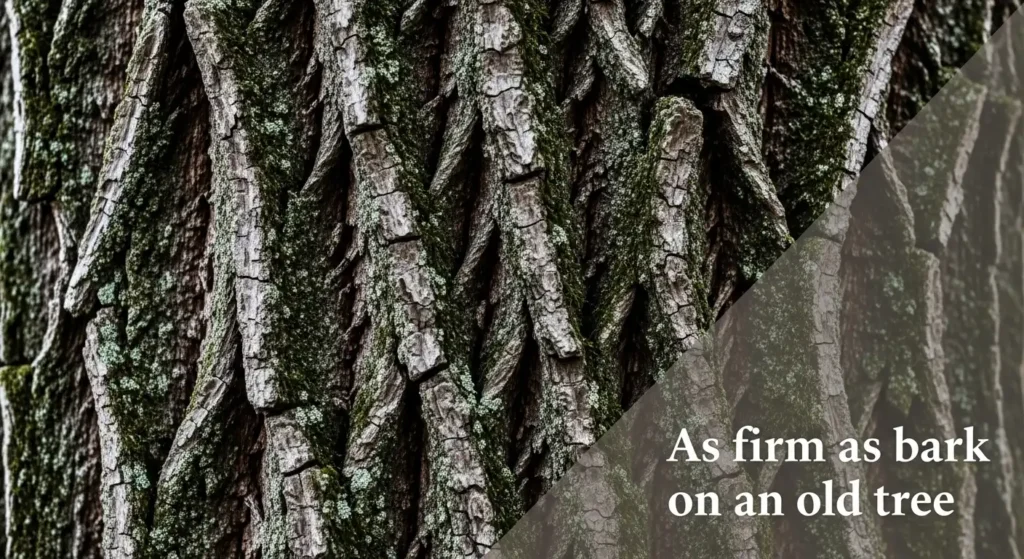
Meaning: Tough and unwavering.
Usage Insight: Useful in conflict scenes.
Examples: Her resolve was as firm as bark on an old tree. He remained as firm as bark on an old tree.
18. Like sunlight filtering through leaves
Meaning: Gentle and warm presence.
Usage Insight: Great for romantic or tender scenes.
Examples: Her smile spread like sunlight filtering through leaves. Hope shimmered like sunlight filtering through leaves.
19. As enduring as a forest through seasons
Meaning: Long-lasting strength.
Usage Insight: Works well in historical or epic writing.
Examples: Their friendship was as enduring as a forest through seasons. His determination stood as enduring as a forest through seasons.
20. Like roots intertwined underground
Meaning: Deeply connected relationships.
Usage Insight: Ideal for friendships or family bonds.
Examples: Their lives were connected like roots intertwined underground. The team worked like roots intertwined underground.
21. As fresh as spring leaves
Meaning: New and vibrant.
Usage Insight: Great for beginnings.
Examples: Her ideas were as fresh as spring leaves. The morning felt as fresh as spring leaves.
22. Like a tree marking time with rings
Meaning: Quietly recording experience.
Usage Insight: Effective for aging themes.
Examples: His face changed like a tree marking time with rings. Life shaped her like a tree marking time with rings.
23. As wild as vines climbing freely
Meaning: Untamed and passionate.
Usage Insight: Works in expressive writing.
Examples: Her spirit was as wild as vines climbing freely. His creativity spread as wild as vines climbing freely.
24. Like leaves whispering secrets
Meaning: Soft, intimate communication.
Usage Insight: Ideal for mystery or romance.
Examples: They spoke like leaves whispering secrets. The wind moved like leaves whispering secrets.
25. As calm as a shaded grove
Meaning: Peaceful and soothing.
Usage Insight: Great for reflective writing.
Examples: She felt as calm as a shaded grove. His presence was as calm as a shaded grove.
26. Like a tree standing alone in a field
Meaning: Independent but exposed.
Usage Insight: Effective for solitude themes.
Examples: He felt like a tree standing alone in a field. She stood like a tree standing alone in a field.
27. As bright as blossoms in spring
Meaning: Cheerful and radiant.
Usage Insight: Perfect for joyful descriptions.
Examples: Her smile was as bright as blossoms in spring. The celebration felt as bright as blossoms in spring.
28. Like roots seeking water in dry soil
Meaning: Desperate or determined searching.
Usage Insight: Powerful in emotional scenes.
Examples: He searched for answers like roots seeking water in dry soil. She longed for peace like roots seeking water in dry soil.
29. As layered as a forest canopy
Meaning: Complex and multi-dimensional.
Usage Insight: Ideal for character depth.
Examples: Her personality was as layered as a forest canopy. The story unfolded as layered as a forest canopy.
30. Like a tree scarred by lightning
Meaning: Marked by painful experience.
Usage Insight: Effective in dramatic writing.
Examples: He stood like a tree scarred by lightning. Her heart felt like a tree scarred by lightning.
31. As generous as a fruit-bearing tree
Meaning: Giving and nurturing.
Usage Insight: Works beautifully in descriptive prose.
Examples: She was as generous as a fruit-bearing tree. His kindness spread as generous as a fruit-bearing tree.
32. Like branches sheltering birds
Meaning: Offering refuge.
Usage Insight: Ideal for protective relationships.
Examples: Her home felt like branches sheltering birds. He acted like branches sheltering birds.
33. As timeless as an old forest
Meaning: Eternal or classic.
Usage Insight: Great for legacy themes.
Examples: Their love felt as timeless as an old forest. His music sounded as timeless as an old forest.
34. Like saplings pushing through soil
Meaning: Determined new beginnings.
Usage Insight: Perfect for inspirational writing.
Examples: Her courage rose like saplings pushing through soil. New ideas emerged like saplings pushing through soil.
35. As strong as roots beneath the surface
Meaning: Hidden strength.
Usage Insight: Effective for inner resilience.
Examples: She was as strong as roots beneath the surface. His confidence was as strong as roots beneath the surface.
How to Use Similes Effectively in Writing
To make similes and metaphors powerful:
- Match emotion with imagery. Use nature similes when describing growth, peace, or resilience.
- Avoid clichés. Fresh comparisons create stronger impact.
- Keep clarity first. A simile should enhance understanding, not confuse readers.
- Use sparingly in academic writing. In essays, similes can clarify complex ideas but should remain appropriate and controlled.
- Experiment in creative work. Poems, songs, and stories benefit from bold, imaginative comparisons.
Strong similes in literature create rhythm, mood, and emotional depth. When used thoughtfully, they transform ordinary descriptions into memorable experiences.
FAQs
1. What are similes and metaphors?
Similes and metaphors are figurative language examples that compare two different things to create vivid imagery. Similes use like or as, while metaphors make direct comparisons.
2. What is the main difference between similes and metaphors?
A simile says something is like or as something else. A metaphor says it is that thing, creating a stronger, more direct comparison.
3. Why are similes important in literature?
Similes in literature help readers visualize scenes, feel emotions, and connect more deeply with characters and themes.
4. Can similes be used in academic writing?
Yes, but they should clarify ideas rather than decorate them. Simple, precise comparisons work best.
5. How can I create original similes?
Look closely at nature, emotions, and daily life. Think about shared qualities between two unlike things, and express the comparison clearly.
Conclusion
Similes and metaphors are more than decorative language—they are bridges between ideas and imagination. Through thoughtful comparisons, writers can express strength like towering trees, resilience like roots beneath the earth, and hope like blossoms after winter. These figurative language tools bring clarity, color, and emotional depth to every form of writing. Whether you are crafting poetry, storytelling, or academic essays, powerful similes turn simple sentences into living images. When you master the art of comparison, your words will grow strong and memorable—just like the trees that inspire them.