Sadness is one of the most universal human emotions, yet it can be surprisingly hard to describe. This is where similes step in and do their quiet magic. Similes compare one thing to another using like or as, helping readers clearly picture feelings that might otherwise stay hidden. In figurative language, they add color, depth, and emotional truth to writing. Nature similes are especially powerful because the natural world mirrors human emotions so beautifully. Trees, in particular, symbolize strength, growth, resilience, wisdom, and deep emotion—standing tall through storms just as people endure sorrow. By using thoughtful comparisons, writers can turn sadness into something readers don’t just understand, but feel.
What Is a Simile?
A simile is a figure of speech that compares two unlike things using the words like or as to make meaning clearer and more vivid.
Example: She felt as lonely as a tree standing alone in an empty field.
This comparison helps readers instantly visualize and emotionally connect with the feeling of sadness.
Similes for Being Sad (With Meaning and Examples)
1. Sad like a tree stripped of its leaves
Meaning: Deep sadness after loss or change.
Usage Insight: Works well when describing grief or emotional emptiness. Examples:
- He stood there, sad like a tree stripped of its leaves.
- Her smile faded, leaving her sad like a bare winter tree.
2. Sad as rain falling on an empty street
Meaning: Quiet, lingering sorrow.
Usage Insight: Ideal for reflective or melancholic scenes. Examples:
- She felt sad as rain falling on an empty street.
- His voice sounded sad as rain tapping the pavement.
3. Sad like a wilting flower

Meaning: Emotional exhaustion or loss of hope.
Usage Insight: Great for gentle, emotional writing. Examples:
- She grew sad like a wilting flower in the shade.
- His energy faded, sad like a flower without sunlight.
4. Sad as a sunset fading too fast
Meaning: Sadness tied to endings or missed moments.
Usage Insight: Perfect for nostalgic tones. Examples:
- The goodbye felt sad as a sunset fading too fast.
- Her laughter ended, sad as the day turning to night.
5. Sad like a tree bending in a storm
Meaning: Emotional pain mixed with resilience.
Usage Insight: Works well in stories of struggle. Examples:
- He felt sad like a tree bending in a storm.
- She stayed silent, sad but standing, like a storm-bent tree.
6. Sad as a song played in a minor key

Meaning: Deep emotional melancholy.
Usage Insight: Effective in artistic or lyrical writing. Examples:
- Her words were sad as a song in a minor key.
- The room felt sad, like music meant to ache.
7. Sad like a shadow that won’t leave
Meaning: Persistent sadness.
Usage Insight: Ideal for long-lasting emotional states. Examples:
- His sadness followed him like a shadow that wouldn’t leave.
- She carried grief, sad like a shadow at noon.
8. Sad as an empty bird’s nest
Meaning: Loss and absence.
Usage Insight: Strong in emotional storytelling. Examples:
- The house felt sad as an empty bird’s nest.
- Her heart was sad, hollow and quiet.
9. Sad like fog covering the morning

Meaning: Emotional confusion or heaviness.
Usage Insight: Useful for uncertain moods. Examples:
- His thoughts felt sad like fog over the hills.
- She woke up sad, her mind wrapped in fog.
10. Sad as a broken branch
Meaning: Emotional damage or heartbreak.
Usage Insight: Great for dramatic moments. Examples:
- He felt sad as a broken branch on the ground.
- Her trust snapped, sad and splintered.
11. Sad like a candle burning out
Meaning: Gradual emotional fading.
Usage Insight: Effective in reflective writing. Examples:
- Her hope dimmed, sad like a candle burning out.
- He spoke softly, like his light was fading.
12. Sad as waves crashing on empty shores
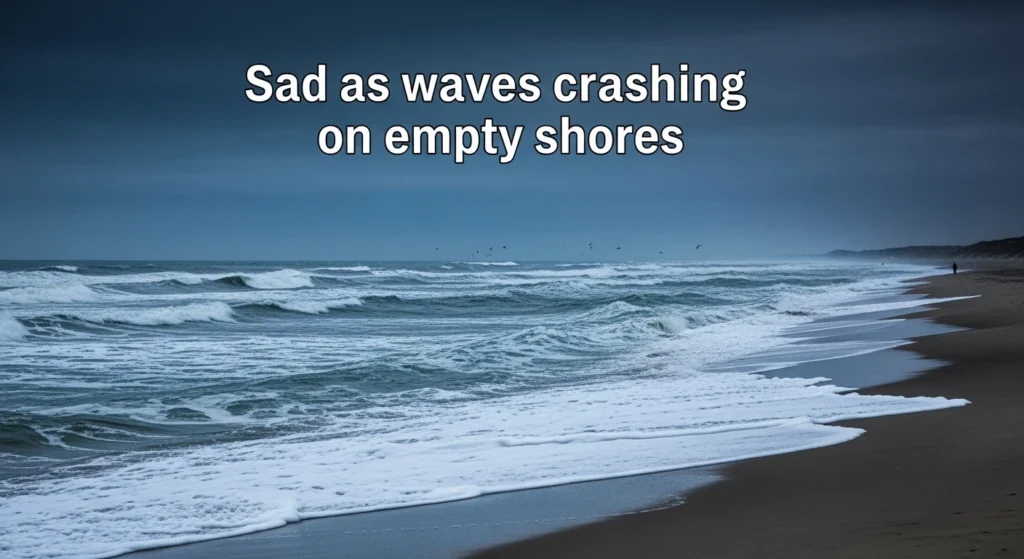
Meaning: Repetitive, overwhelming sorrow.
Usage Insight: Works well in poetic descriptions. Examples:
- His grief returned, sad as waves on empty shores.
- She cried quietly, the sadness coming in waves.
13. Sad like autumn leaves falling
Meaning: Natural, unavoidable sadness.
Usage Insight: Ideal for gentle emotional transitions. Examples:
- The goodbye felt sad like autumn leaves falling.
- Her tears came softly, like leaves letting go.
14. Sad as a sky without stars
Meaning: Hopelessness or loneliness.
Usage Insight: Strong for emotional isolation. Examples:
- The night felt sad as a sky without stars.
- He stared upward, searching for light.
15. Sad like a locked door

Meaning: Emotional distance or closure.
Usage Insight: Effective for character emotions. Examples:
- She felt sad like a door locked from inside.
- His silence was heavy and closed.
16. Sad as a river running dry
Meaning: Emotional emptiness.
Usage Insight: Powerful in serious writing. Examples:
- His joy vanished, sad as a river gone dry.
- Her laughter felt distant now.
17. Sad like a tree growing alone
Meaning: Loneliness and isolation.
Usage Insight: Great for reflective prose. Examples:
- He stood sad like a lone tree on a hill.
- She learned to stand alone, but it hurt.
18. Sad as a forgotten letter

Meaning: Neglect or emotional abandonment.
Usage Insight: Ideal for sentimental writing. Examples:
- Her feelings were sad as a forgotten letter.
- His words stayed unread.
19. Sad like dusk without dawn
Meaning: Lingering despair.
Usage Insight: Strong for dark emotional tones. Examples:
- He felt sad like dusk without dawn.
- The future looked dim.
20. Sad as a cracked mirror
Meaning: Broken self-image or identity.
Usage Insight: Works well in character studies. Examples:
- She felt sad, unable to recognize herself.
- His reflection felt wrong.
21. Sad like a storm that never breaks
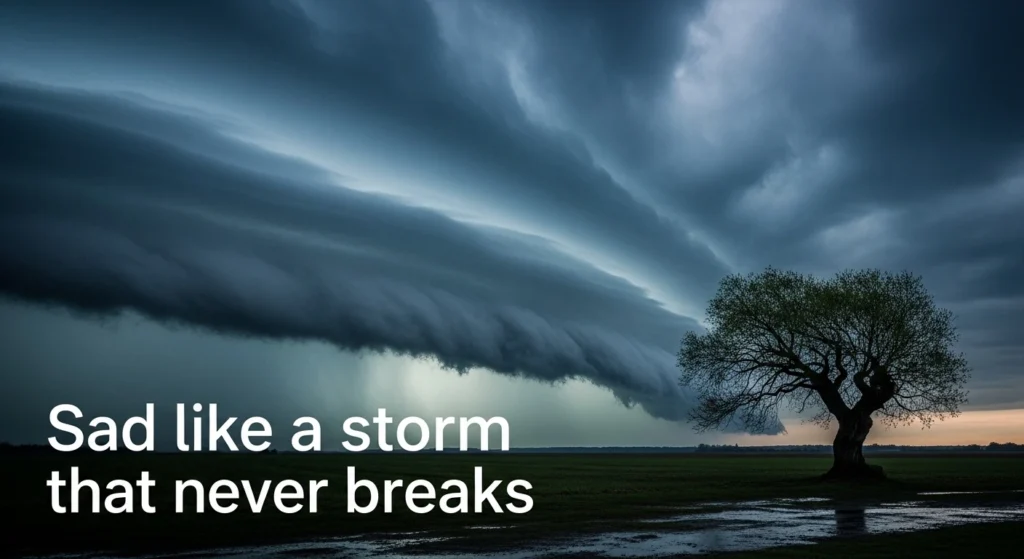
Meaning: Constant emotional pressure.
Usage Insight: Ideal for internal conflict. Examples:
- He lived sad like a storm waiting to fall.
- Her heart felt heavy all day.
22. Sad as a fading photograph
Meaning: Nostalgic sadness.
Usage Insight: Great for memory-driven writing. Examples:
- The memory felt sad as a fading photograph.
- Time softened everything but the ache.
23. Sad like a tree scarred by lightning
Meaning: Pain that leaves marks.
Usage Insight: Powerful for trauma narratives. Examples:
- He survived, sad like a scarred tree.
- The pain showed quietly.
24. Sad as winter without snow

Meaning: Empty sadness without comfort.
Usage Insight: Effective in subtle emotion. Examples:
- The season felt sad and bare.
- Nothing softened the cold.
25. Sad like a path leading nowhere
Meaning: Directionless sorrow.
Usage Insight: Ideal for lost characters. Examples:
- He felt sad like a road with no end.
- She questioned every step.
26. Sad as silence after laughter
Meaning: Sudden emotional drop.
Usage Insight: Works well in contrast scenes. Examples:
- The room felt sad after the jokes ended.
- Silence hit harder than words.
27. Sad like a bird with a broken wing

Meaning: Inability to move forward.
Usage Insight: Strong for emotional struggle. Examples:
- He felt sad and stuck.
- She wanted to fly but couldn’t.
28. Sad as a gray horizon
Meaning: Uncertain future.
Usage Insight: Great for endings. Examples:
- Tomorrow looked sad and unclear.
- Hope felt far away.
29. Sad like a tree waiting for spring
Meaning: Sadness mixed with patience.
Usage Insight: Ideal for hopeful sorrow. Examples:
- She waited, sad but believing.
- Healing took time.
30. Sad as a room without windows

Meaning: Emotional suffocation.
Usage Insight: Strong for intense feelings. Examples:
- He felt trapped and sad.
- The walls felt close.
31. Sad like ashes after fire
Meaning: Aftermath of emotional loss.
Usage Insight: Effective for dramatic moments. Examples:
- Love burned out, leaving sadness behind.
- Only memories remained.
32. Sad as a low-hanging sky
Meaning: Emotional heaviness.
Usage Insight: Great for mood-setting. Examples:
- The day felt heavy and sad.
- Even breathing felt hard.
33. Sad like a clock ticking alone

Meaning: Loneliness over time.
Usage Insight: Ideal for quiet scenes. Examples:
- Time passed slowly.
- The house echoed.
34. Sad as footprints washed away
Meaning: Feeling forgotten. Usage Insight: Effective for emotional reflection. Examples:
- His efforts felt erased.
- Nothing seemed to last.
35. Sad like a tree holding old scars
Meaning: Long-lasting emotional pain. Usage Insight: Perfect for deep, mature writing. Examples:
- She smiled, but the scars remained.
- Growth came with pain.
How to Use Similes Effectively in Writing
- Match emotion to imagery: Choose comparisons that fit the mood and intensity.
- Keep it natural: Avoid forcing similes where plain language works better.
- Use variety: Mix nature similes with everyday comparisons.
- Enhance, don’t distract: Similes should clarify emotion, not overwhelm it.
- Adapt for form: Poems favor lyrical similes, while essays benefit from clarity and restraint.
FAQs
Q1: What are similes for being sad? They are comparisons using like or as to describe sadness more vividly.
Q2: How are similes different from metaphors? Similes use like or as, while metaphors state the comparison directly.
Q3: Are similes used in literature? Yes, similes are widely used in poetry, novels, and essays to express emotion.
Q4: Can similes be used in academic writing? Yes, when used carefully to clarify ideas or illustrate concepts.
Q5: Why are nature similes effective? Nature reflects human emotions in relatable and universal ways.
Conclusion
Similes for being sad give language the power to express emotions that words alone often can’t capture. Through thoughtful comparisons—especially nature similes and tree imagery—writers can turn quiet sorrow into clear, moving images. Whether in poems, stories, songs, or essays, these similes add clarity, depth, and emotional resonance. By using them with care and intention, you invite readers not just to read sadness, but to truly feel it.