Books are more than printed pages—they are experiences, emotions, and entire worlds waiting to be explored. One powerful way writers describe those experiences is through similes, a core element of figurative language that compares two unlike things using like or as. Similes help readers visualize ideas, feel emotions more deeply, and connect abstract thoughts to familiar images. In literature, similes often borrow from nature because natural elements are universal and emotionally rich. Just as trees symbolize strength, growth, resilience, wisdom, and human emotion, books too reflect these qualities by preserving knowledge, stories, and memories across generations. When writers compare books to trees, rivers, keys, or light, language becomes vivid and alive. In this article, you’ll explore creative and meaningful similes for books that elevate writing and deepen understanding.
What Is a Simile?
A simile is a figure of speech that compares two different things using words like “like” or “as” to make a description clearer or more expressive.
Example: A good book is like a lantern in the dark, guiding the reader toward understanding.
1. A book is like a key unlocking hidden worlds
Meaning: Books reveal new ideas, places, and perspectives.
Usage: Works well when emphasizing discovery and imagination.
Examples:
- That novel felt like a key unlocking hidden worlds in my mind.
- Every chapter turned like a key opening another secret room.
2. A book is like a quiet friend who always listens
Meaning: Books offer comfort and companionship.
Usage: Ideal for emotional or reflective writing.
Examples:
- During lonely nights, books are like quiet friends who listen.
- She treated her favorite book like a friend she could trust.
3. A book is like a bridge between minds
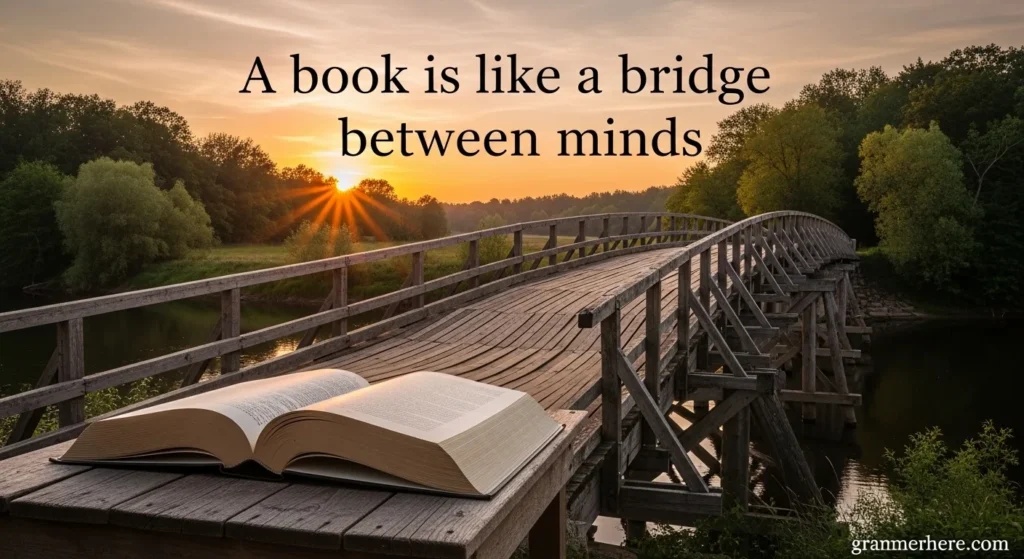
Meaning: Books connect authors and readers across time.
Usage: Perfect for academic or literary discussions.
Examples:
- Literature acts like a bridge between minds centuries apart.
- The book felt like a bridge linking cultures and ideas.
4. A book is like a window into another life
Meaning: Reading allows empathy and understanding.
Usage: Best for novels and character-driven stories.
Examples:
- The memoir was like a window into another life.
- Each page opened like a window to someone else’s world.
5. A book is like a tree growing knowledge branch by branch
Meaning: Books help knowledge expand gradually.
Usage: Effective in educational writing.
Examples:
- Textbooks are like trees growing knowledge branch by branch.
- Her understanding grew like a tree with every chapter.
6. A book is like a mirror reflecting the reader
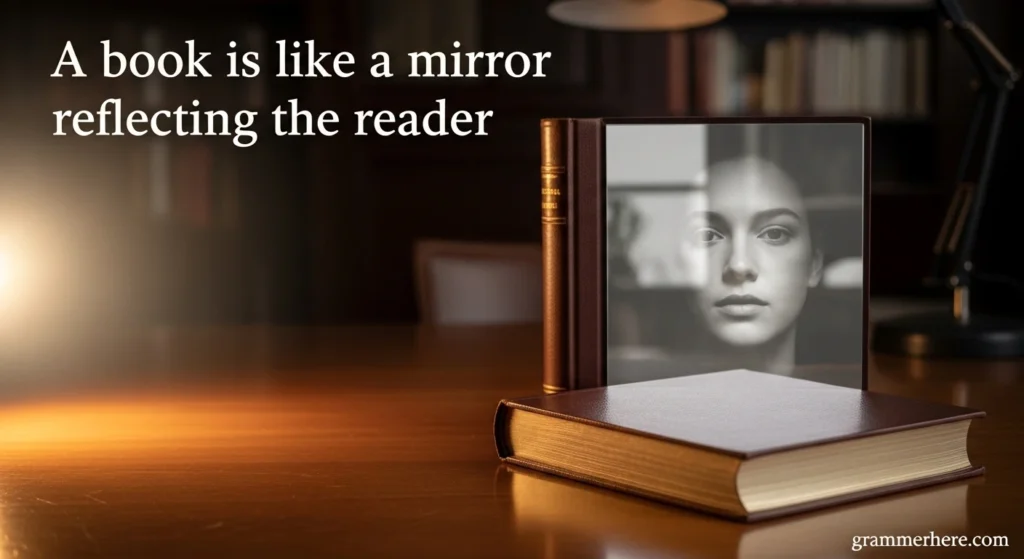
Meaning: Readers see themselves in stories.
Usage: Ideal for introspective themes.
Examples:
- That novel was like a mirror reflecting my fears.
- Books often act like mirrors for hidden emotions.
7. A book is like a map through unfamiliar terrain
Meaning: It guides readers through complex ideas.
Usage: Useful for nonfiction or self-help.
Examples:
- The guidebook felt like a map through unfamiliar terrain.
- Each chapter worked like a landmark on the map.
8. A book is like a seed that grows ideas
Meaning: Reading sparks long-term thinking.
Usage: Great for inspirational writing.
Examples:
- That essay planted ideas like seeds in my mind.
- Books are seeds that grow into wisdom.
9. A book is like a time machine
Meaning: It transports readers across time.
Usage: Works well in historical contexts.
Examples:
- Historical novels feel like time machines.
- One book carried me like a time machine to ancient cities.
10. A book is like a lighthouse in confusion
Meaning: Books provide clarity and guidance.
Usage: Suitable for philosophical writing.
Examples:
- That book stood like a lighthouse in my confusion.
- Good literature guides like a steady light.
11. A book is like a river of flowing thoughts
Meaning: Ideas move smoothly and continuously.
Usage: Effective for poetic descriptions.
Examples:
- The prose moved like a river of thought.
- I drifted along the book like a calm river.
12. A book is like a doorway to imagination
Meaning: It opens creative possibilities.
Usage: Ideal for children’s literature.
Examples:
- Fairy tales are like doorways to imagination.
- Each book opened like a magical door.
13. A book is like a teacher who never tires
Meaning: Books educate endlessly.
Usage: Best for academic themes.
Examples:
- A library is full of teachers who never tire.
- That book taught patiently like a devoted teacher.
14. A book is like a shelter in emotional storms
Meaning: Reading offers emotional safety.
Usage: Works well in personal essays.
Examples:
- Novels feel like shelters during hard times.
- She hid in books like a safe house.
15. A book is like a puzzle waiting to be solved
Meaning: Reading requires thinking and engagement.
Usage: Perfect for mystery genres.
Examples:
- The mystery read like a complex puzzle.
- Every chapter added another piece.
16. A book is like a compass for values
Meaning: Books shape morals and beliefs.
Usage: Suitable for ethical discussions.
Examples:
- Philosophy books act like moral compasses.
- That novel guided my values quietly.
17. A book is like a song written in ink
Meaning: Rhythm and emotion live in text.
Usage: Great for lyrical prose.
Examples:
- The poetry read like a song in ink.
- Her writing sang softly like music.
18. A book is like a garden of ideas
Meaning: Diverse thoughts grow together.
Usage: Ideal for essays and reviews.
Examples:
- The anthology felt like a garden of ideas.
- Each essay bloomed differently.
19. A book is like a fire warming the soul
Meaning: Books inspire and energize.
Usage: Works for motivational writing.
Examples:
- That story burned like a fire inside me.
- Good books warm the soul quietly.
20. A book is like a road trip without moving
Meaning: Reading offers adventure anywhere.
Usage: Casual and engaging tone.
Examples:
- Reading felt like a road trip from my chair.
- Every novel traveled far without motion.
21. A book is like a diary shared with strangers
Meaning: Authors reveal personal truths.
Usage: Ideal for memoirs.
Examples:
- The memoir felt like a shared diary.
- Reading it felt deeply personal.
22. A book is like a ladder to understanding
Meaning: Knowledge builds step by step.
Usage: Best for learning-focused writing.
Examples:
- Each chapter climbed like a ladder.
- Books lift understanding higher.
23. A book is like a photograph of thought
Meaning: Ideas are preserved.
Usage: Effective in reflective essays.
Examples:
- Essays capture thought like photographs.
- That book froze ideas in time.
24. A book is like a whisper from the past
Meaning: History speaks through books.
Usage: Perfect for classic literature.
Examples:
- Classics whisper softly from the past.
- Old books speak like gentle voices.
25. A book is like a toolbox for the mind
Meaning: Books provide mental skills.
Usage: Good for self-development content.
Examples:
- Nonfiction books work like mental toolboxes.
- Each chapter added a new tool.
26. A book is like a mirror lake of emotions
Meaning: Readers see feelings reflected.
Usage: Poetic and emotional writing.
Examples:
- The novel felt like a mirror lake.
- My emotions reflected back clearly.
27. A book is like a compass in confusion
Meaning: It gives direction in uncertainty.
Usage: Inspirational tone.
Examples:
- That book guided me like a compass.
- Reading gave direction to my thoughts.
28. A book is like a treasure chest of words
Meaning: Books contain valuable language.
Usage: Ideal for language learners.
Examples:
- Poetry books are treasure chests of words.
- Every page sparkled with value.
29. A book is like a candle passed hand to hand
Meaning: Knowledge is shared across generations.
Usage: Academic or historical tone.
Examples:
- Literature passes knowledge like a candle.
- Each reader keeps the flame alive.
30. A book is like a path through the forest of thought
Meaning: Books guide complex thinking.
Usage: Works well in essays.
Examples:
- Philosophy books guide like forest paths.
- I followed the argument step by step.
31. A book is like a soft voice in silence
Meaning: Reading is calming and intimate.
Usage: Reflective writing.
Examples:
- The book spoke softly in the quiet room.
- Reading felt peaceful and personal.
32. A book is like a window that never closes
Meaning: Learning is always available.
Usage: Educational contexts.
Examples:
- Libraries offer windows that never close.
- Books keep learning open.
33. A book is like a ship sailing ideas

Meaning: Ideas travel far and wide.
Usage: Literary analysis.
Examples:
- The novel carried ideas like a ship.
- Stories sailed across cultures.
34. A book is like a heartbeat of culture
Meaning: Books preserve societal values.
Usage: Cultural discussions.
Examples:
- Literature is the heartbeat of culture.
- Books pulse with shared history.
35. A book is like roots holding wisdom firm
Meaning: Books ground human knowledge.
Usage: Symbolic and philosophical writing.
Examples:
- Ancient texts act like roots of wisdom.
- Books anchor understanding deeply.
How to Use Similes Effectively in Writing
To use similes well, focus on clarity and relevance. Choose comparisons your audience can easily imagine. In poems and songs, lean into emotion and rhythm. In stories, use similes to reveal character or mood. For essays and academic writing, keep similes precise and meaningful rather than decorative. Avoid overusing them—one strong simile is better than many weak ones. Always ensure the comparison enhances understanding instead of distracting the reader.
FAQs
What are similes for books? They are comparisons using like or as that describe books in vivid, imaginative ways.
How are similes different from metaphors? Similes use like or as, while metaphors state the comparison directly.
Are similes used in literature? Yes, similes are common in poetry, novels, and essays to create imagery.
Can similes be used in academic writing? Yes, when used carefully, they can clarify complex ideas.
Why are nature similes popular in books? Nature offers universal images that readers easily understand.
Conclusion
Similes for books transform ordinary descriptions into powerful imagery that resonates with readers. By comparing books to trees, lights, paths, and voices, writers add clarity, emotion, and depth to language. These comparisons help ideas grow, connect, and endure—just like strong roots beneath a living tree. Whether you’re writing poetry, fiction, essays, or songs, thoughtful similes can elevate your words and make your message unforgettable. When used with care, similes turn books into experiences, not just objects, enriching both language and imagination.