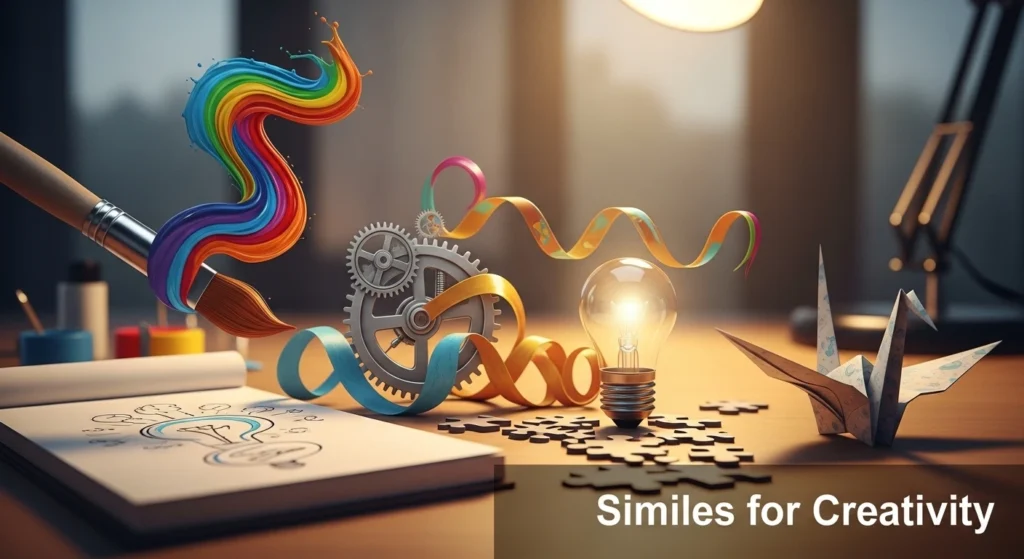
Creativity is often hard to explain, but similes give us a beautiful way to make it visible, vivid, and relatable. A simile is a form of figurative language that compares one thing to another using words like “as” or “like”, helping readers instantly picture an idea or emotion.
In writing, similes add color, depth, and emotion, turning abstract thoughts into clear images. They are especially important in creative expression because they bridge logic and imagination.
Nature-based similes, particularly those inspired by trees, are powerful because trees symbolize strength, growth, resilience, wisdom, and deeply human emotions. Just as a tree grows, bends, and renews itself, creativity evolves through patience, struggle, and inspiration. In this article, you’ll explore rich and original similes for creativity that can elevate poems, stories, essays, and everyday writing with clarity and beauty.
What Is a Simile?
A simile is a figure of speech that compares two unlike things using like or as to make an idea more vivid or meaningful.
Example: Her creativity flowed like a river after rain, unstoppable and full of life.
Creativity like a tree growing toward sunlight
Meaning: Creativity naturally reaches for inspiration and improvement.
Usage: Best for describing personal growth or artistic ambition.
Examples:
- His creativity grew like a tree growing toward sunlight, always seeking something brighter.
- She nurtured her ideas patiently, letting creativity rise like a tree toward the sun.
Creativity like roots breaking through stone
Meaning: Creative ideas persist despite obstacles.
Usage: Ideal for resilience and determination in art or thinking.
Examples:
- Her creativity pushed forward like roots breaking through stone.
- Even in failure, his creativity survived like roots splitting rock.
Creativity like leaves changing with the seasons
Meaning: Creativity evolves and adapts over time.
Usage: Useful for long-term artistic journeys.
Examples:
- His creativity shifted like leaves changing with the seasons.
- Artists often grow by letting creativity change like autumn leaves.
Creativity like a river carving its own path
Meaning: Creativity finds new directions naturally.
Usage: Works well for innovation and originality.
Examples:
- Her creativity moved like a river carving its own path.
- True creativity flows freely, shaping its own way forward.
Creativity like sparks in dry wood
Meaning: Small ideas can ignite powerful outcomes.
Usage: Great for inspiration moments.
Examples:
- One thought lit her creativity like sparks in dry wood.
- His creativity caught fire from a single idea.
Creativity like branches reaching in all directions
Meaning: Creative thinking explores many possibilities.
Usage: Perfect for brainstorming or artistic exploration.
Examples:
- His creativity spread like branches reaching in all directions.
- Writing allowed her creativity to stretch far and wide.
Creativity like morning dew on grass
Meaning: Creativity feels fresh and gentle.
Usage: Best for calm or reflective writing.
Examples:
- Her creativity arrived softly like morning dew on grass.
- New ideas formed with creativity as light as dew.
Creativity like a forest after rain
Meaning: Creativity thrives after struggle or silence.
Usage: Ideal for renewal themes.
Examples:
- After burnout, creativity returned like a forest after rain.
- Silence gave birth to creativity rich and alive.
Creativity like wind through leaves
Meaning: Creativity moves freely and invisibly.
Usage: Good for abstract inspiration.
Examples:
- Creativity moved through his mind like wind through leaves.
- She followed creativity wherever it drifted.
Creativity like seeds waiting underground
Meaning: Ideas may take time before emerging.
Usage: Useful for patience and process.
Examples:
- Her creativity rested like seeds waiting underground.
- Not all creativity blooms immediately.
Creativity like fireflies in the dark
Meaning: Creativity shines brightest in difficult times.
Usage: Works well for emotional writing.
Examples:
- His creativity flickered like fireflies in the dark.
- Even in sadness, creativity found a way to glow.
Creativity like a vine climbing a wall
Meaning: Creativity adapts to limits.
Usage: Perfect for constraint-based creativity.
Examples:
- Creativity climbed obstacles like a vine on stone.
- Limits only shaped her creativity further.
Creativity like clouds forming new shapes
Meaning: Ideas constantly change and reform.
Usage: Ideal for imagination-focused writing.
Examples:
- Creativity shifted like clouds in the sky.
- She watched ideas reshape themselves.
Creativity like bark protecting a tree
Meaning: Creativity shields inner thoughts.
Usage: Works for emotional expression.
Examples:
- Creativity protected his feelings like bark on a tree.
- Art became her safe covering.
Creativity like sunlight through branches
Meaning: Creativity reveals beauty subtly.
Usage: Great for descriptive prose.
Examples:
- Creativity filtered through her words like sunlight through branches.
- Small details made the story glow.
Creativity like moss growing quietly
Meaning: Creativity grows unnoticed but strong.
Usage: Ideal for subtle progress.
Examples:
- Creativity grew slowly like moss on stone.
- Time strengthened her creative voice.
Creativity like waves shaping the shore
Meaning: Creativity changes things gradually.
Usage: Good for long-term influence.
Examples:
- His creativity shaped lives like waves on sand.
- Change came quietly but surely.
Creativity like birds building nests
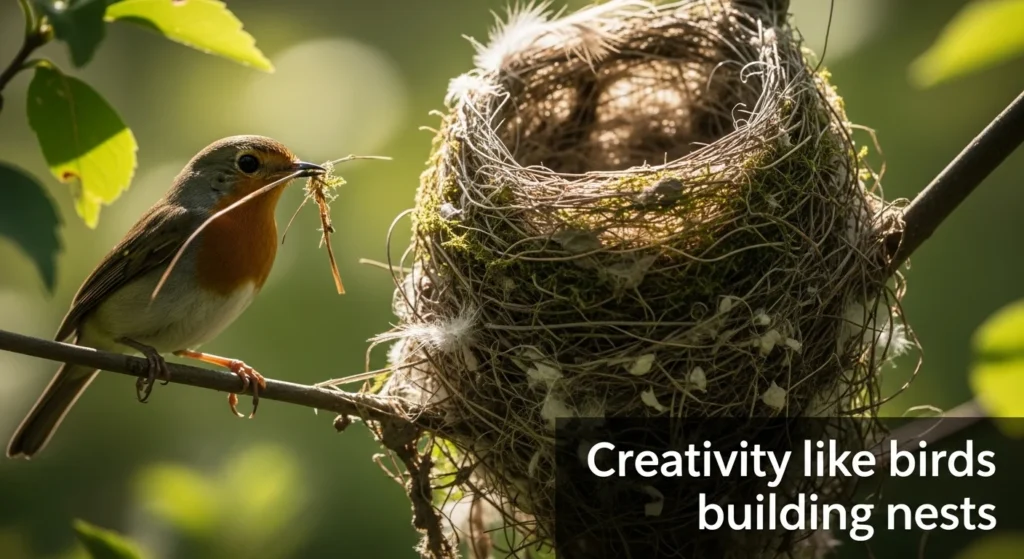
Meaning: Creativity builds from collected ideas.
Usage: Perfect for writing processes.
Examples:
- Creativity formed from fragments like birds building nests.
- Every idea had a place.
Creativity like sap rising in spring
Meaning: Creativity renews energy.
Usage: Ideal for new beginnings.
Examples:
- Creativity rose like sap in spring.
- Fresh motivation filled her work.
Creativity like a lantern in fog
Meaning: Creativity provides guidance.
Usage: Great for uncertainty themes.
Examples:
- Creativity guided him like a lantern in fog.
- Art helped her see clearly again.
Creativity like thunder before rain
Meaning: Creativity signals transformation.
Usage: Good for dramatic moments.
Examples:
- Creativity rumbled before change.
- Something powerful was coming.
Creativity like feathers on the wind
Meaning: Creativity feels light and free.
Usage: Best for playful writing.
Examples:
- Creativity floated like feathers on air.
- She wrote without pressure.
Creativity like echoes in a canyon
Meaning: Creativity builds on past ideas.
Usage: Works for legacy or influence.
Examples:
- Creativity echoed through generations.
- Old stories inspired new ones.
Creativity like rain finding cracks
Meaning: Creativity finds opportunity.
Usage: Ideal for problem-solving.
Examples:
- Creativity slipped through limits like rain.
- Solutions appeared naturally.
Creativity like stars forming constellations
Meaning: Creativity connects ideas.
Usage: Perfect for insight moments.
Examples:
- Creativity linked thoughts like stars.
- Patterns finally appeared.
Creativity like clay in warm hands
Meaning: Creativity is flexible and shaped by effort.
Usage: Good for craftsmanship.
Examples:
- Creativity softened with practice.
- Each revision refined the idea.
Creativity like shadows dancing at dusk
Meaning: Creativity thrives in mystery.
Usage: Ideal for artistic depth.
Examples:
- Creativity played in uncertainty.
- Not everything needed clarity.
Creativity like a path through the woods
Meaning: Creativity unfolds step by step.
Usage: Best for journeys.
Examples:
- Creativity revealed itself gradually.
- Each step mattered.
Creativity like frost painting windows
Meaning: Creativity adds unexpected beauty.
Usage: Good for surprise effects.
Examples:
- Creativity decorated ordinary moments.
- Beauty appeared overnight.
Creativity like a heartbeat
Meaning: Creativity is essential and alive.
Usage: Ideal for passion.
Examples:
- Creativity pulsed through his work.
- Art kept her alive.
Creativity like footprints in fresh snow
Meaning: Creativity leaves a unique mark.
Usage: Perfect for originality.
Examples:
- Her creativity stood apart.
- No one followed the same path.
Creativity like dawn after night
Meaning: Creativity brings hope.
Usage: Great for endings and beginnings.
Examples:
- Creativity returned with light.
- A new chapter began.
Creativity like an open horizon
Meaning: Creativity has endless possibilities.
Usage: Ideal for inspiration.
Examples:
- Creativity stretched endlessly.
- Anything felt possible.
Creativity like a mirror to the soul
Meaning: Creativity reflects inner truth.
Usage: Best for emotional honesty.
Examples:
- Creativity revealed who she was.
- His art spoke honestly.
How to Use Similes Effectively in Writing
To use similes well, choose comparisons that feel natural and meaningful to your subject. In poems and songs, focus on emotional resonance rather than explanation. In stories, similes help readers visualize characters and settings instantly. For essays and academic writing, use similes sparingly to clarify complex ideas. Nature similes work especially well because they are universal and emotionally grounding. Always make sure the comparison strengthens your message rather than distracting from it.
FAQs
What are similes for creativity? They are comparisons that help explain imagination, ideas, and artistic thinking using vivid imagery.
How are similes different from metaphors? Similes use like or as, while metaphors make direct comparisons without them.
Can similes be used in academic writing? Yes, when used carefully, similes can clarify abstract concepts.
Why are nature similes so effective? Because nature is familiar, symbolic, and emotionally powerful.
Are similes common in literature? Yes, similes are widely used in literature to add imagery and depth.
Conclusion
Similes for creativity transform invisible thoughts into clear, memorable images. By comparing ideas to nature, trees, and everyday experiences, similes add clarity, emotion, and beauty to language. They help writers communicate complex feelings in simple, powerful ways. Whether you’re crafting poetry, stories, essays, or songs, thoughtful similes strengthen your voice and spark imagination. When used well, they don’t just decorate language—they bring it to life.