

Similes are one of the simplest yet most powerful tools in language. They help us explain ideas, emotions, and qualities by comparing them to something familiar. When we talk about good—good character, good actions, or good feelings—plain words often fall short. This is where similes step in and make language vivid, emotional, and memorable. In figurative language, similes act like bridges, connecting abstract ideas to real-world images we can easily understand. Nature, especially trees, has long been used in similes because trees symbolize strength, growth, resilience, wisdom, and deep human emotion. Just like people, trees weather storms, grow slowly, and stand tall through time. In this article, you’ll explore powerful similes for good that enrich writing, spark imagination, and bring clarity and warmth to your words.
What Is a Simile?
A simile is a figure of speech that compares two different things using the words like or as to highlight a shared quality.
Example: Her kindness was like sunlight filtering through leaves.
This simile helps the reader feel kindness instead of just reading about it.
Similes for Good
1. Good as a tree that gives shade to all
Meaning: True goodness helps others without expecting anything back.
Usage Insight: Works well when describing generosity or selfless character.
Examples:
- He was as good as a tree that gives shade to all, even strangers.
- Her actions were quiet but helpful, like a tree offering rest from the heat.
2. Good like fresh rain on dry soil
Meaning: Goodness brings relief and renewal.
Usage Insight: Ideal for emotional or hopeful moments in writing.
Examples:
- His apology felt like fresh rain on dry soil.
- Her words came like rain, healing what had been neglected.
3. Good as roots holding the earth together

Meaning: Moral goodness provides stability and support.
Usage Insight: Strong for essays or reflective writing.
Examples:
- His values were as good as roots holding the earth together.
- Tradition can be good when it grounds people like roots in soil.
4. Good like sunlight through morning fog
Meaning: Gentle goodness that brings clarity.
Usage Insight: Best for calm, emotional descriptions.
Examples:
- Her smile was like sunlight through morning fog.
- His advice cleared my doubts like light breaking mist.
5. Good as a calm forest after rain
Meaning: Peaceful and refreshing goodness.
Usage Insight: Great for descriptive or poetic writing.
Examples:
- The room felt good, like a forest after rain.
- Silence settled in, calm and clean.
6. Good like a strong oak in a storm
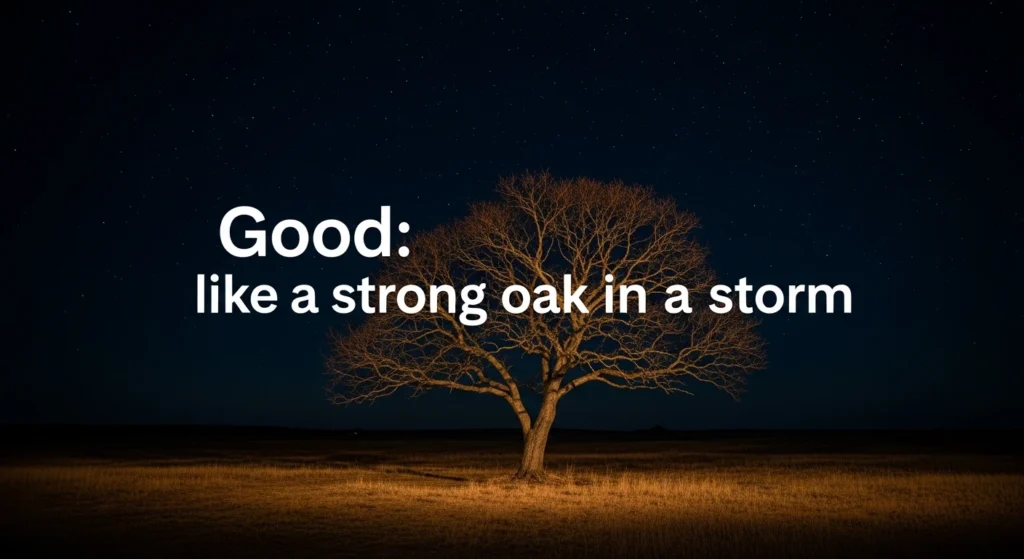
Meaning: Reliable and dependable goodness.
Usage Insight: Perfect for praising character strength.
Examples:
- She remained good like a strong oak in a storm.
- His integrity never bent under pressure.
7. Good as fruit ripened by patience
Meaning: Goodness that develops over time.
Usage Insight: Useful in motivational writing.
Examples:
- Wisdom grows good as fruit ripened by patience.
- His kindness deepened with age.
8. Good like birdsong at dawn
Meaning: Joyful and uplifting goodness.
Usage Insight: Effective in lyrical or emotional passages.
Examples:
- Her laughter was like birdsong at dawn.
- The news felt light and hopeful.
9. Good as a path lined with trees
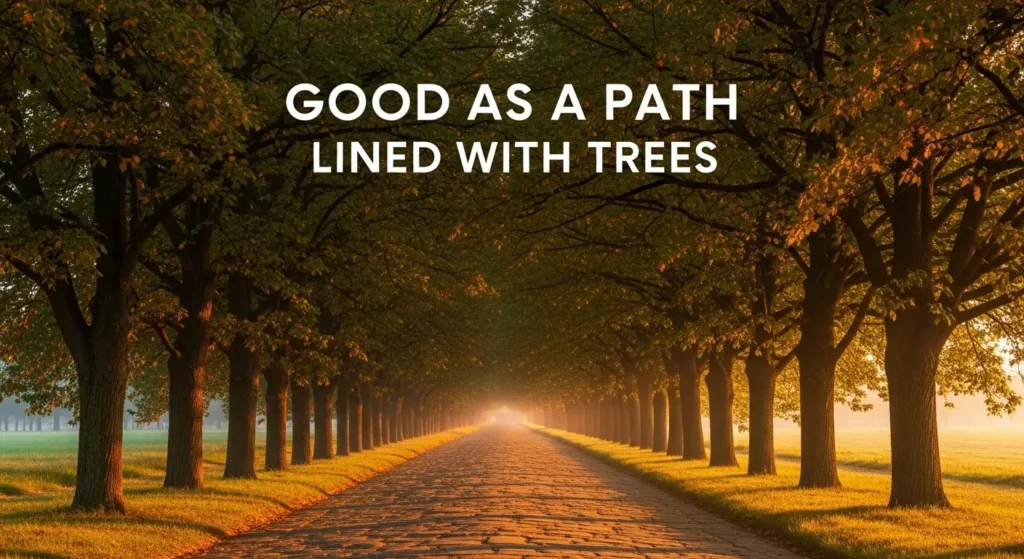
Meaning: Guidance that feels safe and welcoming.
Usage Insight: Ideal for life lessons or advice.
Examples:
- His guidance was as good as a tree-lined path.
- She led with warmth and clarity.
10. Good like leaves turning toward the sun
Meaning: Naturally drawn to what is right.
Usage Insight: Works well in reflective writing.
Examples:
- His heart leaned toward good like leaves to the sun.
- She always chose what felt right.
11. Good as a well-watered garden
Meaning: Flourishing goodness.
Usage Insight: Useful for growth-related themes.
Examples:
- Their relationship was good as a well-watered garden.
- Care made everything thrive.
12. Good like steady mountain air

Meaning: Pure and trustworthy.
Usage Insight: Strong in descriptive prose.
Examples:
- His presence felt good like mountain air.
- Honesty cleared the room.
13. Good as bark protecting a tree
Meaning: Protective goodness.
Usage Insight: Great for parental or leadership themes.
Examples:
- Her care was as good as bark protecting a tree.
- He shielded others quietly.
14. Good like a stream that never dries
Meaning: Consistent kindness.
Usage Insight: Effective in character descriptions.
Examples:
- Her generosity flowed like a steady stream.
- He never ran out of patience.
15. Good as moss softening hard stone

Meaning: Gentle goodness that changes hearts.
Usage Insight: Best for emotional transformation scenes.
Examples:
- Time softened him like moss on stone.
- Kindness slowly healed old wounds.
16. Good like a seed carried by the wind
Meaning: Small acts with lasting impact.
Usage Insight: Ideal for inspirational writing.
Examples:
- One good deed spread like a seed in the wind.
- Words can travel far.
17. Good as the shade of an old tree
Meaning: Comforting and wise goodness.
Usage Insight: Perfect for mentors or elders.
Examples:
- Her advice felt like cool shade.
- He listened patiently.
18. Good like soil ready for planting
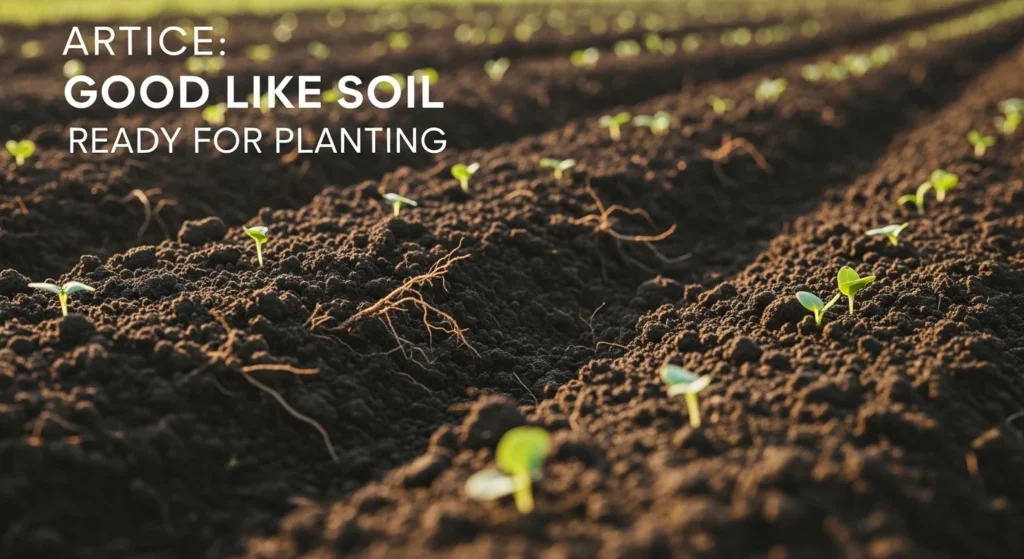
Meaning: Open and receptive goodness.
Usage Insight: Works well in personal growth topics.
Examples:
- Her heart was open like fertile soil.
- He was ready to learn.
19. Good as branches reaching outward
Meaning: Inclusive goodness.
Usage Insight: Effective for social themes.
Examples:
- His kindness reached everyone.
- She welcomed all.
20. Good like the quiet strength of roots
Meaning: Unseen but powerful goodness.
Usage Insight: Ideal for subtle praise.
Examples:
- Her support held everything together.
- He worked silently.
21. Good as a forest that shelters life
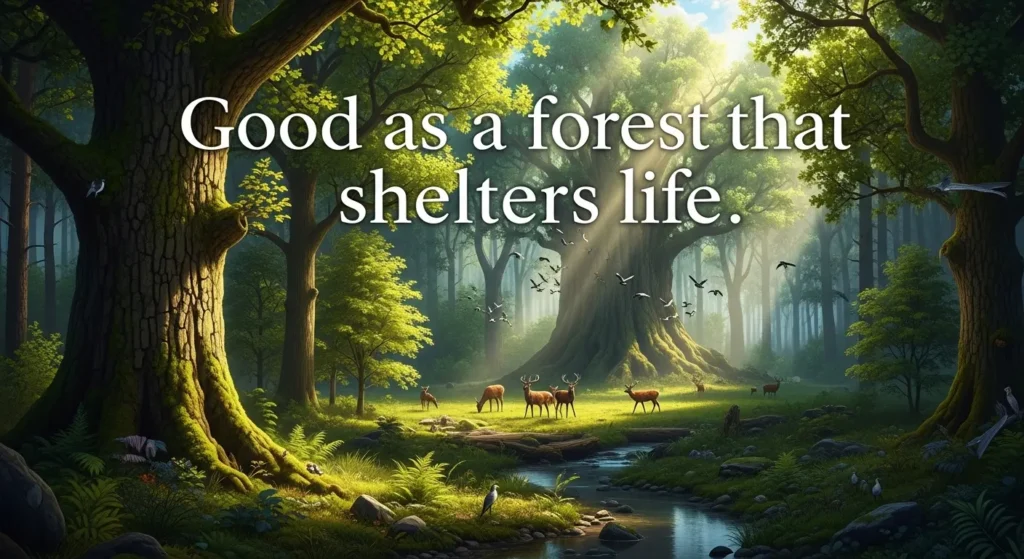
Meaning: Nurturing goodness.
Usage Insight: Great for community descriptions.
Examples:
- Their home felt safe and warm.
- Love filled the space.
22. Good like dew on morning grass
Meaning: Fresh and pure goodness.
Usage Insight: Best for gentle imagery.
Examples:
- Hope arrived softly.
- The moment felt new.
23. Good as rings in a tree trunk
Meaning: Goodness built over time.
Usage Insight: Works well in reflective essays.
Examples:
- His life showed layers of growth.
- Experience shaped him.
24. Good like a leaf floating calmly

Meaning: Peaceful goodness.
Usage Insight: Ideal for calming scenes.
Examples:
- She accepted things with grace.
- Calm settled in.
25. Good as fertile ground for dreams
Meaning: Supportive goodness.
Usage Insight: Perfect for motivational writing.
Examples:
- Encouragement helped ideas grow.
- Support made dreams possible.
26. Good like a tree standing through seasons
Meaning: Enduring goodness.
Usage Insight: Strong for long-term relationships.
Examples:
- Their bond lasted through change.
- He stayed true.
27. Good as a forest path at dusk

Meaning: Safe and reassuring goodness.
Usage Insight: Works well in narrative writing.
Examples:
- His words guided her.
- Comfort followed.
28. Good like leaves whispering in wind
Meaning: Subtle but meaningful goodness.
Usage Insight: Ideal for poetic language.
Examples:
- His kindness spoke softly.
- Care showed quietly.
29. Good as wood warmed by fire
Meaning: Comforting goodness.
Usage Insight: Best for emotional scenes.
Examples:
- Her presence eased pain.
- Warmth filled the room.
30. Good like a tree sharing its fruit
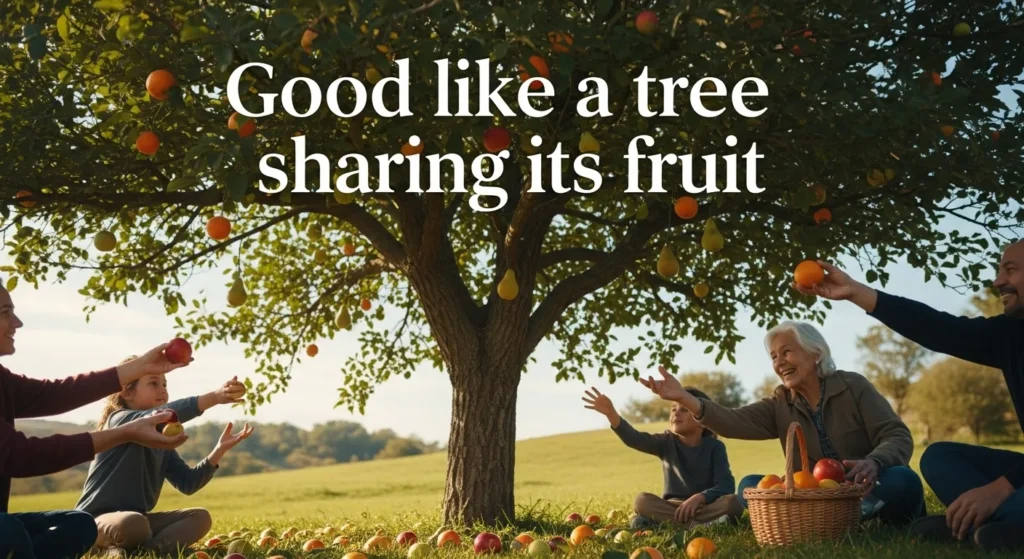
Meaning: Generous goodness.
Usage Insight: Effective in moral lessons.
Examples:
- He shared without hesitation.
- Giving came naturally.
31. Good as leaves returning each spring
Meaning: Renewing goodness.
Usage Insight: Great for hope-filled writing.
Examples:
- Faith returned again.
- Healing was possible.
32. Good like rain-fed rivers
Meaning: Sustained goodness.
Usage Insight: Ideal for long narratives.
Examples:
- Love kept flowing.
- Care never faded.
33. Good as a tree planted with care
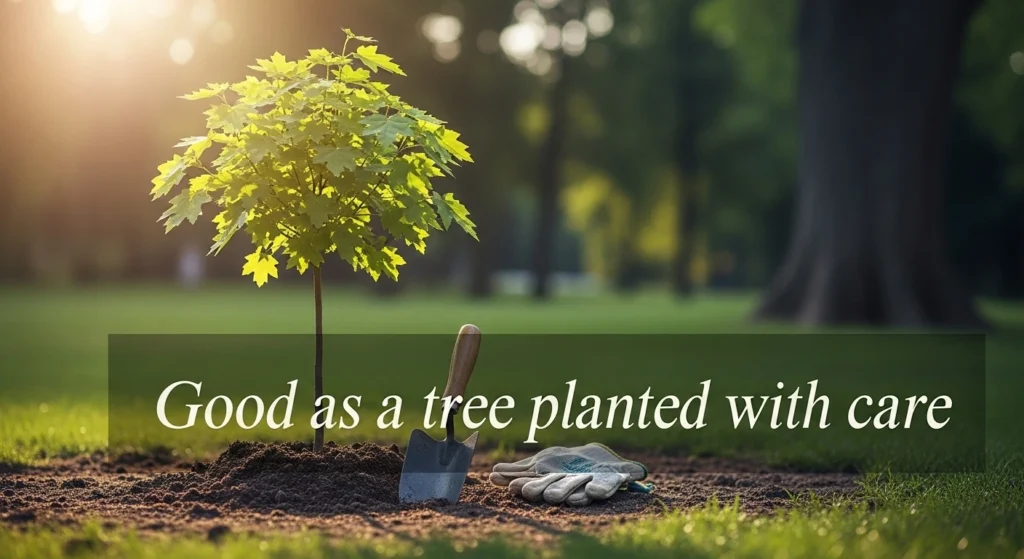
Meaning: Intentional goodness.
Usage Insight: Works well in reflective prose.
Examples:
- Values were taught early.
- Foundations mattered.
34. Good like sunlight feeding leaves
Meaning: Life-giving goodness.
Usage Insight: Perfect for uplifting tones.
Examples:
- Encouragement fueled growth.
- Praise mattered.
35. Good as a forest standing together
Meaning: Collective goodness and unity.
Usage Insight: Strong for teamwork themes.
Examples:
- Together they were strong.
- Unity made the difference.
How to Use Similes Effectively in Writing
Use similes to show ideas instead of simply telling them. Choose comparisons that match your tone—soft nature similes for poetry, strong imagery for essays, and emotional comparisons for stories and songs. Avoid overusing similes; one strong comparison is better than many weak ones. Make sure your simile feels natural and clear to the reader. When used well, similes add depth, clarity, and emotion to creative descriptions.
FAQs
1. What are similes for good? Similes for good compare positive qualities to familiar images to make meaning clearer and more vivid.
2. How are similes different from metaphors? Similes use like or as, while metaphors directly state the comparison.
3. Can similes be used in academic writing? Yes, when used carefully, similes can clarify complex ideas.
4. Why are nature similes so effective? Nature is universal, making comparisons easy to understand and emotionally powerful.
5. Are similes common in literature? Yes, similes in literature are widely used to enhance imagery and emotion.
Conclusion
Similes for good transform simple language into rich, meaningful expression. They help readers see goodness, feel it, and remember it. By drawing from nature, especially trees and forests, these similes reflect strength, growth, resilience, and human emotion. Whether used in poems, stories, essays, or everyday writing, similes add clarity, imagery, and emotional depth. When chosen thoughtfully, they turn ordinary words into powerful comparisons that stay with the reader long after the sentence ends.