When we try to describe something small, ordinary words like “tiny” or “little” often don’t feel strong enough. That’s where similes come in. Similes are creative comparisons that help readers clearly imagine size, shape, feeling, or importance. They are an essential part of figurative language and are widely used in poetry, fiction, speeches, and everyday conversation. Through vivid comparisons, writers can transform a simple description into something memorable and emotional.
Nature has always inspired some of the most beautiful similes. Just as trees symbolize strength, growth, resilience, wisdom, and deep human emotion, small natural objects—like seeds, leaves, or dewdrops—can represent delicacy, fragility, or quiet power. Even something small can carry deep meaning, just like a tiny seed that grows into a mighty tree. In this guide, you’ll discover original and expressive similes for small that will elevate your writing and make your descriptions shine.
What Is a Simile?
A simile is a figure of speech that compares two different things using the words “like” or “as” to create a vivid image.
Example: Her voice was as soft as a whispering breeze.
Similes help readers visualize ideas more clearly by linking unfamiliar descriptions to familiar experiences.
1. As small as a mustard seed
Meaning: Extremely tiny in size, yet potentially powerful.
Usage Insight: Works beautifully in inspirational or reflective writing.
Examples:
- His hope was as small as a mustard seed, yet it refused to disappear.
- The village began with a dream as small as a mustard seed.
2. As small as a grain of sand
Meaning: Almost invisible or insignificant in size.
Usage Insight: Ideal for describing physical size or feelings of insignificance.
Examples:
- From the mountain peak, the houses looked as small as grains of sand.
- She felt as small as a grain of sand in the crowded hall.
3. As small as a raindrop
Meaning: Tiny and delicate.
Usage Insight: Perfect for poetic or romantic descriptions.
Examples:
- The baby’s fingers were as small as raindrops.
- His doubt began as small as a raindrop on glass.
4. As small as a pebble
Meaning: Modest and unassuming in size.
Usage Insight: Useful when describing objects that seem ordinary.
Examples:
- The charm was as small as a pebble but meant the world to her.
- Her village was as small as a pebble on the map.
5. As small as an ant
Meaning: Extremely tiny, often in comparison to something large.
Usage Insight: Effective in descriptive or comparative writing.
Examples:
- The cars below looked as small as ants.
- He felt as small as an ant beside his towering rival.
6. As small as a dewdrop
Meaning: Very tiny and fragile.
Usage Insight: Works well in nature similes and poetic imagery.
Examples:
- Her tear clung to her lashes, as small as a dewdrop.
- The jewel sparkled, as small as a dewdrop at dawn.
7. As small as a button
Meaning: Cute and compact.
Usage Insight: Common in informal or affectionate writing.
Examples:
- The kitten was as small as a button.
- His nose was as small as a button in the old photograph.
8. As small as a spark
Meaning: Tiny but capable of growing into something powerful.
Usage Insight: Excellent for emotional or motivational contexts.
Examples:
- The idea began as small as a spark.
- Her courage was as small as a spark, yet it lit the darkness.
9. As small as a coin
Meaning: Limited in size and dimension.
Usage Insight: Great for physical descriptions.
Examples:
- The island looked as small as a coin from the sky.
- His scar was as small as a coin.
10. As small as a snowflake
Meaning: Tiny and delicate, often unique.
Usage Insight: Ideal for winter imagery or gentle descriptions.
Examples:
- Her worry was as small as a snowflake.
- The ornament glittered, as small as a snowflake.
11. As small as a whisper
Meaning: Barely noticeable or subtle.
Usage Insight: Best for describing sounds or emotions.
Examples:
- His voice was as small as a whisper in the storm.
- The doubt began as small as a whisper.
12. As small as a seed
Meaning: Tiny but full of potential.
Usage Insight: Perfect for symbolic writing.
Examples:
- Every achievement starts as small as a seed.
- Her plan was as small as a seed but destined to grow.
13. As small as a ladybug
Meaning: Tiny yet noticeable.
Usage Insight: Works well in child-friendly writing.
Examples:
- The toy car was as small as a ladybug.
- He spotted a boat as small as a ladybug in the harbor.
14. As small as a crumb
Meaning: Extremely tiny and easy to overlook.
Usage Insight: Useful in everyday descriptions.
Examples:
- She offered a smile as small as a crumb.
- The clue was as small as a crumb on the table.
15. As small as a drop in the ocean
Meaning: Insignificant compared to something vast.
Usage Insight: Effective for emotional or reflective tone.
Examples:
- His donation felt as small as a drop in the ocean.
- Our effort seemed as small as a drop in the ocean.
16. As small as a teardrop
Meaning: Delicate and emotional.
Usage Insight: Ideal for heartfelt writing.
Examples:
- Her hope was as small as a teardrop.
- The diamond shimmered, as small as a teardrop.
17. As small as a thimble
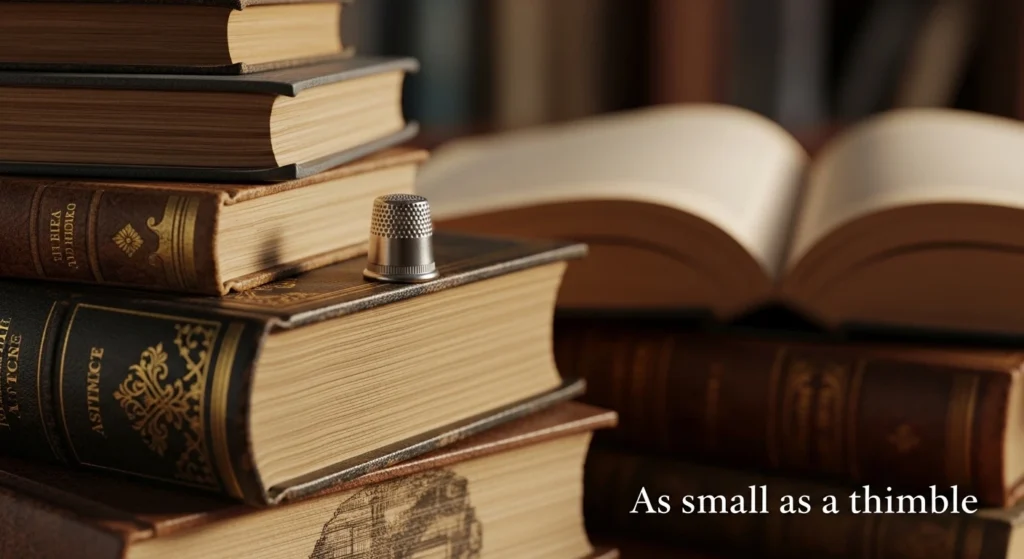
Meaning: Very limited in size or quantity.
Usage Insight: Great for descriptive comparisons.
Examples:
- The cottage kitchen was as small as a thimble.
- He had patience as small as a thimble.
18. As small as a speck of dust
Meaning: Almost invisible.
Usage Insight: Best for dramatic size contrasts.
Examples:
- The plane looked as small as a speck of dust.
- She felt as small as a speck of dust in the universe.
19. As small as a raindrop on a leaf
Meaning: Tiny and natural.
Usage Insight: Enhances nature descriptions.
Examples:
- The gem was as small as a raindrop on a leaf.
- His worry seemed as small as a raindrop on a leaf.
20. As small as a candle flame
Meaning: Small but noticeable in darkness.
Usage Insight: Strong symbolic usage.
Examples:
- Her hope flickered, as small as a candle flame.
- The light in the window was as small as a candle flame.
21. As small as a bead
Meaning: Round and tiny.
Usage Insight: Ideal for jewelry or detail writing.
Examples:
- The sweat formed beads as small as pearls.
- The ornament was as small as a bead.
22. As small as a thumbnail
Meaning: Compact and limited.
Usage Insight: Useful for physical measurements.
Examples:
- The painting was as small as a thumbnail.
- The island appeared as small as a thumbnail from above.
23. As small as a chick
Meaning: Tiny and vulnerable.
Usage Insight: Great for emotional tone.
Examples:
- The puppy was as small as a chick.
- He felt as small as a chick in a storm.
24. As small as a berry
Meaning: Little and round.
Usage Insight: Suitable for natural imagery.
Examples:
- The jewel was as small as a berry.
- Her nose turned red and small as a berry in the cold.
25. As small as a keyhole
Meaning: Very narrow or limited.
Usage Insight: Strong visual comparison.
Examples:
- The window was as small as a keyhole.
- His opportunity felt as small as a keyhole.
26. As small as a shell
Meaning: Petite and delicate.
Usage Insight: Best for beach or soft imagery.
Examples:
- The pendant was as small as a shell.
- Her hand felt as small as a shell in his palm.
27. As small as a paperclip
Meaning: Simple and tiny.
Usage Insight: Modern, everyday comparison.
Examples:
- The device was as small as a paperclip.
- His note was folded into something as small as a paperclip.
28. As small as a flicker
Meaning: Barely visible or lasting briefly.
Usage Insight: Good for emotional writing.
Examples:
- Her confidence was as small as a flicker.
- The light shone as small as a flicker in the cave.
29. As small as a whispering leaf
Meaning: Tiny and gentle.
Usage Insight: Poetic tone.
Examples:
- The sound was as small as a whispering leaf.
- His presence felt as small as a whispering leaf.
30. As small as a bead of sweat
Meaning: Very tiny and subtle.
Usage Insight: Effective in intense scenes.
Examples:
- A worry formed, as small as a bead of sweat.
- The clue was as small as a bead of sweat on his brow.
31. As small as a spark of light
Meaning: Tiny yet hopeful.
Usage Insight: Symbolic writing.
Examples:
- Her joy was as small as a spark of light.
- The star glimmered, as small as a spark of light.
32. As small as a snow globe
Meaning: Compact and enclosed.
Usage Insight: Visual storytelling.
Examples:
- The town felt as small as a snow globe.
- His world seemed as small as a snow globe.
33. As small as a marble
Meaning: Round and tiny.
Usage Insight: Casual descriptions.
Examples:
- The candy was as small as a marble.
- The robot was as small as a marble.
34. As small as a teacup
Meaning: Petite and limited.
Usage Insight: Describing spaces.
Examples:
- The room was as small as a teacup.
- Her appetite was as small as a teacup.
35. As small as a grain of rice
Meaning: Extremely tiny and thin.
Usage Insight: Clear physical comparison.
Examples:
- The chip was as small as a grain of rice.
- His handwriting shrank to letters as small as grains of rice.
How to Use Similes Effectively in Writing
Using similes effectively means choosing comparisons that feel natural and meaningful. In poems, nature similes can create strong imagery and emotional depth. In stories, similes help readers visualize characters, settings, and moods. In essays, they clarify abstract ideas. In songs, they add rhythm and beauty. Always make sure your comparison fits the tone and purpose of your writing. Avoid overusing similes, and choose comparisons your audience can easily understand.
FAQs
1. What are similes for small? Similes for small are comparisons that describe tiny size using “like” or “as,” such as “as small as a grain of sand.”
2. What is the difference between a simile and a metaphor? A simile uses “like” or “as” to compare, while a metaphor directly states that one thing is another.
3. Why are similes important in figurative language examples? They make writing more vivid, relatable, and emotionally engaging.
4. Can similes be used in academic writing? Yes, when used carefully, similes can clarify complex ideas in essays and presentations.
5. Are similes common in literature? Absolutely. Similes in literature help authors create strong imagery and memorable comparisons.
Conclusion
Creative similes for small bring life and precision to your writing. They turn plain descriptions into vivid images that readers can see and feel. Whether you’re crafting poetry, storytelling, essays, or everyday descriptions, similes add clarity, beauty, and emotional depth. Even the smallest comparison—like a tiny seed—can grow into something powerful, just like a strong idea rooted deeply in language. Keep experimenting with comparisons, and let your words grow tall and meaningful.