War is one of the most intense human experiences, filled with fear, bravery, destruction, and survival. Writers, poets, students, and storytellers often struggle to describe it in a way that feels real and emotionally powerful. This is where similes for war become incredibly useful.
Introduction: What Are Similes and Why Do We Use Them?
A simile is a figure of speech that compares two different things using words like “as” or “like.” Similes help readers visualize ideas, feel emotions, and understand complex situations more clearly. In figurative language, similes turn abstract or overwhelming experiences—such as war—into images we can imagine and feel.
War is not just about battles and weapons; it is about noise, confusion, courage, loss, and survival. Using similes for war allows writers to express these realities vividly and memorably. Whether you are writing an essay, a story, a poem, or even a speech, the right simile can make your words come alive.
In this long-form guide, you’ll explore 20 powerful similes for war, each explained in depth. For every simile, you’ll learn its meaning, emotional tone, best usage context, and see multiple natural example sentences. You’ll also find practical daily-use and texting examples to help you apply these similes confidently.
War Is Like a Raging Storm
Meaning: This simile compares war to a violent storm that arrives suddenly, causes destruction, and leaves chaos behind.
Tone: Intense, dramatic, overwhelming.
Best Usage Context: Useful in descriptive writing, history essays, or emotional narratives that highlight the uncontrollable nature of war.
Example Sentences:
- The war hit the village like a raging storm, tearing apart homes and lives overnight.
- Bullets flew like rain as war raged across the battlefield.
- Once war began, it spread like a storm no one could stop.
Daily-Use / Texting Examples:
- “That argument at work was like a raging storm—total chaos.”
- “The competition turned into war, like a storm no one expected.”
War Is Like a Wild Fire
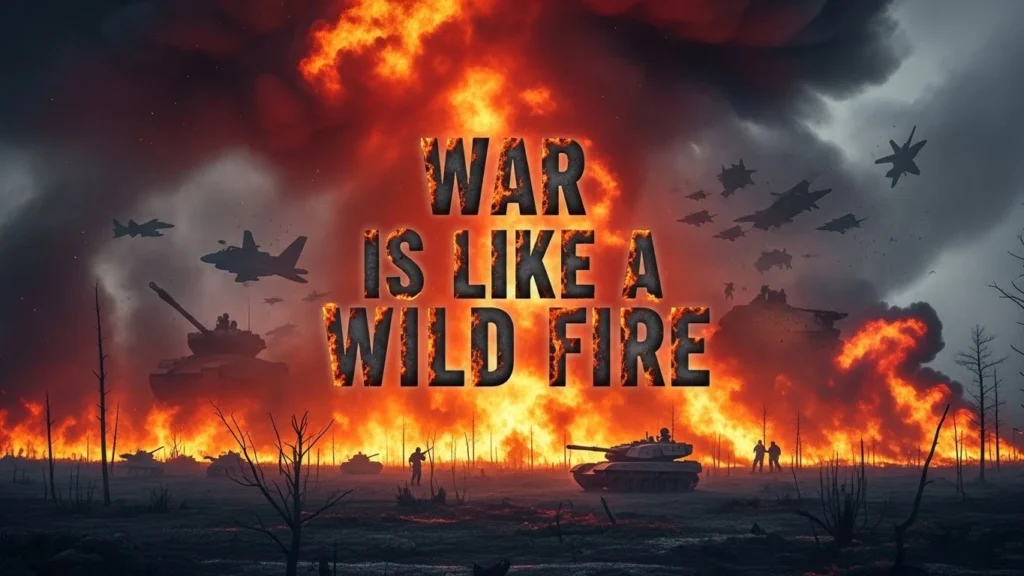
Meaning: This simile suggests that war spreads rapidly, consumes everything in its path, and is difficult to control once ignited.
Tone: Destructive, urgent, alarming.
Best Usage Context: Perfect for explaining escalation, political conflicts, or the spread of violence.
Example Sentences:
- The war spread like a wildfire, crossing borders within weeks.
- Hatred fueled the conflict like dry wood feeding a fire.
- Once started, the war burned through generations like an unstoppable flame.
Daily-Use / Texting Examples:
- “That rumor spread like wildfire—pure chaos.”
- “The fight escalated into war like a fire out of control.”
War Is Like a Dark Shadow
Meaning: This simile shows war as something that looms over people’s lives, bringing fear, uncertainty, and dread.
Tone: Somber, ominous, reflective.
Best Usage Context: Ideal for reflective writing, memoirs, or emotional storytelling.
Example Sentences:
- War followed them like a dark shadow, even in moments of peace.
- Childhood dreams faded under the shadow of war.
- The nation lived beneath war’s shadow for decades.
Daily-Use / Texting Examples:
- “Stress is following me like a dark shadow.”
- “Deadlines feel like war hanging over my head.”
War Is Like a Roaring Beast
Meaning: This simile personifies war as a violent creature that destroys without mercy.
Tone: Aggressive, terrifying, powerful.
Best Usage Context: Great for dramatic fiction, war poetry, or powerful speeches.
Example Sentences:
- War roared like a beast, devouring soldiers and civilians alike.
- The battlefield echoed with the growl of war.
- Once unleashed, the beast of war refused to sleep.
Daily-Use / Texting Examples:
- “Deadlines are like a roaring beast this week.”
- “That exam season feels like war.”
War Is Like a Broken Mirror
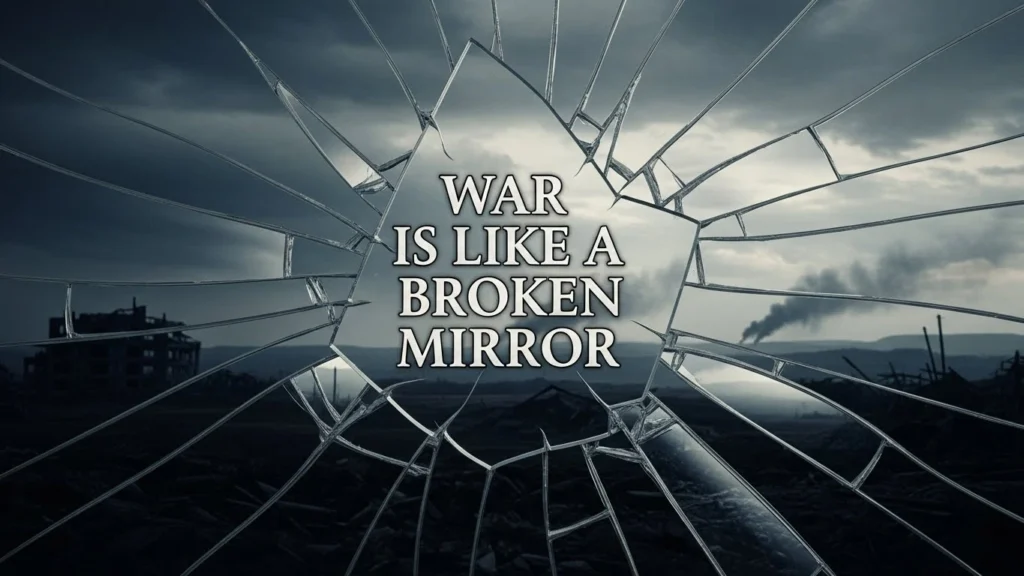
Meaning: This simile represents war as something that shatters societies, families, and identities into fragments.
Tone: Melancholic, reflective, emotional.
Best Usage Context: Useful in literary analysis, reflective essays, or emotional narratives.
Example Sentences:
- War shattered their lives like a broken mirror.
- The nation saw itself fractured by war’s impact.
- Every survivor carried a piece of the broken mirror.
Daily-Use / Texting Examples:
- “That breakup left me like a broken mirror.”
- “Life after failure feels shattered.”
War Is Like a Never-Ending Nightmare
Meaning: This simile compares war to a terrifying dream that feels impossible to escape.
Tone: Disturbing, emotional, heavy.
Best Usage Context: Ideal for trauma-focused writing or personal stories.
Example Sentences:
- For soldiers, war felt like a nightmare with no morning.
- Civilians lived through nights that never ended.
- Even after peace, the nightmare of war remained.
Daily-Use / Texting Examples:
- “This workload is a nightmare.”
- “That week was like war—no rest at all.”
War Is Like a Game with No Winners
Meaning: This simile highlights the futility and shared loss of war.
Tone: Thoughtful, ironic, critical.
Best Usage Context: Great for persuasive essays, debates, or philosophical writing.
Example Sentences:
- War is like a game where everyone loses.
- No matter who claims victory, war leaves scars on all sides.
- History proves this cruel game never rewards humanity.
Daily-Use / Texting Examples:
- “Arguing like this is a game with no winners.”
- “Office politics feel like war sometimes.”
War Is Like a Thunderclap
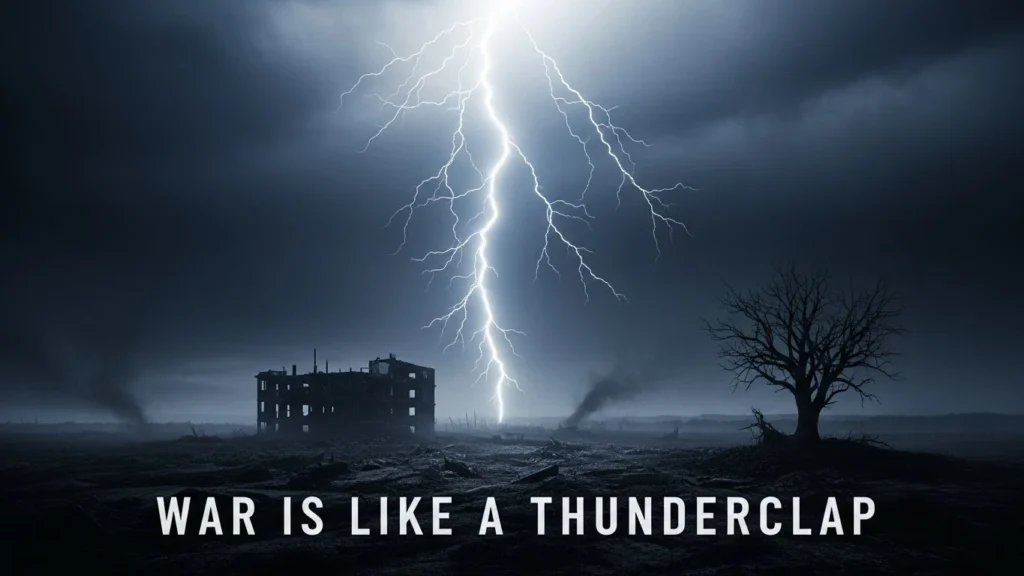
Meaning: This simile shows war as sudden, loud, and shocking.
Tone: Dramatic, urgent, impactful.
Best Usage Context: Useful in introductions or turning points in stories.
Example Sentences:
- The declaration of war hit like a thunderclap.
- Peace shattered with the sound of war.
- News of invasion struck the nation instantly.
Daily-Use / Texting Examples:
- “That announcement hit like thunder.”
- “The news changed everything.”
War Is Like a Poisoned Well
Meaning: This simile suggests that war contaminates trust, peace, and future generations.
Tone: Cautionary, reflective, serious.
Best Usage Context: Perfect for analytical writing or long-term impact discussions.
Example Sentences:
- War poisoned relationships like a tainted well.
- Even after peace, bitterness remained.
- Generations drank from the poisoned past.
Daily-Use / Texting Examples:
- “Negativity at work feels toxic.”
- “That fight poisoned everything.”
War Is Like a Flood
Meaning: This simile emphasizes overwhelming force and destruction.
Tone: Powerful, dramatic.
Best Usage Context: Ideal for large-scale conflict descriptions.
Example Sentences:
- War flooded the land, leaving nothing untouched.
- Villages drowned in violence.
- Resistance crumbled under the flood.
Daily-Use / Texting Examples:
- “Messages are flooding my phone.”
- “Work is overwhelming today.”
War Is Like a Chessboard of Death
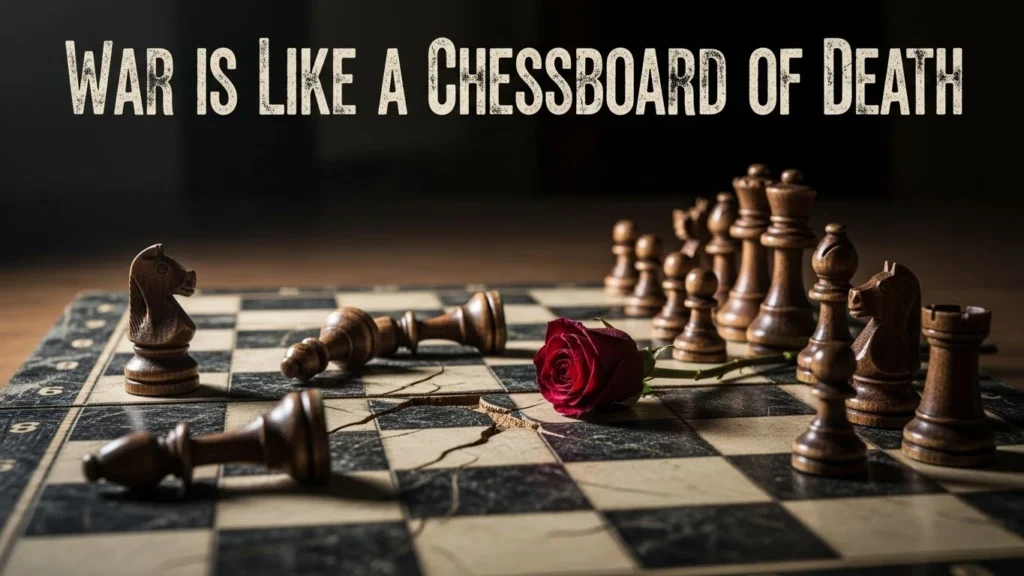
Meaning: This simile compares war to a strategic game where lives are treated as pieces.
Tone: Critical, intellectual, grim.
Best Usage Context: Useful in political commentary or analytical essays.
Example Sentences:
- Generals moved troops like chess pieces.
- War became a deadly game of strategy.
- Ordinary people paid the price.
Daily-Use / Texting Examples:
- “Office politics feel like chess.”
- “Everyone’s making moves.”
War Is Like a Burning Scar
Meaning: This simile represents long-lasting pain and memory.
Tone: Emotional, reflective.
Best Usage Context: Ideal for historical reflection or memoirs.
Example Sentences:
- War left a burning scar on the nation.
- Time passed, but pain remained.
- Memories burned deep.
Daily-Use / Texting Examples:
- “That mistake still hurts.”
- “Past failures leave scars.”
War Is Like a Howling Wind
Meaning: This simile shows war as loud, relentless, and unstoppable.
Tone: Descriptive, intense.
Best Usage Context: Good for atmospheric storytelling.
Example Sentences:
- War howled across borders.
- No voice could silence it.
- It tore through lives mercilessly.
Daily-Use / Texting Examples:
- “Deadlines are relentless.”
- “Life is hectic.”
War Is Like a Cracked Earth
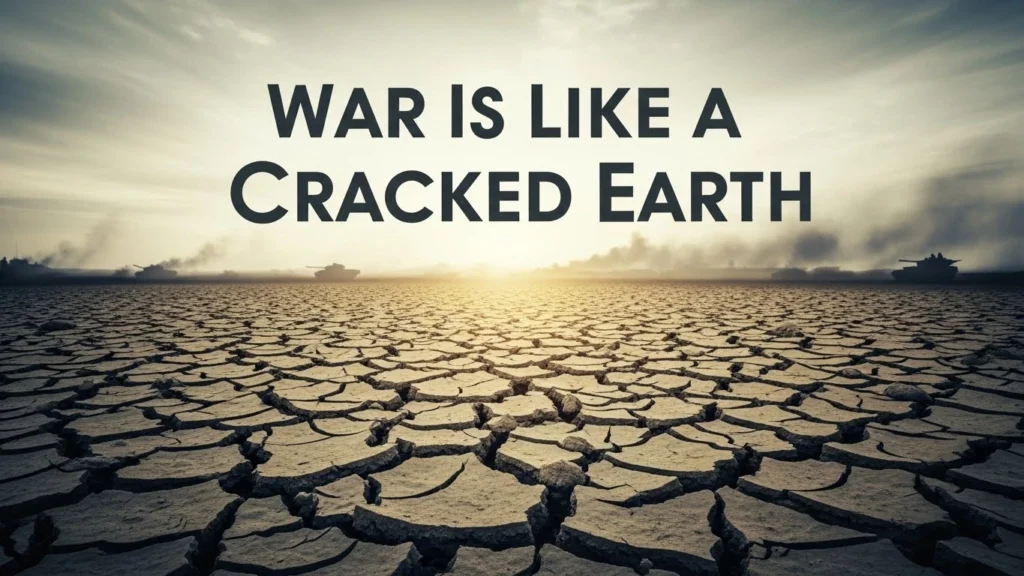
Meaning: This simile symbolizes broken societies and lost stability.
Tone: Somber, symbolic.
Best Usage Context: Poetry or symbolic prose.
Example Sentences:
- War cracked the nation like dry earth.
- Unity split apart.
- Nothing grew easily again.
Daily-Use / Texting Examples:
- “Trust is broken.”
- “Things feel unstable.”
War Is Like a Bleeding Wound
Meaning: This simile emphasizes ongoing pain and unresolved conflict.
Tone: Emotional, serious.
Best Usage Context: Historical or emotional writing.
Example Sentences:
- War remained an open wound.
- Healing took generations.
- Pain resurfaced often.
Daily-Use / Texting Examples:
- “That issue is still painful.”
- “Old arguments resurface.”
War Is Like a Relentless Drumbeat
Meaning: This simile shows constant pressure and tension.
Tone: Rhythmic, intense.
Best Usage Context: Narrative pacing or atmosphere building.
Example Sentences:
- War marched on relentlessly.
- Fear echoed daily.
- No silence existed.
Daily-Use / Texting Examples:
- “Stress never stops.”
- “Work pressure is constant.”
War Is Like a Devouring Monster
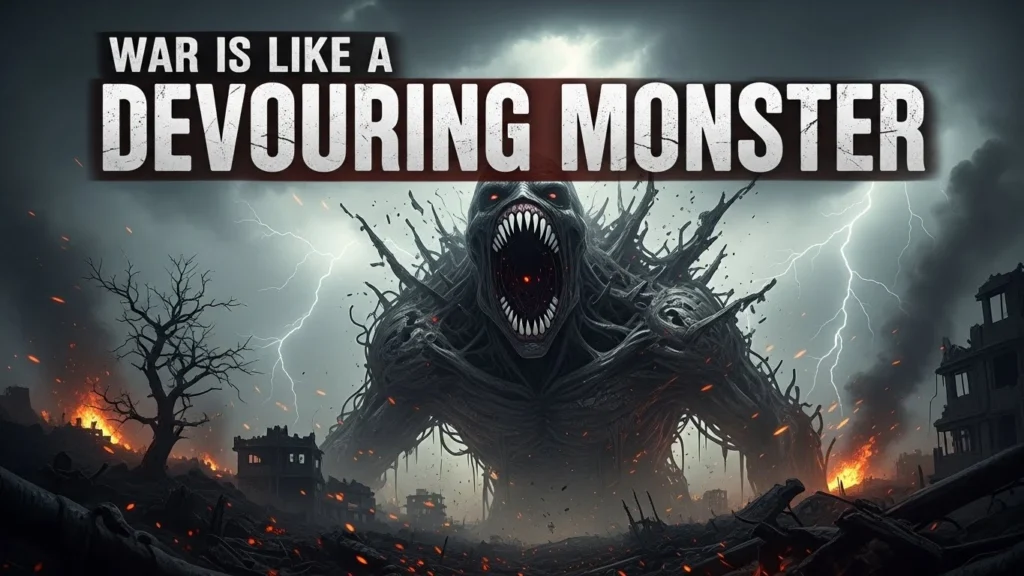
Meaning: This simile focuses on consumption of lives and resources.
Tone: Dark, dramatic.
Best Usage Context: Fiction or persuasive writing.
Example Sentences:
- War devoured youth.
- Resources vanished.
- Hope faded.
Daily-Use / Texting Examples:
- “Bills are eating my money.”
- “This job drains me.”
War Is Like a Shattered Clock
Meaning: This simile represents disrupted time and lost normalcy.
Tone: Reflective, symbolic.
Best Usage Context: Memoirs or reflective essays.
Example Sentences:
- Time stopped during war.
- Lives paused indefinitely.
- Normalcy disappeared.
Daily-Use / Texting Examples:
- “Life feels stuck.”
- “Everything’s off schedule.”
War Is Like a Burning Cage
Meaning: This simile conveys entrapment and suffering.
Tone: Emotional, intense.
Best Usage Context: Human-rights or emotional narratives.
Example Sentences:
- Civilians lived trapped by war.
- Escape felt impossible.
- Fear surrounded them.
Daily-Use / Texting Examples:
- “I feel stuck.”
- “Pressure everywhere.”
War Is Like a Heavy Chain
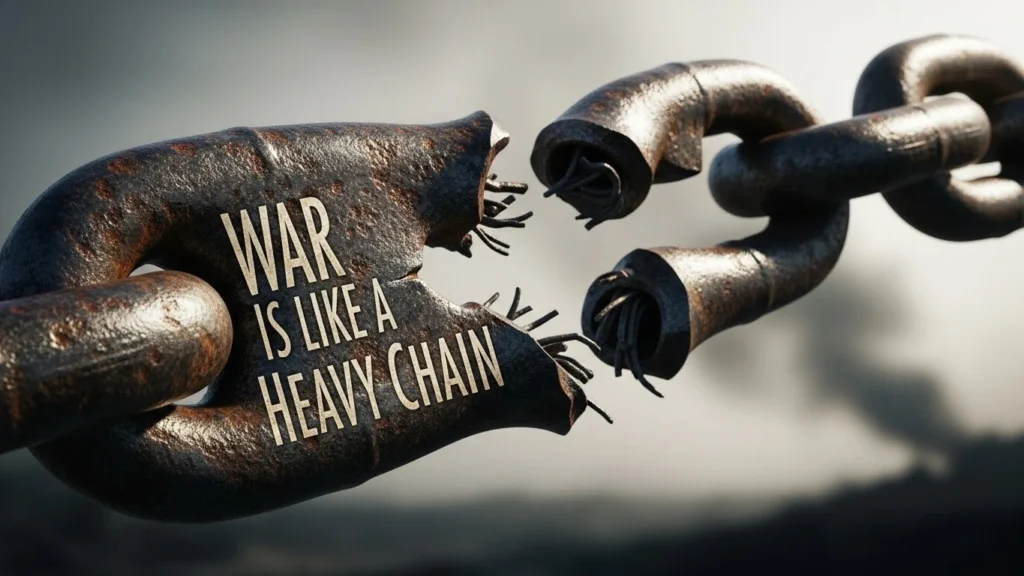
Meaning: This simile symbolizes restriction, burden, and oppression.
Tone: Serious, reflective.
Best Usage Context: Analytical or reflective writing.
Example Sentences:
- War chained progress.
- Freedom felt distant.
- Burdens grew heavier.
Daily-Use / Texting Examples:
- “Responsibilities feel heavy.”
- “Stress is holding me down.”
War Is Like a Screaming Siren
Meaning: This simile highlights urgency, danger, and warning.
Tone: Urgent, alarming.
Best Usage Context: Introductions or dramatic moments.
Example Sentences:
- War screamed across headlines.
- Danger was undeniable.
- The world listened too late.
Daily-Use / Texting Examples:
- “That email was urgent.”
- “Warning signs everywhere.”
Conclusion
Using similes for war transforms writing from plain description into powerful storytelling. Similes help readers see, hear, and feel the realities of conflict. They make complex emotions understandable and historical events more human.
Whether you’re a student, writer, poet, or speaker, mastering similes allows you to communicate with clarity and emotional depth. When used thoughtfully, similes don’t glorify war—they help us understand its impact, remember its lessons, and write with empathy and creativity.
Let these similes inspire your next piece of writing, helping your words carry meaning, emotion, and unforgettable imagery.