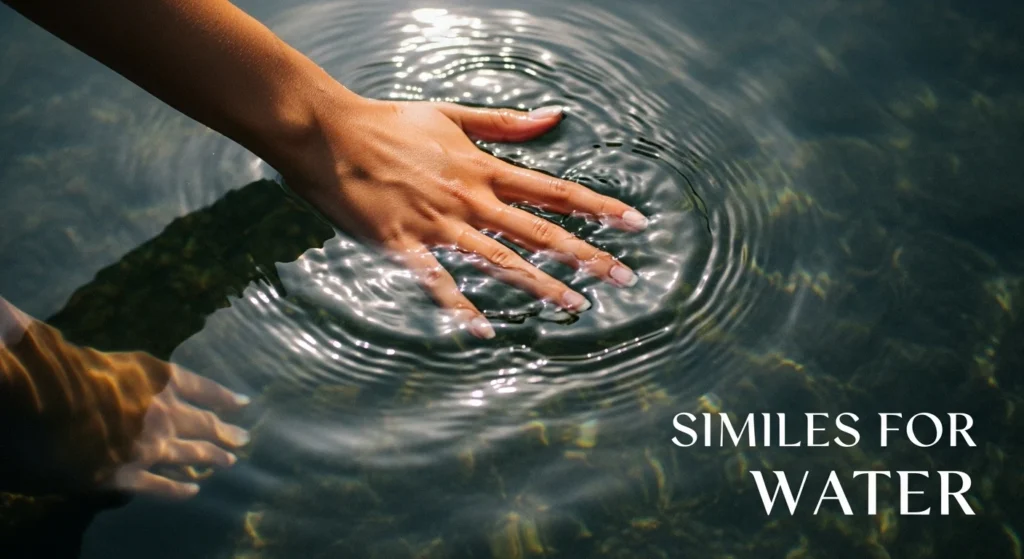
Water is one of the most powerful and poetic elements in nature. It can be calm or violent, clear or mysterious, gentle or unstoppable. That is why writers often turn to similes for water to bring scenes and emotions to life. Similes are an essential part of figurative language because they create vivid comparisons that help readers see, feel, and understand ideas more clearly.
Through simple comparisons using words like “like” or “as,” similes transform ordinary descriptions into memorable images. Nature similes, especially those connected to water and trees, are especially meaningful because they reflect strength, growth, resilience, wisdom, and human emotion. Just as trees stand tall through storms and seasons, water adapts, flows, and reshapes the world around it. In this article, you’ll explore creative, original similes in literature style—designed to enrich poems, essays, and storytelling with depth and clarity.
What Is a Simile?
A simile is a figure of speech that compares two different things using the words “like” or “as.” It helps readers visualize ideas and feel emotions more strongly.
Example: Her voice flowed like a quiet stream at dawn.
This comparison connects a voice to a stream, helping the reader imagine softness, calmness, and gentle movement.
1. As clear as mountain spring water
Meaning: Extremely pure, transparent, or easy to understand.
Usage Insight: Works best when describing honesty, clarity of thought, or clean surroundings.
Examples:
- His explanation was as clear as mountain spring water.
- The sky above the valley looked as clear as mountain spring water after the rain.
2. Like water slipping through open fingers
Meaning: Something difficult to hold onto or control.
Usage Insight: Ideal for describing lost time, fading memories, or missed opportunities.
Examples:
- The days of childhood passed like water slipping through open fingers.
- Her savings disappeared like water slipping through open fingers.
3. As calm as a still lake at sunrise
Meaning: Completely peaceful and steady.
Usage Insight: Perfect for describing a person’s temperament or a quiet setting.
Examples:
- Despite the chaos around him, he remained as calm as a still lake at sunrise.
- The village rested as calm as a still lake at sunrise.
4. Like a river carving its path through stone
Meaning: Persistent and determined.
Usage Insight: Effective when describing resilience or long-term effort.
Examples:
- She pursued her dreams like a river carving its path through stone.
- Change comes slowly, like a river carving its path through stone.
5. As restless as ocean waves in a storm
Meaning: Full of energy or emotional turmoil.
Usage Insight: Useful for portraying anxiety or passion.
Examples:
- His thoughts were as restless as ocean waves in a storm.
- The crowd grew as restless as ocean waves in a storm.
6. Like water reflecting the sky
Meaning: Mirroring emotions or surroundings.
Usage Insight: Great for emotional or psychological descriptions.
Examples:
- Her mood shifted like water reflecting the sky.
- His face was like water reflecting the sky, revealing every hidden feeling.
7. As refreshing as cool water on a hot day
Meaning: Comforting and energizing.
Usage Insight: Best for positive experiences or people.
Examples:
- Her laughter was as refreshing as cool water on a hot day.
- The news felt as refreshing as cool water on a hot day.
8. Like a waterfall crashing from a cliff
Meaning: Powerful and dramatic.
Usage Insight: Ideal for strong emotions or intense action.
Examples:
- His anger fell like a waterfall crashing from a cliff.
- Applause erupted like a waterfall crashing from a cliff.
9. As gentle as rain on thirsty soil
Meaning: Soft and nurturing.
Usage Insight: Beautiful for compassionate characters.
Examples:
- Her words were as gentle as rain on thirsty soil.
- The teacher’s guidance felt as gentle as rain on thirsty soil.
10. Like ripples spreading across a pond
Meaning: Small actions creating wider effects.
Usage Insight: Perfect for moral lessons or cause-and-effect ideas.
Examples:
- One kind act moves like ripples spreading across a pond.
- The rumor traveled like ripples spreading across a pond.
11. As deep as the ocean floor
Meaning: Profound or mysterious.
Usage Insight: Use when describing complex emotions or wisdom.
Examples:
- Her sorrow was as deep as the ocean floor.
- His knowledge seemed as deep as the ocean floor.
12. Like water gliding over smooth stones
Meaning: Effortless and natural.
Usage Insight: Ideal for grace or smooth performance.
Examples:
- She danced like water gliding over smooth stones.
- His speech flowed like water gliding over smooth stones.
13. As cold as icy river water
Meaning: Emotionally distant or physically freezing.
Usage Insight: Strong for dramatic tone.
Examples:
- His reply was as cold as icy river water.
- The wind felt as cold as icy river water.
14. Like a tide pulling back to gather strength
Meaning: Preparing quietly for something big.
Usage Insight: Works well for suspenseful storytelling.
Examples:
- She paused like a tide pulling back to gather strength.
- The team regrouped like a tide pulling back to gather strength.
15. As steady as a flowing stream
Meaning: Consistent and reliable.
Usage Insight: Great for dependable characters.
Examples:
- His support was as steady as a flowing stream.
- The music hummed as steady as a flowing stream.
16. Like water finding every crack
Meaning: Persistent and unavoidable.
Usage Insight: Strong for determination themes.
Examples:
- Truth spreads like water finding every crack.
- Opportunity moves like water finding every crack.
17. As bright as sunlight dancing on water
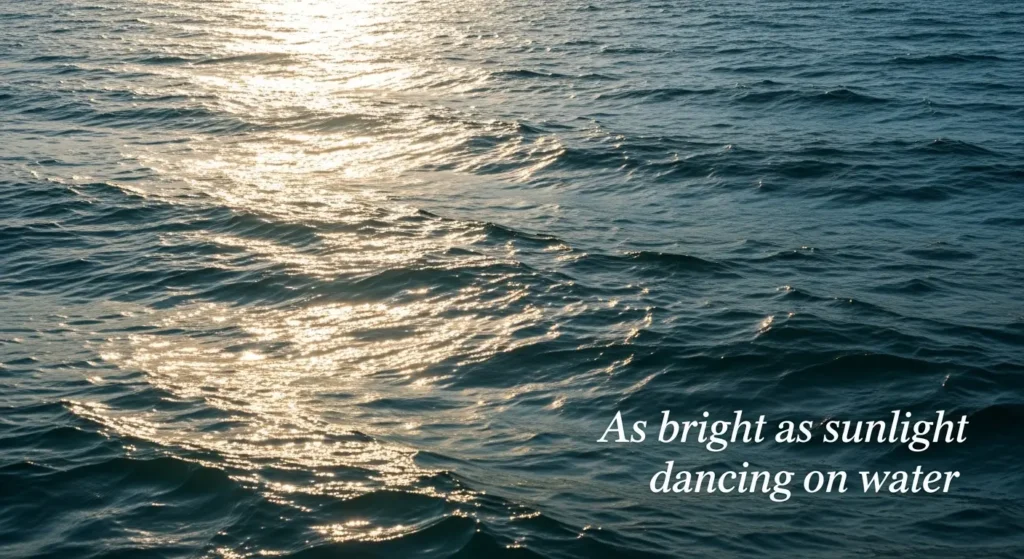
Meaning: Radiant and joyful.
Usage Insight: Perfect for happy imagery.
Examples:
- Her smile was as bright as sunlight dancing on water.
- The festival sparkled as bright as sunlight dancing on water.
18. Like rain tapping against a window
Meaning: Gentle but persistent reminder.
Usage Insight: Good for reflective scenes.
Examples:
- Regret lingered like rain tapping against a window.
- The memory returned like rain tapping against a window.
19. As unstoppable as a rushing flood
Meaning: Impossible to stop.
Usage Insight: Ideal for momentum and power.
Examples:
- His ambition was as unstoppable as a rushing flood.
- Change swept through the city as unstoppable as a rushing flood.
20. Like dew resting on morning leaves
Meaning: Delicate and temporary.
Usage Insight: Perfect for fragile beauty.
Examples:
- Hope shimmered like dew resting on morning leaves.
- Her joy felt like dew resting on morning leaves.
21. As silent as falling snow on water
Meaning: Extremely quiet.
Usage Insight: Strong for peaceful settings.
Examples:
- The room grew as silent as falling snow on water.
- His departure was as silent as falling snow on water.
22. Like water swirling down a drain
Meaning: Quickly disappearing.
Usage Insight: Effective for loss.
Examples:
- The money vanished like water swirling down a drain.
- Her confidence slipped away like water swirling down a drain.
23. As pure as untouched rainwater
Meaning: Innocent and clean.
Usage Insight: Ideal for describing sincerity.
Examples:
- Her intentions were as pure as untouched rainwater.
- The child’s laughter sounded as pure as untouched rainwater.
24. Like a brook singing through the forest
Meaning: Cheerful and lively.
Usage Insight: Works beautifully in nature descriptions.
Examples:
- Her voice was like a brook singing through the forest.
- The melody moved like a brook singing through the forest.
25. As wild as waves crashing against rocks
Meaning: Fierce and untamed.
Usage Insight: Perfect for dramatic characters.
Examples:
- His spirit was as wild as waves crashing against rocks.
- The storm raged as wild as waves crashing against rocks.
26. Like mist rising from a quiet lake
Meaning: Soft and mysterious.
Usage Insight: Excellent for atmospheric scenes.
Examples:
- Doubt drifted like mist rising from a quiet lake.
- The morning unfolded like mist rising from a quiet lake.
27. As smooth as glassy water
Meaning: Extremely calm or flawless.
Usage Insight: Great for describing surfaces or behavior.
Examples:
- His performance was as smooth as glassy water.
- The lake lay as smooth as glassy water.
28. Like water shimmering under moonlight
Meaning: Beautiful and enchanting.
Usage Insight: Ideal for romantic imagery.
Examples:
- Her dress shimmered like water under moonlight.
- The night glowed like water shimmering under moonlight.
29. As unpredictable as shifting tides
Meaning: Constantly changing.
Usage Insight: Useful for personality traits.
Examples:
- His moods were as unpredictable as shifting tides.
- Markets move as unpredictable as shifting tides.
30. Like a stream weaving through tall trees
Meaning: Moving gently but purposefully.
Usage Insight: Connects water imagery with tree symbolism.
Examples:
- She walked like a stream weaving through tall trees.
- The road curved like a stream weaving through tall trees.
31. As transparent as clear river water
Meaning: Honest and open.
Usage Insight: Works well in character descriptions.
Examples:
- His motives were as transparent as clear river water.
- Her expression was as transparent as clear river water.
32. Like rain nourishing ancient trees
Meaning: Reviving and strengthening.
Usage Insight: Beautiful for growth themes.
Examples:
- Encouragement falls like rain nourishing ancient trees.
- Wisdom spreads like rain nourishing ancient trees.
33. As swift as a mountain stream
Meaning: Very fast.
Usage Insight: Perfect for action scenes.
Examples:
- He ran as swift as a mountain stream.
- Time passed as swift as a mountain stream.
34. Like waves whispering to the shore
Meaning: Soft and rhythmic.
Usage Insight: Ideal for romantic or reflective tone.
Examples:
- Her words moved like waves whispering to the shore.
- The wind sounded like waves whispering to the shore.
35. As life-giving as water to a desert tree
Meaning: Essential and sustaining.
Usage Insight: Strong for themes of survival and hope.
Examples:
- Her friendship was as life-giving as water to a desert tree.
- Opportunity can be as life-giving as water to a desert tree.
How to Use Similes Effectively in Writing
Using similes for water can transform ordinary descriptions into vivid, emotional imagery. Here are practical tips:
- In poems: Choose natural similes to deepen emotion and rhythm.
- In stories: Use water comparisons to reveal character feelings or tension.
- In essays: Add subtle similes to clarify complex ideas.
- In songs: Water imagery creates flow and musical softness.
- In descriptive writing: Combine water and tree symbolism for themes of growth, resilience, and change.
Always keep comparisons fresh and relevant. Avoid clichés, and ensure the simile enhances meaning rather than distracting from it.
FAQs
1. What are similes for water?
Similes for water are creative comparisons that describe water—or something related to it—using “like” or “as,” such as “as calm as a still lake.”
2. What is the difference between a simile and a metaphor?
A simile uses “like” or “as” to compare, while a metaphor states that something is something else. For example, “Her voice is water” (metaphor) vs. “Her voice flows like water” (simile).
3. Why are water similes popular in literature?
Water symbolizes emotion, movement, purity, strength, and change, making it powerful in similes in literature and creative writing.
4. Can similes be used in academic writing?
Yes, but sparingly. In academic writing, similes should clarify ideas rather than add unnecessary decoration.
5. How do I create original nature similes?
Observe natural elements like rivers, rain, oceans, and trees. Think about their qualities—movement, depth, growth—and connect them to human experiences.
Conclusion
Similes for water bring clarity, beauty, and emotional depth to language. They allow writers to transform simple comparisons into vivid images that flow naturally through poems, essays, and stories. Because water symbolizes life, resilience, calmness, and power, it offers endless opportunities for meaningful figurative language examples. When used thoughtfully, these comparisons help readers see ideas more clearly and feel emotions more deeply. Like water shaping stone over time, powerful similes gently shape the reader’s imagination. Master them, and your writing will flow with strength, grace, and unforgettable imagery.