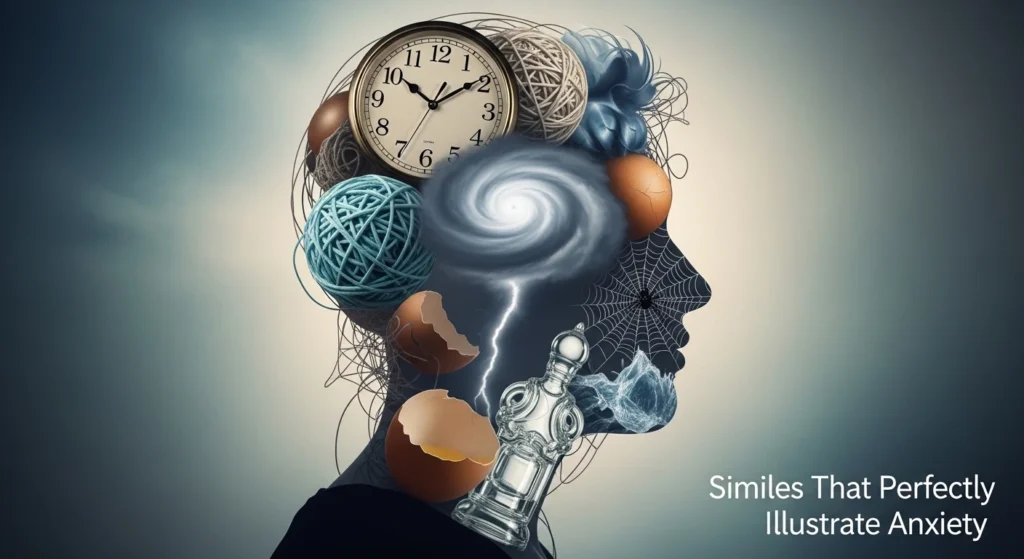
Anxiety can feel like a storm brewing inside, a tight knot in your chest, or shadows creeping across your mind. Writers often struggle to communicate these invisible tensions, but figurative language—especially similes—can make the abstract tangible. A simile compares two unlike things using words like like or as, creating vivid imagery that draws readers into the emotion you want to convey. By connecting feelings of anxiety to familiar experiences, objects, or natural phenomena, writers can make their readers feel the weight, pace, and unease of anxiety in a powerful way.
Trees, in particular, serve as compelling symbols in literature. Their strength, resilience, and growth mirror the human experience, and their shifting moods—leaves trembling in wind, roots gripping the soil—can capture subtle emotional states. By combining similes with nature, you can illuminate the nuances of anxiety while grounding your writing in imagery readers instinctively understand. This article offers 35 original similes that perfectly illustrate anxiety, complete with explanations, usage tips, and polished example sentences.
What Is a Simile?
A simile is a figure of speech that compares two different things using like or as to create vivid imagery. Unlike a metaphor, a simile explicitly signals the comparison, helping readers visualize or feel an experience.
Example: “Her heart raced like a hummingbird trapped in a cage.” This simile immediately conveys panic and urgency through a concrete mental image, making the emotion accessible and relatable.
1. Like leaves trembling in a sudden gust
Meaning: Conveys a fragile, unsettled feeling.
Usage: Works best when describing a sudden, uncontrollable anxiety.
Examples:
- She sat in the meeting, her hands shaking like leaves trembling in a sudden gust.
- His mind fluttered like leaves trembling in a sudden gust, unable to focus on one thought.
2. Like a tightrope walker above a yawning chasm
Meaning: Evokes tension, fear, and the risk of failure.
Usage: Ideal for moments of high stakes or social anxiety.
Examples:
- Every question felt like a tightrope walker above a yawning chasm.
- His presentation left him feeling like a tightrope walker above a yawning chasm, heart pounding with each word.
3. Like a storm cloud pressing on your chest
Meaning: Captures heaviness and oppressive worry.
Usage: Effective in emotional or descriptive passages.
Examples:
- Anxiety loomed like a storm cloud pressing on her chest.
- Thoughts piled up like a storm cloud pressing on his chest, suffocating and relentless.
4. Like shadows crawling at dusk
Meaning: Suggests creeping, subtle fear.
Usage: Works in suspenseful or introspective writing.
Examples:
- Doubts crept through her mind like shadows crawling at dusk.
- The silence was thick, like shadows crawling at dusk, making him uneasy.
5. Like a clock ticking in an empty room
Meaning: Emphasizes anticipation and the pressure of time.
Usage: Perfect for anxious waiting or looming deadlines.
Examples:
- The interview felt like a clock ticking in an empty room.
- He stared at the phone, like a clock ticking in an empty room, waiting for the call.
6. Like a trapped bird beating against glass
Meaning: Conveys desperation and restlessness.
Usage: Suitable for feelings of entrapment or panic.
Examples:
- Her thoughts raced like a trapped bird beating against glass.
- He paced the floor, like a trapped bird beating against glass, seeking an escape.
7. Like a kettle about to whistle
Meaning: Builds tension and imminent release.
Usage: Works when anxiety is reaching a peak.
Examples:
- Her anger and worry simmered like a kettle about to whistle.
- He felt like a kettle about to whistle, ready to snap under pressure.
8. Like roots trembling in rocky soil
Meaning: Suggests instability despite outward strength.
Usage: Ideal for moments when someone feels insecure despite appearances.
Examples:
- She smiled, but inside she was like roots trembling in rocky soil.
- His confidence faltered, like roots trembling in rocky soil beneath him.
9. Like fog rolling over a cliff
Meaning: Evokes confusion and uncertainty.
Usage: Effective for describing unclear thoughts or situations.
Examples:
- Decisions felt like fog rolling over a cliff, obscuring every path.
- His mind was like fog rolling over a cliff, thick and disorienting.
10. Like sparks flying from dry wood
Meaning: Represents sudden, sharp bursts of panic or fear.
Usage: Best for describing fleeting but intense anxiety.
Examples:
- Panic flared like sparks flying from dry wood.
- Her nerves ignited like sparks flying from dry wood, unpredictable and sharp.
11. Like waves crashing on jagged rocks
Meaning: Symbolizes relentless, pounding anxiety.
Usage: Perfect for chronic or recurring stress.
Examples:
- Fear hit him like waves crashing on jagged rocks.
- Her worries pounded like waves crashing on jagged rocks, unyielding and harsh.
12. Like fire ants swarming under the skin
Meaning: Conveys irritability and restlessness.
Usage: Works well for physical manifestations of anxiety.
Examples:
- Her fingers twitched like fire ants swarming under the skin.
- He shifted uneasily, like fire ants swarming under the skin, unable to sit still.
13. Like a pendulum swinging over sharp blades
Meaning: Suggests danger, suspense, and imminent risk.
Usage: Effective in tension-filled narratives.
Examples:
- Thoughts swung like a pendulum over sharp blades, each more terrifying than the last.
- He felt like a pendulum swinging over sharp blades, paralyzed by indecision.
14. Like a bird with clipped wings
Meaning: Evokes limitation and trapped potential.
Usage: Best when anxiety prevents action or freedom.
Examples:
- She moved through the crowd like a bird with clipped wings.
- He felt like a bird with clipped wings, longing to escape but unable to fly.
15. Like a candle flickering in the wind
Meaning: Conveys fragility and uncertainty.
Usage: Ideal for moments of vulnerability or doubt.
Examples:
- Confidence shone like a candle flickering in the wind.
- Her courage was like a candle flickering in the wind, fragile yet persistent.
16. Like a tight knot in the stomach
Meaning: Directly represents physical anxiety.
Usage: Useful for internal, visceral descriptions.
Examples:
- Fear settled like a tight knot in her stomach.
- He swallowed hard, feeling like a tight knot in the stomach.
17. Like a tree swaying in a sudden gust
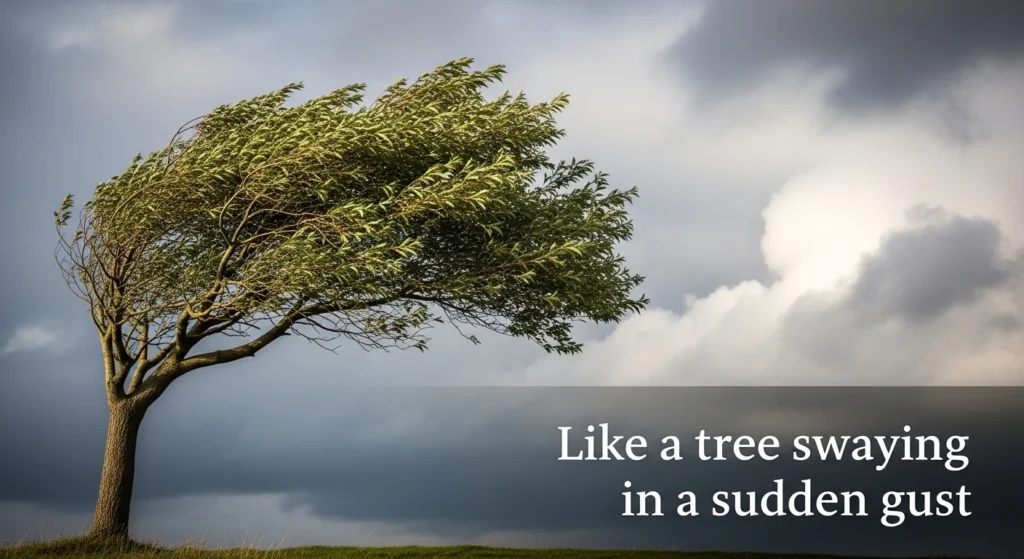
Meaning: Suggests instability and susceptibility to external forces.
Usage: Works well in nature-based descriptions of emotional fluctuation.
Examples:
- Her mood shifted like a tree swaying in a sudden gust.
- He wavered, like a tree swaying in a sudden gust, unsure of his next step.
18. Like clouds racing across a stormy sky
Meaning: Captures restless, rapid thoughts.
Usage: Ideal for high-pressure or anxious brainstorming.
Examples:
- Her mind raced like clouds across a stormy sky.
- Thoughts piled up like clouds racing across a stormy sky, chaotic and fast.
19. Like sand slipping through fingers
Meaning: Represents fleeting control and frustration.
Usage: Works when anxiety stems from helplessness.
Examples:
- Confidence slipped away like sand through fingers.
- He tried to hold onto calm, but it was like sand slipping through fingers.
20. Like thunder rumbling in the distance
Meaning: Suggests looming tension and anticipation.
Usage: Best for foreboding or anxious waiting.
Examples:
- The deadline approached like thunder rumbling in the distance.
- Anxiety built like thunder rumbling in the distance, inevitable and loud.
21. Like a fox cornered by hounds
Meaning: Evokes panic and urgency.
Usage: Ideal for describing inescapable pressure.
Examples:
- She felt like a fox cornered by hounds, desperate to flee.
- His mind raced like a fox cornered by hounds, every option seeming worse than the last.
22. Like ice cracking underfoot
Meaning: Conveys instability and sudden fear.
Usage: Works in moments of fragile security.
Examples:
- Trust felt like ice cracking underfoot.
- Anxiety hit like ice cracking underfoot, sharp and unexpected.
23. Like tangled vines in a dark forest
Meaning: Symbolizes confusion and entrapment.
Usage: Effective for complex mental or emotional struggles.
Examples:
- Thoughts twisted like tangled vines in a dark forest.
- He stumbled through ideas like tangled vines in a dark forest, hopelessly ensnared.
24. Like a heart fluttering in a cage
Meaning: Represents restless, trapped emotion.
Usage: Ideal for panic or nervous anticipation.
Examples:
- Her chest felt like a heart fluttering in a cage.
- He walked into the room like a heart fluttering in a cage, uncertain and exposed.
25. Like a pendulum caught in a storm
Meaning: Suggests lack of control and constant motion.
Usage: Perfect for describing inner turmoil.
Examples:
- Her emotions swung like a pendulum caught in a storm.
- Anxiety tossed him like a pendulum caught in a storm, unpredictable and relentless.
26. Like shadows dancing in candlelight
Meaning: Conveys unease and fleeting threats.
Usage: Works well in atmospheric or suspenseful writing.
Examples:
- Doubts crept like shadows dancing in candlelight.
- His fears moved like shadows dancing in candlelight, unpredictable and unnerving.
27. Like waves trapped in a bottle
Meaning: Represents intense, contained emotion.
Usage: Ideal when describing repressed anxiety.
Examples:
- Anger surged like waves trapped in a bottle.
- She smiled, but inside it felt like waves trapped in a bottle.
28. Like a thread unraveling in the wind
Meaning: Suggests fragility and loss of control.
Usage: Works for describing anxiety slowly taking over.
Examples:
- His resolve frayed like a thread unraveling in the wind.
- Thoughts scattered like a thread unraveling in the wind.
29. Like a wolf stalking in the shadows
Meaning: Evokes quiet, persistent dread.
Usage: Ideal for lurking or creeping anxiety.
Examples:
- Fear prowled like a wolf stalking in the shadows.
- Her mind was restless, like a wolf stalking in the shadows.
30. Like a heartbeat in an empty room
Meaning: Suggests acute awareness and tension.
Usage: Works when focusing on internal sensation.
Examples:
- Every step echoed like a heartbeat in an empty room.
- She froze, hearing the silence like a heartbeat in an empty room.
31. Like sparks under dry leaves
Meaning: Represents sudden, flaring panic.
Usage: Effective in high-intensity moments.
Examples:
- Worries ignited like sparks under dry leaves.
- His nerves sparked like sparks under dry leaves, unpredictable and fierce.
32. Like a bowstring pulled too tight
Meaning: Conveys tension and the risk of snapping.
Usage: Best for built-up stress or approaching breaking points.
Examples:
- Her patience was like a bowstring pulled too tight.
- Anxiety stretched him like a bowstring pulled too tight, ready to snap.
33. Like a pendulum in slow motion
Meaning: Evokes drawn-out suspense and dread.
Usage: Ideal for describing prolonged worry or indecision.
Examples:
- Time crept like a pendulum in slow motion during the exam.
- He waited, every second swinging like a pendulum in slow motion.
34. Like ice in a summer sun
Meaning: Symbolizes vulnerability and impermanence.
Usage: Effective when describing fleeting composure under pressure.
Examples:
- Calm melted like ice in a summer sun.
- Her confidence faded like ice in a summer sun, leaving raw anxiety.
35. Like a tree bending before the wind
Meaning: Conveys endurance under pressure.
Usage: Ideal for portraying resilience despite anxiety.
Examples:
- She stood firm, like a tree bending before the wind.
- He faced the challenge like a tree bending before the wind, flexible yet unbroken.
How to Use Similes Effectively in Writing
- Be Specific: Use vivid images that readers can immediately picture.
- Match Tone: Ensure the simile matches the mood of the scene—tense, subtle, or dramatic.
- Integrate Naturally: Blend similes seamlessly into sentences instead of forcing comparisons.
- Vary Length: Mix short, punchy similes with longer, descriptive ones for rhythm.
- Use Nature: Trees, storms, animals, and landscapes naturally evoke emotion.
- Avoid Clichés: Strive for originality to make anxiety feel personal and immediate.
These strategies help writers craft similes that enrich poems, stories, essays, songs, and descriptive passages with emotional depth.
FAQs
Q1: What is a simile? A simile is a figure of speech comparing two unlike things using like or as to create vivid imagery.
Q2: How do similes differ from metaphors? Similes explicitly compare with like or as, while metaphors imply the comparison directly.
Q3: Can similes be used in academic writing? Yes, when used judiciously, similes clarify complex ideas or illustrate abstract concepts.
Q4: How do I create original similes? Draw inspiration from nature, personal experience, and emotions. Connect the unfamiliar to something readers easily visualize.
Q5: Why use similes to describe anxiety? Similes translate invisible emotions into concrete imagery, helping readers feel the intensity and subtlety of anxiety.
Conclusion
Similes that perfectly illustrate anxiety bring clarity, emotion, and imagery to writing. They turn intangible feelings into vivid experiences, helping readers connect with the text on a deeper level. By drawing from nature, human experience, and personal insight, writers can craft comparisons that capture the fleeting tension, pressure, and vulnerability of anxiety. Whether in poetry, fiction, essays, or song lyrics, similes enrich language, illuminate emotion, and transform words into a living, breathing experience for readers.