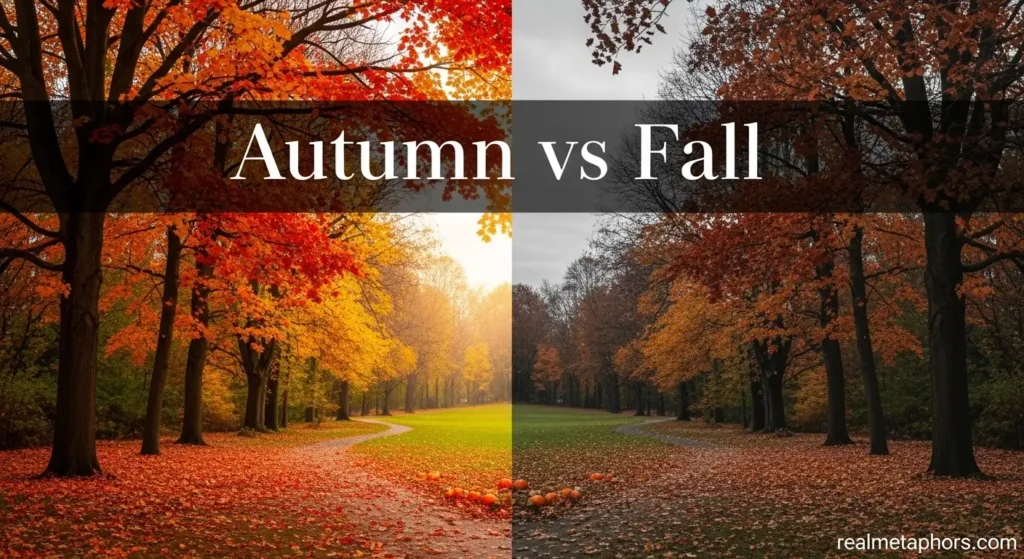
At the simplest level, autumn and fall refer to the same season between summer and winter. This is the time when temperatures begin to drop, daylight shortens, and trees shed their leaves. However, the distinction lies not in nature but in language choice and cultural preference.
“Autumn” is generally seen as the more formal or literary term, often used in writing, education, and British English. It carries a softer, more poetic tone. “Fall,” on the other hand, is commonly used in American English and is more conversational and straightforward. It comes from the phrase “fall of the leaf,” which directly describes what happens during the season.
Interestingly, neither term changes the actual experience of the season. Whether someone says “autumn breeze” or “fall breeze,” they are describing the same crisp air and golden scenery. Yet the word choice subtly shapes how we emotionally interpret the season. “Autumn” often feels nostalgic or artistic, while “fall” feels grounded and everyday. This dual naming shows how language can shape perception without altering reality itself.
Historical Origins of “Autumn” and “Fall”
To understand autumn vs fall, we need to travel back through linguistic history. The word “autumn” comes from the Latin autumnus, which entered English through French influence during the Middle Ages. For centuries, it was the dominant term in English literature and formal writing.
“Fall,” however, has a more native English origin. It developed in early modern English as a shortened version of phrases like “fall of the leaf” or “fall of the year.” By the 17th century, English speakers—especially in North America—began using “fall” more commonly in everyday speech.
As English evolved differently in Britain and America, the terms gradually split in usage. Britain retained “autumn” as the standard term, while America favored “fall” due to its simplicity and descriptive nature. This linguistic divergence is similar to other word differences like “lift vs elevator” or “lorry vs truck.”
What makes this history fascinating is that neither word replaced the other. Instead, they coexisted, each finding its place in different dialects and contexts. Today, their survival reflects how language preserves history while adapting to regional identity.
Regional Usage: Where Each Term Is Used
The choice between autumn and fall is strongly influenced by geography. In the United Kingdom, Ireland, and many Commonwealth countries, “autumn” is the standard term used in schools, media, and formal communication. It is considered the “correct” academic usage in these regions.
In contrast, the United States almost exclusively uses “fall” in everyday conversation. From weather reports to casual speech, Americans typically say “fall season” rather than “autumn season.” However, “autumn” is still used in poetic writing, branding, or when a more elegant tone is desired.
In Canada and Australia, usage is mixed. Canadians often use both terms interchangeably, while Australians tend to lean toward “autumn,” reflecting British influence.
This regional divide highlights how language is not fixed but shaped by cultural evolution. A traveler moving between countries may notice how the same season is described differently, even though the experience remains identical. The difference is not about correctness but about identity—each region has chosen the word that best fits its linguistic personality.
Cultural Associations and Imagery
Words carry emotions, and autumn vs fall is a perfect example of how language shapes imagery. “Autumn” often evokes refined, artistic scenes: quiet forests, classical paintings, and reflective moods. It feels like a word that belongs in poetry or literature.
“Fall,” however, brings more immediate, everyday imagery. It might remind someone of football season, pumpkin patches, school beginnings, or casual outdoor activities. It feels practical and lived-in rather than ornamental.
Emotional Tone Differences
- Autumn: reflective, nostalgic, elegant, literary
- Fall: casual, energetic, grounded, familiar
These associations influence how people emotionally connect with the season. For example, a writer might choose “autumn” to create a dreamy atmosphere, while a marketer promoting seasonal sales might prefer “fall” for clarity and relatability.
Ultimately, both words shape how we visualize the season in our minds. The difference is subtle but powerful, showing how language can influence emotional perception without changing physical reality.
Seasonal Changes in Nature
Regardless of whether we call it autumn or fall, nature undergoes the same remarkable transformation. Trees shift from green to fiery hues as chlorophyll breaks down, revealing hidden pigments like carotenoids and anthocyanins. This biological process creates the iconic reds, oranges, and yellows associated with the season.
Temperatures gradually drop, encouraging animals to prepare for winter. Some migrate, while others gather food or grow thicker coats. The days become shorter, and sunlight takes on a softer, golden quality.
A Natural Cycle of Transition
This season is not just an ending but a preparation phase. Leaves falling to the ground enrich the soil, supporting new growth in the future. In this way, the season symbolizes renewal through letting go.
Whether we say “autumn leaves” or “falling leaves,” the imagery remains powerful. The language may differ, but the natural process unites both terms under one shared experience of transformation and balance in nature’s cycle.
Emotional Symbolism of the Season
The autumn vs fall discussion extends beyond language into emotional symbolism. This season is often associated with change, maturity, and reflection. It represents a stage of life where things slow down, allowing space for introspection.
For many, it brings a bittersweet feeling. The beauty of colorful landscapes is paired with the awareness that warmth is fading. This duality makes the season emotionally rich and complex.
Common Emotional Themes
- Reflection on personal growth
- Acceptance of change
- Nostalgia for passing time
- Preparation for new beginnings
Some people find comfort in this season, enjoying cozy routines, warm drinks, and slower days. Others feel a sense of melancholy as summer ends. Both reactions are valid and reflect the human connection to seasonal rhythms.
The words “autumn” and “fall” can subtly influence these emotions. “Autumn” may deepen reflection, while “fall” may make the transition feel more ordinary and approachable. Language, in this way, becomes part of emotional experience.
Autumn/Fall in Literature and Poetry
Writers and poets have long drawn inspiration from autumn and fall. In literature, autumn often symbolizes maturity, wisdom, or the later stages of life. It is a metaphor for reflection and emotional depth.
Classic poetry frequently uses “autumn” to create a lyrical tone. The word itself fits the rhythm and softness of poetic language. “Fall,” however, appears more in modern or American writing, where simplicity and realism are preferred.
Literary Symbolism Examples
- Autumn as the “twilight of the year”
- Falling leaves representing letting go
- Harvest themes symbolizing completion
In storytelling, the season often marks turning points in character development. A change in setting to autumn or fall can signal emotional shifts or upcoming challenges.
Whether writers choose “autumn” or “fall,” both terms serve the same symbolic purpose. The difference lies in tone rather than meaning, allowing authors to shape mood through word choice alone.
Everyday Language and Communication Differences
In daily conversation, autumn vs fall often reflects background and habit. Someone raised in the United States might naturally say “fall weather,” while someone from the UK would say “autumn weather” without thinking twice.
This difference rarely causes confusion, but it can reveal cultural identity. In global communication, especially online, both terms appear side by side, blending regional language styles.
Practical Usage Examples
- “I love fall colors” (common in American speech)
- “I enjoy autumn evenings” (common in British speech)
In professional writing, the choice often depends on audience. International publications may prefer “autumn” for neutrality, while American media sticks to “fall.”
This shows that language is not just about grammar—it is about connection. Choosing one word over another can subtly align the speaker with a cultural group or audience expectation.
Fashion, Food, and Lifestyle in Autumn/Fall
The season of autumn or fall also shapes lifestyle trends. Fashion shifts toward warm layers, earthy tones, and comfortable textures. Sweaters, scarves, and boots become seasonal staples.
Food also reflects the season’s identity. Pumpkins, apples, cinnamon, and hearty soups dominate menus. These flavors create a sense of warmth and comfort as temperatures drop.
Lifestyle Shifts
- Outdoor activities like hiking or leaf viewing
- Seasonal festivals and harvest celebrations
- Cozy indoor routines and home comfort
Brands often use “fall collection” in marketing, especially in the United States, while “autumn collection” appears in more international or luxury branding. Both aim to capture the same seasonal mood but adjust wording based on audience.
The season becomes not just a natural event but a cultural lifestyle moment, influencing how people dress, eat, and spend their time.
Psychological Impact of the Season
The autumn vs fall season can also influence mental and emotional well-being. As daylight decreases, some people experience changes in mood or energy levels. This is often linked to seasonal rhythms and reduced sunlight exposure.
However, the season can also bring comfort. The slower pace encourages rest, reflection, and structured routines.
Emotional Effects
- Increased introspection
- Desire for warmth and comfort
- Mixed feelings of nostalgia and calm
For many, the season becomes a time of emotional grounding. The visual beauty of changing leaves can provide a sense of peace, even during colder days.
Language plays a role here too. “Autumn” may encourage deeper reflection, while “fall” may make the experience feel more everyday and less symbolic. Both perspectives shape how individuals emotionally interpret the same seasonal reality.
Common Misunderstandings About the Terms
A frequent misunderstanding in the autumn vs fall debate is the belief that they refer to different seasons. In reality, they are simply two names for the same period of the year.
Another misconception is that one term is “correct” and the other is “incorrect.” In truth, both are standard within their respective regions and contexts.
Clarifying Key Myths
- They are not different seasons
- Neither term is wrong
- Usage depends on geography and style
Some people also assume “fall” is informal slang, but it is actually a historically developed English term with legitimate linguistic roots.
Understanding these points helps prevent confusion and promotes appreciation for linguistic diversity. Language is not about strict rules but about shared understanding across cultures.
Why Both Words Still Matter Today
In modern communication, the existence of autumn and fall reflects the richness of the English language. Both words continue to thrive because they serve different stylistic and cultural needs.
“Autumn” preserves historical and literary tradition, while “fall” represents simplicity and accessibility. Together, they offer flexibility in expression.
In a globalized world, both terms often appear side by side, especially online. This coexistence shows that language is not static but adaptive.
Ultimately, the continued use of both words reminds us that meaning is shaped not just by definition but by context, culture, and emotion. The season remains the same, but the words we choose allow us to experience it differently.
Conclusion
The discussion of autumn vs fall is not about choosing a correct term but about understanding how language reflects history, culture, and emotion. Both words describe the same beautiful season of transformation, yet each carries its own tone and identity. “Autumn” leans toward poetic reflection and literary elegance, while “fall” offers simplicity and everyday familia