
Introduction
Imagine standing in front of an old stone building. The walls are solid, textured, and timeless—each brick carefully placed by skilled hands long ago. You might wonder: how did such strength and beauty come together so perfectly? The answer lies in a craft called masonry. But when people try to search or write about it, a small but surprisingly common mistake appears—“masonary.”
At first glance, the difference between masonry vs masonary may seem minor, just a single missing letter. Yet in reality, it opens the door to confusion in writing, search engines, education, and even professional communication. Many people unintentionally misspell the word, while others are unsure which version is correct.
This article explores the true meaning of masonry, clears up the spelling confusion, and dives deeper into its real-world importance. Beyond grammar, we’ll uncover how language mistakes happen, why they matter, and what masonry represents in construction and craftsmanship. By the end, you’ll not only know the correct spelling but also appreciate the skill, history, and meaning behind this powerful word.
What Is Masonry and Why the Spelling Confusion Happens
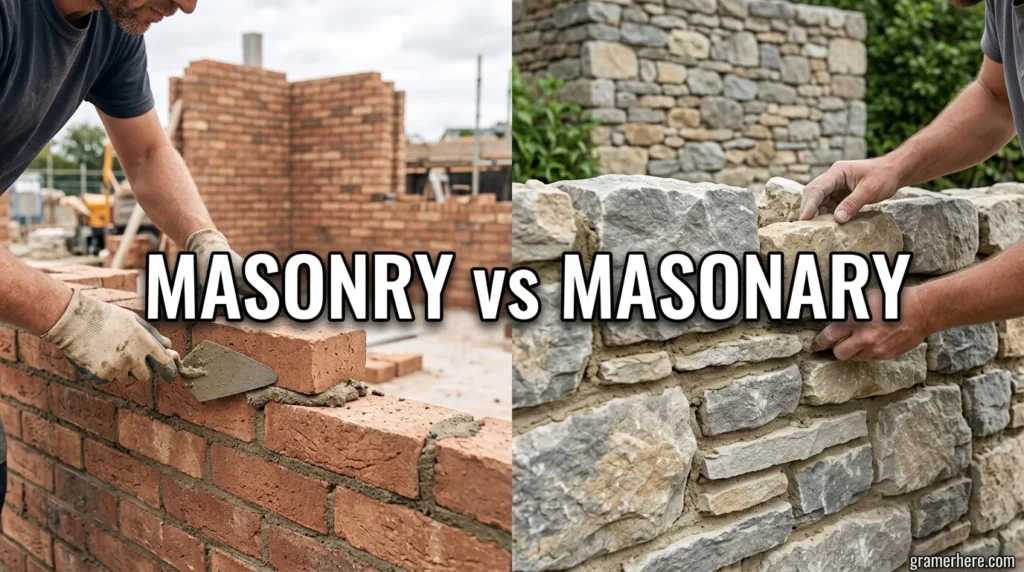
Masonry refers to the art and craft of building structures using materials like brick, stone, or concrete blocks. It is one of the oldest construction techniques in human history, responsible for everything from ancient temples to modern buildings.
However, the confusion between “masonry” and “masonary” is surprisingly common. The mistake usually happens because people naturally pronounce the word in a way that sounds like “masonary,” inserting an extra vowel when writing it. English spelling rules don’t always match pronunciation, which creates these errors.
In everyday situations, this confusion appears in school assignments, job applications, and online searches. Someone might search “masonary work near me” and still get results, but the correct spelling remains “masonry.”
This small spelling error may seem harmless, but in professional writing or construction documentation, it can affect clarity and credibility. Understanding why the mistake happens is the first step toward avoiding it. Once you recognize the pattern, it becomes easier to remember the correct form and use it confidently in both writing and speech.
Masonry vs Masonary: The Correct Spelling and Meaning
Let’s clear the confusion once and for all: the correct spelling is masonry, not “masonary.”
Masonry refers to both a craft and a structural technique. It involves laying individual units—such as bricks, stones, or concrete blocks—and binding them together with mortar to create strong, durable structures.
On the other hand, “masonary” has no official meaning in English. It is simply a common misspelling that appears due to phonetic writing habits.
Why the Correct Spelling Matters
- Professional communication: Builders, engineers, and architects use “masonry” in official documents.
- Education: Students studying construction or engineering must use the correct spelling.
- Online search accuracy: Using the correct spelling improves search results and learning.
Even though both versions may point to the same idea in casual conversation, only “masonry” is accepted in formal English. Recognizing this difference helps avoid misunderstandings and improves writing quality in both academic and professional contexts.
Origins of the Word Masonry
The word “masonry” has deep historical roots. It comes from the Old French word maçonnerie, which refers to the work of a mason—a skilled worker who builds with stone. This, in turn, traces back to Latin influences connected to stone cutting and shaping.
In medieval times, masons were highly respected craftsmen. They were responsible for constructing castles, cathedrals, and fortifications that still stand today. Their knowledge was passed down through apprenticeships, often within guilds that protected trade secrets.
Over time, the word evolved into “masonry” in English, maintaining its connection to craftsmanship and structure. Interestingly, the spelling remained stable for centuries, even as pronunciation shifted slightly across regions.
Understanding the origin of the word gives it more depth. It is not just a technical term but a reflection of human history, skill, and architectural progress. When you write or say “masonry,” you are indirectly referencing centuries of construction tradition and craftsmanship.
Common Misspelling “Masonary” in the Digital World
In today’s digital age, “masonary” appears frequently in search engines, social media posts, and even business listings. This misspelling is so common that search engines automatically correct it or show results for “masonry” instead.
Why People Misspell It Online
- Typing quickly without checking spelling
- Writing based on pronunciation
- Lack of familiarity with construction terminology
- Auto-correct errors or mobile keyboard mistakes
Despite being incorrect, “masonary” still generates traffic online. This has led some websites to target both spellings for SEO purposes. However, professional content always prioritizes the correct form.
The digital world has made spelling errors more visible than ever. A single incorrect letter can influence search results, visibility, and even brand credibility. That’s why understanding and correcting such mistakes is important not just for language accuracy but also for online presence.
Masonry in Construction Industry
Masonry plays a vital role in construction. It is used to build homes, schools, bridges, walls, and monuments. Its popularity comes from its strength, durability, and resistance to weather conditions.
In construction sites, masonry is often seen as the backbone of structural work. Skilled workers carefully place each unit, ensuring alignment and stability. The process may look simple, but it requires precision and experience.
Why Masonry Is So Important
- Provides strong load-bearing structures
- Offers fire resistance and durability
- Requires low maintenance compared to other materials
- Enhances architectural beauty
From ancient stone pyramids to modern brick houses, masonry has shaped human civilization. Even today, it remains one of the most trusted construction methods worldwide.
Types of Masonry Work
Masonry is not a single technique—it includes several specialized types depending on materials and construction methods.
1. Brick Masonry
Uses baked clay bricks joined with mortar. Common in residential buildings.
2. Stone Masonry
Uses natural stones for strong and decorative structures like monuments.
3. Concrete Block Masonry
Uses precast concrete blocks, widely used in modern construction.
4. Veneer Masonry
A decorative layer attached to structural walls for aesthetic appeal.
Each type serves a different purpose, but all rely on the same basic principle: assembling units to create a strong structure. The choice depends on cost, design, and durability requirements.
Understanding these types helps appreciate how versatile masonry really is. It is not just about building walls—it is about creating lasting structures that serve both function and beauty.
Skills of a Mason and the Art of Craftsmanship
Behind every strong wall is a skilled mason. Masonry is not just physical labor; it is a craft that requires patience, precision, and experience.
A mason must understand measurements, materials, and structural balance. Even a small misalignment can affect the stability of an entire structure.
A Day in a Mason’s Work
A mason begins by reading plans, preparing materials, and mixing mortar. Then comes the careful placement of bricks or stones, one layer at a time. Each movement matters.
This work often goes unnoticed, but it shapes the world we live in. Skilled masons transform raw materials into functional and artistic structures, blending science with craftsmanship.
Their work teaches an important lesson: strong foundations—whether in buildings or life—require patience and careful attention to detail.
Materials Used in Masonry
Masonry relies on a few key materials that determine the strength and appearance of a structure.
- Bricks: Durable, uniform, and widely used
- Stone: Natural and strong, often used in historical buildings
- Concrete blocks: Modern, efficient, and cost-effective
- Mortar: The binding material that holds everything together
Each material has its own advantages. For example, stone offers timeless beauty, while concrete blocks provide speed and efficiency in construction.
The combination of these materials allows builders to design structures that are both functional and visually appealing. Understanding materials also helps explain why masonry remains relevant even in modern architecture.
Structural Importance in Buildings
Masonry is often used in load-bearing structures, meaning it supports the weight of the building above it. This makes it a critical element in construction safety.
Properly built masonry walls can withstand heavy loads, harsh weather, and even fire. This reliability is one of the main reasons it has been used for thousands of years.
In modern architecture, masonry is often combined with steel or reinforced concrete to improve strength. This hybrid approach allows architects to balance tradition with innovation.
Without masonry, many of the world’s most iconic structures would not exist. It remains a foundational element of safe and durable construction.
Misunderstandings and SEO Confusion Impact
The “masonry vs masonary” confusion is not just a grammar issue—it also affects online visibility.
Search engines often interpret both spellings, but websites using the correct spelling rank better over time. However, ignoring the common misspelling entirely can also mean losing traffic.
This creates a balancing act in digital content writing. Writers must use “masonry” as the primary keyword while sometimes acknowledging the incorrect version for search relevance.
Misunderstandings like this show how language evolves in the digital age. A single typo can influence search behavior, learning patterns, and even business outcomes.
Learning from Spelling Mistakes in Language
Spelling mistakes like “masonary” offer an interesting lesson in language learning. They show how humans rely heavily on sound when writing unfamiliar words.
English, in particular, is full of irregular spelling patterns, which makes such errors common. Instead of seeing them as failures, they can be viewed as opportunities to learn.
When learners correct “masonary” to “masonry,” they are not just fixing a word—they are improving their understanding of language structure.
This awareness also builds better communication skills, especially in academic and professional writing. Attention to detail becomes a habit that extends beyond spelling.
Real-World Scenarios Where Confusion Appears
The spelling confusion often appears in everyday situations:
- A student writing an assignment on construction
- A job seeker applying for masonry work
- A contractor listing services online
- A homeowner searching for repair services
In each case, the incorrect spelling might still work, but it reflects lack of precision. In professional settings, accuracy matters.
Even small spelling differences can affect credibility. That’s why understanding correct terminology is important in both formal and informal communication.
Practical Tips to Remember the Correct Spelling
Remembering “masonry” instead of “masonary” becomes easier with simple tricks:
- Think: “A mason builds masonry”
- Break it down: mason + ry (not ary)
- Associate it with construction work
- Practice writing it in sentences
Repetition also helps. The more you use the correct form, the more natural it becomes. Over time, the mistake disappears from your writing completely.
Conclusion
The difference between “masonry vs masonary” may seem small, but it carries meaningful lessons about language, craftsmanship, and attention to detail. The correct term, masonry, represents a centuries-old construction art that continues to shape the modern world. The incorrect version, masonary, is simply a common spelling mistake that arises from pronunciation habits.
Beyond spelling, masonry itself symbolizes strength, patience, and skill. From ancient stone structures to modern buildings, it reflects human creativity and engineering excellence. Understanding both the word and its correct usage helps improve communication and appreciation for this essential craft. In the end, precision in language—just like in construction—builds stronger foundations.
FAQs
1. What is the correct spelling, masonry or masonary?
The correct spelling is masonry. “Masonary” is a common misspelling.
2. What does masonry mean?
Masonry is the construction of structures using bricks, stones, or concrete blocks bound together with mortar.
3. Why do people write masonary instead of masonry?
It happens due to pronunciation confusion and typing habits.
4. Is masonary a real word?
No, “masonary” is not an official English word.
5. What are the main types of masonry?
Brick masonry, stone masonry, concrete block masonry, and veneer masonry.
6. Why is masonry important in construction?
It provides strength, durability, and fire resistance in buildings.
7. Who works in masonry?
Skilled workers called masons perform masonry work.
8. How can I remember the correct spelling?
Think of “mason + ry” and relate it to construction work.