
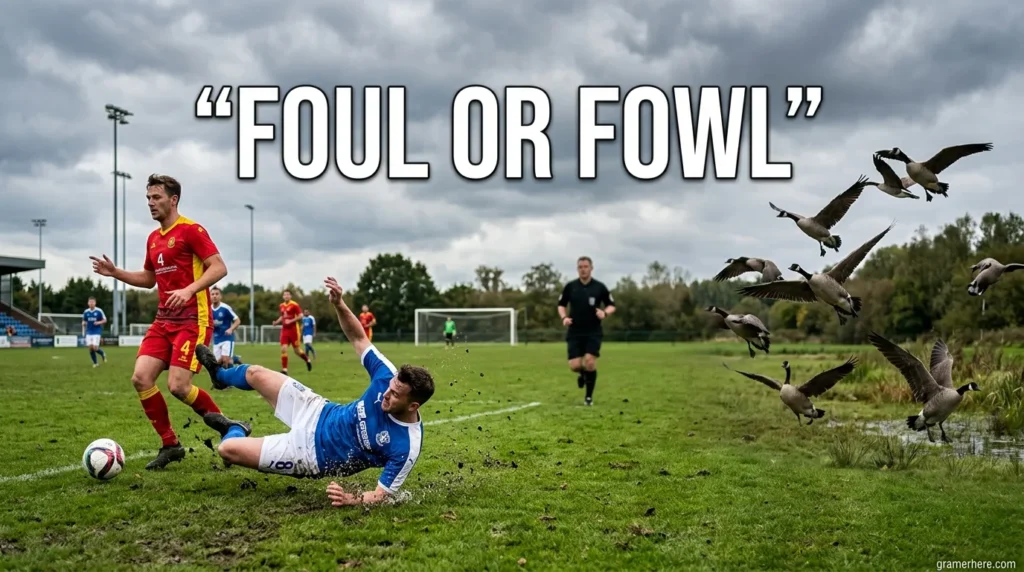
Introduction
Have you ever been reading a sentence and paused because one word looked “almost right,” yet something felt off? Maybe you saw foul weather or fowl behavior and wondered—did the writer mean birds, or something unpleasant? This tiny confusion between “foul” and “fowl” has tripped up students, writers, and even native speakers for generations. The problem is not just spelling; it is about meaning, context, and how one small vowel shift can completely change the message.
In everyday life, these words appear in sports commentary, cooking discussions, literature, and casual conversation. Misusing them can lead to humorous misunderstandings—or in formal writing, it can reduce clarity and credibility. This article explores both words in depth, helping you understand their meanings, origins, real-world uses, and practical ways to remember the difference. By the end, you will not only distinguish foul from fowl with confidence but also appreciate how language precision shapes communication.
Meaning of “Foul” vs “Fowl”
At first glance, foul and fowl seem like linguistic twins. They sound identical in many accents, yet they belong to completely different worlds.
Foul generally refers to something unpleasant, dirty, unfair, or offensive. It is often used to describe behavior, weather, smells, or actions that violate rules or standards. For example, foul smell, foul play, or foul mood all suggest negativity or wrongdoing.
Fowl, on the other hand, is much more specific. It refers to birds, especially domesticated birds like chickens, ducks, geese, and turkeys. It is a term often used in farming, cooking, and wildlife discussions.
Key Difference in Simplicity
- Foul = bad, unpleasant, wrong
- Fowl = bird, poultry, animal category
The confusion happens because English pronunciation often blurs vowel distinctions, especially in casual speech. However, their meanings are not interchangeable. Saying “fowl smell” instead of “foul smell” could suggest you are talking about a bird emitting odor, which changes the meaning entirely. Understanding this difference is the first step toward mastering their usage.
Etymology: Where These Words Come From
Language becomes clearer when we look at history. The origins of foul and fowl reveal why they sound similar but developed separate meanings.
Foul comes from Old English fūl, meaning dirty, unclean, or morally offensive. Over time, it expanded into sports terminology (like illegal moves) and emotional expressions (like “foul temper”).
Fowl originates from Old English fugol, meaning bird. This word evolved alongside Germanic languages, eventually narrowing in modern English to specifically refer to birds used for food or farming.
What is fascinating is how both words once had broader meanings. “Fowl” originally referred to almost any bird, while “foul” covered both physical dirt and moral corruption. Over centuries, English refined their meanings, but their pronunciation remained similar in many dialects.
Why This Matters
Understanding etymology helps learners see that confusion is natural. These words are not randomly similar—they are historical cousins shaped by language evolution. Knowing this makes it easier to remember their distinct roles in modern English.
Pronunciation and Why They Sound the Same
One of the biggest reasons people confuse foul and fowl is pronunciation. In most English accents, both words are pronounced as /faʊl/. This phonetic overlap creates confusion in listening, spelling, and writing.
Spoken Language Challenge
When someone says, “That was a foul smell,” there is no auditory difference between:
- foul (bad smell)
- fowl (bird smell)
This is why context becomes extremely important in spoken communication.
Writing vs Speaking Gap
In writing, spelling clarifies meaning. In speech, tone and context do the work. For example:
- “The referee called a foul.” (sports rule violation)
- “The farmer raised fowl.” (birds for food)
Without context, listeners rely on surrounding words to interpret meaning. This shows how English often depends on structure rather than sound alone.
Understanding pronunciation similarity helps learners avoid confusion and strengthens both listening comprehension and writing accuracy.
Foul in Sports and Rules
One of the most common uses of foul appears in sports. Whether in football, basketball, cricket, or hockey, a foul refers to breaking the rules of the game.
Sports Examples
- In football, a foul might include tripping or pushing an opponent unfairly.
- In basketball, illegal contact like blocking or holding results in a foul.
- In cricket, certain unfair deliveries or player misconduct may be considered fouls.
Why Fouls Matter in Games
Fouls exist to maintain fairness and safety. Without them, competition would become chaotic and unsafe. They act as boundaries that protect players and ensure skill determines outcomes.
Emotional Impact
Fans often react strongly to fouls because they can change the direction of a game. A single foul can lead to penalties, free throws, or even disqualification. This emotional intensity shows how deeply the word foul is connected to fairness and justice in competitive environments.
Foul in Behavior, Emotions, and Everyday Life
Beyond sports, foul is widely used to describe unpleasant behavior or situations in daily life.
Common Uses
- Foul language: offensive or abusive words
- Foul mood: anger or irritability
- Foul intentions: dishonest or harmful motives
Real-Life Scenario
Imagine someone spreading rumors at work. You might say their actions were “foul play,” suggesting dishonesty and manipulation. Similarly, a “foul smell” in a room immediately creates discomfort.
Emotional Weight
The word foul carries emotional intensity. It does not just describe something bad—it often implies disgust, unfairness, or moral wrongness. This makes it a powerful descriptive tool in storytelling, journalism, and conversation.
Understanding this usage helps you express emotions more precisely in both speech and writing.
Fowl: The World of Birds
Unlike foul, the word fowl belongs to nature and agriculture. It refers specifically to birds, especially those raised for food.
Common Examples
- Chickens
- Ducks
- Turkeys
- Geese
These birds are collectively known as poultry in farming and cooking contexts.
Everyday Relevance
You encounter fowl in grocery stores, recipes, and farming discussions. When someone says “roast fowl,” they are referring to cooked poultry.
Important Note
While fowl is mostly used in formal or agricultural contexts today, it once referred to all birds in older English. Over time, its meaning narrowed, but it still remains important in food-related language.
Types of Fowl
Domestic Fowl
Domestic fowl are birds raised by humans for food, eggs, or feathers. Examples include:
- Chickens for meat and eggs
- Ducks for meat and fat-rich eggs
- Turkeys for festive meals
These birds are central to global agriculture and food supply systems.
Wild fowl include birds found in natural habitats such as:
- Wild ducks
- Geese in migration patterns
- Certain game birds hunted for food
Wild fowl often appear in wildlife studies and hunting traditions.
Importance in Human Life
Fowl plays a key role in nutrition and economy. It provides protein-rich food across cultures and is a major part of global farming systems. Understanding this category helps distinguish it clearly from unrelated words like foul.
Fowl in Food and Agriculture
Fowl is not just a linguistic term—it is deeply tied to human survival and cuisine.
Culinary Use
Chicken curry, roast turkey, duck soup—these dishes all fall under the category of fowl-based food. It is one of the most widely consumed protein sources in the world.
Farming Perspective
Farmers raise fowl for meat and eggs. Proper care, feeding, and breeding are essential for healthy production. Poultry farming is a major industry in many countries.
Economic Importance
Fowl farming supports livelihoods, creates jobs, and contributes to food security. This makes the word fowl much more than vocabulary—it represents an entire industry.
Cultural Symbolism of Fowl
Fowl has symbolic meanings in different cultures around the world.
Symbol of Nourishment
In many societies, chickens and other birds represent food security and prosperity.
Ritual and Tradition
Certain cultures use fowl in ceremonies, festivals, or traditional meals, symbolizing celebration and abundance.
Folklore and Beliefs
In some traditions, birds are seen as messengers or symbols of luck. While interpretations vary, fowl often holds a place in cultural storytelling and heritage.
This cultural depth adds richness to the word beyond its literal meaning.
Common Mistakes and Confusion Examples
Many learners confuse foul and fowl in writing, especially in fast typing or informal communication.
Frequent Errors
- Writing “fowl smell” instead of “foul smell”
- Using “foul bird” instead of “fowl bird”
- Misinterpreting sports commentary involving “foul play”
Why Mistakes Happen
The confusion comes from:
- Similar pronunciation
- Fast typing habits
- Lack of context awareness
Example Scenario
A student writes, “The kitchen had a fowl odor.” This completely changes meaning, suggesting a bird-related smell rather than a bad one.
Such mistakes highlight the importance of careful proofreading and contextual understanding.
Memory Tricks and Practical Usage Tips
Simple Memory Trick
- Foul = Bad
- Fowl = Feathered (bird)
Both “fowl” and “feather” relate to birds, making it easier to remember.
Visualization Technique
Imagine:
- A dirty, smelly room = foul
- A chicken or duck = fowl
Writing Strategy
Always ask:
- Am I describing something unpleasant or unfair? → foul
- Am I talking about birds or food? → fowl
These simple checks help eliminate confusion instantly and improve writing accuracy.
FAQs
1. What is the main difference between foul and fowl?
Foul means something unpleasant or wrong, while fowl refers to birds like chickens and ducks.
2. Why do foul and fowl sound the same?
They share similar pronunciation in most English accents, making them homophones.
3. Can foul ever refer to animals?
No, foul does not refer to animals. It describes unpleasant conditions or actions.
4. What animals are considered fowl?
Chickens, ducks, turkeys, and geese are common examples of fowl.
5. Is foul only used in sports?
No, foul is also used for smells, behavior, emotions, and language.
6. Is fowl still commonly used today?
Yes, especially in cooking, farming, and agricultural contexts.
7. What is foul language?
Foul language refers to offensive, rude, or abusive words.
8. How can I easily remember the difference?
Think “foul = bad” and “fowl = bird.” The “w” in fowl can remind you of wings.
Conclusion
The difference between foul and fowl may seem small, but it carries significant meaning in communication. One describes negativity, unfairness, or unpleasantness, while the other represents birds that are deeply connected to food, farming, and culture. Because they sound identical, confusion is common—but understanding their origins, uses, and contexts makes the distinction clear and natural.