Imagine a tense moment on a crowded street corner. Two people argue loudly, voices rising higher with every sentence. Suddenly, one person snaps, “Keep talking and I’ll give you a knuckle sandwich!” The phrase sounds strange, almost funny, yet everyone nearby instantly understands the threat behind it.
Language has a fascinating way of turning serious emotions into colorful expressions. Some idioms paint peaceful pictures, while others carry humor mixed with aggression. “Knuckle sandwich” is one of those unforgettable phrases that blends comedy, intimidation, and cultural history into just two words. Even people who have never been in a fight recognize what it means.
But this expression is more than slang for a punch. It reflects human emotions like anger, frustration, pride, and conflict. It also reveals how language softens harsh realities by wrapping them in creative imagery. Understanding the phrase can help us better understand communication, emotional reactions, and even the role humor plays in tense situations.
In this article, we will explore the meaning, origins, symbolism, emotional depth, real-life uses, misunderstandings, and life lessons connected to the phrase “knuckle sandwich” in a way that goes far beyond a simple dictionary definition.
What Does “Knuckle Sandwich” Mean?
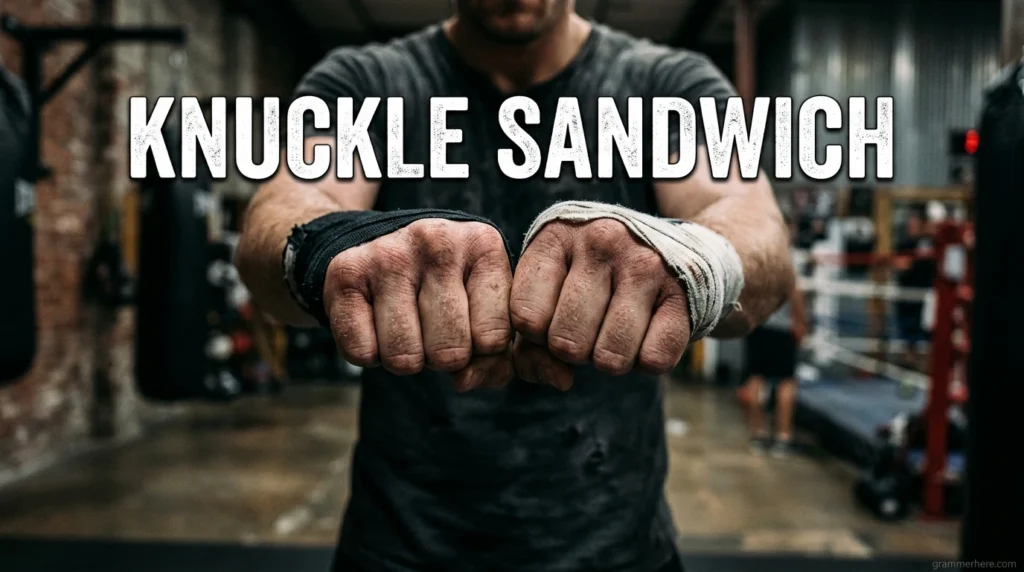
A “knuckle sandwich” is a humorous or slang expression that means a punch to the face. The phrase combines the image of “knuckles” with the word “sandwich,” creating a strangely comic way of describing physical violence.
Most often, the expression is used as a threat rather than an actual promise of violence. Someone might say it jokingly among friends, in movies, cartoons, or during heated arguments. For example:
- “If you touch my fries again, I’ll give you a knuckle sandwich.”
- “The bully threatened everyone with a knuckle sandwich.”
The phrase became popular because it sounds less harsh than directly saying “I’ll punch you.” It transforms aggression into colorful language, which is one reason idioms remain memorable.
Interestingly, many people use the expression without serious intent. Friends may joke with each other using exaggerated threats that no one takes literally. In those situations, tone matters more than words.
Still, context is important. In a real argument, the phrase can become intimidating or hostile. What sounds playful in one setting may sound dangerous in another.
That balance between humor and aggression is what makes “knuckle sandwich” such an enduring expression in everyday language.
The Origin of the Phrase
The exact origin of “knuckle sandwich” is difficult to trace, but the phrase became widely recognized in American slang during the early twentieth century. It appeared in comic strips, movies, and street conversations, especially in stories involving tough characters or playful confrontations.
The imagery behind the phrase is surprisingly simple. A sandwich is something delivered to someone, and in this case, the “filling” is a fist made of knuckles. The absurdity of comparing a punch to food creates humor while still communicating danger.
Old-school cartoons often used the phrase because it sounded dramatic without being overly graphic. Instead of showing realistic violence, writers relied on exaggerated expressions. This helped make the term entertaining rather than frightening.
H3: Influence of Pop Culture
Classic films and television shows helped the idiom spread across generations. Tough detectives, school bullies, and comedic side characters frequently used the phrase.
H3: Why the Phrase Survived
Many slang expressions disappear after a few years, but “knuckle sandwich” survived because it is vivid, funny, and easy to remember. Even today, people recognize it instantly, despite it sounding somewhat old-fashioned.
The phrase demonstrates how language evolves creatively. Instead of describing violence directly, people invented a memorable metaphor that softened the seriousness while keeping the message clear.
Why the Expression Sounds Funny Despite Its Meaning
One fascinating thing about “knuckle sandwich” is how humorous it sounds compared to what it actually means. A punch is painful and aggressive, yet the phrase often makes people smile.
This happens because the human brain notices contradictions. A sandwich is associated with comfort, food, and friendliness. Knuckles, however, suggest force and fighting. Combining these opposite ideas creates surprise, and surprise often creates humor.
Imagine someone calmly saying, “Would you like a knuckle sandwich?” The sentence almost sounds polite at first, which makes the hidden threat feel absurd.
Humor also acts as a social shield. People sometimes use funny language to express anger without sounding completely serious. Instead of shouting directly, they hide frustration behind exaggerated expressions.
H3: Humor as Emotional Protection
Humorous threats can reduce tension in some situations. Friends teasing each other may use exaggerated phrases to avoid sounding genuinely hostile.
H3: When Humor Stops Being Funny
However, humor can quickly disappear when emotions intensify. If spoken angrily, the phrase no longer feels playful. Tone, body language, and context determine whether people laugh or feel threatened.
This dual nature is why the expression remains powerful. It sits somewhere between comedy and conflict.
The Emotional Meaning Behind a “Knuckle Sandwich”
Although the phrase literally refers to a punch, emotionally it often represents bottled frustration, anger, or the desire to defend oneself.
People usually say it when they feel disrespected, ignored, or provoked. In many cases, the phrase acts as a warning rather than an action.
For example, imagine a student repeatedly mocked by classmates. After enduring endless teasing, he finally says, “Keep it up and someone’s getting a knuckle sandwich.” The statement reveals emotional exhaustion more than physical aggression.
The phrase can symbolize:
- Frustration reaching its limit
- A desire for respect
- Loss of patience
- Defensive anger
- Emotional pressure
Interestingly, many people who use such expressions never intend to fight. The phrase becomes a dramatic emotional release instead.
H3: Words as Emotional Signals
Language often exposes feelings before actions happen. Aggressive idioms may signal that someone feels cornered emotionally.
H3: The Hidden Need for Control
Sometimes people use threatening language because they feel powerless. Strong words temporarily create a sense of strength or control.
Understanding these emotional layers helps explain why certain expressions continue to appear in daily conversations.
Knuckle Sandwich in Movies, Cartoons, and Entertainment
Entertainment played a huge role in making “knuckle sandwich” famous. Cartoons especially loved exaggerated threats because they created comedy without realistic violence.
Classic animated characters often shouted the phrase before chaos erupted. The audience knew something ridiculous was about to happen.
Movies also used the expression to define tough personalities. Detectives, gangsters, boxers, and rebellious teenagers frequently used colorful slang to appear intimidating.
H3: Why Writers Loved the Phrase
The phrase was dramatic yet safe for family entertainment. It hinted at violence without sounding too graphic.
H3: Cartoon Exaggeration
Cartoons turned fights into humorous spectacles. Instead of realistic injuries, characters bounced back instantly after receiving a “knuckle sandwich.”
These exaggerated portrayals influenced how generations understood conflict. The phrase became associated more with comedy and nostalgia than real harm.
Even today, hearing the expression often reminds people of vintage humor and old-school entertainment culture.
Real-Life Situations Where People Use the Phrase
Although less common today than in previous decades, people still use “knuckle sandwich” in certain situations.
H3: Friendly Teasing
Friends may jokingly threaten each other over harmless annoyances.
Example: “Eat my dessert again and you’re getting a knuckle sandwich!”
H3: Heated Arguments
During arguments, the phrase can become more serious and intimidating.
Example: The angry customer shouted the phrase during a confrontation at a store.
H3: Parenting and Humor
Older generations sometimes used the phrase playfully with children, though modern parenting discourages threatening language.
H3: Sports and Competition
Competitive environments occasionally inspire exaggerated expressions about fighting or toughness.
In most cases today, the idiom survives more as humorous slang than an actual threat. However, context still matters because language affects emotions and perceptions.
A joke among close friends may sound completely inappropriate in public or professional environments.
The Difference Between Playful Threats and Real Aggression
One important lesson connected to “knuckle sandwich” is understanding the difference between playful language and genuine aggression.
Humans constantly use exaggerated expressions:
- “I’m starving to death.”
- “I could scream.”
- “I’ll kill you for taking my seat.”
Most people recognize these as emotional exaggerations rather than literal intentions.
The same principle often applies to “knuckle sandwich.”
H3: Signs of Playful Use
Playful use usually includes:
- Smiling
- Laughing
- Relaxed body language
- Friendly relationships
H3: Signs of Real Aggression
Serious threats often involve:
- Angry tone
- Physical intimidation
- Escalating conflict
- Fear or discomfort
Learning to recognize these differences improves emotional intelligence and communication skills.
Words carry emotional weight. Even humorous phrases can hurt or frighten others if delivered carelessly. That is why understanding tone and context matters so much in everyday life.
Why Violent Idioms Exist in Language
“Knuckle sandwich” belongs to a larger family of violent idioms found across cultures. People talk about:
- “Blowing off steam”
- “Biting someone’s head off”
- “Taking a shot”
- “Throwing punches verbally”
These expressions reveal how deeply conflict is connected to human communication.
Violent idioms often serve symbolic rather than literal purposes. They help people express emotional intensity dramatically.
H3: Emotional Release Through Language
Strong expressions allow people to vent frustration verbally instead of physically.
H3: Creativity in Human Speech
Humans rarely communicate using plain facts alone. We naturally create imagery, exaggeration, and metaphors to make emotions vivid.
Without colorful idioms, conversations would feel flat and robotic. Expressions like “knuckle sandwich” add personality, humor, and emotional depth to language.
At the same time, violent metaphors remind us how important emotional control remains in social interactions.
Lessons About Anger and Self-Control
One of the most valuable insights connected to this phrase is the importance of managing anger before it turns into harmful behavior.
Almost everyone experiences moments of irritation or rage. Someone cuts you off in traffic, insults you, or repeatedly tests your patience. In those moments, aggressive language may feel natural.
But emotional maturity involves recognizing feelings without letting them control actions.
H3: The Pause Before Reaction
Imagine a man at work unfairly blamed for a mistake. He feels humiliated and furious. For a second, he wants to threaten his coworker. Instead, he pauses, breathes deeply, and calmly explains the truth.
That pause changes everything.
H3: Words Can Escalate Conflict
Threatening phrases can quickly worsen situations. Even if intended jokingly, they may trigger fear or defensiveness.
The deeper lesson behind “knuckle sandwich” is not about violence. It is about understanding emotional triggers and choosing responses wisely.
Strong emotions are human. Self-control is strength.
How Modern Generations View the Phrase
Language changes over time, and younger generations often view “knuckle sandwich” differently than older generations do.
For many older adults, the phrase feels nostalgic and harmless, connected to cartoons and classic movies. Younger people, however, may hear it less often or interpret it more literally.
Modern communication has also shifted toward digital slang, memes, and internet humor. As a result, older idioms sometimes sound outdated or theatrical.
H3: Nostalgia and Vintage Slang
Expressions from previous generations often survive because they carry emotional memories.
H3: Changing Attitudes Toward Threatening Language
Today, society tends to take threats more seriously, especially in schools and workplaces. Even joking aggressive language may be discouraged in professional settings.
Despite these changes, the phrase still survives because of its colorful imagery and comedic rhythm. It remains one of those expressions people instantly understand, even if they rarely use it themselves.
Language evolves, but memorable idioms rarely disappear completely.
Common Misunderstandings About “Knuckle Sandwich”
Many people misunderstand the phrase or its intent.
One common misconception is that the idiom always signals real violence. In reality, it is often used humorously or symbolically.
Another misunderstanding is assuming the phrase is modern slang. Actually, it has existed for decades and carries an old-fashioned flavor.
H3: Misreading Tone
Someone unfamiliar with the phrase might interpret it as extremely threatening, while the speaker intended playful exaggeration.
H3: Cultural Differences
Idioms do not always translate well across cultures. Non-native English speakers may feel confused hearing food connected to fighting.
This highlights an important truth about language: meaning depends heavily on cultural understanding and context.
Learning idioms helps people communicate more naturally, but it also teaches deeper lessons about humor, history, and human emotion.
The Symbolism of the Fist in Human Culture
The “knuckle” part of the phrase carries symbolic meaning beyond physical fighting.
Throughout history, fists have represented:
- Strength
- Resistance
- Anger
- Protection
- Determination
A clenched fist can symbolize solidarity in protests or aggression during conflict. The same image can represent courage or danger depending on context.
H3: Physical Power and Identity
People sometimes associate fists with toughness and masculinity. Tough characters in stories often solve problems physically rather than emotionally.
H3: Moving Beyond Physical Strength
Modern perspectives increasingly emphasize communication, empathy, and emotional intelligence over intimidation.
That shift changes how people interpret phrases like “knuckle sandwich.” Instead of admiring aggression, many now view such expressions more humorously or critically.
The phrase becomes a reminder of how society’s understanding of strength continues evolving.
Why Idioms Like This Make Language Memorable
Imagine if everyone spoke literally all the time. Conversations would sound repetitive and lifeless.
Idioms make language vivid. They create pictures in the mind. “Knuckle sandwich” instantly produces a dramatic mental image that people rarely forget.
H3: Storytelling Through Expressions
Every idiom contains a tiny story or emotional scene. That storytelling quality helps language feel alive.
H3: Emotional Connection
People remember expressions that trigger emotion, surprise, or humor. The weirdness of combining food with fighting makes the phrase unforgettable.
Idioms also help cultures preserve personality and humor across generations. They connect people through shared understanding.
Even someone hearing the phrase for the first time can usually guess its meaning because the imagery is so strong.
That creative power is one reason idioms remain such an important part of communication.
Practical Communication Lessons From the Phrase
Surprisingly, “knuckle sandwich” teaches several useful communication lessons.
First, words shape emotional environments. Humor can reduce tension, but careless language can also escalate conflict.
Second, tone matters as much as vocabulary. The same phrase can sound playful, sarcastic, or dangerous depending on delivery.
Third, communication often hides deeper feelings. Aggressive expressions sometimes reveal stress, insecurity, or frustration rather than genuine violent intent.
H3: Choosing Better Responses
When emotions rise, people have choices:
- Escalate conflict
- Withdraw completely
- Communicate calmly
The healthiest option is usually calm honesty.
H3: Understanding Others More Deeply
Instead of reacting immediately to aggressive words, it helps to ask:
- Is this person joking?
- Are they frustrated?
- Do they feel unheard?
This perspective encourages empathy and emotional awareness.
In the end, phrases like “knuckle sandwich” are not just slang. They are small windows into human emotion and social behavior.
FAQs
What does “knuckle sandwich” mean?
It is a slang expression meaning a punch to the face, usually said humorously or as a threat.
Is “knuckle sandwich” a serious threat?
Sometimes it is joking, but in angry situations it can be interpreted as threatening language.
Where did the phrase come from?
The phrase became popular in early American slang and was widely used in cartoons, movies, and comedic dialogue.
Why is it called a sandwich?
The word “sandwich” humorously describes delivering a fist to someone, creating exaggerated imagery.
Is the phrase still commonly used?
It is less common today but still recognized by many people, especially through older media and nostalgic humor.
Can children use this phrase?
Children may hear it in cartoons or jokes, but it is generally better to encourage respectful communication.
Is “knuckle sandwich” considered an idiom?
Yes, it is an idiomatic slang expression because its meaning cannot be understood literally.
Why do people use funny expressions for violence?
Humorous language can soften harsh ideas, express frustration creatively, or make communication more entertaining.
Conclusion
“Knuckle sandwich” may sound like a silly old-fashioned phrase, but it carries surprising depth beneath its humor. On the surface, it refers to a punch. Yet behind those words lies a fascinating mix of emotion, culture, storytelling, and human psychology.