Imagine two friends arguing on a basketball court after a rough game. One points a finger and snaps, “Keep talking, and I’ll give you a knuckle sandwich!” Suddenly, everyone goes quiet. Nobody expects an actual sandwich to appear. Instead, the phrase creates an image that is both humorous and threatening at the same time. That strange mix is exactly why the expression has survived for generations.
The “knuckle sandwich” idiom is more than just an old-fashioned threat. It reflects human emotion, conflict, humor, frustration, and even the creative ways language evolves. Idioms like this turn ordinary conversations into colorful experiences. They paint pictures in our minds, making speech more memorable and expressive.
In everyday life, people often hear the phrase in movies, cartoons, jokes, or casual arguments. Yet many never stop to think about what it truly means, where it came from, or why it still matters today. Understanding this idiom opens a window into culture, communication, and emotional expression. It also teaches us how language can soften aggression through humor while still delivering a strong message.
This article explores the deeper meaning, history, emotional impact, interpretations, examples, misunderstandings, and lessons connected to the “knuckle sandwich” idiom in a way that goes far beyond a basic dictionary definition.
What Does “Knuckle Sandwich” Mean?
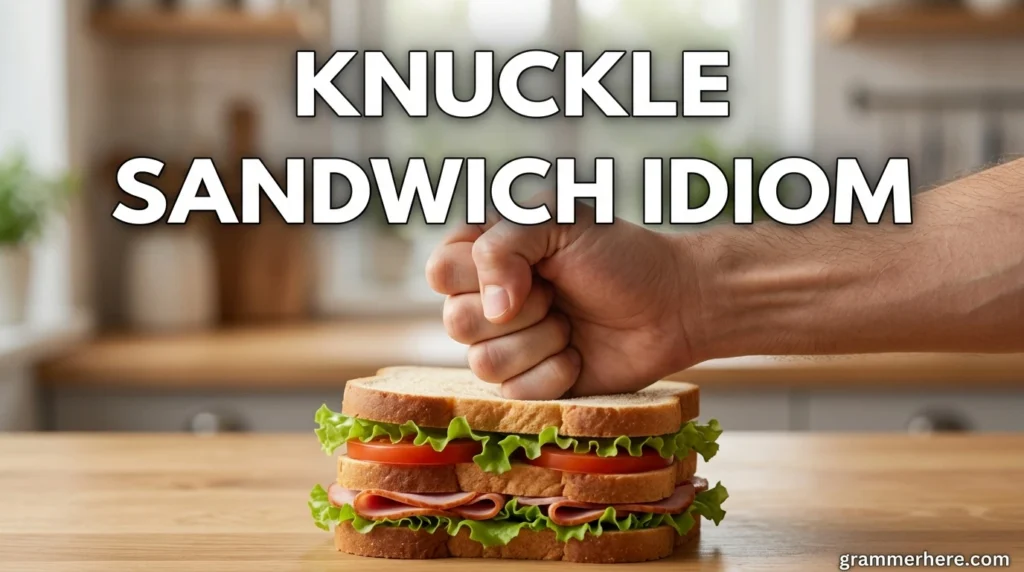
The idiom “knuckle sandwich” refers to a punch in the face or the threat of physical violence. It is usually said jokingly or dramatically rather than as a serious promise of harm. The phrase combines “knuckle,” referring to the joints of the fingers, with “sandwich,” creating a humorous mental image of someone being “served” a punch.
At first glance, the phrase sounds ridiculous. That is part of its charm. Language often uses humor to make uncomfortable ideas easier to express. Instead of directly saying, “I’m going to hit you,” someone may jokingly say, “You’re asking for a knuckle sandwich.”
The idiom became popular because it sounds vivid and memorable. It transforms an aggressive statement into something cartoonish and exaggerated.
Everyday Example
A teenager teases his older brother repeatedly during a road trip. After several annoying jokes, the older brother laughs and says, “Keep it up, and you’ll get a knuckle sandwich.”
In this situation, the phrase may not signal real danger. Instead, it expresses irritation mixed with playful humor.
Why People Remember It
People remember idioms like this because they create strong mental pictures. You instantly imagine a fist and a sandwich together, which feels strange enough to stick in your memory. That unusual combination gives the phrase personality and emotional impact.
The Strange and Fascinating Origin of the Idiom
The exact origin of “knuckle sandwich” is uncertain, but the phrase became widely used in the early twentieth century, especially in American slang. During that era, colorful expressions were common in street culture, comedy routines, and boxing language.
People enjoyed inventing exaggerated phrases for fighting. Instead of plainly threatening someone, they used creative expressions that sounded humorous or dramatic. “Knuckle sandwich” fit perfectly into that trend.
The phrase likely emerged because punches and food both involve “serving” something. A sandwich is normally offered as a meal, while a punch can metaphorically be “served” during a confrontation. Combining the two ideas created a funny contradiction.
Connection to Old Cartoons and Films
Classic cartoons often featured exaggerated fights where characters threatened each other with expressions like “knuckle sandwich.” These shows helped spread the idiom to younger audiences.
Old detective movies and gangster films also popularized it. Tough characters used the phrase to sound intimidating while maintaining a sense of swagger or comic flair.
Why the Idiom Survived
Many old expressions disappear over time, but “knuckle sandwich” survived because it balances aggression with humor. It sounds threatening without feeling excessively dark. That makes it suitable for comedy, storytelling, and casual conversation.
Why the Idiom Sounds Funny Despite Its Violent Meaning
One fascinating thing about “knuckle sandwich” is that it makes people laugh even though it refers to violence. The humor comes from contrast.
A sandwich is comforting and harmless. Knuckles represent pain and conflict. Combining them creates absurdity. The brain struggles to connect the two images, and that tension often creates amusement.
This reflects a larger truth about human communication: people frequently use humor to soften serious emotions.
Humor as Emotional Protection
Imagine a frustrated father telling his son, “You’re heading toward a knuckle sandwich.” The exaggerated phrase may communicate annoyance without escalating into genuine hostility.
Humorous language can reduce tension by making anger sound theatrical rather than dangerous.
Cartoon-Like Imagery
The phrase feels exaggerated, almost like something from a comic strip. That cartoon quality makes it less severe than a direct threat.
People often prefer indirect expressions because they create emotional distance. Saying “knuckle sandwich” sounds less alarming than describing violence plainly.
The Power of Absurd Language
Absurd phrases stay alive because they entertain people. Language is not only about information; it is also about personality and creativity. “Knuckle sandwich” succeeds because it turns aggression into vivid storytelling.
How the Idiom Reflects Human Emotions
The phrase reveals more than anger. It reflects frustration, pride, embarrassment, irritation, and emotional limits.
Sometimes people use strong expressions when they feel unheard or disrespected. The idiom acts as an emotional release valve.
Anger Without Action
Many people say things they never truly intend to do. A person might jokingly threaten a “knuckle sandwich” simply to express annoyance.
For example, a friend repeatedly steals fries from another friend’s plate. The annoyed person finally says, “Touch one more fry, and you’ll get a knuckle sandwich!”
The statement communicates irritation dramatically without actual violence.
Emotional Exaggeration
Humans naturally exaggerate emotions in speech. We say things like:
- “I’m starving.”
- “I’m dying of embarrassment.”
- “This weighs a ton.”
Similarly, “knuckle sandwich” exaggerates anger for emotional effect.
Social Signaling
The idiom can also signal boundaries. It warns someone that behavior has become unacceptable, even if the speaker never plans to fight.
In this way, language becomes a tool for emotional communication rather than literal action.
Situations Where People Commonly Use the Expression
Although the idiom sounds old-fashioned today, it still appears in many situations.
Friendly Teasing
Friends often use the phrase jokingly during playful arguments.
Example: “You ate the last slice of pizza? You deserve a knuckle sandwich!”
The humor keeps the conversation lighthearted.
Sports and Competition
Competitive environments sometimes encourage dramatic language. Players jokingly threaten teammates or rivals after rough plays.
Movies and Entertainment
Action comedies and animated shows still use the phrase because it sounds theatrical and nostalgic.
Family Conversations
Older generations may use the idiom more frequently than younger people. Parents and grandparents sometimes say it playfully when children misbehave.
Online Humor
Internet memes occasionally revive old idioms because their exaggerated style feels entertaining and ironic.
Even though modern slang changes quickly, “knuckle sandwich” remains recognizable because its imagery is unforgettable.
The Difference Between Literal and Figurative Meaning
One reason idioms confuse language learners is that their meanings are not literal.
A “knuckle sandwich” is not food. It symbolizes a punch.
Understanding figurative language requires cultural awareness and imagination.
Literal Interpretation
A child hearing the phrase for the first time may picture a sandwich shaped like a fist. That misunderstanding can actually seem funny.
Figurative Understanding
Adults recognize that the phrase represents violence metaphorically rather than literally.
This gap between literal and figurative meaning is what makes idioms interesting. They force listeners to think beyond individual words.
Why Figurative Language Matters
Idioms make communication richer and more expressive. Instead of speaking mechanically, people use symbolic language that carries emotion, humor, and personality.
Learning idioms also helps people understand cultural humor and social context more deeply.
How “Knuckle Sandwich” Appears in Pop Culture
Pop culture helped transform this idiom into a recognizable phrase across generations.
Classic cartoons frequently used exaggerated threats during comic fights. Characters rarely caused serious harm, making the violence feel silly rather than frightening.
Comedy and Timing
The phrase works well in comedy because it arrives unexpectedly. A character might speak politely one moment and suddenly threaten a “knuckle sandwich” the next.
That contrast creates laughter.
Nostalgic Appeal
Many people associate the idiom with older entertainment styles. Hearing it today may feel nostalgic, reminding audiences of vintage humor and childhood cartoons.
Character Personality
Writers often use the expression to define characters. Tough but lovable characters may use it to sound intimidating while remaining funny.
For example, a grumpy mechanic in a sitcom might constantly threaten customers with a “knuckle sandwich” while never actually hurting anyone.
This makes the character feel colorful and memorable.
Common Misunderstandings About the Idiom
People sometimes misunderstand the tone or intent behind the phrase.
Mistaking Humor for Real Threats
In some situations, listeners may not recognize the joking tone. Context matters greatly.
A playful statement among friends differs from an angry confrontation between strangers.
Cultural Confusion
Non-native English speakers may interpret the idiom literally or struggle to understand why food imagery represents violence.
This confusion is normal because idioms rarely follow logical patterns.
Assuming the Phrase Encourages Violence
The idiom often functions more as comic exaggeration than genuine aggression. In many cases, speakers use it symbolically rather than literally.
However, tone and context still matter. Even humorous expressions can become inappropriate if used carelessly.
Outdated Language
Some younger people may see the phrase as old-fashioned because modern slang has changed. Still, its uniqueness keeps it recognizable.
Emotional Lessons Hidden Inside the Expression
Although the idiom sounds humorous, it quietly teaches important lessons about emotional control and communication.
Frustration Needs Expression
People need ways to release irritation safely. Dramatic language can sometimes prevent real conflict by transforming anger into humor.
Instead of fighting physically, someone may express frustration verbally in exaggerated ways.
Words Carry Emotional Energy
The phrase reminds us that language affects emotions strongly. Even playful threats can influence mood and relationships.
Being mindful of tone matters.
Humor Can Defuse Tension
A joking expression often reduces conflict better than direct aggression.
Imagine two coworkers arguing over a mistake. One laughs and says, “You’re lucky I don’t serve knuckle sandwiches around here.”
The humor may break tension and allow both people to calm down.
Emotional Intelligence Matters
The best communicators understand when humor helps and when it harms. Timing, relationship dynamics, and emotional awareness all shape how idioms are received.
Real-Life Scenarios That Explain the Idiom Clearly
Stories make idioms easier to understand because they connect language with human experience.
Scenario One: The Sibling Argument
Two brothers are playing video games. The younger brother keeps unplugging the controller whenever he starts losing.
Finally, the older brother says dramatically, “Do that again, and you’re getting a knuckle sandwich!”
Both brothers laugh because the threat is exaggerated and unserious.
Scenario Two: The School Cafeteria
A student repeatedly jokes about his friend’s bad haircut. After several comments, the friend jokingly replies, “You’re one insult away from a knuckle sandwich.”
The statement sets a boundary while keeping the interaction playful.
Scenario Three: Workplace Humor
An office worker accidentally drinks a coworker’s expensive coffee.
The coworker grins and says, “That coffee cost enough to earn you a knuckle sandwich.”
Again, humor softens frustration.
These examples show how the idiom usually functions socially rather than violently.
Why Idioms Like This Matter in Language Learning
Idioms reveal how cultures think, joke, and express emotions.
Someone can memorize grammar perfectly yet still struggle to understand everyday conversation without learning idioms.
Building Cultural Understanding
Expressions like “knuckle sandwich” teach learners about humor, conflict, exaggeration, and conversational style in English-speaking cultures.
Improving Communication Skills
Understanding idioms helps people sound more natural and confident in conversation.
Developing Emotional Awareness
Idioms often carry emotional meaning beyond dictionary definitions. Learning them teaches nuance and social context.
Making Language Memorable
Creative phrases stick in the mind better than plain vocabulary. That makes idioms powerful learning tools.
For many learners, discovering idioms feels like unlocking hidden layers of a language.
Similar Idioms and Expressions Related to Fighting
English contains many colorful expressions related to conflict.
“Throw Hands”
This modern slang phrase means to start fighting physically.
“Hit Below the Belt”
This idiom refers to unfair behavior, especially in arguments.
“Face the Music”
Although not violent, it relates to consequences after conflict.
“Take a Punch”
This can mean handling criticism or hardship emotionally.
Comparing Them to “Knuckle Sandwich”
Unlike some aggressive expressions, “knuckle sandwich” carries a humorous and exaggerated tone. It feels less serious than direct threats.
Its playful imagery makes it stand out among fighting idioms.
Language often transforms difficult experiences into creative expressions, and these idioms show how humans use metaphor to discuss conflict indirectly.
How Modern Society Views Expressions Like This
Language evolves alongside culture. Today, people are more aware of how words affect others emotionally.
As a result, some older expressions may feel less appropriate in professional or formal settings.
Changing Attitudes Toward Aggression
Modern communication often emphasizes emotional intelligence, respect, and nonviolent conflict resolution.
Because of this, expressions involving threats may sometimes seem outdated.
Humor Still Has a Place
Despite changing attitudes, many people still recognize “knuckle sandwich” as playful rather than dangerous.
Tone remains the deciding factor.
Generational Differences
Older generations may use the phrase naturally, while younger speakers may prefer newer slang expressions.
Still, the idiom survives because it feels vivid and theatrical.
The Balance Between Expression and Sensitivity
Language should communicate emotion without causing unnecessary harm. Understanding context helps people use idioms responsibly and effectively.
Practical Lessons We Can Learn From the Idiom
Surprisingly, “knuckle sandwich” offers meaningful life lessons beyond its humorous surface.
Learn to Recognize Emotional Signals
People often use dramatic language when frustrated. Paying attention to emotional cues can prevent misunderstandings.
Humor Can Be Powerful
Humor helps people cope with tension, embarrassment, and conflict.
A funny phrase may stop arguments from becoming serious.
Communication Requires Context
Words change meaning depending on tone, relationships, and environment.
The same phrase may sound playful among friends but threatening in another situation.
Emotional Control Is Strength
The idiom reminds us that expressing anger verbally is usually better than acting physically.
Strong communication skills allow people to release emotions safely and constructively.
Ultimately, idioms teach not only vocabulary but also emotional wisdom.
FAQs
What does “knuckle sandwich” mean?
It means a punch in the face or a joking threat of physical violence.
Is “knuckle sandwich” a real sandwich?
No. It is a figurative expression and not actual food.
Is the idiom serious or humorous?
Usually, it is humorous or exaggerated rather than genuinely threatening.
Where did the phrase come from?
The exact origin is unclear, but it became popular in early twentieth-century American slang and entertainment.
Do people still use this idiom today?
Yes, though it is less common than modern slang. It still appears in movies, jokes, and casual speech.
Why is it called a “sandwich”?
The word “sandwich” creates humorous imagery, making the threat sound exaggerated and memorable.
Can the idiom offend people?
It can if used aggressively or in the wrong context. Tone and relationship matter greatly.
Why are idioms important in language learning?
Idioms help learners understand culture, humor, emotions, and natural conversational English.
Conclusion
The “knuckle sandwich” idiom may sound silly at first, but beneath its humorous surface lies a fascinating example of how language reflects human emotion, culture, and creativity. What began as colorful slang evolved into an expression recognized across generations through movies, cartoons, conversations, and storytelling. Its unusual blend of humor and aggression makes it memorable, while its figurative nature highlights the imaginative power of idioms.