
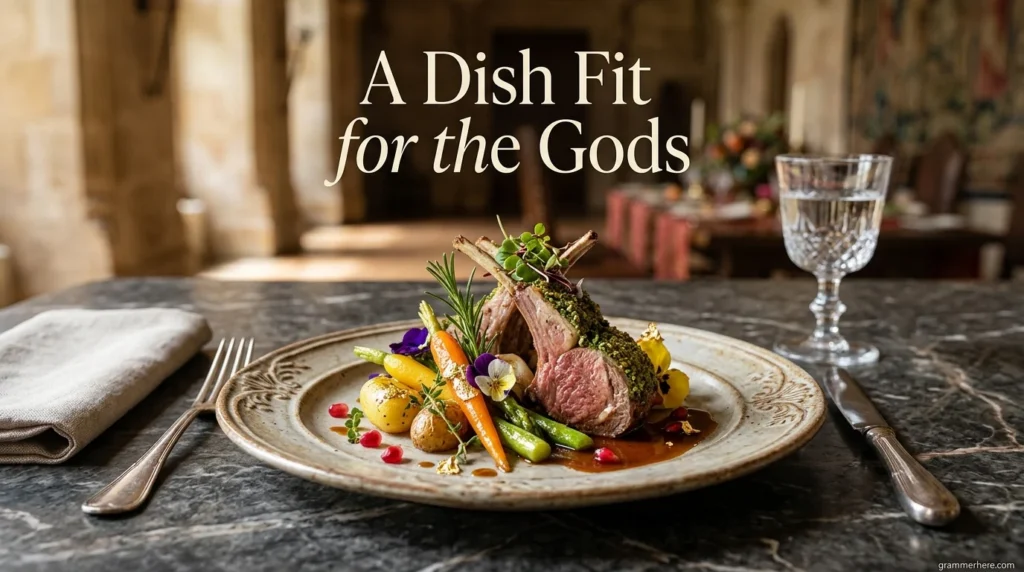
There are moments when food stops being just food. Imagine a dimly lit banquet hall where golden light spills across a long table, and in the center sits a dish so beautifully prepared that conversation fades into silence. The aroma alone feels almost sacred—rich, layered, and unforgettable. Someone whispers, “This is a dish fit for the gods,” and suddenly the meal becomes more than nourishment; it becomes an experience, a memory, a story.
This phrase has traveled through literature, culture, and everyday speech, symbolizing food that transcends ordinary expectations. But what does it truly mean? Why do humans describe certain meals as divine? And what can this idea teach us about pleasure, gratitude, creativity, and even life itself?
“A dish fit for the gods” is not just about luxury or taste. It reflects emotion, craftsmanship, symbolism, and human aspiration. In this article, we explore its deeper meaning, cultural roots, emotional resonance, and practical lessons hidden within this powerful expression.
The Meaning Behind “A Dish Fit for the Gods”
At its core, the phrase refers to food so extraordinary that it feels worthy of divine beings. It suggests perfection—not only in taste but also in presentation, aroma, and emotional impact. When people use this expression, they are not simply praising a meal; they are elevating it to a symbolic level.
The idea of “gods” here represents the highest standard imaginable. It reflects human admiration for perfection, beauty, and sensory pleasure. A dish described this way often combines rare ingredients, expert technique, and artistic presentation. But beyond physical qualities, it also carries emotional weight—it makes people feel awe, joy, or even gratitude.
Cultural Interpretation
Different cultures express this idea in unique ways. In some traditions, food offered to deities in temples is prepared with extreme care, symbolizing purity and devotion. In others, royal cuisines were designed to impress emperors and kings, later becoming legendary dishes shared across generations.
The phrase, therefore, bridges culinary excellence with cultural imagination, turning food into something almost sacred.
Historical Roots of Divine Cuisine
The concept of divine food is not modern. Ancient civilizations often associated exceptional meals with the gods. In Greek mythology, ambrosia was considered the food of immortals, granting eternal life. Similarly, in Hindu traditions, offerings known as “bhog” are prepared with devotion for deities.
In royal courts of medieval Europe and Asia, chefs competed to create meals that symbolized power and prestige. The more elaborate the dish, the closer it felt to something divine.
Feasts of Kings and Emperors
Royal banquets were not just meals; they were performances. Tables were decorated with gold, spices were imported from distant lands, and recipes were guarded secrets. These meals shaped the idea that extraordinary food belongs not just to humans but to higher realms of experience.
The phrase “a dish fit for the gods” likely evolved from this historical admiration for culinary grandeur.
The Emotional Power of Exceptional Food
Food is deeply tied to emotion. A single bite can trigger nostalgia, joy, or comfort. When a dish is described as divine, it often means it has touched something emotional within the eater.
Think of a meal prepared by a loved one after a long day. It may not contain expensive ingredients, yet it feels extraordinary. The emotional connection elevates it beyond its physical form.
Why Emotion Matters in Taste
- Memory enhances flavor perception
- Familiarity creates comfort
- Presentation influences expectation
- Atmosphere shapes experience
A “god-like” dish often succeeds because it engages not just the tongue but the heart and mind. It becomes an emotional experience rather than just a meal.
Ingredients That Create a “God-Fit” Dish
While emotion plays a huge role, ingredients still matter. A dish that feels divine often uses high-quality, fresh, and carefully balanced components.
Rare and Luxurious Elements
Some dishes achieve legendary status because of rare ingredients like saffron, truffles, or exotic spices. These elements add depth, richness, and uniqueness.
Balance and Harmony
More important than rarity is harmony. A dish fit for the gods achieves perfect balance—sweet, salty, sour, bitter, and umami working together seamlessly.
Craftsmanship Over Excess
A common misunderstanding is that luxury equals divinity. In reality, simplicity executed perfectly can feel even more powerful. A humble recipe refined with mastery can rival the most extravagant feast.
The Role of Presentation and Aesthetics
We eat first with our eyes. A visually stunning dish often feels more satisfying even before the first bite. This is why presentation plays a key role in what people call “divine food.”
Visual Elements That Elevate a Dish
- Color contrast
- Elegant plating
- Symmetry or intentional asymmetry
- Use of texture and height
A beautifully arranged plate creates anticipation. It signals care, skill, and respect for the diner. This visual storytelling transforms food into art.
Even a simple dish can feel extraordinary when presented thoughtfully, reinforcing the idea that beauty is a gateway to experience.
Cultural Symbolism of Divine Food
Food is never just physical—it carries cultural meaning. When a dish is called fit for the gods, it often symbolizes celebration, gratitude, or reverence.
Religious and Spiritual Connections
In many cultures, food is offered to divine beings before being consumed. This act transforms cooking into devotion. The idea is that food prepared with sincerity becomes spiritually elevated.
Festive Significance
During festivals and celebrations, special dishes are prepared to mark joy and abundance. These meals often become symbolic memories tied to happiness and togetherness.
Thus, divine food often represents more than taste—it reflects shared human experience.
Psychological Experience of “Divine” Taste
Why does some food feel extraordinary while other equally good meals feel ordinary? The answer lies in psychology.
Expectation and Anticipation
When people expect something amazing, their brain enhances sensory perception. This is why presentation and reputation matter so much.
Context and Environment
A beach dinner, a mountain picnic, or a candlelit room can transform a simple dish into something unforgettable.
Social Influence
If others around us praise a dish, we are more likely to perceive it as exceptional. Human experience is deeply social, even in taste.
Together, these factors create the illusion—or reality—of divine food experiences.
The Chef as an Artist of the Divine
Behind every “dish fit for the gods” is a chef who blends science, intuition, and creativity.
Creativity in Cooking
Chefs experiment with textures, flavors, and techniques to create something new. Their work is similar to painting or composing music.
Discipline and Precision
Perfect dishes require precision—measured cooking times, balanced seasoning, and consistent execution.
Emotional Intent
Great chefs often cook with intention. They aim not just to feed but to move people emotionally.
In this sense, chefs become storytellers, and their dishes become narratives of taste.
Misunderstandings About Divine Food
People often misunderstand what makes food truly exceptional.
Myth 1: Expensive Means Divine
Price does not guarantee quality or emotional impact. Some of the most memorable dishes come from humble ingredients.
Myth 2: Complexity Equals Excellence
Overly complex dishes can overwhelm the senses. Simplicity often allows flavors to shine more clearly.
Myth 3: Perfection Is Objective
Taste is subjective. What feels divine to one person may feel ordinary to another.
Understanding these myths helps us appreciate food more authentically.
Real-Life Experiences of “A Dish Fit for the Gods”
Everyone has likely encountered such moments, even without realizing it.
A Family Memory
A grandmother’s recipe prepared during childhood gatherings often feels unmatched later in life. The emotional connection elevates its value.
A Restaurant Surprise
Sometimes, an unexpected dish in a small restaurant leaves a lasting impression because it exceeds expectations.
Travel Experiences
Trying local cuisine while traveling often creates unforgettable memories, where environment and novelty enhance taste.
These moments remind us that divine food is often about experience, not just ingredients.
Lessons We Can Learn from Divine Cuisine
The idea of a “dish fit for the gods” offers deeper life lessons.
Appreciation of Detail
Great experiences come from attention to small details—whether in cooking, relationships, or work.
Balance in Life
Just as flavors must harmonize, life requires balance between work, rest, and joy.
Presence and Gratitude
Fully experiencing a meal teaches mindfulness. It reminds us to slow down and appreciate the present moment.
Food becomes a metaphor for living well—intentional, balanced, and meaningful.
The Modern Evolution of Divine Dining
Today, the idea of divine food continues to evolve. Fine dining restaurants, molecular gastronomy, and fusion cuisine push boundaries of creativity.
Innovation in Culinary Arts
Modern chefs experiment with science, using techniques like foams, liquid nitrogen, and deconstructed dishes to surprise diners.
Social Media Influence
Food presentation has become more important than ever, as visually striking dishes are shared globally online.
Return to Simplicity
At the same time, there is a growing appreciation for rustic, traditional cooking that emphasizes authenticity over spectacle.
The modern “dish fit for the gods” exists somewhere between innovation and tradition.
Conclusion
A “dish fit for the gods” is not defined solely by luxury, rarity, or technique. It is defined by experience—how it makes us feel, remember, and connect. It represents the intersection of artistry, emotion, culture, and human imagination.
Whether found in a royal banquet, a humble kitchen, or a roadside stall, such a dish transcends its ingredients and becomes something unforgettable. It reminds us that food is not just survival—it is celebration, memory, and meaning.
Ultimately, the phrase invites us to see everyday meals differently. Even the simplest dish can become divine when prepared with care, shared with love, and experienced with presence.
FAQs
1. What does “a dish fit for the gods” mean?
It refers to food that is exceptionally delicious, beautifully prepared, and emotionally impactful, as if worthy of divine beings.
2. Is it always about expensive ingredients?
No. Even simple dishes can feel divine if they are prepared with care, balance, and emotional significance.
3. Why is presentation important in food?
Because visual appeal influences taste perception and creates anticipation before eating.
4. Can homemade food be considered “divine”?
Yes. Many people find emotionally meaningful homemade dishes more memorable than restaurant meals.
5. What role does emotion play in taste?
Emotion strongly influences how we perceive flavor, often enhancing or transforming the experience.
6. Is “divine food” the same for everyone?
No. Taste is subjective and shaped by culture, memory, and personal preference.
7. How do chefs create extraordinary dishes?
They combine creativity, precision, high-quality ingredients, and emotional intention.
8. Can everyday meals become special?
Yes. Mindful preparation, gratitude, and shared experiences can elevate any meal into something memorable.