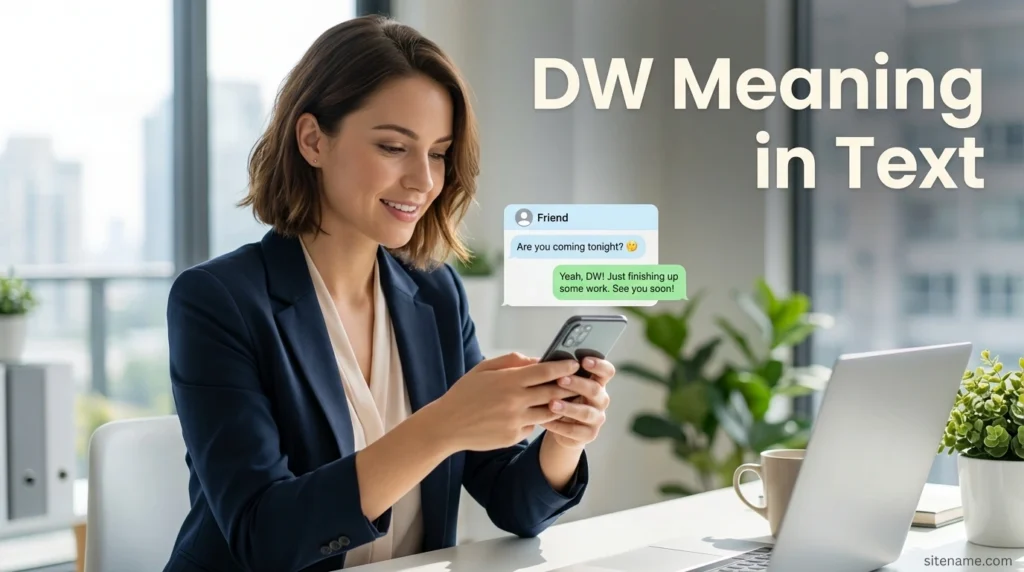
If you have received a message like “dw, everything will be okay” or “dw about it,” you may have wondered what DW meaning in text actually is. Internet slang can sometimes look confusing because people use short forms, abbreviations, and acronyms instead of complete sentences. DW is one of the most common texting abbreviations, especially in casual conversations, social media messages, and online chats.
Understanding its meaning can help you communicate more naturally and avoid misunderstandings. In most texting situations, DW means “don’t worry.” It is usually used to reassure someone, tell them not to stress, or let them know that a problem is not serious. This guide explains the DW slang meaning, its full form, examples, social media usage, similar abbreviations, and ways to reply confidently.
What Does DW Mean in Text?
The most common answer to what does DW mean in text is simple:
DW = Don’t Worry
People use DW as a quick and casual way to reassure another person.
For example:
- “DW, I got it.”
- “DW about the homework.”
- “DW, you didn’t do anything wrong.”
- “DW, I’ll handle it.”
- “Sorry I’m late.” — “DW!”
In these examples, DW has the same basic idea as saying:
- Don’t worry.
- It’s okay.
- No problem.
- You’re fine.
- Don’t stress about it.
The exact feeling can change slightly depending on the conversation. Sometimes DW sounds comforting and caring, while other times it is simply a quick way to dismiss a minor concern.
DW Full Form
The full form of DW in texting is:
DW — Don’t Worry
It is an informal abbreviation rather than a formal English expression. You are most likely to see it in text messages, direct messages, comments, gaming chats, and social media conversations.
DW Slang Meaning Explained
The DW slang meaning is generally connected with reassurance.
When someone says “DW,” they are usually telling you that you do not need to be concerned about something.
For example:
Person 1: “I’m sorry I forgot to send the file.”
Person 2: “DW, you can send it tomorrow.”
Here, DW means “Don’t worry.” The speaker is reassuring the other person that forgetting the file is not a major problem.
Another example:
Person 1: “I think I messed everything up.”
Person 2: “DW, we can fix it.”
Again, DW is being used to provide comfort.
DW Can Sound Different Depending on Context
Although the basic meaning remains “don’t worry,” the tone may vary.
Friendly:
“DW! We’ve got plenty of time.”
Caring:
“DW, I’m here if you need me.”
Casual:
“DW about it.”
Short or dismissive:
“dw, it’s fine.”
Therefore, you should consider the surrounding conversation before deciding exactly how the person feels.
Why Do People Use DW Instead of “Don’t Worry”?
The main reason is convenience.
Online communication is fast. People often want to send a quick response without typing an entire sentence. Abbreviations make conversations shorter and easier.
Instead of typing:
“Don’t worry about it. Everything is completely fine.”
Someone might simply write:
“DW, it’s fine.”
This is especially common among people who regularly communicate through smartphones and social media.
Texting abbreviations also create a casual conversational style. Using DW can make a message feel less formal and more relaxed.
Origin and Rise in Popularity of DW
DW is part of a larger culture of internet and texting abbreviations. As instant messaging, mobile phones, online forums, and social media became increasingly popular, users began shortening common phrases.
Expressions such as:
- LOL — Laughing Out Loud
- BRB — Be Right Back
- IDK — I Don’t Know
- BTW — By The Way
- OMG — Oh My God
- TBH — To Be Honest
- IMO — In My Opinion
- DW — Don’t Worry
became familiar forms of digital communication.
DW became especially useful because “don’t worry” is a phrase people use frequently. It is easy to shorten and still easy for most readers to understand from context.
Unlike some newer slang terms, DW is not necessarily limited to teenagers or Gen-Z users. Adults also use it in casual texting.
How Is DW Used in Real Conversations?
The best way to understand DW is to see it in natural conversations.
Example 1: Apologizing
A: “Sorry, I forgot to call you.”
B: “DW, I was busy too.”
Here, DW means “Don’t worry.”
Example 2: Asking for Help
A: “I might need your notes later.”
B: “DW, I’ll send them.”
The speaker is reassuring the other person that getting the notes will not be a problem.
Example 3: Being Late
A: “I’m running 20 minutes late.”
B: “DW, take your time.”
The second person is telling them not to stress.
Example 4: Making a Mistake
A: “I accidentally deleted the message.”
B: “DW, I already saw it.”
Again, DW provides reassurance.
Example 5: Emotional Support
A: “I’m nervous about tomorrow.”
B: “DW, you’ll do great!”
In this situation, DW sounds encouraging and supportive.
DW Meaning on WhatsApp
On WhatsApp, DW usually means “Don’t Worry.”
WhatsApp conversations are often informal, so abbreviations are common. Someone might write:
- “DW I’ll call you later.”
- “DW, everything is okay.”
- “DW about the money.”
- “DW haha.”
- “DW, no need to apologize.”
WhatsApp does not give DW a special official meaning. Its interpretation comes from the context of the conversation.
If a friend sends:
“DW 😊”
they are probably reassuring you.
If they send:
“dw.”
it may still mean “don’t worry,” but the period or lack of emojis can make the message feel more serious or emotionally neutral.
DW Meaning on Instagram
On Instagram, DW can appear in:
- Direct messages
- Comments
- Story replies
- Group chats
- Casual conversations
For example:
“DW girl, you looked amazing!”
or:
“DW, I won’t tell anyone 😂.”
The meaning remains “don’t worry.”
Instagram users often combine abbreviations with emojis, making the tone easier to understand.
For example:
“DW 😭❤️”
could sound affectionate or supportive.
Meanwhile:
“dw.”
could sound brief or slightly cold depending on the conversation.
DW Meaning on TikTok
On TikTok, DW can appear in comments, private messages, captions, and conversations between users.
For example:
“DW bro, you’ll get it next time.”
Or:
“DW, everyone makes mistakes.”
The DW meaning on TikTok is generally still “don’t worry.”
It is important not to assume that every abbreviation has a special TikTok-specific definition. Sometimes users simply bring common texting slang into TikTok conversations.
TikTok slang changes quickly, so some abbreviations can develop additional meanings. However, when DW appears in an ordinary conversational sentence, “don’t worry” is usually the most natural interpretation.
DW Meaning on Snapchat
Snapchat is another platform where short messages and abbreviations are extremely common.
You might see:
I got you.”
“DW about it 😂.”
“dw, it’s all good.”
On Snapchat, DW normally means “Don’t Worry.”
Because Snapchat messages are often quick and informal, users may type abbreviations in lowercase:
- dw
- DW
- Dw
Capitalization does not normally change the meaning.
What DW Does NOT Mean
One common problem with online abbreviations is that the same letters can sometimes represent completely different things.
In everyday texting, DW usually means “Don’t Worry.”
However, DW can have other meanings outside casual texting. For example, depending on the context, DW may refer to:
- A person’s initials
- A company or organization
- A technical abbreviation
- A title or name
- A professional term
- A location or other proper noun
Therefore, context matters.
DW Is Not the Same as WYLL
It is also important not to confuse DW with WYLL.
DW usually means:
Don’t Worry
WYLL is a separate internet abbreviation commonly interpreted as:
What You Look Like?
These are completely different slang terms.
If someone says:
“DW, everything is fine.”
they are not asking what you look like.
Similarly, if someone uses WYLL, you should not automatically interpret it as DW.
Common Misinterpretations of DW
Some people may misunderstand DW because abbreviations can be ambiguous.
Misinterpretation 1: Thinking DW Means Something Romantic
DW does not automatically have a romantic meaning.
If someone says:
“DW, I’m here for you.”
that can be friendly, supportive, or romantic depending on the relationship and context.
The abbreviation itself does not mean romance.
Misinterpretation 2: Thinking DW Is Always Rude
DW is not inherently rude.
However, a very short response can sometimes feel dismissive.
Compare:
“DW ❤️”
with:
“dw.”
The first might feel warm and comforting. The second may feel more abrupt.
Tone depends on the surrounding conversation.
Misinterpretation 3: Assuming It Has One Meaning Everywhere
DW most commonly means “don’t worry” in casual texting, but abbreviations can have different meanings in professional, technical, or specialized contexts.
Always look at the words around it.
How to Reply When Someone Says DW
Your reply depends on the situation and your relationship with the person.
Polite Responses
If someone says “DW,” you can simply respond:
- “Thanks!”
- “Okay, thank you.”
- “I appreciate it.”
- “That’s good to hear.”
- “Thanks for understanding.”
- “Okay, no problem.”
Example:
Them: “DW, I can help you tomorrow.”
You: “Thanks, I really appreciate it!”
Casual Responses
With a friend, you can keep it relaxed:
- “Okay haha.”
- “Alright 😂.”
- “Gotcha.”
- “Cool, thanks!”
- “Haha okay.”
- “You got it.”
Example:
Them: “DW about it.”
You: “Alright 😂.”
Flirty Responses
If the conversation is clearly romantic or playful, you can respond with something slightly flirty.
For example:
- “I’ll try not to worry 😉.”
- “Okay, but only because you said so 😏.”
- “You always know how to calm me down.”
- “Fine, I trust you 😉.”
- “You’re pretty reassuring, you know.”
Remember that DW itself is not a flirty abbreviation. The flirty tone comes from the context and your response.
Boundary-Respecting Responses
Sometimes you may not want to continue a conversation or accept reassurance from someone.
You can respond politely while maintaining your boundaries:
- “Thanks, I appreciate that.”
- “I understand, but I still need some space.”
- “Thanks for letting me know.”
- “I’m okay, but I’d rather handle this myself.”
- “I appreciate the reassurance, but I need some time.”
This allows you to stay respectful without feeling pressured to continue the conversation.
DW vs. Similar Texting Abbreviations
DW belongs to a large group of casual internet abbreviations.
AbbreviationMeaningDWDon’t WorryIDKI Don’t KnowIDCI Don’t CareIMOIn My OpinionIMHOIn My Humble OpinionBTWBy The WayTBHTo Be HonestNVMNever MindFYIFor Your InformationBRBBe Right BackTTYLTalk To You LaterNPNo ProblemTYThank YouTYSMThank You So MuchWBUWhat About You?WYDWhat You Doing?
DW vs. NP
These two can sometimes appear in similar situations.
DW = Don’t Worry
NP = No Problem
Example:
A: “Sorry for bothering you.”
B: “DW!”
Or:
A: “Sorry for bothering you.”
B: “NP!”
Both can reassure someone, but they are not exactly the same phrase.
DW vs. NVM
DW means “Don’t Worry.”
NVM means “Never Mind.”
Example:
“DW, I fixed it.”
means the person is telling you not to worry.
“NVM, I fixed it.”
means the person is withdrawing or canceling their previous request.
Is DW Still Popular?
Yes. DW remains recognizable and useful in casual digital communication.
Unlike some slang expressions that become popular for a short period and then disappear, DW is based on a very common everyday phrase. People continue to use it because it is short, easy to understand, and convenient.
It may appear in:
- Text messages
- Instagram DMs
- Snapchat
- TikTok
- Discord
- Gaming chats
- Group chats
- Online communities
Gen-Z and younger internet users may use newer slang alongside older abbreviations, but DW still fits naturally into casual digital conversations.
Is DW Gen-Z Slang?
DW can be used by Gen-Z, but it is not exclusively Gen-Z slang.
It is better described as a common internet and texting abbreviation.
Different generations may use it differently. Younger users may combine it with emojis, lowercase typing, memes, and other slang, while older users may use it more simply.
For example:
“dw lol”
or
“DW, no problem.”
Both communicate the same basic idea.
When Should You Avoid Using DW?
DW is best for informal communication.
It may not be appropriate in formal writing such as:
- Job applications
- Academic essays
- Business reports
- Formal emails
- Official documents
- Professional proposals
Instead of writing:
“DW about the meeting.”
a professional message would be clearer as:
“Please don’t worry about the meeting.”
or:
“There is no need to be concerned about the meeting.”
In casual communication, however, DW is perfectly normal.
How to Understand DW From Context
When you see DW in a message, look at the words before and after it.
If someone says:
“DW, I’m not mad.”
they are reassuring you.
If someone says:
“DW about the assignment.”
they are telling you not to worry about the assignment.
If someone says:
“DW, I’ll take care of it.”
they are offering reassurance and taking responsibility.
This makes context one of the easiest ways to understand texting slang.
Examples of DW in Different Situations
Friendship
“I can’t come tonight, sorry.”
“DW, we can hang out tomorrow.”
School
“I forgot to bring your notebook.”
“DW, just bring it tomorrow.”
Work
“I might be a little late.”
“DW, the meeting starts in 30 minutes.”
Family
“I’ll be home late.”
“DW, just be careful.”
Online Gaming
“Sorry, I messed up that round.”
“DW bro, next round.”
Romantic Conversation
“I hope I didn’t upset you.”
“DW ❤️.”
Again, the context determines the emotional tone.
FAQs
What does DW mean in text?
DW usually means “Don’t Worry.” It is a casual texting abbreviation used to reassure someone or tell them not to stress.
What is the full form of DW in texting?
The full form of DW is “Don’t Worry.” It is commonly used in texts, DMs, social media, and online chats.
What does DW mean on TikTok?
The DW meaning on TikTok is usually “Don’t Worry” when it appears in a normal conversation. TikTok does not automatically give DW a different meaning.
What does DW mean on WhatsApp?
On WhatsApp, DW generally means “Don’t Worry.” Friends and family may use it as a quick response to apologies, concerns, questions, or problems.
Is DW a slang word?
DW is better described as a texting abbreviation or internet shorthand. It is commonly used as casual slang in online conversations.
Is DW rude?
No. DW is not inherently rude. However, a very short message such as “dw.” can sometimes sound dismissive depending on the situation and the relationship between the speakers.
Can DW be romantic?
DW itself is not romantic. A romantic meaning can come from the surrounding conversation, relationship, emojis, or tone.
What should I reply to DW?
You can reply with “Thanks!”, “Okay, I appreciate it,” “Alright,” or another natural response. If the conversation is playful or romantic, you can respond in a more flirty way.
Is DW still used?
Yes. DW remains a common and understandable abbreviation in casual digital communication, including messaging apps and social media.
Does DW mean “Dear Wife”?
In some personal contexts, people may use abbreviations differently, but in ordinary texting DW most commonly means “Don’t Worry.” Context should always be considered before choosing an interpretation.
Final Thoughts
Understanding DW meaning in text is easy once you know its most common full form: “Don’t Worry.” People use DW to reassure someone, reduce stress, accept an apology, or communicate that a situation is not a big problem. You may encounter it on WhatsApp, Instagram, TikTok, Snapchat, gaming chats, and ordinary text messages.
Remember that DW is generally informal and should not be confused with unrelated abbreviations such as WYLL. Its exact tone can range from warm and supportive to brief or dismissive depending on the conversation.