
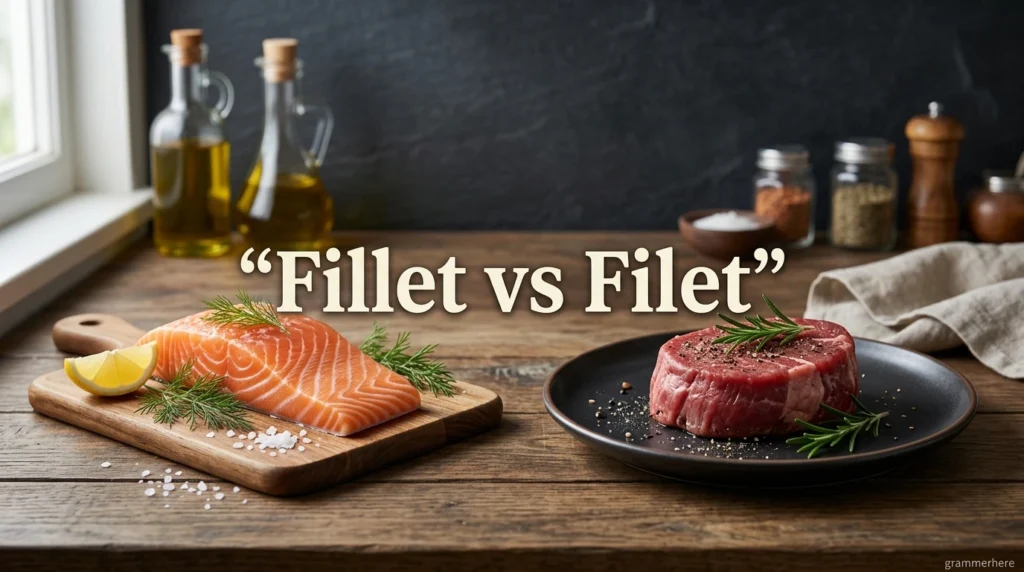
Picture yourself sitting in a cozy restaurant, scanning the menu while trying to decide between grilled salmon fillet and filet mignon. At first glance, the words seem nearly identical. Maybe you pause for a moment and wonder: Are fillet and filet actually different, or are they just two spellings of the same thing? It’s a small question, but surprisingly common. These terms appear everywhere—from grocery stores and cooking shows to fancy steakhouse menus and seafood recipes.
The confusion grows because both words sound alike, both relate to food, and both are tied to French culinary traditions. Yet context matters. In some situations, one spelling feels more refined, while the other appears more practical and everyday. Understanding the difference can help you read menus confidently, cook with more accuracy, and even appreciate how language evolves across cultures.
This article explores the meaning, history, pronunciation, usage, and cultural significance of fillet vs filet. Along the way, you’ll discover why these words exist side by side, how chefs and restaurants use them differently, and what each version subtly communicates in real life.
The Basic Meaning of Fillet and Filet
At their core, both “fillet” and “filet” refer to a boneless cut of meat or fish. The idea is simple: a clean, tender piece without bones that is easier to cook and eat. Despite the spelling differences, the meaning remains closely connected.
The word originally comes from French. In French cuisine, filet refers to a strip or threadlike cut of meat. Over time, English speakers adopted the term but gradually created two spelling traditions. British English mostly kept “fillet,” while American English uses both “fillet” and “filet” depending on context.
In everyday life, you might notice this split naturally. A grocery store may advertise fish fillets, while a luxury steakhouse promotes filet mignon. The distinction is less about correctness and more about convention and tone.
This small difference reflects something interesting about language. Words often evolve differently across regions and industries. One spelling may sound elegant or formal, while another feels practical and familiar.
Imagine someone cooking dinner at home. They might casually say they bought chicken fillets for a family meal. But if they reserve a table at an upscale restaurant, they suddenly encounter filet mignon written in polished script on the menu. Same roots, different atmosphere.
Understanding this foundation makes the rest of the discussion much easier.
Why the Spelling Difference Confuses So Many People
The confusion surrounding fillet vs filet comes from how closely connected the words are in pronunciation and meaning. Most people hear the word before they ever see it written down. That creates uncertainty later.
A person might grow up hearing “fish fillet” at fast-food restaurants but later encounter “filet mignon” in culinary magazines. Naturally, they begin wondering whether one spelling is wrong or whether each word describes something entirely different.
The truth is less dramatic but more interesting. English borrows heavily from French, and borrowed words often keep traces of their original spelling. Over time, some become “Anglicized,” meaning adapted to English spelling patterns.
Fillet in Everyday English
“Fillet” became the standard English spelling for many common food contexts. It feels accessible and familiar. You’ll often see it in supermarkets, recipes, and casual dining.
Examples include:
- Fish fillet
- Chicken fillet
- Beef fillet
- Fillet knife
This spelling blends naturally into standard English writing.
Filet in Culinary Culture
“Filet,” however, keeps a stronger French identity. Restaurants often prefer it because it sounds elegant and sophisticated.
The best-known example is filet mignon, a premium steak cut associated with fine dining.
This subtle stylistic difference shapes how people emotionally respond to the words. One feels ordinary and practical; the other feels refined and luxurious.
The French Origins Behind the Words
To truly understand fillet vs filet, it helps to step into the world of French culinary history. French cuisine has influenced global cooking for centuries, especially in professional kitchens.
The French word filet originally referred to a thread or strip. Eventually, it became associated with thin, boneless cuts of meat or fish. French chefs prized precision, tenderness, and elegant presentation, so the term naturally entered culinary vocabulary.
When English-speaking countries adopted French cooking traditions, they borrowed many terms directly:
- Soufflé
- Entrée
- Croissant
- Filet
Over time, English speakers modified some spellings to fit English patterns. That’s how “fillet” became widely accepted.
This transformation reflects something larger about language. Borrowed words rarely stay frozen. They adapt to local pronunciation, culture, and usage habits.
Imagine Victorian-era cooks learning French culinary techniques from European chefs. Some recipes preserved original French spellings to appear sophisticated, while others simplified terms for English readers. That gradual split helped create the dual usage we see today.
Even now, restaurants often use French spellings strategically because they create a sense of luxury and tradition. A menu saying “pan-seared filet” may sound more upscale than “pan-seared fillet,” even if the dish is nearly identical.
Language shapes perception more than people realize.
Fillet in Cooking and Everyday Food Language
The word “fillet” appears constantly in everyday cooking. It’s practical, descriptive, and widely understood across English-speaking countries.
When someone buys salmon fillets from a market, they usually mean neatly sliced portions without bones. The same applies to chicken fillets or pork fillets. The emphasis is on preparation and convenience rather than elegance.
Home cooks often prefer this spelling because it feels straightforward. Recipes in cookbooks, meal kits, and grocery packaging commonly use “fillet.”
Fish Fillets
Fish is perhaps the most common context for the word. A fish fillet is a side of fish removed cleanly from the backbone.
People appreciate fillets because they are:
- Easier to cook
- Simpler to season
- Safer to eat without bones
- Faster to prepare
A parent serving fish to children may specifically choose fillets for convenience.
Meat Fillets
The term also appears in meat preparation. Chicken breast fillets, pork fillets, and beef fillets are common grocery labels.
Unlike “filet,” which often signals luxury, “fillet” feels practical and approachable. It belongs to kitchens where people cook daily meals, experiment with recipes, and focus on nourishment rather than presentation.
This difference may seem subtle, but emotionally it matters. Words influence expectations before the food even reaches the table.
Filet Mignon and the Luxury Connection
If there is one phrase responsible for keeping “filet” alive in modern English, it is filet mignon.
This famous steak cut carries a sense of sophistication. Even people who rarely eat steak recognize the name from restaurants, television, or cooking competitions.
The phrase comes directly from French:
- Filet = thick boneless cut
- Mignon = delicate or dainty
Together, filet mignon refers to a tender cut from the smaller end of the beef tenderloin.
Why does the French spelling remain here? Because the dish itself became tied to fine dining culture. Restaurants intentionally preserved the French form to maintain prestige and culinary tradition.
Imagine two menu descriptions:
- Grilled beef fillet
- Filet mignon with garlic butter
The second instantly feels more luxurious, even before tasting it.
The Power of Presentation
Restaurants understand that language shapes customer expectations. French culinary terms often create associations with expertise, elegance, and high quality.
That’s why upscale menus frequently use:
- Filet
- Au gratin
- Confit
- Béarnaise
The spelling becomes part of the dining experience itself.
Emotional Perception
People may unconsciously connect “filet” with celebrations, romantic dinners, or expensive meals. Meanwhile, “fillet” feels more everyday and functional.
The emotional atmosphere around a word can become just as important as its literal meaning.
Pronunciation Differences Around the World
One fascinating aspect of fillet vs filet is pronunciation. Different regions pronounce the words differently depending on local language habits.
In American English:
- “Filet” is often pronounced fi-LAY
- “Fillet” may be pronounced fill-it or fi-LAY depending on context
In British English:
- “Fillet” is commonly pronounced fill-it
This creates even more confusion because identical spellings may sound different depending on where someone lives.
The Role of French Influence
The pronunciation fi-LAY closely mirrors the original French pronunciation. Restaurants and culinary schools often favor this version because it sounds refined.
Meanwhile, the English pronunciation fill-it reflects the Anglicized adaptation of the word.
Neither version is necessarily wrong. Language evolves according to community usage rather than strict universal rules.
Real-Life Communication
Picture a traveler ordering dinner abroad. They may say “fill-it,” while the waiter says “fi-LAY.” Both understand the meaning, but the pronunciation reveals cultural background.
These small differences remind us that language is deeply connected to identity, geography, and social habits.
How Restaurants Use Fillet and Filet Differently
Restaurants carefully choose language because menus influence perception and sales. The choice between fillet and filet often reflects branding rather than strict grammar rules.
Casual restaurants usually prefer “fillet.” It sounds familiar and accessible.
Examples:
- Crispy fish fillet sandwich
- Grilled chicken fillet
- Breaded cod fillet
Upscale restaurants often choose “filet” to create elegance.
Examples:
- Filet mignon
- Peppercorn filet
- Center-cut filet
The Psychology of Menu Language
Restaurants know that certain words create emotional reactions. French-inspired terms can make dishes appear more premium.
Customers may unconsciously expect:
- Better presentation
- Higher quality ingredients
- More refined cooking techniques
Simply changing the spelling can subtly affect perceived value.
A Small Word With Big Influence
Imagine two diners comparing menus online. One sees “beef fillet,” while the other sees “prime filet.” Even before tasting anything, the second description may sound more exclusive.
This shows how language and marketing often work together in the culinary world.
Common Misunderstandings About Fillet vs Filet
Many people believe one spelling is correct and the other is wrong. In reality, both are accepted English terms.
The misunderstanding usually comes from limited exposure. Someone familiar only with “fish fillet” may assume “filet” is a misspelling. Meanwhile, frequent steakhouse visitors may think “filet” is the proper culinary spelling.
Neither assumption is fully accurate.
Misunderstanding #1: Filet Is Always Fancy
While “filet” often appears in upscale contexts, it simply refers to a boneless cut. The elegance comes from cultural association, not the word itself.
Misunderstanding #2: Fillet and Filet Are Different Cuts
They are not fundamentally different cuts. The distinction is primarily linguistic and stylistic.
Misunderstanding #3: One Is American and One Is British
The situation is more nuanced. American English uses both spellings, while British English strongly favors “fillet.”
These misconceptions persist because language evolves unevenly across industries and cultures.
The Role of Culture in Food Vocabulary
Food vocabulary often carries emotional and cultural meaning far beyond definitions. Words can communicate class, tradition, sophistication, or comfort.
“Fillet” feels practical and familiar because it appears in everyday cooking. “Filet” feels refined because it is linked to French culinary heritage and luxury dining.
This pattern appears in many food terms.
For example:
- “Dessert” sounds more elegant than “sweets”
- “Cuisine” feels more refined than “cooking”
- “Entrée” sounds more formal than “main dish”
Cultural Identity Through Food Language
Restaurants and chefs often choose language carefully to match their identity.
A family diner may advertise:
- Homemade fish fillets
A luxury steakhouse may advertise:
- Hand-cut filet mignon
The food may be excellent in both places, but the vocabulary shapes expectations.
Why People Care So Much
Food connects deeply to emotion, celebration, memory, and status. Because of this, even spelling differences can spark strong opinions and preferences.
Language becomes part of the experience itself.
Fillet vs Filet in Grocery Stores and Packaging
Walk through a supermarket, and you’ll quickly notice how commonly “fillet” appears on packaging.
Frozen foods, seafood counters, and meat sections overwhelmingly favor:
- Salmon fillets
- Chicken breast fillets
- Tilapia fillets
This spelling feels clear and functional for everyday shoppers.
Why Packaging Prefers “Fillet”
Grocery stores prioritize readability and familiarity. The spelling “fillet” aligns naturally with standard English expectations.
Consumers scanning shelves quickly recognize the word without confusion.
Exceptions in Premium Products
High-end products sometimes use “filet” to create an upscale image.
For example:
- Bacon-wrapped beef filet
- Gourmet filet medallions
In these cases, the French spelling becomes a branding tool.
Everyday Consumer Psychology
Imagine a shopper choosing between two frozen meals. One uses casual language; the other uses French-inspired wording. Even without realizing it, the shopper may associate the second option with higher quality.
Marketing teams understand these psychological effects very well.
The Emotional Side of Culinary Language
Words shape feelings long before people taste food. “Filet” often creates anticipation and elegance, while “fillet” creates familiarity and comfort.
Think about a special anniversary dinner. A couple may dress formally, sit under dim lighting, and order filet mignon because the entire experience feels luxurious.
Now imagine a family dinner at home with crispy fish fillets and mashed potatoes. The atmosphere feels warm, practical, and comforting.
Neither experience is better. They simply create different emotional worlds.
Language as Atmosphere
Food descriptions help set mood and expectation. That’s why chefs, restaurants, and advertisers carefully choose wording.
Elegant vocabulary can:
- Increase perceived sophistication
- Suggest craftsmanship
- Raise expectations for quality
Simple vocabulary can:
- Feel approachable
- Create trust
- Emphasize comfort and familiarity
More Than Just Spelling
The difference between fillet and filet is ultimately about perception, tone, and cultural context as much as literal definition.
That’s what makes the topic surprisingly fascinating.
Practical Tips for Using Fillet and Filet Correctly
Understanding when to use each spelling can help avoid confusion in writing, menus, recipes, and conversation.
Use “Fillet” When:
- Referring to fish cuts
- Writing everyday recipes
- Describing grocery products
- Using standard English food terminology
Examples:
- Salmon fillet
- Chicken fillet sandwich
- Pork fillet recipe
Use “Filet” When:
- Referring to filet mignon
- Writing upscale menu descriptions
- Emphasizing French culinary style
- Creating a luxury tone
Examples:
- Filet mignon
- Center-cut filet
When Either Works
In some contexts, both spellings are accepted. Audience and tone matter more than strict rules.
A home cook writing a casual recipe blog may prefer “fillet.” A gourmet magazine may lean toward “filet.”
The key is consistency. Once you choose a style, stick with it throughout your writing.
What Fillet vs Filet Teaches About Language Evolution
The story of fillet vs filet reflects a larger truth about language: words constantly evolve through culture, migration, and human habit.
English absorbs vocabulary from many languages and adapts it over time. Some borrowed words remain close to their origins, while others become transformed.
This process creates fascinating variations.
Language Reflects Society
People often assume dictionaries control language completely. In reality, everyday usage shapes language more powerfully than rules alone.
Restaurants, chefs, advertisers, and consumers collectively influence which spellings survive.
Adaptation Over Time
Centuries ago, few people would have predicted that one French culinary word would split into two accepted English spellings with different emotional tones.
Yet that’s exactly what happened.
The evolution of these words reminds us that language is alive. It changes alongside culture, trade, travel, and human creativity.
FAQs
What is the main difference between fillet and filet?
The main difference is spelling and usage style. Both refer to boneless cuts of meat or fish, but “filet” often appears in upscale or French-inspired contexts.
Is filet mignon the same as beef fillet?
Yes. Filet mignon is a specific cut from the beef tenderloin, which is also considered a type of beef fillet.
Which spelling is more common in America?
American English uses both, though “fillet” is common for fish and general cooking, while “filet” appears more often in restaurant menus.
Why do restaurants use “filet”?
Restaurants often use “filet” because it sounds more elegant and reflects French culinary tradition.
Is “fillet” wrong for steak?
No. “Beef fillet” is perfectly correct, especially in British English and general cooking contexts.
How do you pronounce fillet?
It depends on region. Some pronounce it “fill-it,” while others say “fi-LAY.”
Is filet always French?
The word originated in French, but it has become part of English culinary vocabulary as well.
Can fillet and filet be used interchangeably?
In many cases, yes. However, context and tone often determine which spelling feels more appropriate.
Conclusion
The debate around fillet vs filet may seem small at first, but it reveals something surprisingly meaningful about language, culture, and human perception. Both words share the same roots and describe similar boneless cuts of meat or fish, yet each carries its own emotional tone and social atmosphere. “Fillet” feels practical, familiar, and rooted in everyday cooking, while “filet” often suggests elegance, French culinary tradition, and upscale dining.