Introduction
Picture a quiet morning in a classroom. Students shuffle into their seats, half-awake, some whispering softly, others staring out the window. The teacher opens the register, looks up, and begins calling names—one by one. “Ayesha?” “Present.” “Ali?” “Here.” This simple ritual lasts only a few minutes, yet it quietly sets the tone for the entire day.
Now imagine the same scene in a military camp, a corporate meeting, or even an online class. The format may change, but the purpose remains surprisingly consistent: confirming presence, establishing order, and creating a sense of accountability. This process is known as roll call—often mistakenly written or spoken as “role call.”
Roll call is more than just a list of names. It is a structured moment of recognition, belonging, and responsibility. Whether in schools, workplaces, government assemblies, or digital platforms, it plays a subtle but powerful role in organizing human interaction. Understanding roll call helps us see how societies track participation, maintain discipline, and ensure that every individual is accounted for in a shared space.
Meaning and Origin of Roll Call
Roll call refers to the systematic reading of names to confirm attendance or presence. Traditionally, it involves calling individuals from a register or “roll” and recording their response. The term originates from the word roll, meaning a list of names written on a scroll or register used in official settings.
Historically, roll call was essential in military organizations, where knowing exactly who was present could determine readiness for battle. Over time, the practice spread to schools, legislative bodies, and workplaces. It became a universal method of accountability.
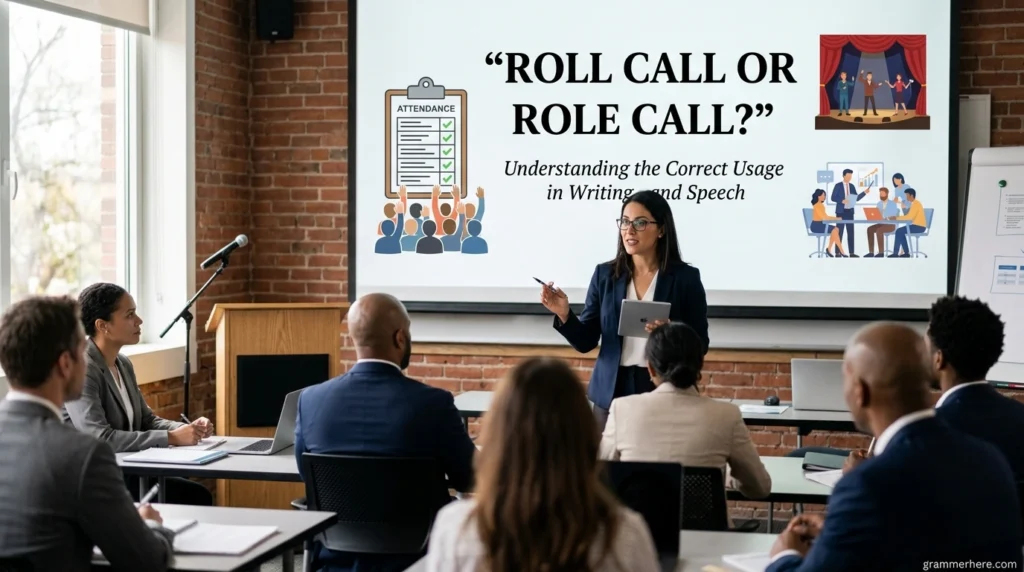
The confusion between “roll call” and “role call” is common. However, “role” refers to a function or character someone plays, while “roll” refers to a list. So, “roll call” is the correct term.
At its core, roll call is about verification. It ensures that every individual is recognized within a group. This simple act reflects deeper human needs: order, structure, and acknowledgment. Even in modern digital systems, the concept remains alive in attendance logs and automated check-ins.
Why Roll Call Matters in Real Life
Roll call may seem like a small administrative task, but its importance extends far beyond marking attendance. It creates structure in environments where coordination is essential. Without it, confusion and disorganization can quickly arise.
In educational settings, roll call ensures that students are present and engaged. It helps teachers track participation and identify absentees early. In workplaces, it supports productivity by confirming that team members are available for tasks or meetings.
Key Real-Life Functions
- Ensures accountability
- Builds discipline and routine
- Helps track participation
- Supports safety in emergencies
Roll call also has a psychological effect. Being called by name reinforces a sense of identity and inclusion. It reminds individuals that they are recognized members of a group.
In emergency situations, roll call becomes critical. Whether during fire drills or evacuations, knowing who is present can save lives. This simple process, therefore, plays a silent but essential role in both daily organization and crisis management.
Roll Call in Schools
Schools are perhaps the most familiar setting for roll call. Every morning or at the start of a class, teachers call out student names to mark attendance. This routine helps establish order and discipline in the classroom.
Beyond attendance tracking, roll call also sets the tone for learning. It signals the transition from informal interaction to structured education. Students mentally prepare to engage with lessons, and teachers gain awareness of classroom dynamics.
Classroom Dynamics During Roll Call
In many classrooms, roll call becomes a moment of subtle interaction. Students respond with “present,” “here,” or sometimes even playful variations. This brief exchange fosters familiarity between teacher and students.
Roll call also helps identify patterns of absenteeism. Regular absences may indicate academic struggles, health issues, or personal challenges. Teachers can then take appropriate action to support students.
In modern classrooms, digital attendance systems are replacing traditional roll call, but the purpose remains unchanged: ensuring every student is accounted for and supported in their educational journey.
Roll Call in Military Life
In military environments, roll call carries a deeper level of seriousness and discipline. It is not just about attendance—it is about readiness, responsibility, and safety.
Soldiers are required to respond immediately when their names are called. This ensures that every member of a unit is present and prepared for duty. In high-risk environments, roll call can determine whether a mission proceeds or is delayed.
Functions in Military Settings
- Confirms troop presence
- Ensures operational readiness
- Maintains discipline and hierarchy
- Tracks personnel during deployments
Roll call in the military also fosters unity. It reinforces the idea that every individual matters to the group’s success. Missing personnel are immediately identified, allowing commanders to take swift action.
This structured accountability reflects the military’s core values: precision, discipline, and reliability. Even in modern armed forces, automated systems may assist, but traditional roll call remains an important ritual.
Roll Call in Government and Voting Systems
In parliamentary and governmental systems, roll call takes on a formal and democratic role. It is used during voting sessions to record how each member votes on legislation or motions.
Instead of simply marking presence, roll call voting ensures transparency. Each name is called, and the member’s vote is recorded publicly. This prevents ambiguity and promotes accountability in decision-making.
Why It Matters in Governance
- Ensures transparent voting
- Holds representatives accountable
- Creates official voting records
- Prevents manipulation of results
Roll call voting also strengthens democracy. Citizens can see how their representatives voted, which builds trust in the system. In many legislatures, important decisions are decided through this method to ensure fairness and clarity.
This form of roll call transforms a simple attendance check into a powerful democratic tool.
Roll Call in Workplaces and Organizations
In modern workplaces, roll call often appears in the form of meetings, check-ins, or digital attendance systems. It ensures that employees are present, engaged, and ready to contribute.
In corporate environments, roll call is not always literal. It may involve project updates, team stand-ups, or online attendance tracking software.
Workplace Benefits
- Improves coordination
- Enhances team accountability
- Supports time management
- Encourages active participation
For remote teams, roll call has evolved into virtual check-ins through video calls or collaboration tools. This adaptation ensures that even distributed teams maintain structure and communication.
Roll call in workplaces reflects modern organizational needs—flexibility combined with accountability.
Digital Evolution of Roll Call
Technology has transformed how roll call is conducted. Traditional name-calling has shifted toward automated systems, biometric scanners, and mobile applications.
Schools now use QR codes or fingerprint systems to record attendance. Companies rely on software that logs employee entry times automatically. Online learning platforms track student participation through login activity.
Advantages of Digital Roll Call
- Faster processing
- Reduced human error
- Real-time tracking
- Data storage and analytics
Despite these advancements, the essence of roll call remains unchanged. It still serves the purpose of confirming presence and ensuring participation.
Digital systems have simply made the process more efficient, especially in large organizations where manual roll call would be time-consuming.
Emotional and Social Meaning of Roll Call
Roll call is not just administrative—it also carries emotional significance. Being called by name in a group setting reinforces identity and belonging.
For students, hearing their name can create a sense of recognition. For soldiers, it reinforces unity and mutual dependence.
Psychological Impact
Roll call subtly communicates: “You are seen. You matter.” This acknowledgment can boost confidence and motivation.
At a social level, roll call also strengthens group cohesion. It reminds individuals that they are part of something larger than themselves. Even though it is a routine practice, its emotional effect can be surprisingly meaningful.
Common Misunderstandings:
One of the most common mistakes is confusing “roll call” with “role call.” While they sound similar, they have completely different meanings.
- Roll call: A process of calling names from a list
- Role: A function or responsibility someone performs
“Role call” is grammatically incorrect when referring to attendance. The confusion likely arises because “role” is more commonly used in everyday language.
Understanding this difference improves both writing accuracy and communication clarity. In formal contexts like education or administration, using the correct term is essential.
Different Types of Roll Call Methods
Roll call is not a one-size-fits-all process. It varies depending on context, technology, and organizational needs.
Traditional Verbal Roll Call
Names are called aloud, and individuals respond verbally.
Written Roll Call
Participants sign attendance sheets manually.
Digital Roll Call
Systems automatically record attendance through apps or devices.
Hybrid Systems
Combining manual and digital methods for accuracy and flexibility.
Roll Call in Storytelling and Culture
Roll call also appears in cultural narratives, films, and literature. It is often used to symbolize order, discipline, or the beginning of a structured event.
In movies, military roll call scenes create tension and realism. In school-based stories, roll call often marks the start of daily life. Writers use it to ground scenes in reality.
Culturally, roll call represents structure within chaos. It is a reminder that even in unpredictable environments, systems exist to bring order and clarity.
Practical Lessons from Roll Call
Roll call offers deeper lessons beyond attendance tracking. It teaches discipline, responsibility, and awareness.
Key Takeaways
- Every individual has a place in a system
- Accountability strengthens group performance
- Structure supports productivity
- Recognition builds confidence
In everyday life, the principle of roll call can be applied beyond formal settings. Checking in with goals, tracking progress, or acknowledging responsibilities are modern extensions of this concept.
Ultimately, roll call reflects how humans organize themselves in groups—balancing individuality with collective order.
Conclusion
, but it carries layers of meaning that extend into education, military life, governance, and modern workplaces.
From classrooms to digital platforms, the act of calling and responding to names continues to shape how societies function. It ensures order while reinforcing a sense of belonging among individuals.
Understanding roll call helps us appreciate the small systems that keep larger structures running smoothly. It is a reminder that even the simplest practices often carry the deepest significance in our daily lives.
FAQs
1. What is roll call in simple terms?
Roll call is the process of calling names from a list to confirm who is present in a group or meeting.
2. Is it roll call or role call?
The correct term is roll call, referring to a list of names. “Role call” is incorrect in this context.
3. Where is roll call commonly used?
It is used in schools, military units, workplaces, and government assemblies.
4. Why is roll call important?
It ensures attendance, accountability, and proper organization within groups.
5. How does digital roll call work?
Digital systems use apps, biometrics, or logins to automatically track attendance.
6. What is roll call voting?
It is a method where each member’s name is called, and their vote is recorded publicly.
7. Can roll call improve discipline?
Yes, it encourages responsibility, punctuality, and structured behavior.
8. What is the emotional impact of roll call?
It creates a sense of recognition, belonging, and inclusion within a group.